Quick Verdict: The Efficiency Benchmark in a Midsize Sedan
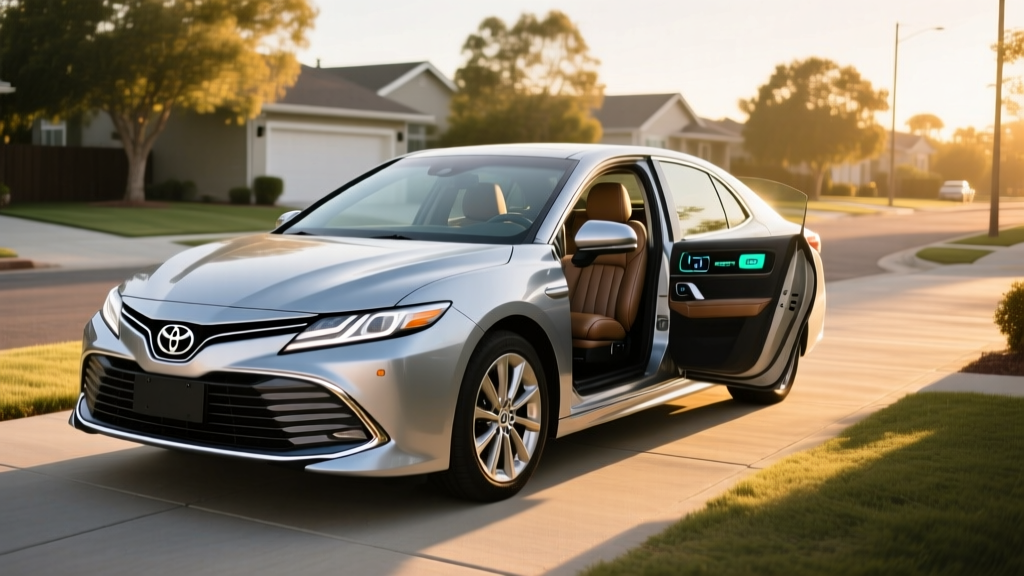
The 2024 Toyota Camry Hybrid XLE sits at the intersection of proven hybrid efficiency, premium comfort, and Toyota's reliability reputation. With an EPA-estimated 46 MPG combined, a 208-horsepower hybrid powertrain, and a starting MSRP of $33,145, it remains one of the most compelling conventional hybrid sedans on the market — particularly for buyers who want EV-like fuel savings without ever plugging in.
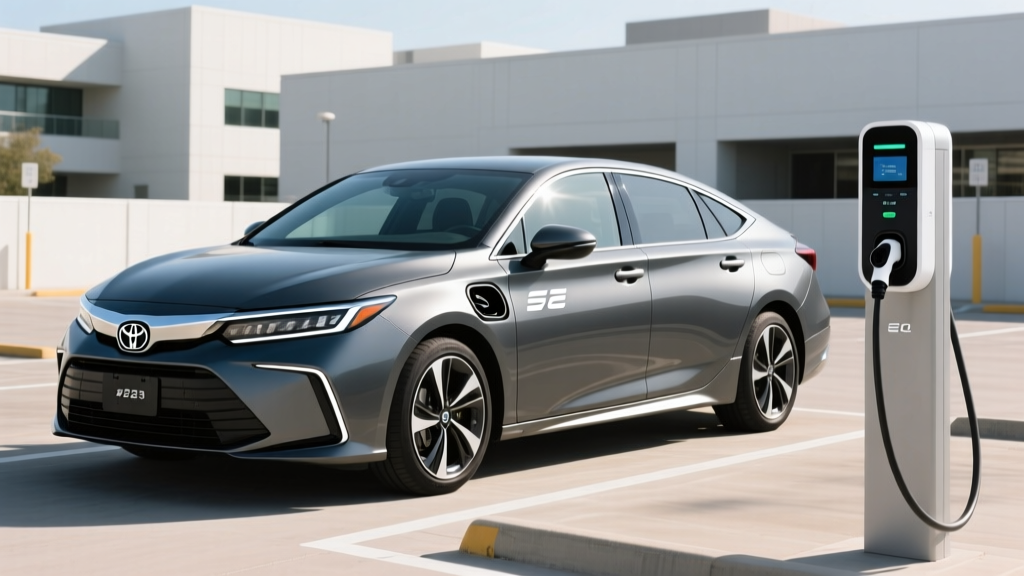
This is a conventional hybrid electric vehicle (HEV), not a plug-in hybrid (PHEV). That means you never need to charge it. The 1.6 kWh nickel-metal hydride battery charges itself through regenerative braking and the gasoline engine. For buyers weighing a Camry Hybrid against a plug-in hybrid or full battery electric vehicle (BEV), this guide breaks down exactly what you get, what it costs, and whether it's the right electrified vehicle for your driving pattern.
HEV vs PHEV vs BEV: Where the Camry Hybrid XLE Fits
Before diving into specs, it's critical to understand the distinction between the three electrified powertrain types. The Camry Hybrid is an HEV — it pairs a gasoline engine with an electric motor and a small battery that charges itself. You fuel it at a gas station and never plug it in.
| Feature | HEV (Camry Hybrid) | PHEV (e.g., Prius Prime) | BEV (e.g., Tesla Model 3) |
|---|---|---|---|
| Plug-in Required? | No | Yes (Level 1/2) | Yes (Level 1/2/DC) |
| Electric-Only Range | ~1 mile at low speed | 25-44 miles typical | 250-350+ miles |
| Battery Size | 1.6 kWh | 13.6 kWh typical | 50-82 kWh typical |
| Fueling | Gas station only | Gas + plug-in | Plug-in only |
| Federal Tax Credit | No | Up to $7,500 (if eligible) | Up to $7,500 (if eligible) |
| Best For | No home charging access | Short commutes + road trips | Home charging + daily driving |
The Camry Hybrid XLE is ideal for buyers who lack access to home or workplace charging but still want significant fuel savings over a gas-only vehicle. If you have a garage and a short commute, a PHEV like the Prius Prime may deliver even lower operating costs on electric-only miles. If you charge at home and rarely drive over 300 miles between stops, a full BEV eliminates gasoline entirely.
Fuel Economy: EPA Ratings and Real-World MPG
The 2024 Camry Hybrid XLE with front-wheel drive carries EPA ratings of 44 MPG city / 47 MPG highway / 46 MPG combined, according to fueleconomy.gov. The available all-wheel-drive (AWD) variant drops slightly to 44/43/44 MPG city/highway/combined.
| Drivetrain | City MPG | Highway MPG | Combined MPG |
|---|---|---|---|
| FWD | 44 | 47 | 46 |
| AWD | 44 | 43 | 44 |
Real-World MPG: What to Actually Expect
Toyota's hybrid system excels in city driving, where frequent stops feed energy back into the battery via regenerative braking. Many Camry Hybrid owners report exceeding the EPA city estimate, with real-world city figures reaching 48-52 MPG in moderate climates with light traffic. Highway driving at sustained speeds above 70 MPH typically yields 40-44 MPG, slightly below the EPA highway sticker.
Cold weather reduces efficiency — expect a 5-10% MPG drop in winter months below freezing, as the gasoline engine runs more frequently to provide cabin heat and maintain battery temperature. Over a 12,000-mile annual driving cycle at $3.50/gallon, the FWD Camry Hybrid XLE costs approximately $913 per year in fuel, compared to roughly $1,556 for a comparable gas-only midsize sedan averaging 28 MPG combined.
Powertrain Specs: 208 Horsepower from Toyota's Hybrid Synergy Drive
| Specification | 2024 Camry Hybrid XLE |
|---|---|
| Engine | 2.5L 4-cylinder Dynamic Force |
| Engine Power | 176 hp / 163 lb-ft torque |
| Electric Motor | Permanent magnet synchronous (front) |
| Motor Power | 118 hp / 149 lb-ft (FWD front motor) |
| Net Combined Horsepower | 208 hp (FWD) / 219 hp (AWD) |
| Transmission | Electronically controlled CVT (eCVT) |
| 0-60 MPH | ~7.2 seconds (FWD) |
| Battery Type | Nickel-Metal Hydride (NiMH) |
| Battery Capacity | 1.6 kWh (gross) |
| Drivetrain | FWD standard; AWD available |
| Fuel Tank | 13.2 gallons |
| Total Range | ~607 miles (FWD, combined) |
The AWD variant adds a rear-mounted 40-hp electric motor that engages automatically during acceleration and low-traction conditions. Unlike a mechanical AWD system, there's no driveshaft — the rear motor is entirely independent, which preserves trunk space and adds only modest weight.
The eCVT is not a traditional belt-and-pulley CVT. It uses a planetary gearset to seamlessly blend engine and motor output, resulting in smooth, linear acceleration without the droning associated with older CVT designs. Power delivery is immediate from the electric motor at low speeds, with the gasoline engine blending in above roughly 25 MPH or under heavier throttle.
Pricing, Trims, and Tax Credit Eligibility
The 2024 Toyota Camry Hybrid XLE starts at an MSRP of $33,145 (including destination charge) for the FWD configuration. Adding AWD increases the price by approximately $1,400. With options such as the Navigation Package, panoramic glass roof, and premium JBL audio, a well-equipped XLE AWD can reach $37,000-$38,000.
Federal Tax Credit: Does the Camry Hybrid Qualify?
The conventional Camry Hybrid does not qualify for the IRS §30D Clean Vehicle Credit. That credit applies only to plug-in electric vehicles (PHEVs and BEVs) with a battery capacity of at least 7 kWh. The Camry Hybrid's 1.6 kWh battery is far below the threshold.
If federal tax incentives are a priority, consider the Toyota Prius Prime (PHEV), which may qualify for up to $7,500 depending on your income, the vehicle's MSRP, and battery component sourcing requirements per current IRS §30D rules. Always consult a tax professional before relying on credit eligibility.
Battery Longevity, Warranty, and Replacement Cost
| Coverage | Term |
|---|---|
| Hybrid Battery Warranty | 10 years / 150,000 miles (whichever comes first) |
| Hybrid System Components | 8 years / 100,000 miles |
| Basic Vehicle Warranty | 3 years / 36,000 miles |
| Powertrain Warranty | 5 years / 60,000 miles |
Toyota's hybrid battery warranty is among the strongest in the industry. The 10-year/150,000-mile coverage applies in all 50 states, an improvement over the earlier 8-year/100,000-mile standard that applied outside California Air Resources Board (CARB) states.
Real-World Battery Lifespan
Toyota's NiMH hybrid batteries have an exceptional longevity track record. Data from fleet operators and long-term owners shows that Camry and Prius hybrid batteries routinely last 150,000-200,000+ miles before significant capacity loss. Unlike the larger lithium-ion packs in BEVs, the Camry Hybrid's small NiMH battery operates within a narrow state-of-charge window (roughly 40-80%), which dramatically reduces stress and degradation.
If replacement is needed out of warranty, a new OEM hybrid battery for the Camry Hybrid costs approximately $2,000-$3,500 installed at a Toyota dealership. Refurbished or aftermarket options are available for $1,000-$2,000. Individual cell module replacement (rather than the full pack) can reduce costs further. This is dramatically less expensive than BEV battery replacement, which can exceed $10,000-$20,000.
Is the Camry Hybrid Reliable?
Toyota's hybrid powertrain is one of the most thoroughly proven systems in automotive history, with over 25 years of continuous refinement since the original Prius. The Camry Hybrid consistently earns top marks from reliability trackers. The 2024 model carries an IIHS Top Safety Pick+ rating when equipped with specific headlights, and Toyota Safety Sense 2.5+ is standard across all trims, including automatic emergency braking, lane departure alert with steering assist, full-speed-range adaptive cruise control, and lane tracing assist.
XLE Trim: What You Get for the Money
The XLE sits in the upper-middle of the Camry Hybrid lineup, positioned above the LE and SE but below the XSE. Key XLE-standard features include:
- 9-inch touchscreen with wireless Apple CarPlay and Android Auto
- Wireless phone charging pad
- Leather-trimmed heated front seats
- 8-way power-adjustable driver's seat
- Dual-zone automatic climate control
- Smart Key System with push-button start on all doors
- 18-inch alloy wheels (dark gray finish)
- Blind Spot Monitor with Rear Cross-Traffic Alert
- Toyota Safety Sense 2.5+ suite
- Ambient interior lighting
The XLE trades the sport-tuned suspension of the SE/XSE for a more comfort-oriented tune, which pairs well with the hybrid's quiet, torque-rich low-speed driving. Road noise is well-managed, though the 18-inch wheels transmit more impact harshness than the 16-inch wheels on the LE trim.
Camry Hybrid XLE vs the Alternatives
Pros
- 46 MPG combined — among the best in the midsize sedan class
- No plug-in required; fuel and go
- 10-year / 150,000-mile hybrid battery warranty
- Proven 208-hp powertrain with smooth eCVT
- Available AWD with independent rear motor
- Strong IIHS safety ratings and standard TSS 2.5+
- Low annual fuel cost (~$913 at 12,000 mi/yr)
Cons
- No federal tax credit eligibility (HEV, not PHEV)
- eCVT limits driver engagement; no manual shift feel
- Trunk slightly reduced vs gas Camry (battery placement)
- No DC fast charging capability (not applicable to HEV)
- Infotainment acceptable but trails Hyundai/Kia interfaces
- AWD fuel economy penalty of ~2 MPG combined
Decision Framework: Which Electrified Vehicle Is Right for You?
Choose the Camry Hybrid XLE (HEV) if: You don't have access to home or workplace charging, you want maximum simplicity with no plug-in routine, you drive a mix of city and highway miles, and you prioritize long-term reliability and low maintenance cost.
Choose a PHEV (e.g., Prius Prime) if: You have home charging, your daily commute is under 40 miles round-trip (running mostly on electricity), and you want the option of gas-free daily driving with gasoline backup for road trips. You may also qualify for the §30D tax credit.
Choose a BEV (e.g., Tesla Model 3, Hyundai Ioniq 6) if: You can install a Level 2 home charger, you want zero tailpipe emissions, your typical trips fall within 250 miles, and you want the lowest per-mile energy cost (electricity is typically $0.04-$0.06/mile vs $0.10-$0.15/mile for a hybrid).
Ownership Costs Over 5 Years
| Cost Category | Camry Hybrid XLE (HEV) | Gas Midsize Sedan (28 MPG avg) |
|---|---|---|
| Purchase Price (MSRP) | $33,145 | $30,000 |
| Federal Tax Credit | $0 | $0 |
| Fuel (60,000 mi at $3.50/gal) | $4,565 | $7,500 |
| Maintenance (5 yr est.) | $2,200 | $3,000 |
| Insurance (5 yr est.) | $7,500 | $7,000 |
| Estimated 5-Year Total | ~$47,410 | ~$47,500 |
The Camry Hybrid XLE's higher MSRP is largely offset by fuel savings within 5 years. Toyota hybrids also tend to require less brake maintenance due to regenerative braking reducing pad wear, and the hybrid system has fewer mechanical wear points than a conventional automatic transmission. Insurance premiums run slightly higher than gas equivalents due to the higher purchase price and specialized hybrid components.
Frequently Asked Questions
How many MPG does the 2024 Toyota Camry Hybrid XLE get?
The FWD Camry Hybrid XLE is EPA-rated at 44 city / 47 highway / 46 combined MPG. The AWD variant is rated at 44/43/44. Real-world city driving often exceeds the EPA estimate, while sustained highway driving above 70 MPH typically returns 40-44 MPG.
Does the Camry Hybrid need to be plugged in?
No. The 2024 Camry Hybrid is a conventional hybrid (HEV), not a plug-in hybrid. The 1.6 kWh battery charges entirely through regenerative braking and the gasoline engine. You fuel it at a gas station like any other car.
Does the 2024 Camry Hybrid qualify for a federal tax credit?
No. The IRS §30D Clean Vehicle Credit requires a plug-in vehicle with at least 7 kWh of battery capacity. The Camry Hybrid's 1.6 kWh battery does not qualify. Some states may offer separate incentives for hybrid purchases — check your state's energy office for details.
How long will the Camry Hybrid battery last?
Toyota's hybrid batteries are designed to last the life of the vehicle. Real-world data shows most Camry and Prius hybrid batteries reach 150,000-200,000+ miles before needing replacement. Toyota covers the hybrid battery for 10 years or 150,000 miles. Out-of-warranty replacement costs approximately $2,000-$3,500 for a new OEM pack.
Is the Camry Hybrid XLE better than the gas Camry?
For most buyers, yes. The hybrid delivers 46 MPG combined versus roughly 28-32 MPG for the gas Camry, saving approximately $600-$700 per year in fuel. The hybrid also produces 208 hp (versus 203 hp for the gas 4-cylinder) with smoother, more responsive low-speed acceleration. The trade-off is a ~$3,000-$4,000 higher purchase price and no federal tax credit to offset it.
Can the Camry Hybrid drive on electric power alone?
Only at very low speeds (under ~25 MPH) for short distances (roughly one mile or less). The battery is too small for meaningful electric-only driving. If electric-only commuting is a priority, you need a PHEV or BEV.
How does the Camry Hybrid compare to the Honda Accord Hybrid?
The Accord Hybrid is EPA-rated at 48 MPG combined (vs. 46 for the Camry Hybrid FWD). However, the Camry Hybrid offers available AWD, a more comfort-focused ride in the XLE trim, and Toyota's longer hybrid battery warranty history. Both are excellent choices; the decision often comes down to styling preference, dealer proximity, and whether you want AWD availability.