Quick Verdict: The Sweet Spot in the Camry Lineup
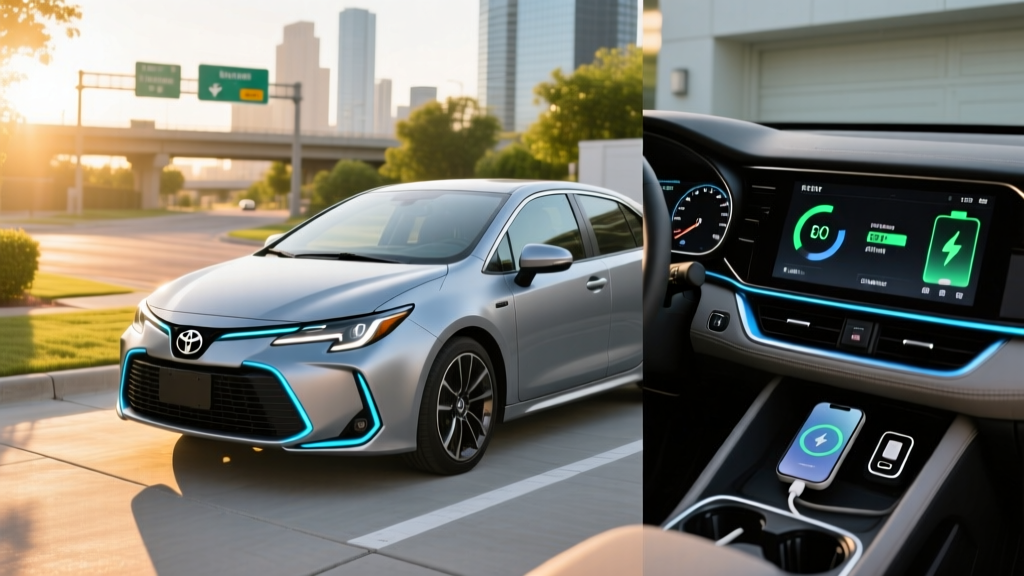
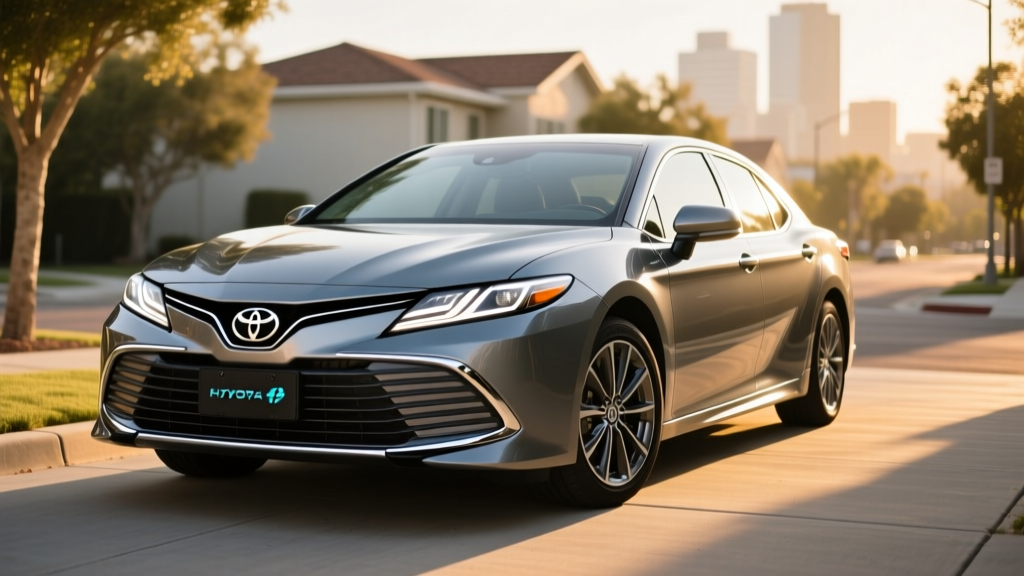
The 2024 Toyota Camry Hybrid SE occupies a narrow but compelling lane: a sport-tuned suspension and styling upgrades wrapped around Toyota's proven hybrid synergy drive system, all while returning an EPA-estimated 46 MPG combined. For buyers who want better fuel economy than a gas-only midsize sedan without committing to plug-in infrastructure or full EV ownership, the Camry Hybrid SE makes a strong case — particularly if your commute is stop-and-go city driving where hybrids thrive.
This review covers the SE trim specifically, but we'll contextualize it within the broader Camry Hybrid lineup and address the questions that matter most: real-world MPG, battery longevity, warranty coverage, and whether a conventional hybrid (HEV) or a plug-in hybrid (PHEV) better fits your driving pattern.
HEV vs. PHEV: Where the Camry Hybrid Fits
Conventional Hybrid (HEV) — like the Camry Hybrid SE: Uses a small battery (typically 1.0–1.6 kWh) charged entirely by regenerative braking and the gasoline engine. You never plug it in. The electric motor assists the engine during acceleration and enables brief electric-only driving at low speeds. Fuel economy improvement over a gas-only equivalent: 30–50%.
Plug-in Hybrid (PHEV) — like the Toyota RAV4 Prime or Prius Prime: Carries a larger battery (13–18 kWh) that you plug in to charge, giving 25–44 miles of electric-only range before the gas engine engages. Once the battery depletes, it operates as a conventional hybrid. Requires access to charging (home or work) to realize full efficiency benefits.
Full EV (BEV): No gasoline engine. Larger battery (60–100+ kWh), 200–400+ miles of range, requires regular charging. Lowest per-mile fuel cost but highest upfront price and requires reliable charging access.
The 2024 Camry Hybrid is an HEV — Toyota does not offer a Camry PHEV variant. If you need plug-in electric range in a Toyota sedan, the closest alternative is the Prius Prime (up to 44 miles electric-only EPA). The Camry Hybrid's advantage is simplicity: no charging cables, no range planning, just fill up with gas and go.
Fuel Economy: EPA Ratings and Real-World MPG
| Trim | City MPG | Highway MPG | Combined MPG |
|---|---|---|---|
| Camry Hybrid LE | 51 | 53 | 52 |
| Camry Hybrid SE / Nightshade | 44 | 47 | 46 |
| Camry Hybrid XLE | 44 | 47 | 46 |
| Camry Gas SE (2.5L I4) | 27 | 38 | 31 |
Source: EPA Fuel Economy
The SE trim's slightly lower EPA numbers versus the LE (46 vs. 52 combined) come from wider tires (235/45R18 vs. 215/55R17), a sport-tuned suspension, and marginally higher curb weight. The trade-off is noticeably sharper handling — the SE feels more planted through corners than the softer LE.
Real-World MPG: What to Actually Expect
Toyota hybrids consistently deliver close to — or even above — their EPA city estimates because regenerative braking recovers energy that gas cars waste as heat. In mixed suburban and city driving, owners routinely report 45–50 MPG in the SE. On long highway trips at 75+ mph, expect a dip to roughly 40–43 MPG, as aerodynamic drag dominates and the engine runs more frequently.
In cold weather (below 35°F), anticipate a 5–10% drop in fuel economy. The engine runs longer to warm the cabin and bring the catalytic converter to operating temperature, reducing the time the car spends in electric-assist mode. This is normal for all hybrids and far less severe than the 20–30% range loss a full EV experiences in winter.
Powertrain and Performance Specs
| Specification | 2024 Camry Hybrid SE |
|---|---|
| Engine | 2.5L Dynamic Force 4-cylinder |
| Engine Output | 176 hp / 163 lb-ft torque |
| Electric Motor | 88 kW (118 hp) front-mounted |
| Net Combined Horsepower | 208 hp |
| Transmission | eCVT (planetary gearset) |
| Drivetrain | FWD (AWD-e available on SE) |
| Hybrid Battery | 1.6 kWh lithium-ion (sealed NiMH on some builds) |
| 0–60 mph | ~7.2 seconds |
| Curb Weight | ~3,530 lbs |
| Fuel Tank | 13.2 gallons |
| Total Range (est.) | ~607 miles (at 46 MPG combined) |
The 208 net horsepower figure represents the combined output of the engine and electric motor — not their simple sum, since peak outputs occur at different RPM points. The result is responsive low-speed acceleration (the electric motor delivers instant torque) and adequate highway passing power. The eCVT is not a belt-driven continuously variable transmission; it's a planetary gearset that's inherently smooth and has no belts or pulleys to wear out.
The available AWD-e system adds a rear-mounted 40 kW electric motor that engages automatically during acceleration or when front-wheel slip is detected. It adds roughly 1 MPG penalty and ~$1,400 to the MSRP but provides meaningful traction improvement in rain and light snow. Note: AWD-e does not apply to the rear wheels at steady highway speeds — it's a traction aid, not a performance system.
Battery Warranty, Lifespan, and Replacement Cost
Toyota Hybrid Battery Warranty: 10 years / 150,000 miles (whichever comes first) for 2020 and newer model years. This covers the hybrid traction battery against defects and excessive capacity loss. Prior to 2020, the warranty was 8 years / 100,000 miles (10/150,000 in California and CARB-adopting states).
Hybrid System Components Warranty: 8 years / 100,000 miles — covers the inverter, converter, and electric motor.
How Long Do Toyota Hybrid Batteries Actually Last?
Toyota's hybrid battery track record is among the best in the industry. The Camry Hybrid's battery is deliberately small (1.6 kWh) and the system's software maintains a narrow state-of-charge window — typically cycling between roughly 40% and 80%. This shallow-cycling strategy dramatically reduces degradation compared to a full EV battery that regularly charges to 100% or depletes to near zero.
Real-world data from fleet operators and long-term owners suggests Toyota hybrid batteries commonly last 150,000–200,000+ miles before requiring replacement. Many first-generation Prius batteries (2001–2003) exceeded 200,000 miles. Failures before 100,000 miles are uncommon and typically covered under warranty.
Battery Replacement Cost
If your hybrid battery does fail outside warranty, here's what to budget:
- New OEM battery from Toyota: $2,500–$4,000 installed
- Refurbished/remanufactured battery: $1,500–$2,500 installed
- Individual module replacement (if only a few cells fail): $500–$1,200 at a hybrid specialist
For context, a $3,000 battery replacement at 180,000 miles still represents a lower total cost of ownership than a gas-only Camry that consumed ~$6,000 more in fuel over the same distance.
Pricing, Trims, and Tax Credit Eligibility
| Trim | MSRP (2024) | Key Features |
|---|---|---|
| Hybrid LE | $28,855 | 17" alloy wheels, Toyota Safety Sense 2.5+, 8" touchscreen |
| Hybrid SE | $30,390 | Sport-tuned suspension, 18" black alloy wheels, sport seats, paddle shifters |
| Hybrid SE Nightshade | $31,390 | Black exterior accents, black mirror caps, Nightshade badging |
| Hybrid XLE | $33,495 | Leather-trimmed seats, 9" touchscreen, ambient lighting, wireless charging |
MSRP includes destination charge. AWD-e adds approximately $1,400 to SE and XLE trims.
Federal Tax Credit: Does the Camry Hybrid Qualify?
The conventional Camry Hybrid does not qualify for the federal §30D Clean Vehicle Credit ($7,500 maximum). Under current IRS rules, only plug-in electric vehicles (BEVs and PHEVs) with a battery capacity of at least 7 kWh are eligible. The Camry Hybrid's ~1.6 kWh battery falls well below this threshold.
If federal tax incentives are a priority, the closest Toyota that qualifies is the Prius Prime (PHEV), which may be eligible for up to $3,750 depending on battery-sourcing requirements. Always verify current eligibility on IRS.gov before purchasing, as critical-mineral and battery-component sourcing rules tighten annually.
Some states offer their own hybrid or efficiency rebates — check your state's energy office or DMV website for current programs, as these vary widely and change frequently.
Ownership Economics: Camry Hybrid SE vs. Gas vs. EV
To put the Camry Hybrid SE's value in perspective, here's a 5-year cost comparison assuming 15,000 miles/year, $3.50/gallon gas, and $0.14/kWh home electricity:
| Vehicle | Purchase Price | 5-Yr Fuel Cost | Estimated Maintenance | 5-Yr Total* |
|---|---|---|---|---|
| Camry Hybrid SE | $30,390 | $5,707 | $2,800 | ~$38,897 |
| Camry Gas SE (2.5L) | $28,495 | $8,468 | $3,200 | ~$40,163 |
| Tesla Model 3 RWD | $38,990 | $3,150 | $1,800 | ~$43,940 |
*Excludes insurance, depreciation, and tax credits. Insurance on the Tesla typically runs 20–40% higher than the Camry. Actual costs vary by region, driving pattern, and electricity/gas prices.
The Camry Hybrid SE breaks even against the gas Camry within roughly 2–3 years through fuel savings alone, and the gap widens if gas prices rise. Against the Model 3, the Camry Hybrid wins on upfront cost and eliminates charging-infrastructure dependency, though the Tesla's per-mile energy cost is significantly lower if you charge at home.
Who Should Buy the Camry Hybrid SE — and Who Shouldn't
Pros
- 46 MPG combined EPA — no plugging in required
- Sport-tuned suspension gives genuinely engaging handling for a hybrid sedan
- 10-year/150,000-mile hybrid battery warranty
- Toyota Safety Sense 2.5+ standard (pre-collision, lane tracing, adaptive cruise)
- ~607 miles total range — fewer fill-ups on road trips
- Strong resale value; Camry Hybrids hold value well in the used market
Cons
- No plug-in option — cannot drive on electric-only for meaningful distances
- SE's 46 MPG trails the LE's 52 MPG due to larger wheels and sport tuning
- No federal tax credit eligibility
- Infotainment is functional but not class-leading (8" screen on SE)
- Rear seat is comfortable but not as spacious as a Hyundai Sonata Hybrid
- AWD-e adds cost and slight MPG penalty
Choose the Camry Hybrid SE if: You want a reliable, efficient midsize sedan with sportier handling, you lack access to home or workplace charging (making a PHEV or BEV impractical), and your driving is a mix of city and highway commutes.
Choose a PHEV (like the Prius Prime) if: You have reliable home charging, your daily commute is under 40 miles round-trip, and you want to drive mostly on electricity while keeping a gas engine for road trips.
Choose a full EV (like the Tesla Model 3 or Hyundai Ioniq 6) if: You have home Level 2 charging, want the lowest per-mile energy cost, value instant acceleration, and are comfortable planning longer road trips around DC fast-charging stops.
Stick with the gas Camry SE if: Your annual mileage is under 8,000 miles, the hybrid's $1,895 price premium would take too long to recoup, or you prioritize the lowest possible purchase price.
Reliability and Safety Ratings
The Camry Hybrid carries Toyota's reputation for long-term reliability, and the hybrid powertrain has been in continuous production since 2006 (first Camry Hybrid). The eCVT transmission is notably durable — it lacks the friction bands, clutches, and torque converters that wear out in conventional automatic transmissions.
The 2024 Camry earned a 5-Star Overall Safety Rating from NHTSA and was named an IIHS Top Safety Pick+ when equipped with specific headlights. Toyota Safety Sense 2.5+ includes automatic emergency braking with pedestrian detection, lane departure alert with steering assist, full-speed-range dynamic radar cruise control, and lane tracing assist.
Frequently Asked Questions
How many MPG does the 2024 Camry Hybrid SE get?
The EPA rates the Camry Hybrid SE at 44 city / 47 highway / 46 combined MPG. In real-world mixed driving, owners typically see 45–50 MPG in city-dominant commutes and 40–43 MPG on sustained highway trips. The LE trim achieves a higher 51/53/52 EPA rating due to smaller wheels and lower rolling resistance.
Does the Camry Hybrid need to be plugged in?
No. The Camry Hybrid is a conventional hybrid (HEV), not a plug-in hybrid. Its small battery charges through regenerative braking and the gasoline engine. You simply fill it with gas like any other car. If you want a Toyota sedan you can plug in, look at the Prius Prime.
How far can the Camry Hybrid drive on electric only?
Very short distances — typically under 1 mile at speeds below 25 mph. The hybrid system uses electric assist frequently during acceleration and low-speed maneuvering, but it cannot sustain highway speeds on electric power alone. This is normal for conventional hybrids and is why they're classified as HEVs, not PHEVs.
Is the hybrid battery reliable, and what does replacement cost?
Toyota hybrid batteries are among the most proven in the industry, commonly lasting 150,000–200,000+ miles. The battery is covered by a 10-year/150,000-mile warranty. Out-of-warranty replacement costs $2,500–$4,000 for a new OEM unit or $1,500–$2,500 for a refurbished battery. Module-level repair at a hybrid specialist can cost $500–$1,200.
Does the 2024 Camry Hybrid qualify for any tax credit?
No. The federal §30D Clean Vehicle Credit applies only to plug-in vehicles (BEVs and PHEVs) with battery capacity of at least 7 kWh. The Camry Hybrid's ~1.6 kWh battery does not qualify. Some states may offer separate efficiency or hybrid rebates — check your state energy office for current programs.
Is the Camry Hybrid SE available with all-wheel drive?
Yes. The AWD-e option adds a rear-mounted 40 kW electric motor that engages during acceleration and low-traction conditions. It costs approximately $1,400 and reduces combined MPG by about 1 MPG. It's a worthwhile upgrade for buyers in snow-belt states but unnecessary in mild climates.
How does the Camry Hybrid SE compare to the Hyundai Sonata Hybrid?
The Sonata Hybrid offers slightly more rear-seat room and a more modern infotainment system, with an EPA rating of up to 52 combined MPG (Blue trim). However, the Camry Hybrid has a stronger reliability track record, higher resale value, and the SE's sport-tuned suspension provides better handling dynamics. Both are excellent choices; the decision often comes down to brand loyalty and dealer proximity.