The 2024 Subaru Forester Hybrid: Where It Stands in 2026
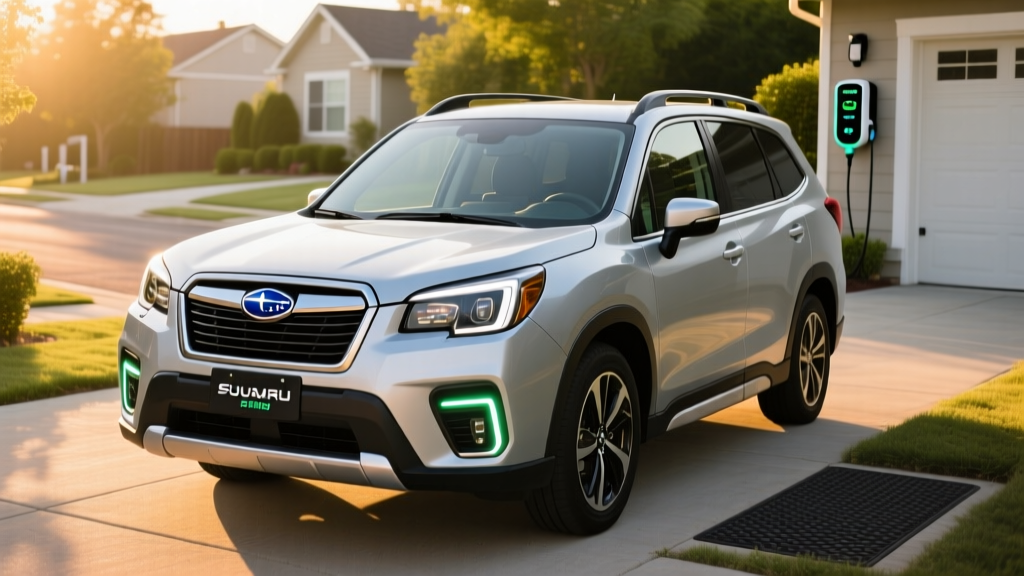
Subaru discontinued the Forester Hybrid after the 2024 model year, pivoting to a fully redesigned sixth-generation Forester for 2025 that — as of early 2026 — does not offer a hybrid variant in the U.S. market. That makes the 2024 Subaru Forester Hybrid an increasingly interesting proposition on the used and certified-pre-owned market: a compact SUV with standard all-wheel drive, genuine hybrid efficiency, and Subaru's reputation for long-term durability. If you're shopping for one today, here's every number you need to know.
| Spec | Value |
|---|---|
| Powertrain | 2.0L flat-4 + electric motor (HEV) |
| Combined Horsepower | 194 hp |
| Drivetrain | Standard Symmetrical AWD |
| EPA MPG (City / Hwy / Combined) | 35 / 33 / 35 |
| Battery | ~1.1 kWh lithium-ion (self-charging) |
| 0–60 mph | ~7.9 seconds |
| Cargo Volume | 28.9 cu ft (rear seats up) / 69.1 cu ft (folded) |
| Ground Clearance | 8.7 inches |
| Original MSRP (Base Premium Trim) | ~$36,495 |
| Hybrid Battery Warranty | 8 years / 100,000 miles |
HEV vs PHEV: What the Forester Hybrid Actually Is
The 2024 Forester Hybrid is a conventional hybrid (HEV), not a plug-in hybrid (PHEV). That distinction matters for your daily routine:
| Feature | HEV (Forester Hybrid) | PHEV (e.g., Toyota RAV4 Prime) |
|---|---|---|
| Plug-in Charging? | No — refuels at gas station only | Yes — plug in for electric-only miles |
| Electric-Only Range | Less than 1 mile at low speed | 25–42 miles typical |
| Battery Size | ~1–2 kWh | ~18–20 kWh |
| Federal Tax Credit | Not eligible | Up to $7,500 (subject to §30D rules) |
| Charging Infrastructure Needed | None | Home Level 2 recommended |
The Forester Hybrid recovers energy through regenerative braking and uses its small battery to assist the gas engine during acceleration and enable brief electric-only movement at parking-lot speeds. You never plug it in. If you want electric-only commuting range, you'd need to look at a PHEV like the Toyota RAV4 Prime or a full BEV.
Fuel Economy: EPA Numbers and Real-World MPG
The EPA rates the 2024 Subaru Forester Hybrid at 35 MPG city / 33 MPG highway / 35 MPG combined according to fueleconomy.gov. That's a meaningful improvement over the non-hybrid 2024 Forester, which achieves 26 city / 33 highway / 29 combined.
| Model | City MPG | Highway MPG | Combined MPG |
|---|---|---|---|
| Forester Hybrid (AWD) | 35 | 33 | 35 |
| Forester Gas (AWD) | 26 | 33 | 29 |
| Toyota RAV4 Hybrid (AWD) | 41 | 38 | 40 |
| Honda CR-V Hybrid (AWD) | 40 | 34 | 37 |
Real-World MPG: What Owners Actually See
Hybrids typically exceed their EPA city ratings in stop-and-go traffic because regenerative braking recaptures energy that a gas car wastes as heat. Forester Hybrid owners frequently report 36–38 MPG in mixed suburban driving. However, sustained highway driving at 75+ mph can drop figures to 30–31 MPG, since the electric motor provides less benefit at constant high speeds. In cold weather (below 30°F), expect a 2–4 MPG reduction as the engine runs longer to generate cabin heat and the battery operates less efficiently.
Powertrain and Driving Impressions
Subaru pairs a 2.0-liter naturally aspirated boxer four-cylinder engine with an electric motor integrated into the Lineartronic CVT transmission. Combined output is 194 horsepower — a substantial 12-hp bump over the gas-only Forester's 182 hp. The electric motor fills in the torque gap at low RPMs, making the hybrid feel noticeably more responsive from a stop than its non-hybrid sibling.
The Symmetrical AWD system is standard and uses a rear-axle electric motor to distribute torque to the rear wheels when needed. Ground clearance remains 8.7 inches, matching the gas model, and the hybrid retains Subaru's X-Mode for snow, dirt, and deep-snow settings. Towing capacity is limited to 1,500 pounds, which is typical for the compact hybrid SUV segment.
Pricing, Used Market Value, and Tax Credit Eligibility
When new, the 2024 Forester Hybrid started around $36,495 for the Premium trim (the only trim offered with the hybrid powertrain). As of early 2026, certified pre-owned examples typically list between $28,000 and $33,000 depending on mileage and condition.
Does the Forester Hybrid Qualify for a Tax Credit?
No. The 2024 Forester Hybrid is a conventional HEV and does not qualify for the federal §30D Clean Vehicle Credit. That credit — up to $7,500 — applies only to plug-in electric vehicles (BEVs and PHEVs) that meet battery sourcing, MSRP caps, and buyer income requirements. Some states offer modest hybrid rebates or HOV-lane access, but these vary by jurisdiction. Check your state's energy office or DMV for current programs.
Battery Warranty, Reliability, and Replacement Cost
Hybrid battery longevity is the single biggest concern buyers raise, and Subaru addresses it with a strong warranty.
Hybrid Battery Warranty
Subaru covers the Forester Hybrid's lithium-ion battery pack for 8 years or 100,000 miles (whichever comes first) in all 50 states. In states that follow California's CARB emissions rules (including CA, NY, WA, OR, and others), the hybrid battery warranty extends to 10 years or 150,000 miles. The warranty covers capacity loss below a defined threshold and any manufacturing defects.
How Reliable Is It?
The 2024 Forester Hybrid uses a mature, proven powertrain. Subaru's hybrid system is shared with Toyota (a result of their corporate partnership), and the e-CVT design has logged hundreds of millions of real-world miles across both brands. Subaru consistently scores above average in long-term reliability surveys from Consumer Reports and J.D. Power.
Battery Replacement Cost
If the hybrid battery does fail outside warranty, replacement costs typically range from $2,500 to $4,500 including parts and labor at a Subaru dealer. Independent hybrid specialists may offer refurbished packs for $1,800–$2,800. However, hybrid battery failures before 150,000 miles are uncommon in modern systems — most degrade gradually, losing 10–15% capacity over a decade rather than failing catastrophically.
Who Should Buy the 2024 Forester Hybrid?
The Decision Framework
Choose the 2024 Forester Hybrid if:
- You want AWD and 35 MPG without changing your fueling habits
- You live in a snowy or rural area where ground clearance and AWD matter
- You can't install a home charger and don't want to rely on public charging
- You value Subaru's safety reputation (the 2024 Forester earned IIHS Top Safety Pick+)
Choose a PHEV (like the RAV4 Prime) instead if:
- You have home charging and a short commute you want to cover on electricity
- You want to qualify for the federal tax credit
- You want 35–42 miles of electric-only range before the gas engine starts
Choose a full BEV (like the Hyundai Ioniq 5 or Tesla Model Y) if:
- You have reliable home charging and want to eliminate gas entirely
- You want the lowest cost per mile and minimal maintenance
- Your daily driving stays within 200–250 miles
Pros
- 35 MPG combined with standard AWD — rare in the compact SUV segment
- 8.7 inches of ground clearance; genuine off-road capability
- Strong hybrid battery warranty (up to 10 yr / 150k mi in CARB states)
- Toyota-sourced hybrid system with proven long-term reliability
- Excellent visibility and practical cargo space (28.9 cu ft)
Cons
- No plug-in option — can't access EV tax credits or drive on electricity alone
- Lower MPG than the RAV4 Hybrid (40 combined) and CR-V Hybrid (37 combined)
- Only available in one trim (Premium); limited option flexibility
- Discontinued after 2024 — no direct new-car successor as of 2026
- 1,500-lb towing limit is low for an AWD SUV
Forester Hybrid vs. the Competition
The Forester Hybrid occupies a specific niche: an AWD compact hybrid SUV with Subaru's rugged character. Its closest competitors are the Toyota RAV4 Hybrid (40 MPG combined, starting ~$32,000 new) and the Honda CR-V Hybrid (37 MPG combined, starting ~$34,000 new). The Forester Hybrid trails both on fuel economy but offers more ground clearance (8.7 in. vs. 8.1 in. for the RAV4, 8.2 in. for the CR-V) and standard EyeSight driver assistance. On the used market, the Forester Hybrid often prices slightly below comparable RAV4 Hybrids, making it a value play.
Frequently Asked Questions
How many MPG does the 2024 Subaru Forester Hybrid get?
The EPA rates it at 35 city / 33 highway / 35 combined. Real-world owners commonly see 36–38 MPG in suburban driving, with highway-only trips dropping to around 30–31 MPG at higher speeds.
Is the 2024 Forester Hybrid a plug-in hybrid?
No. It's a conventional hybrid (HEV). You never plug it in — it charges its small battery through regenerative braking and the gas engine. If you want plug-in capability, consider the Toyota RAV4 Prime.
Does the Forester Hybrid qualify for any federal tax credit?
No. Federal §30D credits apply only to plug-in vehicles (BEVs and PHEVs). The Forester Hybrid, as a conventional HEV, is not eligible. Check your state for any local hybrid incentives.
How long will the hybrid battery last?
Subaru warranties the battery for 8 years/100,000 miles (10 years/150,000 miles in CARB states). In practice, modern hybrid batteries commonly last 150,000–200,000+ miles with gradual capacity loss rather than sudden failure.
What does a hybrid battery replacement cost?
Expect $2,500–$4,500 at a dealer for a new pack, or $1,800–$2,800 for a refurbished unit from an independent hybrid specialist.
Can I still buy a 2024 Forester Hybrid new in 2026?
Subaru discontinued the Forester Hybrid after the 2024 model year. You'll find remaining examples on the certified pre-owned and used market. The redesigned 2025+ Forester does not currently offer a hybrid option in the U.S.
Is the Forester Hybrid good in snow?
Yes. Standard Symmetrical AWD, 8.7 inches of ground clearance, and X-Mode traction settings make it one of the most capable compact SUVs in winter conditions. The hybrid system's low-speed electric torque also helps with smooth starts on icy surfaces.