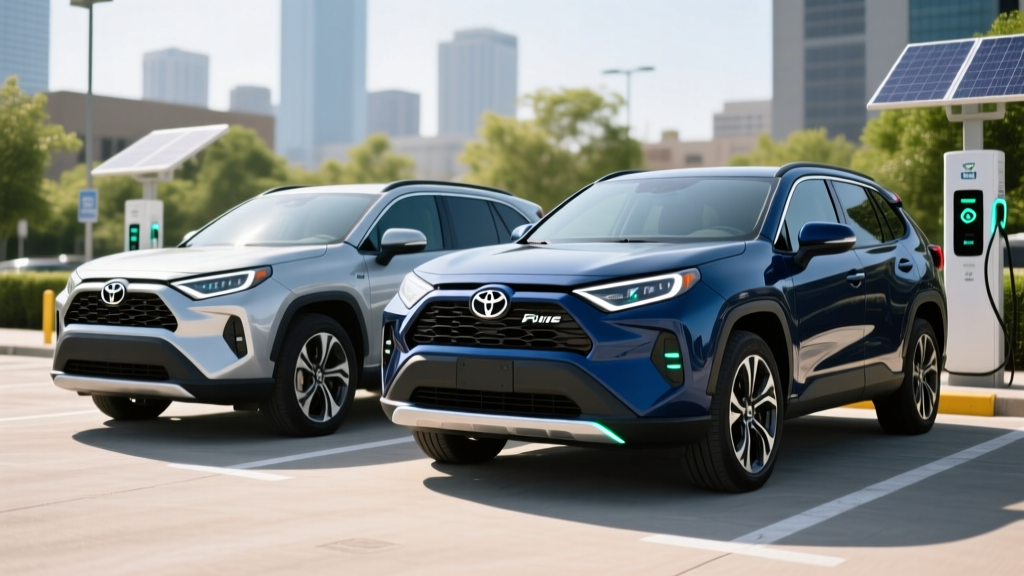
The 2024 Toyota RAV4 Hybrid XSE sits in the sweet spot of Toyota's compact crossover lineup. It pairs a sport-tuned suspension and blacked-out styling cues with a proven hybrid powertrain that delivers real-world fuel economy many owners report exceeding in city driving. If you're researching the 2024 RAV4 Hybrid XSE specifically, you're likely weighing its 39 MPG combined rating against the plug-in RAV4 Prime and conventional gas models. Here's a data-driven breakdown of what this trim actually delivers.
2024 RAV4 Hybrid XSE Powertrain and Performance
The RAV4 Hybrid XSE uses Toyota's fourth-generation hybrid system, combining a 2.5-liter inline-four Atkinson-cycle gasoline engine with front and rear electric motors for standard electronic all-wheel drive (AWD-i). The gas engine produces 176 hp and 163 lb-ft of torque on its own, while the electric motors contribute additional output for a combined system horsepower rating of 219 hp.
| Specification | 2024 RAV4 Hybrid XSE |
|---|---|
| Engine | 2.5L 4-cyl Atkinson-cycle |
| Combined System Horsepower | 219 hp |
| Drivetrain | AWD-i (electronic AWD) |
| Transmission | eCVT (electronically controlled) |
| 0-60 mph (Toyota est.) | ~7.4 seconds |
| Towing Capacity | 1,750 lbs |
| Hybrid Battery | 1.6 kWh (NiMH), sealed |
| Cargo Volume (behind rear seats) | 37.5 cu ft |
The XSE trim differentiates itself mechanically with a sport-tuned suspension — firmer damping than the LE, XLE, and Limited trims — and a unique 18-inch black alloy wheel. The result is slightly sharper turn-in and reduced body roll, though ride quality over sharp impacts is noticeably stiffer than the comfort-oriented trims. It's a meaningful distinction for drivers who prioritize handling feel in a hybrid crossover.
Fuel Economy: EPA Ratings vs. Real-World MPG
The EPA rates the 2024 RAV4 Hybrid XSE at 41 MPG city / 38 MPG highway / 39 MPG combined on regular 87-octane fuel. The XSE shares these figures with the XLE and Woodland Edition trims; only the base LE achieves a slightly higher 41/38/40 split due to lighter weight and lower rolling-resistance tires.
| Driving Scenario | EPA Rating | Real-World Expectation |
|---|---|---|
| City | 41 MPG | 40-45 MPG (hybrids excel in stop-and-go regen) |
| Highway (70-75 mph) | 38 MPG | 34-37 MPG (aero drag reduces hybrid advantage) |
| Combined | 39 MPG | 37-41 MPG (varies by climate and driving style) |
| Cold Weather (below 32°F) | — | 32-36 MPG (engine runs more for cabin heat) |
HEV vs. PHEV: RAV4 Hybrid vs. RAV4 Prime
Toyota offers the RAV4 in two electrified forms: the conventional hybrid (HEV) and the RAV4 Prime plug-in hybrid (PHEV). Understanding this distinction is essential before choosing the XSE.
| Feature | RAV4 Hybrid XSE (HEV) | RAV4 Prime (PHEV) |
|---|---|---|
| Plug-in Charging Required? | No — self-charging via regen + engine | Yes — plugs in for EV range |
| Electric-Only Range | ~1 mile at low speed | 42 miles (EPA) |
| Total Combined Range | ~530 miles | ~600 miles (EV + gas) |
| Combined Horsepower | 219 hp | 302 hp |
| Hybrid Battery Capacity | 1.6 kWh (NiMH) | 18.1 kWh (lithium-ion) |
| Level 1 Charge Time (120V) | N/A | ~12 hours |
| Level 2 Charge Time (240V) | N/A | ~2.5 hours (6.6 kW onboard charger) |
| DC Fast Charging | N/A | Not available |
| Starting MSRP | $35,725 | $43,690 |
| Federal Tax Credit (§30D) | Not eligible | Up to $7,500 (subject to sourcing/income rules) |
The RAV4 Hybrid XSE is a conventional hybrid — it never plugs in. Its small 1.6 kWh nickel-metal hydride (NiMH) battery charges exclusively through regenerative braking and the gas engine. You drive it exactly like a gas car; it simply uses less fuel, especially in city conditions.
The RAV4 Prime, by contrast, has a much larger 18.1 kWh lithium-ion battery that delivers 42 miles of pure electric driving before the gas engine engages. It requires access to a 120V or 240V outlet for regular charging to realize its efficiency benefit. If you can charge at home nightly, the Prime effectively covers most daily commutes on electricity alone. The trade-off is an ~$8,000 higher starting price and limited availability due to high demand.
Pricing, Tax Credits, and Total Cost
The 2024 RAV4 Hybrid XSE starts at $35,725 MSRP (including destination charge). Popular option packages — such as the Premium package with panoramic sunroof and heated/ventilated seats — can push the sticker to $39,000-$41,000.
Federal tax credit status: The conventional RAV4 Hybrid does not qualify for the IRS §30D federal clean vehicle tax credit. That credit applies only to plug-in electric vehicles (BEVs and PHEVs) with sufficient battery capacity. The RAV4 Prime PHEV may qualify for up to $7,500 under §30D, but eligibility depends on battery critical-mineral sourcing requirements, buyer income caps ($150K single / $300K joint), and the vehicle's MSRP staying under the $80,000 SUV cap. Always verify current eligibility on the IRS §30D page before purchase.
Some states offer additional hybrid incentives — typically $500-$1,500 rebates from utilities or state clean-air programs for purchasing any hybrid. Check your local utility and state energy office for current programs.
| 5-Year Cost Factor | RAV4 Hybrid XSE | RAV4 Gas AWD (LE) |
|---|---|---|
| MSRP (base) | $35,725 | $30,425 |
| Fuel (15K mi/yr, $3.40/gal) | ~$6,525 | ~$8,500 |
| Federal Tax Credit | $0 | $0 |
| Estimated Insurance (5 yr) | ~$7,800 | ~$7,500 |
| Maintenance (5 yr est.) | ~$2,800 | ~$3,200 |
| 5-Year Fuel Savings vs. Gas | ~$1,975 savings for hybrid | |
The hybrid premium over a gas RAV4 AWD LE is roughly $5,300 at MSRP. At 15,000 miles per year and $3.40/gallon, the hybrid saves approximately $395/year in fuel. The payback period on the hybrid premium alone is roughly 13 years — but the hybrid's higher resale value, lower brake wear (regen reduces pad usage), and reduced emissions factor into the total ownership equation. According to fueleconomy.gov, annual fuel cost for the RAV4 Hybrid is approximately $1,350 vs. $1,700 for the gas AWD model.
Battery Warranty, Reliability, and Replacement Cost
Toyota's hybrid system is among the most proven in the industry, with over 25 years of continuous production since the original Prius. The RAV4 Hybrid's NiMH battery pack is small (1.6 kWh), operates within a conservative state-of-charge window (never fully depleted or fully charged), and is air-cooled — all factors that contribute to long battery life. Real-world data from fleet operators and high-mileage owners shows these packs routinely lasting 150,000-200,000+ miles before significant degradation.
Battery replacement cost: If the hybrid battery does require replacement out of warranty, a new OEM NiMH pack for the RAV4 Hybrid typically runs $2,500-$4,000 including parts and labor. Refurbished/reconditioned packs are available from third-party suppliers for $1,500-$2,500. This is substantially less than BEV battery replacement costs ($10,000-$20,000+) because the pack is small and accessible.
The 12V auxiliary battery (standard lead-acident) may need replacement every 4-6 years at typical cost of $150-$250 — the same as any conventional vehicle.
XSE Trim Features and Interior
The XSE trim occupies the sport-oriented middle of the RAV4 Hybrid lineup. Key features specific to or standard on the XSE include:
- SofTex-trimmed seats with red contrast stitching
- 18-inch gloss black alloy wheels
- Sport-tuned shock absorbers
- Black roof (two-tone, on select colors)
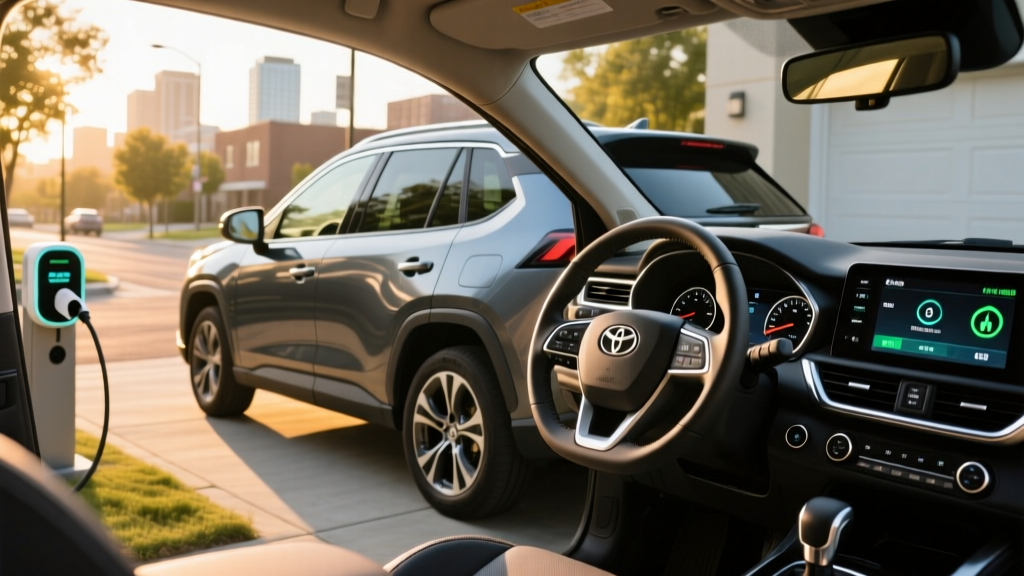
- 8-inch Toyota Audio Multimedia touchscreen (wireless Apple CarPlay/Android Auto)
- Toyota Safety Sense 2.5+ (pre-collision, lane tracing, adaptive cruise, blind spot monitor)
- Qi wireless phone charging pad
- Leather-trimmed steering wheel with paddle shifters
The infotainment system is Toyota's current-generation interface, which supports over-the-air updates, cloud-based navigation (with subscription), and a Wi-Fi hotspot. It's functional and responsive, though the 8-inch screen is smaller than competitors like the Hyundai Tucson Hybrid's available 10.25-inch display. The XSE does not offer the 12.3-inch digital gauge cluster found on the Limited trim — you get a 7-inch multi-information display instead.
Who Should Choose the RAV4 Hybrid XSE?
- You want maximum city fuel economy without plugging in
- You lack access to home or workplace EV charging
- You want Toyota's proven hybrid reliability and 10-year battery warranty
- You prefer sport-tuned handling in a hybrid crossover
- Your budget is $35,000-$41,000
- You have reliable home Level 2 charging
- Your daily commute is under 42 miles round-trip
- You want 302 hp and electric-only driving
- You qualify for the §30D tax credit (offsetting the higher MSRP)
- You want zero tailpipe emissions and lowest per-mile energy cost
- You have home charging and your trips are mostly under 250 miles
- You want to eliminate oil changes and engine maintenance entirely
- 39 MPG combined EPA; often exceeds 42 MPG in city driving
- 10-year/150K-mile hybrid battery warranty
- Standard AWD with no fuel-economy penalty vs. FWD
- No plug-in charging required — zero lifestyle change from gas
- Strong resale value and proven long-term reliability
- Sport-tuned suspension adds engagement over base trims
- No federal tax credit eligibility (HEV)
- Firmer ride than comfort-oriented trims (XLE, Limited)
- 8-inch screen smaller than some competitors
- Cargo space slightly reduced vs. gas RAV4 (battery packaging)
- Only 1,750-lb towing capacity
- Highway MPG drops to 34-37 at speeds above 75 mph
Frequently Asked Questions
How many MPG does the 2024 RAV4 Hybrid XSE get?
The EPA rates it at 41 city / 38 highway / 39 combined MPG. In real-world city driving with frequent stops, many owners achieve 42-45 MPG. Highway-heavy driving at 75+ mph typically yields 34-37 MPG. Cold weather reduces figures by 10-15%.
Does the RAV4 Hybrid XSE need to be plugged in?
No. The RAV4 Hybrid is a conventional hybrid (HEV). Its 1.6 kWh battery charges entirely through regenerative braking and the gasoline engine. You fuel it at a gas station and never plug it in. If you want plug-in capability, look at the RAV4 Prime PHEV.
Does the 2024 RAV4 Hybrid XSE qualify for a federal tax credit?
No. The IRS §30D New Clean Vehicle Credit applies only to plug-in vehicles (BEVs and PHEVs) with qualifying battery sourcing. Conventional hybrids like the RAV4 Hybrid are not eligible. Some state and utility programs offer smaller hybrid rebates ($500-$1,500) — check your local programs.
How long will the RAV4 Hybrid battery last, and what does replacement cost?
Toyota warranties the hybrid battery for 10 years or 150,000 miles. In practice, Toyota's NiMH hybrid packs commonly last 150,000-200,000+ miles. Out-of-warranty replacement costs $2,500-$4,000 for a new OEM pack, or $1,500-$2,500 for a refurbished unit.
Is the RAV4 Hybrid XSE faster than the gas RAV4?
Yes. The hybrid's 219 combined horsepower and instant electric-motor torque deliver a 0-60 mph time of approximately 7.4 seconds, compared to roughly 8.1 seconds for the gas-only AWD RAV4. The difference is most noticeable in city acceleration and highway merging.
RAV4 Hybrid vs. RAV4 Prime — which is better?
The RAV4 Prime offers 42 miles of electric-only range, 302 hp, and potential §30D tax credit eligibility, but starts ~$8,000 higher and requires home charging access to realize its efficiency advantage. The Hybrid XSE is the better value if you can't plug in at home or want a lower purchase price with still-excellent fuel economy.