Quick Verdict: The 2024 RAV4 Hybrid Delivers Where It Counts
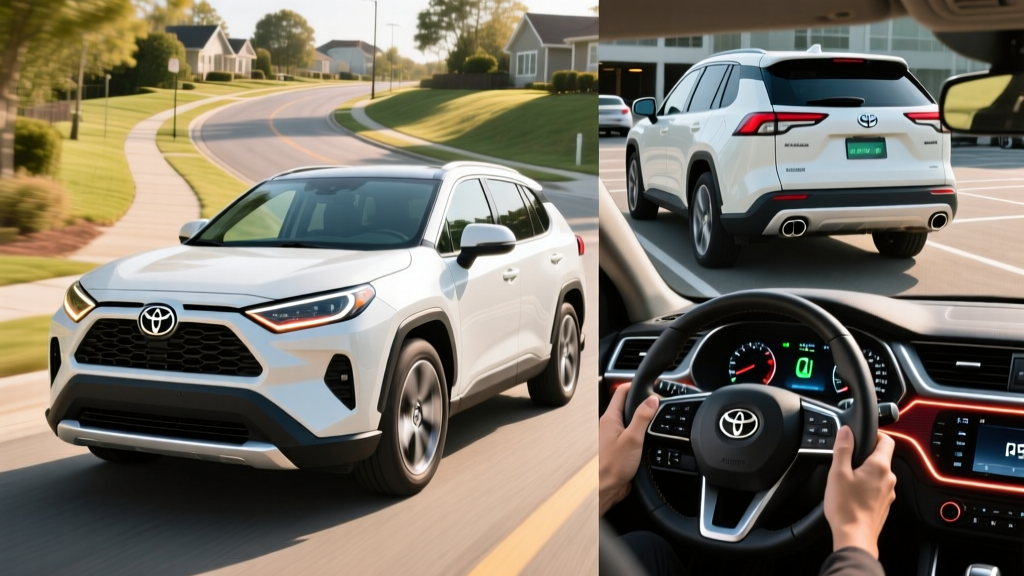
Toyota's 2024 RAV4 Hybrid remains one of the most fuel-efficient compact SUVs you can buy without plugging in. With an EPA-estimated 41 MPG city, 38 highway, and 39 combined, it undercuts nearly every rival in the segment — and real-world driving often matches or exceeds those numbers in stop-and-go traffic. Starting at $31,725, it's a straightforward value proposition for buyers who want hybrid efficiency without range anxiety, charging logistics, or a plug-in lifestyle.
But the RAV4 family also includes the RAV4 Prime, a plug-in hybrid (PHEV) with 42 miles of electric-only range and up to 94 MPGe. Choosing between the conventional hybrid (HEV) and the Prime (PHEV) — or stepping up to a full battery-electric vehicle — depends on your driving patterns, home charging access, and budget. This guide breaks down the exact numbers so you can decide.
Conventional Hybrid (HEV): The RAV4 Hybrid uses a small battery (1.6 kWh) charged entirely by the gasoline engine and regenerative braking. You never plug it in. It simply gets better MPG than a gas-only car.
Plug-in Hybrid (PHEV): The RAV4 Prime has a much larger battery (18.1 kWh) that you can charge from a wall outlet or Level 2 charger. It drives up to 42 miles on electricity alone before the gas engine kicks in. After that, it operates like a regular hybrid.
2024 RAV4 Hybrid Fuel Economy: EPA Numbers and Real-World MPG
Here's how the 2024 RAV4 Hybrid stacks up across all trims according to fueleconomy.gov:
| Configuration | City MPG | Highway MPG | Combined MPG |
|---|---|---|---|
| AWD (all trims: LE, XLE, XLE Premium, SE, XSE, Woodland, Limited) | 41 | 38 | 39 |
All 2024 RAV4 Hybrid trims come with electronic all-wheel drive (AWD) as standard, so there's no FWD-only variant to compare. The 39 MPG combined rating is consistent across the entire lineup — Toyota doesn't sacrifice efficiency for higher trims.
Real-World MPG: What Owners Actually Report
Hybrids tend to outperform their EPA city estimates in real-world stop-and-go driving, where regenerative braking and electric-motor assist do the most work. The RAV4 Hybrid is no exception:
- City / suburban driving: Many owners report 42–45 MPG in moderate weather with mixed stop-and-go traffic. The hybrid system recaptures energy during braking that a gas car simply wastes.
- Highway cruising (70–80 mph): Expect 34–37 MPG. At sustained highway speeds, aerodynamic drag dominates and the electric motor contributes less. This is normal for all hybrids.
- Cold weather (below 32°F): Expect a 5–10% drop (roughly 35–37 MPG combined). The engine runs more frequently to generate cabin heat and warm up the hybrid battery.
- Hot weather with A/C: Minimal impact — the electric A/C compressor doesn't require the engine to run solely for cooling, unlike older hybrids.
For context, the gas-only 2024 RAV4 AWD is rated at 27 city / 34 highway / 30 combined. The hybrid delivers a 30% improvement in combined fuel economy — translating to roughly $400–$600 in annual fuel savings depending on local gas prices and mileage.
RAV4 Hybrid vs. RAV4 Prime (PHEV): Which Powertrain Fits You?
The 2024 RAV4 family offers two electrified paths. Here's a side-by-side comparison:
| Specification | RAV4 Hybrid (HEV) | RAV4 Prime (PHEV) |
|---|---|---|
| Powertrain type | Conventional hybrid | Plug-in hybrid |
| Combined horsepower | 219 hp | 302 hp |
| Engine | 2.5L 4-cyl + 3 electric motors | 2.5L 4-cyl + 3 electric motors (higher output) |
| 0–60 mph | 7.4 sec | 5.7 sec |
| Hybrid battery capacity | 1.6 kWh (NiMH) | 18.1 kWh (lithium-ion) |
| Electric-only range | N/A (not a plug-in) | 42 miles (EPA) |
| MPGe (electric + gas) | N/A | 94 MPGe |
| Gas-only MPG (after battery depletes) | 39 combined | 38 combined |
| Total range (gas + electric) | ~580 miles | ~600 miles |
| Plug-in charging required? | No — never plug in | Yes — 120V or 240V |
| Level 1 charge time (120V) | N/A | ~12 hours |
| Level 2 charge time (240V) | N/A | ~2.5 hours (6.6 kW onboard charger) |
| DC fast charging | N/A | Not supported |
| Starting MSRP | $31,725 (LE) | $43,690 (SE) |
What is MPGe? MPGe (miles per gallon equivalent) converts electricity consumption into the energy equivalent of a gallon of gasoline (33.7 kWh = 1 gallon). The RAV4 Prime's 94 MPGe means that while driving on electricity, it uses energy at a rate equivalent to getting 94 miles per gallon. Once the battery depletes, it reverts to its 38 MPG combined gas rating.
The RAV4 Prime's lack of DC fast charging is a notable limitation. You're limited to Level 2 (240V) charging at home or at public AC stations. For most PHEV owners who charge overnight, this isn't a problem — but it means you can't quickly top up at a DC fast charger on a road trip.
Powertrain Deep Dive: How Toyota's Hybrid System Works
The 2024 RAV4 Hybrid uses Toyota's fourth-generation Hybrid Synergy Drive with a 2.5-liter Dynamic Force four-cylinder engine paired with three electric motor-generators:
- MG1: Functions as a starter and generator, managing the planetary gearset
- MG2: Primary drive motor powering the front wheels
- Rear motor: Powers the rear axle for electronic AWD (eAWD), providing up to 1,300 Nm of torque to the rear wheels when traction is needed
Combined system output is 219 horsepower — a meaningful bump over the gas-only RAV4's 203 hp. The 0–60 mph time of 7.4 seconds is adequate for daily driving and highway merging. The eCVT (electronically controlled continuously variable transmission) uses a planetary gearset rather than a belt-and-pulley design, which is both more durable and more efficient.
The RAV4 Prime's powertrain uses the same architecture but with higher-output electric motors, producing 302 combined horsepower and a 5.7-second 0–60 time — making it the quickest RAV4 Toyota sells and one of the quickest vehicles in the compact SUV segment.
Pricing, Trims, and Tax Credit Eligibility
2024 RAV4 Hybrid Pricing (HEV)
| Trim | MSRP |
|---|---|
| LE | $31,725 |
| XLE | $33,235 |
| XLE Premium | $35,325 |
| SE | $35,425 |
| XSE | $37,115 |
| Woodland Edition | $35,925 |
| Limited | $39,925 |
2024 RAV4 Prime Pricing (PHEV)
| Trim | MSRP |
|---|---|
| SE | $43,690 |
| XSE | $47,560 |
Federal Tax Credit: What Qualifies?
Here's where the distinction between HEV and PHEV matters significantly:
- RAV4 Hybrid (HEV): Does NOT qualify for the federal §30D clean vehicle tax credit. Conventional hybrids are not eligible — the credit applies only to plug-in electric vehicles (BEVs and PHEVs) that meet battery sourcing and critical mineral requirements under current IRS rules.
- RAV4 Prime (PHEV): May qualify for up to $3,750 of the federal tax credit, depending on battery component and critical mineral sourcing compliance. The full $7,500 credit requires meeting both the battery components requirement ($3,750) and the critical minerals requirement ($3,750). Because the RAV4 Prime is assembled in Japan and uses battery components that may not meet domestic sourcing thresholds, buyers should verify current-year eligibility on the IRS clean vehicle credit page before purchasing. Income caps also apply: $150,000 single / $300,000 married filing jointly.
Hybrid Battery Warranty, Reliability, and Replacement Costs
Toyota has built a strong track record with hybrid battery longevity since the original Prius in 1997. The 2024 RAV4 Hybrid and RAV4 Prime both come with comprehensive hybrid battery coverage:
• Hybrid battery: 10 years / 150,000 miles (whichever comes first)
• Hybrid system components: 8 years / 100,000 miles
• Bumper-to-bumper: 3 years / 36,000 miles
• Powertrain: 5 years / 60,000 miles
Toyota's hybrid battery warranty is transferable to subsequent owners, which supports strong resale value.
Real-World Hybrid Battery Lifespan
Toyota's nickel-metal hydride (NiMH) hybrid battery in the RAV4 Hybrid is proven technology. Based on long-term data from Toyota's hybrid fleet:
- Most Toyota hybrid batteries last well beyond the 10-year/150,000-mile warranty period
- Taxi fleet data shows Prius hybrid batteries routinely reaching 200,000–300,000 miles before significant degradation
- The smaller 1.6 kWh NiMH battery in the HEV is simpler and less stressed than a large PHEV or BEV battery, contributing to longevity
Battery Replacement Cost
If a hybrid battery does eventually fail outside of warranty:
- RAV4 Hybrid (HEV): $2,000–$3,500 for a new OEM replacement battery, plus labor. Aftermarket and refurbished options are available for $1,500–$2,500.
- RAV4 Prime (PHEV): $6,000–$9,000+ for the larger 18.1 kWh lithium-ion pack. This is significantly more expensive due to the larger capacity and lithium-ion chemistry.
For context, the HEV battery replacement cost is comparable to a major transmission repair on a conventional vehicle — and far less likely to be needed within typical ownership periods.
Overall Reliability
The RAV4 Hybrid consistently earns strong reliability ratings. Toyota's hybrid system has fewer wear components than a conventional powertrain — no traditional starter motor, no alternator, no accessory belt, and regenerative braking extends brake pad life significantly (many owners report 80,000+ miles on original brake pads). The eCVT planetary gearset has no belts or cones to wear out, unlike belt-driven CVTs found in some competitors.
Pros and Cons: The Honest Assessment
✓ Pros
- 41 MPG city — best in compact SUV class
- Standard AWD with no efficiency penalty
- No plug-in required — zero lifestyle change from gas
- Strong 10-year/150,000-mile hybrid battery warranty
- Excellent resale value and proven reliability
- Regenerative braking extends brake pad life
- Competitive starting price at $31,725
✗ Cons
- No federal tax credit for the HEV version
- Highway MPG drops to 38 — less impressive at sustained speeds
- eCVT engine drone under hard acceleration
- Modest 219 hp — adequate but not exciting
- Infotainment system lags behind rivals in responsiveness
- Cargo space slightly reduced vs. gas RAV4 (battery under rear seat)
- Cold-weather MPG drops 5–10%
RAV4 Hybrid vs. PHEV vs. Full EV: Which Should You Choose?
Your ideal powertrain depends on three factors: daily mileage, charging access, and budget.
Decision Framework
Choose the RAV4 Hybrid (HEV) if:
- You don't have access to home or workplace charging
- You want maximum simplicity — no plugs, no apps, no charging planning
- Your budget is under $40,000
- You drive a mix of city and highway and want consistently strong MPG
- You plan to keep the vehicle 8+ years and value proven reliability
Choose the RAV4 Prime (PHEV) if:
- You have Level 2 (240V) charging at home or work
- Your daily commute is under 42 miles round-trip (you could drive months without using gas)
- You want 302 hp and 5.7-second 0–60 performance
- You want the option of electric-only driving but also need road-trip range
- You may qualify for federal/state PHEV incentives that offset the ~$12,000 price premium
Choose a full EV (like the Toyota bZ4X, Hyundai Ioniq 5, or Tesla Model Y) if:
- You have reliable home Level 2 charging
- Your daily driving is under 250 miles and you road-trip infrequently
- You want zero tailpipe emissions and minimal maintenance (no oil changes, no engine)
- You want to qualify for the full $7,500 federal tax credit (on eligible models)
- You're ready to plan charging on longer road trips
5-Year Cost of Ownership: RAV4 Hybrid vs. Gas RAV4
| Cost Category | RAV4 Hybrid AWD (LE) | RAV4 Gas AWD (LE) |
|---|---|---|
| Purchase price (MSRP) | $31,725 | $29,825 |
| Fuel cost (75k mi at $3.50/gal) | $7,212 | $8,750 |
| Maintenance (5 yr) | $2,800 | $3,200 |
| Insurance (est. 5 yr) | $8,500 | $8,000 |
| Estimated depreciation | $12,500 | $13,200 |
| Total 5-year cost | ~$62,737 | ~$62,975 |
The hybrid's higher purchase price is largely offset by lower fuel and maintenance costs and stronger resale value. Over five years, the total cost of ownership is nearly identical — but you drive a more efficient, more powerful, and all-wheel-drive vehicle. The hybrid essentially pays for its price premium at the pump and in brake pad savings.
Frequently Asked Questions
How many MPG does the 2024 RAV4 Hybrid get?
The EPA rates all 2024 RAV4 Hybrid trims at 41 city / 38 highway / 39 combined MPG. In real-world driving, city MPG often exceeds the EPA estimate (42–45 MPG), while highway MPG may fall slightly below (34–37 MPG at 75–80 mph). Cold weather can reduce combined MPG by 5–10%.
Does the RAV4 Hybrid need to be plugged in?
No. The RAV4 Hybrid is a conventional hybrid (HEV) that charges its own 1.6 kWh battery through regenerative braking and the gasoline engine. You never plug it in. If you want plug-in capability, look at the RAV4 Prime (PHEV), which offers 42 miles of electric-only range when charged.
How far can the RAV4 Prime go on electric only?
The 2024 RAV4 Prime has an EPA-rated 42 miles of electric-only range on a full charge. In real-world conditions, expect 35–40 miles in warm weather and 30–35 miles in cold weather (the battery is less efficient and cabin heating draws additional energy). After the battery depletes, the Prime operates as a conventional hybrid rated at 38 MPG combined.
Is the RAV4 Hybrid reliable and what does battery replacement cost?
Toyota's hybrid system is among the most proven in the industry, with decades of fleet and consumer data supporting long-term durability. The hybrid battery is warranted for 10 years / 150,000 miles. If replacement is needed outside warranty, a new OEM NiMH battery costs approximately $2,000–$3,500 installed. Most hybrid batteries outlast the warranty period by a significant margin.
Does the 2024 RAV4 Hybrid qualify for a tax credit?
No. The conventional RAV4 Hybrid (HEV) does not qualify for the federal §30D clean vehicle tax credit, which is reserved for plug-in vehicles (BEVs and PHEVs). The RAV4 Prime (PHEV) may qualify for up to $3,750 depending on current battery sourcing compliance and your income level. Always verify eligibility on IRS.gov before purchasing. State and local incentives may also be available for the PHEV.
How does the RAV4 Hybrid compare to the Honda CR-V Hybrid?
The 2024 Honda CR-V Hybrid AWD is rated at 40 city / 34 highway / 37 combined MPG — slightly behind the RAV4 Hybrid, particularly on the highway. The CR-V Hybrid starts at $35,395, roughly $3,700 more than the RAV4 Hybrid LE. Both are excellent choices, but the RAV4 Hybrid holds a measurable edge in highway efficiency and starting price.
Does the RAV4 Hybrid have a spare tire?
Most 2024 RAV4 Hybrid trims come with a temporary compact spare tire stored under the cargo floor. The hybrid battery is located under the rear seat, so it doesn't intrude on cargo space or spare tire storage. Verify with your dealer, as some trims with specific option packages may differ.