Quick Verdict: The 2024 RAV4 Hybrid Limited at a Glance
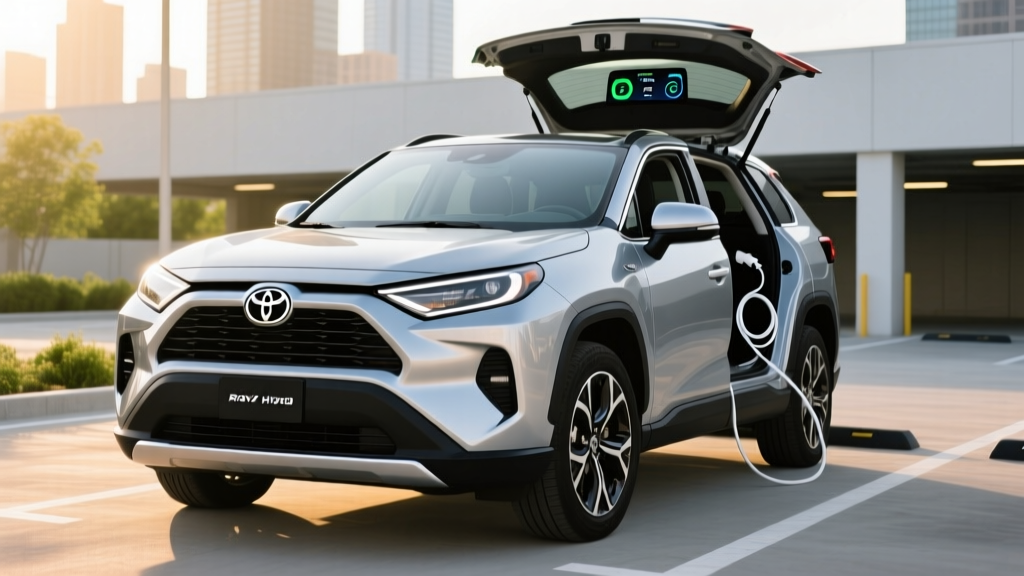
The 2024 RAV4 Hybrid Limited sits at the top of Toyota's conventional hybrid SUV lineup, pairing a 2.5-liter four-cylinder engine with dual electric motors for 219 combined horsepower and standard electronic all-wheel drive. With an EPA-estimated 41 city / 38 highway / 39 combined MPG, it delivers the fuel economy of a compact sedan in a five-passenger crossover with 69.8 cubic feet of cargo space behind the front row. The Limited trim adds premium features like SofTex-trimmed seats, a 10.5-inch touchscreen, and a panoramic moonroof — pushing the MSRP to $39,420 before destination.
This is a conventional hybrid (HEV), not a plug-in. You never plug it in; the battery charges through regenerative braking and the gasoline engine. If you want electric-only driving, you'd need the RAV4 Prime (Toyota's PHEV variant), which we'll compare below.
| Powertrain | 2.5L 4-cyl + 2 electric motors (AWD) |
| Combined Horsepower | 219 hp |
| EPA MPG (City / Hwy / Combined) | 41 / 38 / 39 |
| Fuel Tank | 14.5 gallons |
| Total Range | ~565 miles |
| 0–60 mph | 7.4 seconds |
| Cargo Volume | 37.5 cu ft (rear seats up) / 69.8 cu ft (folded) |
| Base MSRP (Limited) | $39,420 + $1,350 destination |
| Hybrid Battery Warranty | 10 years / 150,000 miles |
| Federal Tax Credit | Not eligible (§30D applies to PHEVs/BEVs only) |
Real-World MPG: How Does the RAV4 Hybrid Limited Actually Perform?
The EPA rates the 2024 RAV4 Hybrid Limited at 41 MPG city, 38 MPG highway, and 39 MPG combined. These numbers are specific to the Limited trim because its 18-inch alloy wheels and slightly heavier curb weight (about 3,800 lbs) cost it 1 MPG on the highway compared to the LE and XLE trims, which are rated at 41/41/41 with 17-inch wheels.
| Trim | City MPG | Highway MPG | Combined MPG |
|---|---|---|---|
| LE / XLE / SE | 41 | 41 | 41 |
| XSE | 41 | 38 | 39 |
| Limited | 41 | 38 | 39 |
| Woodland Edition | 38 | 35 | 37 |
Source: fueleconomy.gov
Hybrids tend to exceed their EPA city ratings in stop-and-go traffic because regenerative braking recovers energy that a gas car wastes as heat. Owners on Fuelly report a median of 38–42 MPG combined in mixed driving. In heavy city commuting, some drivers see 43–45 MPG. Highway-only trips at 75+ mph typically drop to 34–36 MPG — aerodynamic drag dominates at speed, and the electric motor assists less. In cold weather (below 30°F), expect a 5–10% reduction as the engine runs more frequently to generate cabin heat.
Hybrid vs. PHEV: RAV4 Hybrid vs. RAV4 Prime
Toyota sells two electrified RAV4 variants. Understanding the distinction is essential before you shop:
- RAV4 Hybrid (HEV): Conventional hybrid. No plug. The 1.6 kWh nickel-metal hydride (NiMH) battery charges via regen braking and the gas engine. You drive it exactly like a gas car — just fill up and go. Available in six trims from $32,620 to $40,770.
- RAV4 Prime (PHEV): Plug-in hybrid. Has an 18.1 kWh lithium-ion battery that provides an EPA-estimated 42 miles of electric-only range before the gas engine engages. You plug it in overnight (Level 2 charges it in ~2.5 hours). Combined output is 302 hp. MSRP starts at $43,690 for the SE and $47,560 for the XSE — but it qualifies for a partial federal tax credit (up to $3,750 under current IRS §30D rules, subject to battery-sourcing requirements and income caps).
| Attribute | RAV4 Hybrid Limited (HEV) | RAV4 Prime XSE (PHEV) |
|---|---|---|
| Drivetrain | 219 hp AWD | 302 hp AWD |
| Battery | 1.6 kWh NiMH | 18.1 kWh Li-ion |
| Plug-in Charging | No | Yes (Level 1/2, no DCFC) |
| EV-Only Range | ~1 mile (low-speed) | 42 miles (EPA) |
| EPA Combined | 39 MPG | 94 MPGe / 38 MPG (gas) |
| Total Range | ~565 miles | ~600 miles |
| 0–60 mph | 7.4 sec | 5.7 sec |
| MSRP | $39,420 | $47,560 |
| Federal Tax Credit | None | Up to $3,750* |
* §30D credit eligibility depends on battery critical-mineral sourcing, buyer income caps ($150K single / $300K joint), and MSRP caps ($80K SUV). Verify at irs.gov.
Bottom line: If you have access to Level 2 home charging and your daily commute is under 40 miles, the RAV4 Prime lets you drive almost entirely on electricity during the week while keeping the gas engine for road trips. If you lack home charging or want a lower upfront cost, the RAV4 Hybrid is the practical choice — no lifestyle change required.
Powertrain Deep Dive: How the Hybrid System Works
The 2024 RAV4 Hybrid uses Toyota's fourth-generation hybrid system (THS IV). Here's what's under the hood:
- Gasoline engine: 2.5-liter Dynamic Force inline-4, producing 176 hp and 163 lb-ft of torque on its own. It runs an Atkinson cycle for higher thermal efficiency (41%), sacrificing low-end punch for fuel economy.
- Front electric motor: 88 kW (118 hp), integrated into the transaxle. Provides instant torque from 0 rpm and handles regenerative braking.
- Rear electric motor: 40 kW (54 hp), powering the rear axle for electronic AWD. Engages automatically during acceleration, low-traction conditions, and low-speed maneuvers.
- Combined system output: 219 hp. Note that combined HP is not the simple sum of engine + motors — Toyota limits total output to protect the drivetrain and battery.
- Hybrid battery: 1.6 kWh NiMH pack located under the rear seats. This is a small buffer — it stores energy from regen braking and provides brief electric-only assist at low speeds (typically under 25 mph for short distances).
- Transmission: eCVT (planetary gearset, not a belt-driven CVT). Toyota's eCVT has no belts or pulleys; it's a mechanically robust power-split device that blends engine and motor output seamlessly.
The result is a 0–60 mph time of 7.4 seconds — quick enough for confident highway merging and a full second faster than the gas-only RAV4's 8.2-second run. The electric motor's instant torque fills in the low-rpm gap that the Atkinson-cycle engine leaves.
Battery Longevity, Warranty, and Replacement Cost
Toyota covers the 2024 RAV4 Hybrid's battery pack for 10 years or 150,000 miles, whichever comes first. This applies in all 50 states. The warranty guarantees the battery will retain sufficient capacity to operate the hybrid system — Toyota defines this as the battery's ability to maintain the vehicle's emissions compliance and hybrid functionality.
Toyota's hybrid battery track record is among the best in the industry. The NiMH pack in the RAV4 Hybrid is a mature, well-proven chemistry that degrades very slowly compared to early-generation hybrid batteries. Real-world data from fleet operators and long-term owners suggests these packs routinely last 150,000–200,000+ miles before any significant capacity loss. Unlike full EVs, the hybrid battery is small and operates in a narrow state-of-charge window (roughly 40–80%), which is the least stressful operating range for any battery chemistry.
Replacement cost if out of warranty: A new OEM hybrid battery pack for the RAV4 Hybrid currently runs $2,500–$4,000 including parts and labor at a Toyota dealer. Independent hybrid specialists often offer refurbished packs for $1,500–$2,500 with 1–3 year warranties. Given the 10-year/150K-mile coverage and the pack's proven longevity, battery replacement should be a low-probability concern for most original owners.
The rest of the powertrain is covered by Toyota's 5-year/60,000-mile powertrain warranty, and the vehicle carries a 3-year/36,000-mile basic warranty. Toyota Safety Sense 2.5+ (pre-collision, lane tracing, adaptive cruise) is standard across all trims.
Pricing, Trims, and Tax Credit Eligibility
The 2024 RAV4 Hybrid is available in six trims. Here's the pricing breakdown:
| Trim | MSRP | Key Additions Over Base |
|---|---|---|
| LE | $32,620 | TSS 2.5+, 8" touchscreen, wireless CarPlay/Android Auto |
| XLE | $34,080 | Blind-spot monitor, dual-zone climate, smart key |
| SE | $35,420 | Sport suspension, 18" black alloys, paddle shifters |
| XSE | $36,650 | SofTex seats, 10.5" display, ambient lighting |
| Limited | $39,420 | Panoramic moonroof, JBL audio, heated/ventilated front seats |
| Woodland Edition | $37,120 | TRD-tuned suspension, all-terrain tires, roof rack |
All prices exclude the $1,350 destination charge. Fully loaded, a Limited with options (Advanced Technology Package, roof rails, mudguards) can approach $43,000.
Federal tax credit: The RAV4 Hybrid (HEV) does not qualify for the IRS §30D Clean Vehicle Credit. That credit applies only to plug-in electric vehicles (BEVs and PHEVs) with a minimum 7 kWh battery capacity. The RAV4 Hybrid's 1.6 kWh NiMH pack falls well below that threshold. The RAV4 Prime (PHEV) may qualify for up to $3,750, subject to current-year sourcing and income requirements.
State incentives: Some states offer rebates or HOV-lane access for conventional hybrids, though these programs have diminished as policy focus shifted to plug-in vehicles. Check your state's energy office or AFDC's state incentive database for current programs.
Who Should Buy the RAV4 Hybrid Limited — And Who Shouldn't
- You want excellent fuel economy without changing your fueling habits
- You lack access to home or workplace charging (apartment, street parking)
- You regularly drive in stop-and-go city traffic where hybrids shine
- You need AWD for snow/rain but don't want the efficiency penalty of a gas AWD SUV
- You value Toyota's reliability track record and strong resale value
- You want premium features (JBL audio, panoramic roof) without luxury-brand pricing
- You want electric-only commuting (consider the RAV4 Prime or a full BEV)
- You need a third row (Highlander Hybrid or Grand Highlander Hybrid)
- You want maximum towing — the Hybrid is rated for 1,750 lbs (gas RAV4: 1,500 lbs; neither is a hauler)
- You're chasing the $7,500 federal tax credit (look at the RAV4 Prime or a BEV like the Ioniq 5 or Model Y)
- You prefer a sportier driving feel — the eCVT drones under hard acceleration
| Your Situation | Best Choice |
|---|---|
| No home charging, mostly city driving | RAV4 Hybrid (HEV) |
| Home Level 2 charging, commute < 40 mi | RAV4 Prime (PHEV) |
| Home charging, commute < 250 mi, want lowest running cost | Full BEV (e.g., Tesla Model Y, Ioniq 5) |
| Frequent 400+ mile road trips, no charging patience | RAV4 Hybrid (HEV) |
| Want tax credit + some EV driving + road-trip flexibility | RAV4 Prime (PHEV) |
Ownership Costs: 5-Year Estimate
Let's put real numbers behind the RAV4 Hybrid Limited vs. its gas-only counterpart (RAV4 gas Limited, AWD, EPA 27/34/30 MPG) over 5 years and 75,000 miles at $3.50/gallon:
| Cost Factor | RAV4 Hybrid Limited | RAV4 Gas Limited (AWD) |
|---|---|---|
| MSRP + Destination | $40,770 | $40,015 |
| Fuel (75K mi) | $6,731 | $8,750 |
| Estimated Maintenance | $2,100 | $2,500 |
| Insurance (est. avg) | $7,800 | $7,500 |
| 5-Year Total | $57,401 | $58,765 |
| Fuel Savings | Hybrid saves ~$2,019 in fuel over 5 years | |
The Hybrid costs about $755 more upfront but saves roughly $2,000 in fuel over five years — a net savings of ~$1,250. The hybrid also benefits from reduced brake wear (regenerative braking extends pad life significantly) and no traditional starter/alternator to replace. Toyota hybrids consistently rank at or near the top of resale-value retention in their segments, further closing the total-cost gap.
Frequently Asked Questions
How many MPG does the 2024 RAV4 Hybrid Limited get?
The EPA rates it at 41 city / 38 highway / 39 combined MPG. In real-world mixed driving, owners report 38–42 MPG combined, with city driving often exceeding the EPA estimate and sustained highway driving at 75+ mph dropping to 34–36 MPG. The lower trims (LE, XLE) achieve 41 combined thanks to lighter 17-inch wheels.
Does the RAV4 Hybrid need to be plugged in?
No. The RAV4 Hybrid is a conventional hybrid (HEV). Its 1.6 kWh battery charges entirely through regenerative braking and the gasoline engine. You fuel it like any other gas car. Only the RAV4 Prime (PHEV) requires plug-in charging to access its 42 miles of electric-only range.
Is the RAV4 Hybrid reliable?
Toyota's hybrid system is one of the most proven in the automotive industry, with over 25 years of continuous refinement since the original Prius. The eCVT transmission has no belts or friction clutches to wear out. The NiMH battery is covered for 10 years/150,000 miles and routinely lasts well beyond that. IIHS named the 2024 RAV4 a Top Safety Pick+ with acceptable headlights on all trims.
Does the RAV4 Hybrid qualify for any tax credit?
The conventional RAV4 Hybrid (HEV) does not qualify for the federal §30D Clean Vehicle Credit — that credit requires a plug-in vehicle with at least 7 kWh of battery capacity. The RAV4 Prime (PHEV) may qualify for up to $3,750 depending on your income, the vehicle's battery sourcing, and current-year IRS rules. Some states offer separate hybrid incentives; check the AFDC incentive database for your location.
What does the hybrid battery replacement cost?
If the hybrid battery fails outside the 10-year/150,000-mile warranty, a new OEM replacement runs $2,500–$4,000 at a Toyota dealer. Refurbished packs from independent hybrid specialists cost $1,500–$2,500. In practice, Toyota's NiMH hybrid batteries routinely exceed 150,000 miles with minimal degradation due to the narrow state-of-charge operating window.
How does the RAV4 Hybrid compare to a full EV?
A full EV like the Hyundai Ioniq 5 or Tesla Model Y offers lower per-mile energy costs (~$0.04–0.06/mile on home electricity vs. ~$0.09/mile for the hybrid at $3.50/gal), zero tailpipe emissions, and eligibility for the full $7,500 federal credit. However, EVs require home charging access, cost more upfront, and add range-planning complexity on road trips. The RAV4 Hybrid is the right choice if you can't charge at home, frequently drive long distances in rural areas with sparse charging infrastructure, or simply want zero lifestyle change with strong fuel economy.