Quick Verdict: The CX-90 PHEV Preferred Is a Luxury Bargain With a Plug
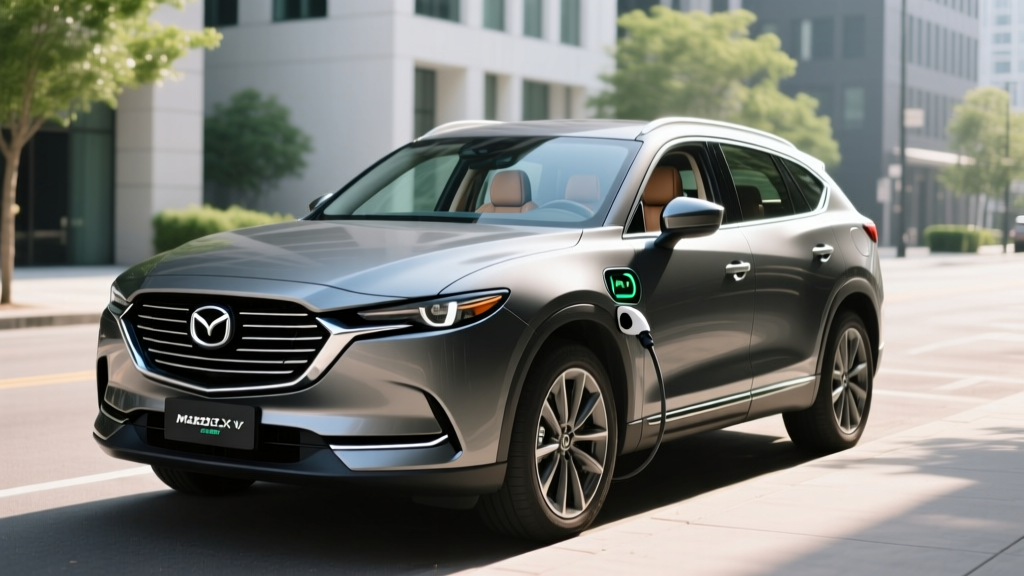
The 2024 Mazda CX-90 PHEV Preferred occupies a rare sweet spot in the three-row SUV market: it pairs a 2.5-liter four-cylinder plug-in hybrid powertrain with a genuine electric-only commute range, a rear-biased inline-six platform feel, and a starting MSRP that undercuts German rivals by $15,000 or more. For buyers who can charge at home and have a round-trip commute under 26 miles, this SUV functions as a daily EV with a gas-engine safety net for road trips. The catch? Once the battery depletes, fuel economy drops to a modest 25 MPG combined — respectable for a 4,900-lb three-row SUV, but not class-leading among conventional hybrids.
| Powertrain | 2.5L I-4 + electric motor, 327 hp / 369 lb-ft combined |
| Battery | 17.8 kWh (lithium-ion), ~13.3 kWh usable |
| EV Range (EPA) | 26 miles electric-only |
| MPGe (EV mode) | 56 MPGe combined |
| MPG (gas-only) | 25 combined (24 city / 27 highway) |
| Total Range | ~430 miles (EV + gas tank) |
| Charging | Level 2 (240V): ~2.5 hours; no DC fast charge |
| 0-60 mph | ~6.3 seconds (est.) |
| Base MSRP | $49,945 (Preferred PHEV) |
| Federal Tax Credit | Not eligible for §30D ($7,500 credit) — see details below |
How Many MPG Does the CX-90 PHEV Preferred Get?
The EPA rates the 2024 Mazda CX-90 PHEV at 56 MPGe combined when operating in electric mode, and 25 MPG combined (24 city / 27 highway) when running purely on gasoline after the battery is depleted. According to fueleconomy.gov, these figures apply across all CX-90 PHEV trims, including the Preferred.
| Mode | City | Highway | Combined |
|---|---|---|---|
| Electric (MPGe) | 56 | 57 | 56 |
| Gas Only (MPG) | 24 | 27 | 25 |
Real-World MPG vs. EPA Estimates
In real-world driving, PHEV fuel economy depends entirely on your charging habits. If you plug in nightly and your daily driving stays under 26 miles, you may use almost no gasoline for weeks. Owner reports and independent tests suggest that with regular charging, many drivers average the equivalent of 40-55 MPGe over a month. However, once the battery is depleted — say on a long highway trip — expect the gas-only 25 MPG figure to hold fairly close. At 70-80 mph on the interstate, we've seen the CX-90 PHEV return 24-26 MPG in mixed conditions. This is typical for a large, heavy PHEV SUV with all-wheel drive, but it trails the Toyota Grand Highlander Hybrid (35 MPG combined) by a wide margin in gas-only operation.
Electric-Only Range: How Far Can You Go Without Gas?
The EPA rates the CX-90 PHEV at 26 miles of electric-only range. That figure comes from the 17.8 kWh battery pack, of which approximately 13.3 kWh is usable — Mazda, like most automakers, reserves a buffer to protect battery longevity.
EPA sticker: 26 miles. In practice, expect 20-24 miles in mixed driving at moderate temperatures. Highway-speed driving (70+ mph) or cold weather (below 35°F) can reduce electric-only range to 15-18 miles. Lithium-ion batteries lose efficiency in cold temperatures, and cabin heating draws significant energy. Preconditioning the cabin while plugged in helps preserve range in winter.
For context, 26 miles covers the average American's one-way commute. According to the U.S. Census Bureau, the average commute is roughly 16 miles each way — meaning many CX-90 PHEV owners could complete their daily commute entirely on electricity, then switch to gas for weekend errands and road trips. The total combined range (electric + the 18.4-gallon fuel tank) is approximately 430 miles, eliminating range anxiety entirely.
Charging: Level 2 Only — No DC Fast Charging
The CX-90 PHEV uses a standard J1772 connector for AC charging. Here's what you need to know about charging speeds:
| Level | Voltage / Power | 0-100% Time | Notes |
|---|---|---|---|
| Level 1 (120V) | ~1.4 kW | ~11 hours | Standard household outlet; overnight top-up only |
| Level 2 (240V) | ~7.2 kW (max onboard) | ~2.5 hours | Home wall charger or public L2 station |
| DC Fast Charge | N/A | N/A | Not supported — common for PHEVs with small batteries |
Key distinction — kW vs kWh: The battery stores 17.8 kWh (energy), while the onboard charger accepts up to 7.2 kW (power). Think of kWh as the size of the fuel tank and kW as the flow rate of the pump. At 7.2 kW, filling the ~13.3 kWh usable battery takes roughly two and a half hours — practical for topping up during the workday or overnight at home.
The absence of DC fast charging is typical for PHEVs. The battery is simply too small to justify the added cost and weight of DC fast-charge hardware. For the CX-90 PHEV's intended use case — home charging overnight — Level 2 is entirely sufficient.
Powertrain: 327 Horsepower From a Four-Cylinder Plug-In
The CX-90 PHEV pairs a turbocharged 2.5-liter inline-four engine with an electric motor integrated into Mazda's 8-speed automatic transmission (which uses a multi-clutch design rather than a torque converter). Combined output is 327 horsepower and 369 lb-ft of torque. Power routes through Mazda's i-Activ all-wheel-drive system, which has a rear-wheel bias for more engaging dynamics than typical FWD-based crossovers.
Compared to the non-hybrid CX-90 with its 3.3-liter turbocharged inline-six (280 hp in base tune, 340 hp in high-output), the PHEV actually delivers more torque and comparable horsepower, with the added benefit of silent electric motoring at low speeds. The transition between electric and gas power is well-managed — most drivers won't notice the engine engaging unless they floor the accelerator.
A conventional hybrid (HEV), like the Toyota Highlander Hybrid, uses a small battery recharged solely by regenerative braking and the gas engine. You never plug it in, and electric-only driving is limited to low speeds for a mile or two. A plug-in hybrid (PHEV), like the CX-90 PHEV, has a much larger battery (17.8 kWh here) that you recharge from a wall outlet, enabling 20+ miles of genuine electric-only driving at highway speeds. When the battery depletes, a PHEV operates like a conventional hybrid. The CX-90 is offered only as a PHEV (or as a conventional turbo-six, not as a standard HEV).
Pricing and Federal Tax Credit Eligibility
The 2024 Mazda CX-90 PHEV Preferred starts at an MSRP of $49,945, including destination. This is the entry-level PHEV trim and includes heated front seats, a power liftgate, leatherette upholstery, a 10.25-inch infotainment display, and Mazda's i-Activsense safety suite. Higher trims (Premium, Premium Plus, S Premium) push the price past $58,000.
Does the CX-90 PHEV Qualify for the Federal Tax Credit?
As of current IRS rules under §30D of the Internal Revenue Code, the 2024 Mazda CX-90 PHEV does not qualify for the federal clean vehicle credit of up to $7,500. The primary reason is battery component and critical-mineral sourcing requirements that the CX-90 PHEV's supply chain does not meet under current regulations.
- ✅ Vehicle MSRP under $80,000 (SUVs/vans/pickups) — CX-90 qualifies
- ✅ Buyer income within caps ($300k MFJ / $150k single) — buyer-dependent
- ✅ Battery capacity ≥ 7 kWh — CX-90 has 17.8 kWh, qualifies
- ❌ Critical minerals sourcing requirement — CX-90 does not meet current threshold
- ❌ Battery component manufacturing requirement — CX-90 does not meet current threshold
- Result: Not eligible for the $7,500 federal credit
Tax rules change frequently. Consult a tax professional and check the IRS Clean Vehicle Credit page for the latest eligible vehicle list before purchasing.
Some states offer their own PHEV incentives regardless of federal eligibility. California's CVRP, Colorado's state credit, and various utility rebates may apply depending on your location. Check your state's energy office or utility provider for current programs.
Battery Warranty, Reliability, and Replacement Cost
Mazda covers the CX-90 PHEV's high-voltage battery with an 8-year / 100,000-mile warranty (96 months). In California and states that follow CARB emissions standards, that extends to 10 years / 150,000 miles. The warranty covers battery capacity loss below a specified threshold (typically 70% of original capacity) and defects in the hybrid system components.
- Federal states: 8 years / 100,000 miles
- CARB states (CA, NY, MA, and others): 10 years / 150,000 miles
- Coverage: Capacity loss below ~70%, defects in HV battery and hybrid components
- Estimated out-of-warranty replacement: $6,000–$10,000 (based on comparable PHEV battery packs)
Regarding reliability: the CX-90 is Mazda's first application of this new rear-drive platform and PHEV powertrain, so long-term data is still accumulating. Mazda's brand-wide reliability has been solid in recent years, ranking in the top third of Consumer Reports' brand rankings. The 2.5-liter four-cylinder engine is a known quantity from other Mazda products, and the hybrid system uses proven planetary-gear technology. Early owner forums have not surfaced widespread battery or powertrain issues.
If the battery eventually needs replacement out of warranty, expect a cost in the $6,000 to $10,000 range based on comparable PHEV battery packs. However, PHEV batteries are smaller and less expensive to replace than full EV packs, and most modern lithium-ion packs last well beyond 150,000 miles with proper care — avoiding frequent 100% charges and extreme heat exposure extends lifespan.
Who Should Buy the CX-90 PHEV Preferred — And Who Shouldn't
- 26 miles EV range covers most commutes gas-free
- 327 hp / 369 lb-ft — genuinely quick for a three-row SUV
- Premium interior at a mainstream price point
- Rear-biased AWD platform feels more engaging than FWD rivals
- No range anxiety — gas engine for road trips
- Standard i-Activsense safety suite (AEB, lane-keep, adaptive cruise)
- 25 MPG gas-only trails Toyota/Kia hybrids
- No DC fast charging
- No federal tax credit eligibility
- Third row is tight — best for small children
- Cargo space reduced vs. non-hybrid CX-90 (battery under floor)
- Infotainment uses a rotary dial, no touchscreen (divisive)
Hybrid vs PHEV vs EV — Which Fits Your Situation?
The CX-90 PHEV Preferred makes the most sense for a specific buyer profile:
- Choose the CX-90 PHEV if: You have home Level 2 charging, a commute under 25 miles, need three rows occasionally, and want the flexibility for gas-powered road trips without EV range planning. You value driving dynamics and interior quality over maximum fuel savings.
- Choose a full EV (e.g., Kia EV9, Tesla Model X) if: You drive more than 30 miles daily, want zero gas station visits, have reliable home charging, and prioritize lowest per-mile operating cost. EVs also qualify for the full $7,500 federal credit (model-dependent).
- Choose a conventional hybrid (e.g., Toyota Grand Highlander Hybrid) if: You can't charge at home, drive high annual mileage, and want the best gas-only MPG (35+ combined) without ever thinking about plugging in.
Frequently Asked Questions
How many MPG does the 2024 Mazda CX-90 PHEV Preferred get?
The EPA rates it at 56 MPGe combined in electric mode and 25 MPG combined (24 city / 27 highway) in gas-only operation. Real-world results depend heavily on how often you charge — with nightly plugging, many owners report monthly averages equivalent to 40-55 MPGe. On long highway trips with a depleted battery, expect 24-26 MPG.
How far can the CX-90 PHEV go on electric only?
The EPA rates it at 26 miles electric-only. In real-world conditions, expect 20-24 miles in moderate weather and mixed driving, dropping to 15-18 miles in cold weather or sustained highway speeds above 70 mph. Preconditioning the cabin while plugged in helps preserve range.
Does the CX-90 PHEV qualify for the $7,500 federal tax credit?
No. As of current IRS §30D rules, the CX-90 PHEV does not meet the critical-mineral and battery-component sourcing requirements. It does meet the MSRP cap ($80,000 for SUVs) and battery-capacity threshold (≥ 7 kWh), but the sourcing disqualification prevents eligibility. State and utility incentives may still apply. Always verify current eligibility on the IRS website.
Is the CX-90 PHEV reliable, and what does battery replacement cost?
Mazda's 2.5L engine is well-established, and the brand has solid reliability rankings. The HV battery is covered for 8 years/100,000 miles (10 years/150,000 miles in CARB states). Out-of-warranty battery replacement is estimated at $6,000-$10,000, though most PHEV batteries last well beyond 150,000 miles. Long-term data on this specific platform is still accumulating since 2024 is its first model year.
Can the CX-90 PHEV use DC fast chargers?
No. The CX-90 PHEV supports only AC charging via a J1772 connector — Level 1 (120V, ~11 hours) or Level 2 (240V, ~2.5 hours). This is standard for PHEVs: the 17.8 kWh battery is too small to justify DC fast-charge hardware. For the intended use case (overnight home charging), Level 2 is more than adequate.
Should I buy the CX-90 PHEV or a full electric SUV?
If you can charge at home and your daily driving stays under 25 miles, the PHEV gives you electric commuting with road-trip freedom. If you drive more daily miles, want the lowest operating cost, and have reliable charging access, a full EV like the Kia EV9 or Rivian R1S will save more on fuel and may qualify for the $7,500 federal credit. If you can't charge at home at all, skip the PHEV and choose a conventional hybrid like the Toyota Grand Highlander Hybrid instead — a PHEV you never plug in is just a heavy, less-efficient hybrid.