Quick Verdict: A Luxury Hybrid That Prioritizes Comfort Over Efficiency Records
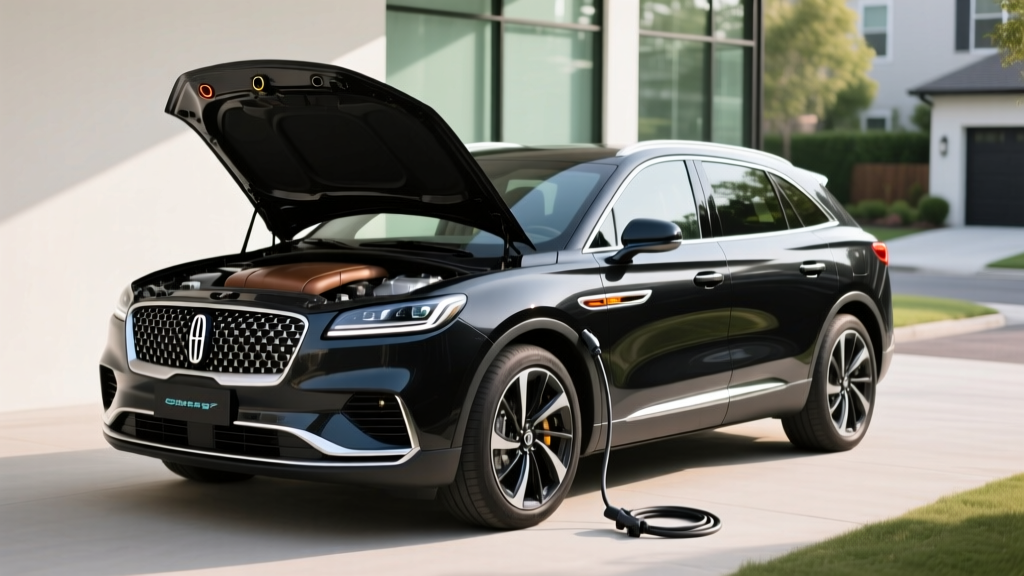
The 2024 Lincoln Nautilus Hybrid pairs a 2.0-liter turbocharged four-cylinder with an electric motor and a 1.1 kWh lithium-ion battery pack to produce 310 combined horsepower. Unlike a plug-in hybrid (PHEV), this is a conventional hybrid electric vehicle (HEV) — meaning it recharges its small battery through regenerative braking and the gasoline engine. You never plug it in.
EPA-rated at 21 city / 29 highway / 23 combined MPG (for the front-wheel-drive hybrid), the Nautilus Hybrid trails the segment's efficiency leaders like the Lexus RX 350h (36 MPG combined) but delivers a smoother, more isolated luxury experience with Lincoln's latest BlueCruise hands-free driving tech. Starting at $52,095 for the Premiere Hybrid trim, it targets buyers who want hybrid fuel savings without the complexity of plug-in charging or the range planning of a full battery-electric vehicle (BEV).
| Attribute | 2024 Lincoln Nautilus Hybrid |
|---|---|
| Powertrain | 2.0L Turbo I-4 + Electric Motor (HEV) |
| Combined Horsepower | 310 hp |
| Battery Capacity | 1.1 kWh (lithium-ion) |
| EPA MPG (FWD Hybrid) | 21 city / 29 highway / 23 combined |
| EPA MPG (AWD Hybrid) | 21 city / 28 highway / 23 combined |
| Drivetrain | FWD or AWD |
| 0-60 mph (est.) | ~6.8 seconds |
| Towing Capacity | Not rated for towing (hybrid) |
| Plug-In Required? | No — self-charging HEV |
| Federal Tax Credit | Not eligible (§30D requires PHEV/BEV) |
| Starting MSRP | $52,095 (Premiere Hybrid) |
| Hybrid Battery Warranty | 8 years / 100,000 miles |
HEV vs PHEV: What the Nautilus Actually Is (and Isn't)
This distinction matters because Lincoln's marketing sometimes blurs it. The 2024 Nautilus Hybrid is a conventional hybrid (HEV), not a plug-in hybrid (PHEV). There is no electric-only driving range to speak of, no charging port, and no eligibility for the federal §30D EV tax credit.
| Feature | Nautilus HEV (This Car) | Typical Luxury PHEV | Full BEV |
|---|---|---|---|
| Plug-in charging | No | Yes (Level 1/2) | Yes (Level 1/2/DC) |
| Electric-only range | ~1 mile at low speed | 20-40 miles | 200-400+ miles |
| Battery size | 1.1 kWh | 15-25 kWh | 70-100+ kWh |
| Federal tax credit | None | Up to $7,500 (if eligible) | Up to $7,500 (if eligible) |
| Real-world MPG/MPGe | 23 MPG combined | 25-30 MPG + electric miles | 85-120 MPGe |
| Maintenance complexity | Low (gas + regen) | Moderate (dual systems) | Low (no engine) |
The HEV setup suits buyers who live in apartments without charging access, drive in mixed city-highway patterns, and want a simple ownership experience. If you have a garage and want 30+ miles of silent electric commuting, a PHEV like the BMW X5 xDrive50e or Volvo XC60 Recharge would serve you better. If your daily driving is under 250 miles and you can charge at home, a BEV like the Genesis Electrified GV70 eliminates gasoline entirely.
Fuel Economy: EPA Numbers vs. Real-World MPG
The EPA rates the 2024 Nautilus Hybrid at 21 city / 29 highway / 23 combined MPG for FWD, and 21/28/23 for AWD. These figures are sourced from fueleconomy.gov.
| Driving Condition | EPA Estimate | Real-World Expectation |
|---|---|---|
| City (stop-and-go) | 21 MPG | 22-24 MPG — hybrids often exceed EPA in city due to regenerative braking |
| Highway (70-75 mph) | 29 MPG | 25-27 MPG — aerodynamic drag and sustained speeds reduce hybrid advantage |
| Combined (55/45 mix) | 23 MPG | 22-25 MPG — varies with driving style and climate |
| Cold weather (below 32°F) | — | 18-20 MPG — engine runs more often for cabin heat and battery warm-up |
Hybrids generally outperform their EPA city estimates because regenerative braking recovers energy during deceleration — something the EPA test cycle captures but real stop-and-go traffic amplifies. Highway driving is where the Nautilus Hybrid falls behind its sticker: at 75 mph, the 2.0L turbo engine does most of the work with minimal electric assist, and the boxy SUV profile creates significant drag.
For context, the Lexus RX 350h achieves 36 MPG combined with a less powerful but far more efficient hybrid system. The Nautilus trades roughly 13 MPG for 100+ additional horsepower and a more premium cabin experience. Whether that trade-off is worth it depends on your priorities.
Powertrain Deep Dive: 310 HP From Turbo + Electric
The Nautilus Hybrid's powertrain combines a 250-hp 2.0-liter turbocharged inline-four with a 131-hp electric motor integrated into the transmission. Combined system output is 310 horsepower, routed through a continuously variable transmission (CVT) to either the front wheels or all four via Lincoln's AWD system.
The 1.1 kWh battery pack is small by electrified-vehicle standards — it's roughly 1/70th the capacity of a typical BEV battery. Its role isn't to store meaningful energy for electric-only driving but to buffer energy captured from regenerative braking and release it in short bursts for acceleration assist and low-speed electric creep. Think of it as a performance and efficiency supplement to the gas engine, not a replacement.
Acceleration is respectable: expect 0-60 mph in approximately 6.8 seconds, which is brisk for a 4,600-pound luxury SUV. The CVT keeps the engine in its power band during hard acceleration, though it introduces the characteristic drone under sustained throttle that some buyers find unrefined. In normal driving, the transition between electric and gas power is nearly imperceptible — a mark of Ford/Lincoln's mature hybrid engineering.
Pricing, Trims, and Tax Credit Reality
The 2024 Nautilus Hybrid is available across three trims:
- Premiere Hybrid: $52,095 MSRP — includes 48-inch panoramic display, wireless Apple CarPlay/Android Auto, Lincoln Co-Pilot360, heated front seats
- Reserve Hybrid: $56,695 MSRP — adds BlueCruise hands-free driving, 21-inch wheels, ventilated front seats, Revel audio
- Black Label Hybrid: $68,095 MSRP — adds exclusive interior materials, 30-way Perfect Position seats, concierge service
Federal Tax Credit: Not Eligible. The IRS §30D Clean Vehicle Credit applies only to plug-in electric vehicles (BEVs and PHEVs) with battery capacities of at least 7 kWh. The Nautilus Hybrid's 1.1 kWh battery and HEV architecture disqualify it entirely. No federal purchase incentive is available for conventional hybrids as of 2026.
Some states offer hybrid-specific rebates or HOV lane access, but these vary by jurisdiction. Check your state's energy office or DMV for current programs.
Without a tax credit to offset the hybrid premium, buyers should weigh the fuel savings carefully. At 23 MPG combined and $3.50/gallon gasoline, the Nautilus Hybrid costs approximately $15.22 per 100 miles to fuel. A comparable non-hybrid luxury SUV averaging 20 MPG would cost $17.50 per 100 miles — a savings of roughly $2.28 per 100 miles, or about $342 per year at 15,000 miles annually. The hybrid powertrain's price premium over a gas-only equivalent (if available) would take several years to recoup through fuel savings alone.
Battery Warranty, Reliability, and Replacement Cost
Lincoln Hybrid Battery Warranty: 8 years or 100,000 miles (whichever comes first), covering defects and capacity loss below a functional threshold. In states that follow California Air Resources Board (CARB) standards — including California, New York, Massachusetts, and several others — the hybrid battery warranty extends to 10 years or 150,000 miles.
Lincoln (and parent company Ford) has been building hybrid powertrains since the mid-2000s, starting with the Ford Escape Hybrid. The 1.1 kWh battery in the Nautilus is small, lightly stressed, and never deep-cycled the way a BEV or PHEV battery is. It operates within a narrow state-of-charge window (roughly 40-60%), which dramatically reduces degradation. Most conventional hybrid batteries outlast their warranty periods without issue.
If replacement is needed outside warranty, expect a cost of $2,000-$4,000 for the hybrid battery module, plus labor. This is far less than BEV battery replacements ($10,000-$20,000+) because the pack is small and accessible. Independent hybrid repair shops are increasingly available and can often replace individual battery cells rather than the entire pack, reducing costs further.
For reliability data, the 2024 Nautilus is too new for long-term owner surveys, but Ford/Lincoln's hybrid systems have historically scored well in J.D. Power and Consumer Reports reliability assessments. The CVT and turbocharged engine are the components more likely to require attention over 100,000+ miles than the hybrid battery itself.
Hybrid vs PHEV vs EV: Which Powertrain Fits You?
Choose the Nautilus Hybrid (HEV) if:
- You cannot charge at home (apartment, street parking, no garage)
- You take frequent long road trips and don't want to plan around charging stations
- You want better fuel economy than a gas SUV but minimal lifestyle change
- You value Lincoln's luxury cabin and BlueCruise over maximum efficiency
Choose a PHEV (e.g., BMW X5 xDrive50e, Volvo XC60 Recharge) if:
- You have home Level 2 charging and a commute under 35 miles
- You want to drive mostly electric on weekdays but gas-free on long trips
- You qualify for the $7,500 federal tax credit (income and sourcing rules apply)
Choose a full BEV (e.g., Genesis Electrified GV70, BMW iX) if:
- You have reliable home charging and your daily driving is under 250 miles
- You want to eliminate gasoline costs and engine maintenance entirely
- You qualify for federal/state EV incentives
- You prioritize lowest per-mile energy cost over lowest purchase price
Pros and Cons at a Glance
Pros
- 310 hp provides confident highway merging and passing
- No plug-in charging required — works with existing gas-station habits
- Lincoln's 48-inch panoramic screen and BlueCruise are segment standouts
- Hybrid battery warranty up to 10 years / 150,000 miles in CARB states
- Regenerative braking improves real-world city MPG beyond EPA estimate
- Quiet, well-isolated cabin with minimal road and wind noise
Cons
- 23 MPG combined trails Lexus RX 350h (36 MPG) significantly
- No federal tax credit — HEVs are ineligible for §30D
- CVT drone under hard acceleration diminishes luxury feel
- Hybrid trim is not rated for towing (gas-only Nautilus tows up to 3,500 lbs)
- Small 1.1 kWh battery provides negligible electric-only driving
- Black Label trim pushes price near $70,000 with no efficiency advantage over cheaper trims
Ownership Costs Over 5 Years
Here's a realistic 5-year cost projection for the Nautilus Hybrid Reserve ($56,695 MSRP), assuming 15,000 miles/year, $3.50/gallon gasoline, and national-average insurance rates:
| Cost Category | 5-Year Estimate |
|---|---|
| Purchase price (MSRP) | $56,695 |
| Fuel (23 MPG avg, 75,000 miles) | $11,413 |
| Insurance (avg) | $12,500 |
| Maintenance (oil, brakes, tires) | $3,500 |
| Depreciation (est. 50%) | ~$28,348 |
| Total 5-Year Cost | ~$112,456 |
Compared to a similarly priced non-hybrid luxury SUV averaging 20 MPG, the hybrid saves approximately $1,710 in fuel over five years. Maintenance costs are slightly higher than a BEV (which has no oil changes, spark plugs, or transmission fluid) but lower than a conventional gas vehicle due to regenerative braking extending brake pad life.
Frequently Asked Questions
How many MPG does the 2024 Lincoln Nautilus Hybrid get?
The EPA rates it at 21 city / 29 highway / 23 combined MPG (FWD). Real-world city driving often yields 22-24 MPG thanks to regenerative braking, while sustained highway speeds above 70 mph typically drop to 25-27 MPG. Cold weather can reduce combined efficiency to 18-20 MPG.
Does the Nautilus Hybrid need to be plugged in?
No. The Nautilus Hybrid is a conventional HEV, not a PHEV. It charges its 1.1 kWh battery through regenerative braking and the gasoline engine. There is no charging port and no electric-only driving range beyond brief low-speed creep.
Does the 2024 Nautilus Hybrid qualify for a federal tax credit?
No. The IRS §30D Clean Vehicle Credit requires a plug-in vehicle with at least 7 kWh of battery capacity. The Nautilus Hybrid's 1.1 kWh HEV system does not qualify. Check your state's energy office for any local hybrid incentives.
Is the hybrid battery reliable and what does replacement cost?
Lincoln covers the hybrid battery for 8 years/100,000 miles (10 years/150,000 miles in CARB states). Ford/Lincoln's hybrid systems have a long track record of reliability. Out-of-warranty replacement typically costs $2,000-$4,000, and independent hybrid shops can often repair individual cells for less.
Should I buy the Nautilus Hybrid or a full electric SUV?
If you have home charging, drive under 250 miles daily, and want the lowest per-mile cost, a BEV like the Genesis Electrified GV70 or BMW iX is more economical long-term and qualifies for federal tax credits. If you lack charging access, take frequent long trips, or want zero lifestyle change from your gas-car routine, the Nautilus Hybrid is the practical choice.
Can the Nautilus Hybrid tow a trailer?
No. Lincoln does not rate the Hybrid variant for towing. The conventional gas-only Nautilus (with the 2.0L turbo, non-hybrid) is rated for up to 3,500 pounds when properly equipped. If towing is a priority, the hybrid is not the right configuration.