Quick Verdict: The Sweet-Spot Compact Hybrid SUV
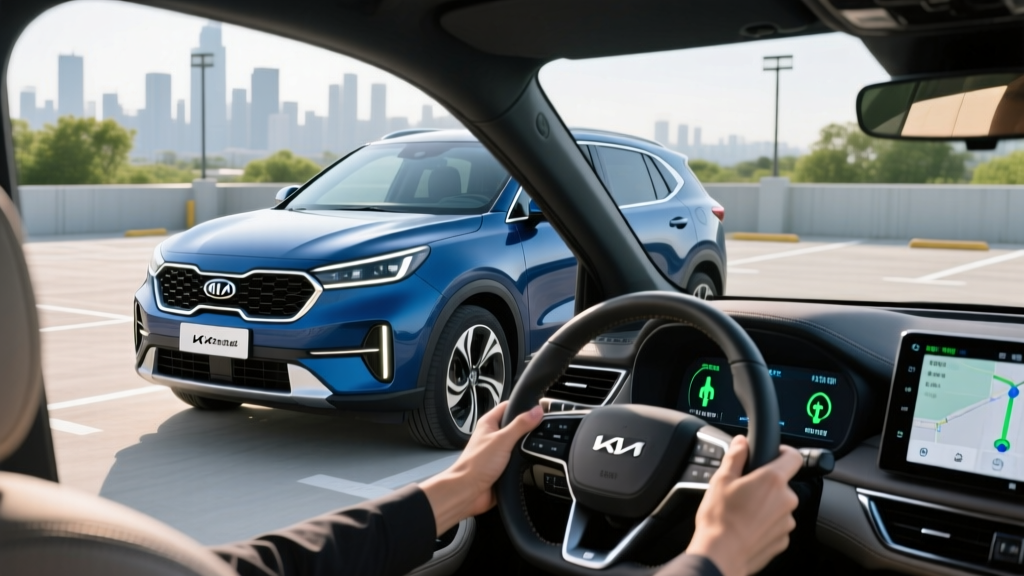
The 2024 Kia Sportage Hybrid EX occupies a rare position in the compact SUV segment: it delivers genuine hybrid efficiency without sacrificing power, cargo space, or tech. With an EPA-rated 43 MPG combined and a 227-horsepower turbocharged powertrain, it outperforms most rivals on paper and, as we'll show, in real-world driving too. For buyers weighing a conventional hybrid (HEV) against a plug-in hybrid (PHEV) or a full battery-electric vehicle (BEV), the Sportage Hybrid EX makes a compelling case — especially at its $31,490 starting MSRP before destination.
This review covers the HEV Sportage Hybrid EX specifically. We'll also compare it against the Sportage Plug-In Hybrid variant so you can determine which electrified powertrain fits your driving pattern, charging access, and budget.
HEV vs PHEV: Which Sportage Hybrid Is Right for You?
Kia offers the Sportage in two distinct electrified configurations. Understanding the difference is essential before you visit a dealer.
| Attribute | Sportage Hybrid (HEV) | Sportage Plug-In Hybrid (PHEV) |
|---|---|---|
| Powertrain | 1.6L turbo + electric motor, self-charging | 1.6L turbo + larger electric motor, plug-in capable |
| Combined Horsepower | 227 hp | 261 hp |
| Battery Capacity | 1.49 kWh (lithium-ion polymer) | 13.8 kWh (lithium-ion polymer) |
| Electric-Only Range | N/A — always blends engine + motor | EPA 34 miles electric-only |
| EPA Combined MPG / MPGe | 43 MPG combined | 84 MPGe combined (35 MPG gas-only) |
| Needs to Plug In? | No — regenerates via braking and engine | Yes, for electric range (drives fine without plugging in) |
| Drivetrain | AWD standard | AWD standard |
| Starting MSRP (2024) | $31,490 (EX) | $39,990 (X-Line) |
The bottom line: If you can charge at home and your daily commute is under 34 miles round-trip, the PHEV lets you drive almost entirely on electricity on weekdays while keeping a gas engine for road trips. If you lack home charging access or want a lower purchase price, the HEV delivers excellent efficiency with zero lifestyle change — just fill up less often.
Fuel Economy: EPA Ratings and Real-World MPG
The 2024 Kia Sportage Hybrid EX carries EPA ratings of 40 MPG city, 48 MPG highway, and 43 MPG combined, according to fueleconomy.gov. These numbers apply to the EX trim with standard all-wheel drive.
| Driving Condition | EPA Rating | Real-World Expectation |
|---|---|---|
| City | 40 MPG | 42–46 MPG (hybrids excel in stop-and-go) |
| Highway | 48 MPG | 38–43 MPG (aero drag and sustained speed reduce hybrid advantage) |
| Combined | 43 MPG | 39–44 MPG depending on driving mix |
| Cold Weather (below 32°F) | — | 34–38 MPG (engine runs more for cabin heat) |
How many MPG does the 2024 Kia Sportage Hybrid EX actually get? In mixed suburban and highway driving, owners typically report 40–44 MPG — close to the EPA combined figure. City-heavy routes often push the car above its EPA city rating because regenerative braking recovers more energy in stop-and-go traffic. Highway-only trips at 75+ mph will drop fuel economy into the upper 30s, which is typical for a boxy compact SUV with AWD.
For context, a comparable gas-only 2024 Sportage AWD achieves just 25 MPG combined. The hybrid's 43 MPG combined translates to roughly 553 miles of total range from its 13.7-gallon tank — meaning most drivers will visit a gas station once every two weeks or less.
Powertrain and Performance Specs
| Specification | 2024 Sportage Hybrid EX |
|---|---|
| Engine | 1.6L turbocharged 4-cylinder (178 hp, 195 lb-ft) |
| Electric Motor | 44 kW (59 hp, 195 lb-ft) |
| Combined System Output | 227 hp, 258 lb-ft torque |
| Transmission | 6-speed automatic |
| Drivetrain | AWD (standard) |
| 0–60 mph | ~7.2 seconds (manufacturer estimate) |
| Battery | 1.49 kWh lithium-ion polymer |
| Towing Capacity | 2,000 lbs |
| Cargo Volume (behind 2nd row) | 39.5 cu ft |
| Cargo Volume (seats folded) | 73.7 cu ft |
| Curb Weight | ~3,814 lbs |
The Sportage Hybrid pairs a turbocharged 1.6-liter engine with a 44 kW electric motor sandwiched between the engine and the 6-speed automatic. Unlike Toyota's e-CVT approach, Kia's conventional automatic delivers familiar shift feel and strong passing response. The 227 combined horsepower puts it well ahead of the Toyota RAV4 Hybrid (219 hp) and Honda CR-V Hybrid (204 hp).
The 1.49 kWh battery is small by design — it's a conventional hybrid, not a plug-in. It captures energy from regenerative braking and the engine to provide short electric-only bursts at low speeds and assist during acceleration. You never plug it in; the system manages charge automatically.
Pricing, Trims, and Tax Credit Eligibility
The 2024 Kia Sportage Hybrid is offered in three trims, all with AWD standard:
- LX: $28,590 MSRP — base hybrid with cloth seats, 12.3-inch infotainment
- EX: $31,490 MSRP — adds leatherette seats, heated front seats, power liftgate, smart cruise control
- SX-Prestige: $36,190 MSRP — adds panoramic sunroof, ventilated seats, premium Harman Kardon audio, highway driving assist
Add $1,375 destination charge to all trims. As of current IRS §30D rules, the conventional Sportage Hybrid (HEV) does not qualify for the federal clean vehicle tax credit — that credit applies only to plug-in electric vehicles (BEVs and PHEVs) meeting battery sourcing and MSRP caps. The Sportage PHEV may qualify for up to $7,500, but eligibility depends on the buyer's modified adjusted gross income (≤$150,000 single / ≤$300,000 joint), the vehicle's MSRP (≤$80,000 for SUVs), and battery component/critical mineral sourcing requirements, which have tightened significantly. Consult a tax professional or the IRS Clean Vehicle provisions page before counting on the credit.
Some states offer additional rebates for hybrids and PHEVs. Check your state's energy office or AFDC state incentive database for local programs.
Battery Warranty, Reliability, and Replacement Cost
Kia Hybrid Battery Warranty: 10 years / 100,000 miles (whichever comes first) for the hybrid battery and all hybrid system components. This applies to the original owner; subsequent owners receive 5 years / 60,000 miles under the powertrain warranty transfer provision.
Is the 2024 Kia Sportage Hybrid reliable? Kia's 1.6L turbo-hybrid powertrain has been in service across the Kia/Hyundai lineup since 2022 (also in the Sorento Hybrid and Tucson Hybrid). Early reports from owners and reliability surveys show no systemic issues with the hybrid system itself. The 10-year/100,000-mile hybrid battery warranty is among the best in the industry and provides strong peace of mind.
Battery replacement cost: If the hybrid battery fails outside warranty — unlikely given the coverage period — replacement costs for a compact hybrid battery of this size (1.49 kWh) typically range from $2,000 to $3,500 including labor. This is substantially less than a full EV battery replacement because the pack is small. In practice, most hybrid batteries outlast the vehicle; Toyota's hybrid batteries from the early 2000s are still running at 200,000+ miles in many cases.
The conventional hybrid system also eliminates several maintenance items: there's no traditional starter motor, no alternator to replace, and regenerative braking extends brake pad life significantly — many hybrid owners report original brake pads at 60,000+ miles.
Sportage Hybrid vs PHEV vs Full EV: Decision Framework
Choose the Sportage Hybrid (HEV) if:
- You don't have access to home or workplace charging
- You want maximum range flexibility for road trips without planning
- Your budget is under $35,000
- You want to reduce fuel costs by ~40% vs a gas-only SUV without changing habits
Choose the Sportage PHEV if:
- You can install a Level 2 charger at home or have reliable workplace charging
- Your daily commute is under 34 miles round-trip (you'll rarely use gas on weekdays)
- You want electric-quiet daily driving with gas-engine backup for long trips
- You can capture the federal tax credit, effectively narrowing the price gap with the HEV
Choose a full EV (like the Kia EV6 or Hyundai Ioniq 5) if:
- You have reliable home Level 2 charging
- You rarely drive more than 250 miles in a single day, or are comfortable with DC fast charging on road trips
- You want zero tailpipe emissions and the lowest per-mile fuel cost
- You qualify for the full $7,500 federal credit and any state EV rebates
For the Sportage PHEV specifically: its 13.8 kWh battery provides an EPA-rated 34 miles of electric-only range. Charging takes approximately 3 hours and 45 minutes on a standard 120V household outlet (Level 1) or about 1 hour and 45 minutes on a 240V Level 2 charger. The PHEV uses a J1772 connector for AC charging and does not support DC fast charging — this is typical for PHEVs, as their smaller batteries don't require it. Total combined range (electric + gas) exceeds 420 miles.
Pros and Cons
Pros
- 43 MPG combined EPA — among the best in the compact SUV segment
- 227 hp provides confident highway merging and passing
- AWD standard on all hybrid trims (some competitors charge extra)
- Generous cargo space: 39.5 cu ft behind rear seats
- 10-year / 100,000-mile hybrid battery warranty
- Strong value at $31,490 for the well-equipped EX trim
- Real-world city MPG often exceeds EPA estimate
Cons
- Highway MPG drops noticeably above 70 mph
- No DC fast charging (PHEV variant)
- Turbo engine requires premium fuel for maximum output (regular acceptable with slight power reduction)
- Does not qualify for federal EV tax credit (HEV)
- Ride quality is firm over rough pavement compared to the RAV4 Hybrid
- Infotainment can be slow to respond compared to rivals
Frequently Asked Questions
How many MPG does the 2024 Kia Sportage Hybrid EX get?
The EPA rates it at 40 city / 48 highway / 43 combined MPG. Real-world driving typically yields 39–44 MPG combined, with city-heavy routes often exceeding 42 MPG thanks to aggressive regenerative braking. Cold weather (below freezing) can reduce fuel economy to 34–38 MPG as the engine runs more frequently for cabin heating.
Does the Sportage Hybrid need to be plugged in?
No. The Sportage Hybrid (HEV) is a conventional hybrid — it charges its small 1.49 kWh battery through regenerative braking and the gasoline engine. You never plug it in. Only the Sportage Plug-In Hybrid (PHEV) variant benefits from being plugged into a wall outlet or charger.
How far can the Sportage PHEV go on electric only?
The Sportage PHEV achieves an EPA-rated 34 miles of electric-only range from its 13.8 kWh battery. Real-world electric range varies from 28–36 miles depending on temperature, terrain, and driving style. Highway speeds and cold weather reduce electric range more significantly than city driving.
Is the Sportage Hybrid reliable, and what does battery replacement cost?
Kia's hybrid system has proven reliable since its introduction across the Hyundai/Kia lineup. The hybrid battery is covered by a 10-year / 100,000-mile warranty. Out-of-warranty replacement for the 1.49 kWh pack typically costs $2,000–$3,500, but hybrid batteries routinely last 150,000+ miles without significant degradation.
Does the 2024 Kia Sportage Hybrid qualify for a tax credit?
The conventional Sportage Hybrid (HEV) does not qualify for the federal §30D clean vehicle tax credit, which is reserved for plug-in vehicles. The Sportage PHEV may qualify for up to $7,500, but eligibility depends on income limits (≤$150K single / ≤$300K joint), MSRP caps (≤$80K for SUVs), and battery sourcing requirements. Always verify current rules at IRS.gov before purchasing.
How does the Sportage Hybrid compare to the RAV4 Hybrid?
The Toyota RAV4 Hybrid achieves 41 MPG combined (vs Kia's 43) and produces 219 hp (vs Kia's 227). The Sportage offers slightly more cargo space (39.5 vs 37.6 cu ft) and a more conventional transmission feel. The RAV4 Hybrid has a longer track record and typically stronger resale value. Both are excellent choices — the Kia edges out on power and efficiency, the Toyota on long-term resale confidence.