Quick Verdict: The Efficiency Bargain of the Crossover Segment
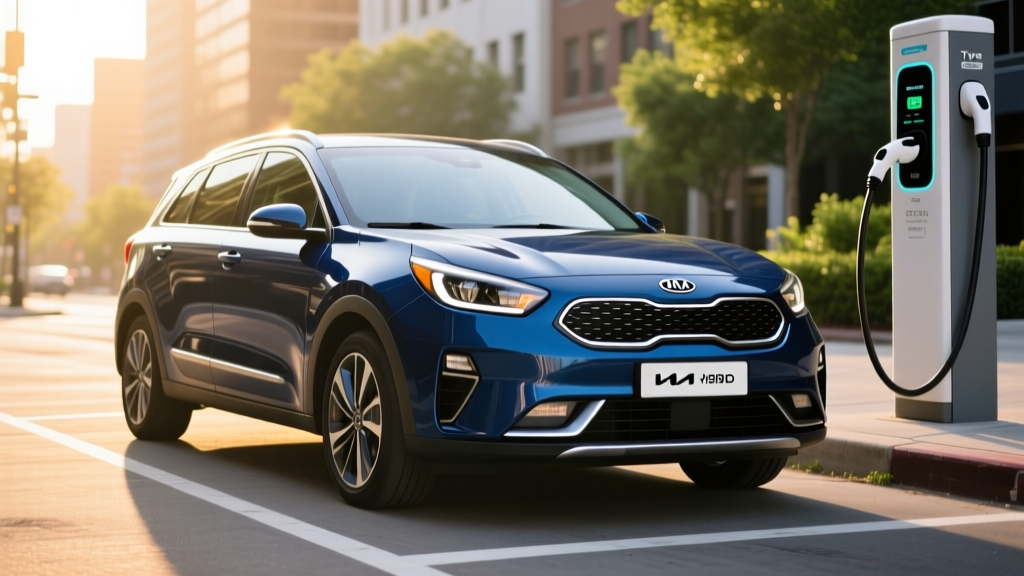
The 2024 Kia Niro Hybrid occupies a precise niche: a compact crossover that delivers Prius-rivaling efficiency without requiring a plug, a lifestyle change, or a massive upfront investment. With an EPA-estimated 53 MPG combined on the base LX trim and a starting MSRP of $26,940, the Niro HEV (conventional hybrid) remains one of the most cost-effective ways to slash fuel consumption in 2026's market. But with the Niro also available as a plug-in hybrid (PHEV) and a full battery-electric vehicle (EV), choosing the right version requires understanding exactly what each powertrain delivers—and what it doesn't.
| Specification | Value |
|---|---|
| Powertrain | 1.6L GDI 4-cyl + 32 kW electric motor |
| Combined Horsepower | 139 hp |
| Combined Torque | 195 lb-ft |
| Transmission | 6-speed dual-clutch automatic (DCT) |
| Hybrid Battery | 1.56 kWh lithium-ion polymer |
| EPA Fuel Economy (LX trim) | 53 city / 54 hwy / 53 combined MPG |
| EPA Fuel Economy (EX/Touring) | 49 city / 50 hwy / 49 combined MPG |
| Fuel Tank | 11.1 gallons |
| Total Driving Range (LX) | ~588 miles |
| 0–60 mph | ~9.5 seconds |
| Cargo Volume | 22.8 cu ft (rear seats up) / 63.7 cu ft (folded) |
| Base MSRP (LX) | $26,940 |
| Hybrid Battery Warranty | 10 years / 100,000 miles |
HEV vs. PHEV vs. EV: Which Niro Powertrain Fits You?
Kia offers the Niro in three electrified flavors for the 2024 model year, and confusing them is a common buyer mistake. Here's the fundamental distinction:
| Attribute | Niro HEV (Hybrid) | Niro PHEV (Plug-In) | Niro EV (Battery Electric) |
|---|---|---|---|
| Plug Required? | No — charges via regen & engine | Yes — plug in for EV range | Yes — plug in for all driving |
| EPA Combined | 53 MPG (LX) | 105 MPGe (EV mode) / 48 MPG (gas) | 113 MPGe combined |
| Electric-Only Range | N/A (EV assist only) | 33 miles | 239 miles |
| Total Range | ~588 miles | ~430 miles (EV + gas) | 239 miles |
| Battery Capacity | 1.56 kWh | 11.1 kWh | 64.8 kWh |
| Combined HP | 139 hp | 180 hp | 201 hp |
| Starting MSRP | $26,940 | $34,390 | $39,600 |
| Federal Tax Credit (§30D) | Not eligible | Up to $7,500* | Not eligible (sourcing) |
*PHEV credit eligibility depends on battery component sourcing, buyer income, and MSRP caps under current IRS §30D rules. Verify at irs.gov.
The conventional Niro Hybrid (HEV) never plugs in. Its small 1.56 kWh battery recovers energy through regenerative braking and the gasoline engine, then deploys that energy to assist acceleration and enable brief low-speed electric-only operation. You simply fill it with gas and drive.
The Niro PHEV has a larger 11.1 kWh battery that provides 33 miles of electric-only range when charged. Once that depletes, it operates as a conventional hybrid at 48 MPG combined. It charges on Level 1 (120V, ~9 hours) or Level 2 (240V, ~2.5–3 hours). It does not support DC fast charging—a notable limitation if you need quick top-ups on road trips.
The Niro EV is a full battery-electric vehicle with 239 miles of EPA range and no gasoline engine at all. It supports DC fast charging at up to 85 kW (10–80% in roughly 45 minutes).
Fuel Economy: EPA Numbers and Real-World MPG
The 2024 Niro Hybrid's EPA ratings vary by trim because higher trims add weight and larger wheels that increase rolling resistance:
| Trim | City | Highway | Combined | Annual Fuel Cost* |
|---|---|---|---|---|
| LX (16" wheels) | 53 MPG | 54 MPG | 53 MPG | ~$1,050 |
| EX (18" wheels) | 49 MPG | 50 MPG | 49 MPG | ~$1,150 |
| EX Touring / SX Touring | 49 MPG | 50 MPG | 49 MPG | ~$1,150 |
*Based on 15,000 miles/year, 55% city driving, $3.50/gallon regular unleaded. Source: fueleconomy.gov
Real-World MPG: What Owners Actually See
Hybrids like the Niro tend to meet or slightly exceed their EPA city estimates because stop-and-go driving maximizes regenerative braking opportunities. On owner forums and aggregated fuel-tracking data (Fuelly, Edmunds), LX owners commonly report 50–55 MPG in mixed suburban driving. Highway-only trips at 75+ mph typically yield 45–48 MPG, as the electric motor provides less benefit at sustained high speeds and aerodynamic drag dominates.
Cold weather reduces efficiency in any vehicle, but hybrids are less affected than full EVs because the gasoline engine provides cabin heat without draining a traction battery. Expect a 5–10% MPG reduction in sub-freezing conditions—roughly 47–50 MPG combined for the LX in winter.
Powertrain Deep Dive: How the Niro Hybrid Drives
The Niro Hybrid pairs a 1.6-liter gasoline direct-injection (GDI) four-cylinder engine producing 104 hp and 109 lb-ft of torque with a 32 kW (43 hp) permanent-magnet synchronous electric motor embedded in the transmission housing. Combined system output is 139 hp and 195 lb-ft of torque.
Unlike the Toyota Prius, which uses a continuously variable transmission (CVT), the Niro employs a 6-speed dual-clutch transmission (DCT). This gives it more natural, stepped gear shifts that feel familiar to drivers accustomed to conventional automatics—and it avoids the "rubber band" drone some CVTs produce under hard acceleration.
The trade-off: 139 hp and a ~9.5-second 0–60 mph time mean the Niro HEV is adequate for commuting and confident in city traffic, but it won't win any stoplight races. Highway merging requires planning, especially when loaded with passengers and cargo. If performance matters more, the PHEV's 180 hp or the EV's 201 hp (with a 7.0-second 0–60) are noticeably quicker.
Driving Modes and Regenerative Braking
The Niro HEV offers Eco, Normal, and Sport drive modes that adjust throttle response, shift points, and steering weight. Regenerative braking captures kinetic energy during deceleration and feeds it back to the 1.56 kWh battery. The regen level is moderate—enough to slow the car noticeably when you lift off the throttle, but not strong enough for true one-pedal driving (a feature reserved for the EV model).
Pricing, Trims, and Tax Credit Eligibility
The 2024 Niro Hybrid lineup starts at $26,940 (including destination) for the LX trim and climbs to roughly $35,000 for a fully loaded SX Touring. Here's the trim breakdown:
- LX ($26,940): 8-inch touchscreen, wireless Apple CarPlay/Android Auto, 16-inch alloy wheels, Smart Cruise Control, Lane Keeping Assist, Forward Collision-Avoidance Assist
- EX ($29,840): 10.25-inch touchscreen with navigation, heated front seats, Smart Power Liftgate, 18-inch wheels, Highway Driving Assist
- EX Touring ($32,440): Leatherette seats, ventilated front seats, Harman Kardon premium audio, wireless phone charging
- SX Touring ($34,840): Full synthetic leather, sunroof, Highway Driving Assist 2, additional ADAS features
Does the Niro Hybrid Qualify for a Federal Tax Credit?
No. The conventional Niro Hybrid (HEV) does not qualify for the IRS §30D Clean Vehicle Credit. That credit is reserved for plug-in vehicles—battery-electric vehicles (BEVs) and plug-in hybrids (PHEVs) with a battery capacity of at least 7 kWh.
The Niro PHEV may qualify for up to $7,500 under §30D, but eligibility is not guaranteed. Current IRS rules impose buyer income caps ($150,000 single / $300,000 joint AGI), an MSRP cap ($80,000 for SUVs), and strict battery component and critical mineral sourcing requirements. These sourcing rules have tightened significantly since 2023, and some PHEVs that previously qualified have lost eligibility. Always verify current status at irs.gov or consult a tax professional before purchasing.
Some states and utilities offer separate rebates for hybrids—check your state energy office or local utility for programs that may apply.
Battery Longevity, Warranty, and Replacement Cost
Hybrid battery anxiety is the number-one concern we hear from prospective HEV buyers. Here's what the data shows for the Niro:
Kia Hybrid Battery Warranty
Coverage: 10 years / 100,000 miles (whichever comes first)
What's covered: Hybrid battery pack, hybrid control unit, electric motor, and related powertrain components
Capacity threshold: Kia warrants the battery against defects and abnormal capacity loss. If the battery degrades below a functional threshold during the warranty period, Kia replaces it at no cost.
Transferability: The 10-year/100,000-mile powertrain warranty is limited to the original owner. The hybrid battery component warranty may transfer to subsequent owners for a reduced term—confirm with your dealer.
Real-World Battery Degradation
The Niro HEV's 1.56 kWh battery is small and operates within a narrow state-of-charge window (roughly 40–80% SoC), which is the least stressful operating range for lithium-ion cells. Kia's hybrid battery management system actively limits charge and discharge extremes to maximize longevity. Based on long-term owner data and Kia's track record with the Niro since its 2017 debut, hybrid battery failures within the first 150,000 miles are rare.
For comparison, Toyota's hybrid systems (the gold standard) have demonstrated battery lifespans exceeding 200,000 miles routinely. Kia's system is newer but has shown strong reliability in consumer surveys from J.D. Power and Consumer Reports.
Out-of-Warranty Replacement Cost
If the hybrid battery does fail outside the warranty period, replacement costs for the Niro HEV typically range from $2,000 to $3,500 for the battery pack itself, plus $300–$600 in labor. This is substantially less than a full EV battery replacement ($8,000–$15,000+) because the HEV battery is small. Third-party hybrid battery refurbishers may offer reconditioned packs for $1,200–$1,800, though availability varies by region.
Reliability and Safety Ratings
The 2024 Niro Hybrid earned strong safety credentials. The NHTSA awarded it a 5-Star Overall Safety Rating, and the IIHS named it a Top Safety Pick when equipped with specific headlight configurations. Standard driver-assistance features include forward collision-avoidance with pedestrian detection, lane keeping assist, blind-spot collision warning, rear cross-traffic collision-avoidance, and Smart Cruise Control with stop-and-go.
On reliability, the Niro Hybrid scores above average in its segment. J.D. Power gives the 2024 Niro a predicted reliability score in the "Great" range (80+ out of 100), and the powertrain has proven durable in fleet and taxi applications in international markets where the Niro has been in service since 2016. The dual-clutch transmission has drawn occasional complaints about low-speed hesitation in earlier model years, but Kia's software updates for the 2023 redesign smoothed out most of these issues.
Who Should Choose the Niro Hybrid (and Who Shouldn't)
Choose the Niro HEV If:
- You want maximum fuel savings without installing a home charger or changing your fueling habits
- Your budget is under $30,000 and you need crossover practicality (cargo, ground clearance)
- You drive 12,000–15,000 miles/year in mixed city/suburban conditions where hybrid efficiency shines
- You want a proven, low-complexity powertrain with a 10-year battery warranty
- You live in an apartment or lack reliable access to charging infrastructure
Look Elsewhere If:
- You want electric-only driving (consider the Niro PHEV or EV)
- You need strong acceleration — the 139 hp HEV feels leisurely on highway on-ramps
- You tow — the Niro HEV has no official towing rating
- You want AWD — the Niro is front-wheel drive only across all powertrains
- You drive mostly highway miles at 80+ mph — the hybrid advantage diminishes at sustained high speed
The Decision Framework
If you can charge at home and your daily commute is under 30 miles, the Niro PHEV lets you drive most days on electricity alone while keeping a gas engine for road trips—and it may qualify for a federal credit that narrows the price gap. If you have reliable home charging and rarely drive more than 200 miles in a day, the Niro EV delivers the lowest per-mile fuel cost and the strongest performance. But if you want simplicity, low upfront cost, and 53 MPG without ever thinking about a plug, the Niro HEV is the straightforward answer.
Frequently Asked Questions
How many MPG does the 2024 Kia Niro Hybrid actually get?
The EPA rates the Niro Hybrid LX at 53 city / 54 highway / 53 combined MPG. Higher trims (EX, SX Touring) with 18-inch wheels are rated at 49/50/49 MPG. Real-world owner data clusters around 50–55 MPG in mixed suburban driving, with highway-only trips returning 45–48 MPG.
Does the Niro Hybrid need to be plugged in?
No. The Niro Hybrid (HEV) is a conventional, self-charging hybrid. Its battery is recharged entirely through regenerative braking and the gasoline engine. You never plug it in—you just fill the gas tank as you would with any other car.
How far can the Niro PHEV go on electric only?
The 2024 Niro PHEV provides an EPA-estimated 33 miles of electric-only range on a full charge of its 11.1 kWh battery. Once that range is depleted, the vehicle operates as a conventional hybrid at 48 MPG combined. Total combined range (electric + gasoline) is approximately 430 miles.
Is the Kia Niro Hybrid reliable, and what does battery replacement cost?
The Niro Hybrid has above-average predicted reliability ratings from J.D. Power and a strong track record since its 2017 introduction. Kia covers the hybrid battery for 10 years / 100,000 miles. Out-of-warranty battery replacement costs approximately $2,000–$3,500 including labor—far less than an EV battery swap.
Does the 2024 Niro Hybrid qualify for a federal tax credit?
The conventional Niro Hybrid (HEV) does not qualify for the federal §30D Clean Vehicle Credit, which is limited to plug-in vehicles. The Niro PHEV may qualify for up to $7,500, but eligibility depends on battery sourcing requirements, buyer income caps, and MSRP limits under current IRS rules. Check fueleconomy.gov for the latest qualifying vehicle list.
Does the Niro Hybrid have all-wheel drive?
No. All 2024 Niro variants—HEV, PHEV, and EV—are front-wheel drive only. If AWD is a priority, consider the Toyota RAV4 Hybrid or Hyundai Tucson Hybrid, both of which offer electronic AWD systems.
How does the Niro Hybrid compare to the Toyota Prius?
The 2024 Prius (redesigned for 2023) achieves 57 MPG combined on its LE trim and offers optional AWD, but it's a liftback sedan with less cargo height than the Niro's crossover body. The Niro offers 22.8 cu ft of cargo space behind the rear seats versus the Prius's 23.8 cu ft—similar on paper, but the Niro's taller roof makes loading bulky items easier. The Prius is quicker (0–60 in ~7.2 seconds for the FWD model) and slightly more efficient; the Niro offers a higher seating position and more upright cabin.