The 2024 Honda Odyssey Hybrid: Separating Fact From Fiction
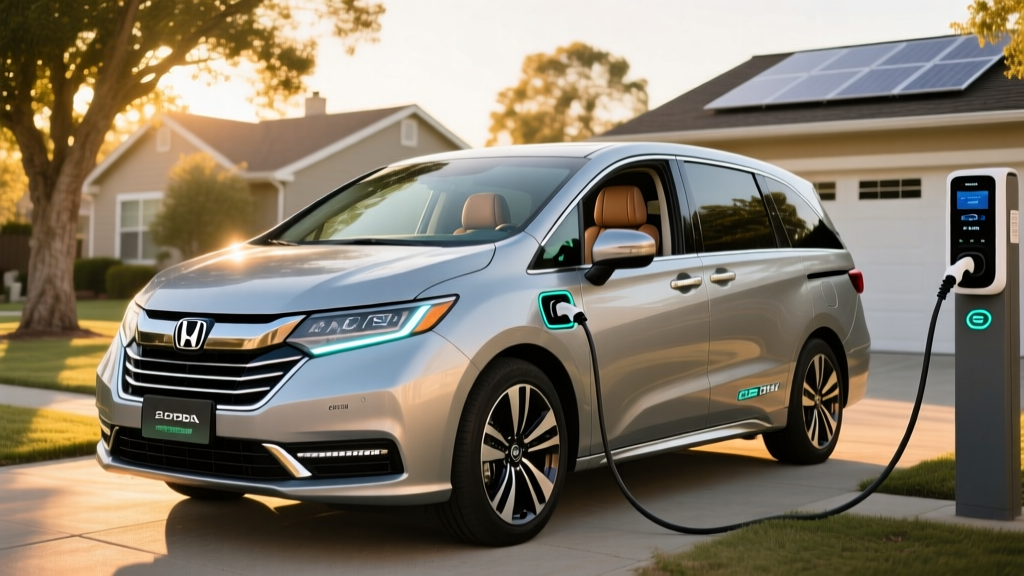
If you've been searching for a 2024 Honda Odyssey Hybrid, you've likely encountered conflicting information — forum posts claiming it exists, YouTube thumbnails promising a hybrid minivan from Honda, and wishful speculation from family hauler shoppers desperate to cut fuel costs. Let's set the record straight with data, not rumors.
The 2024 Honda Odyssey is sold exclusively with a 3.5-liter V6 gasoline engine paired with a 10-speed automatic transmission. Honda does not offer a hybrid, plug-in hybrid, or any electrified variant of the Odyssey in the United States for the 2024 model year — nor for the updated 2025 or 2026 model years as of this writing. There is no hybrid battery, no electric motor assist, and no plug to be found.
That said, the search volume for "2024 Honda Odyssey Hybrid" reflects a genuine market need: families who love the Odyssey's interior packaging and Honda Sensing safety suite but want better fuel economy. Below, we break down what the current Odyssey actually delivers, then examine the hybrid minivans that genuinely exist and whether a PHEV or full EV might serve your family better.
2024 Honda Odyssey: Actual Powertrain and Fuel Economy
Before comparing alternatives, here's exactly what Honda sells. The 2024 Odyssey uses a carryover powertrain that's been in the lineup since the 2018 refresh:
| Specification | Value |
|---|---|
| Engine | 3.5L V6 (J35Y6) |
| Horsepower | 280 hp @ 6,000 rpm |
| Torque | 262 lb-ft @ 4,700 rpm |
| Transmission | 10-speed automatic |
| Drivetrain | Front-wheel drive (FWD only) |
| EPA City MPG | 19 |
| EPA Highway MPG | 28 |
| EPA Combined MPG | 22 |
| Fuel Tank | 19.5 gallons |
| Total Range | ~429 miles |
| Base MSRP (EX) | $39,635 |
| Top Trim MSRP (Elite) | $49,995 |
Data sourced from fueleconomy.gov. These numbers are the EPA sticker estimates. In real-world driving, the Odyssey's highway figure is reasonably achievable on flat interstates at moderate speeds, but city driving with frequent stops, cargo loads, and summer A/C usage commonly drops observed economy to 17–18 MPG. Owners reporting on Fuelly and similar trackers average roughly 20–21 MPG combined over thousands of miles — close to the EPA number but rarely exceeding it.
HEV vs. PHEV vs. EV: Which Minivan Powertrain Fits Your Family?
The minivan segment now offers three distinct electrification paths. Understanding the difference is essential before cross-shopping.
Conventional Hybrid (HEV)
No plug required. A small battery (typically 1–2 kWh) captures energy from regenerative braking and assists the gas engine. You fuel up at any gas station. MPG gains are largest in stop-and-go city driving where regen recovers energy that a gas-only car wastes as brake heat.
Example: Toyota Sienna (36 MPG combined)
Plug-In Hybrid (PHEV)
Plug in to gain electric-only miles. A larger battery (typically 10–20 kWh) provides 20–45 miles of pure electric driving for school runs and errands. Once depleted, it operates as a conventional hybrid. Requires access to charging (home Level 2 ideal) to realize full benefit.
Example: Chrysler Pacifica Hybrid (32 mi electric, 30 MPG hybrid mode)
Battery Electric (BEV)
No gas engine at all. A large battery (80–120+ kWh) provides 250–350+ miles of range. Lowest per-mile "fuel" cost if charging at home, but requires route planning for road trips and access to DC fast charging.
Example: No mainstream electric minivan currently sold in the US (the Kia EV9 is a 3-row SUV, not a minivan).
For most minivan buyers without home charging access, a conventional hybrid (HEV) delivers the most hassle-free fuel savings. If you can install a Level 2 charger at home and most daily trips fall under 30 miles, a PHEV lets you do school drop-offs, grocery runs, and activities on electricity alone — effectively functioning as an EV on weekdays and a hybrid on road-trip weekends.
The Hybrid Minivan That Actually Exists: Toyota Sienna
Since Honda doesn't offer an Odyssey Hybrid, the Toyota Sienna is the direct alternative. Toyota made the bold decision to offer the Sienna exclusively as a hybrid starting with the 2021 redesign. Every 2024 Sienna — from the LE base model to the Platinum — uses Toyota's fourth-generation hybrid system.
| Specification | Value |
|---|---|
| Powertrain | 2.5L 4-cyl + 2 electric motors (FWD) / 3 motors (AWD) |
| Combined Horsepower | 245 hp |
| Hybrid Type | Conventional HEV (no plug) |
| Hybrid Battery | ~1.9 kWh, Nickel-Metal Hydride (NiMH) |
| EPA City MPG (FWD) | 36 |
| EPA Highway MPG (FWD) | 36 |
| EPA Combined MPG (FWD) | 36 |
| EPA Combined MPG (AWD) | 35 |
| Fuel Tank | 14.5 gallons |
| Total Range | ~522 miles (FWD) |
| Base MSRP (LE) | $37,185 |
| Top Trim MSRP (Platinum) | $53,790 |
| Battery Warranty | 10 years / 150,000 miles |
Data sourced from fueleconomy.gov and Toyota's official specifications.
Real-World Sienna MPG vs. EPA
The Sienna's 36 MPG combined is remarkable for a 4,500-pound minivan, and here's where hybrid physics works in your favor: unlike gas-only vehicles that get their worst MPG in the city, the Sienna's regenerative braking and electric motor assist actually make city and highway MPG nearly identical. Many owners report exceeding the EPA city estimate in moderate stop-and-go traffic, where the electric motor handles low-speed propulsion and the engine shuts off at stops. Observed averages on owner forums cluster between 33–38 MPG, with some careful drivers hitting 40 MPG on suburban routes. Cold weather (below 30°F) reduces observed economy by roughly 3–5 MPG due to increased engine-on time for cabin heat.
Plug-In Hybrid Option: Chrysler Pacifica Hybrid
If you want electric-only driving for daily errands without committing to a full EV, the Chrysler Pacifica Hybrid is the only plug-in hybrid minivan sold in the US.
| Specification | Value |
|---|---|
| Powertrain | 3.6L V6 + 2 electric motors (eFlite CVT) |
| Combined Horsepower | 260 hp |
| Hybrid Type | Plug-In Hybrid (PHEV) |
| Battery Capacity | 16 kWh (lithium-ion) |
| EPA Electric-Only Range | 32 miles |
| EPA Combined (hybrid mode) | 30 MPG |
| MPGe (electric + gas combined) | 82 MPGe |
| Level 2 Charge Time (0–100%) | ~2 hours (7.2 kW onboard charger) |
| DC Fast Charging | Not supported |
| Total Range (electric + gas) | ~430 miles |
| Base MSRP (SXT) | $51,095 |
| Battery Warranty | 10 years / 100,000 miles |
The Pacifica Hybrid's 32 miles of electric-only range covers the majority of daily family logistics — school drop-off, grocery store, extracurriculars — without burning a drop of gasoline. The 7.2 kW onboard charger means a full recharge in about 2 hours on a Level 2 home station, so you can recharge between morning and afternoon school runs. However, note that DC fast charging is not available; this is normal for PHEVs with smaller batteries.
Once the battery is depleted, the Pacifica Hybrid operates as a conventional hybrid at 30 MPG combined — a 36% improvement over the gas-only Pacifica's 22 MPG combined, but still below the Sienna's 36 MPG. This is because the Pacifica carries roughly 600 additional pounds of battery and electric motor hardware, and its V6 is less efficient than Toyota's Atkinson-cycle 4-cylinder when operating in hybrid-only mode.
Tax Credits: What Actually Applies to Hybrid Minivans
This is where many buyers get confused. Under current IRS §30D rules (as of 2024–2026), the federal Clean Vehicle Credit has specific eligibility requirements:
- Conventional hybrids (HEV): The Toyota Sienna Hybrid does NOT qualify for the §30D federal tax credit. The credit requires a minimum battery capacity of 7 kWh and plug-in capability. The Sienna's ~1.9 kWh NiMH pack doesn't meet either threshold.
- Plug-in hybrids (PHEV): The Chrysler Pacifica Hybrid's 16 kWh battery meets the capacity requirement. However, §30D eligibility depends on battery component and critical mineral sourcing requirements, buyer income caps ($150K single / $300K joint), and the vehicle's MSRP staying under the $80,000 van/SUV/truck cap. The Pacifica Hybrid may qualify for up to $7,500 depending on the specific model year's battery sourcing compliance. Check the latest eligibility list at fueleconomy.gov and consult a tax professional.
- Point-of-sale transfer: Since 2024, eligible buyers can transfer the credit to the dealer at purchase, reducing the purchase price upfront rather than waiting for a tax refund. This applies only if the vehicle and buyer both qualify.
Bottom line: the Sienna Hybrid offers no federal tax credit. The Pacifica Hybrid might qualify, but verify current-year sourcing compliance on the IRS and DOE websites before counting on it in your budget.
Battery Longevity and Replacement Costs
Hybrid Battery Warranty Comparison
| Vehicle | Hybrid Battery Warranty | Estimated Replacement Cost |
|---|---|---|
| Toyota Sienna Hybrid | 10 years / 150,000 miles | $3,000–$5,000 (NiMH pack) |
| Chrysler Pacifica Hybrid | 10 years / 100,000 miles | $7,000–$10,000 (16 kWh Li-ion) |
| Honda Odyssey (gas only) | N/A — no hybrid battery | N/A |
Hybrid battery anxiety is the number-one concern we hear from prospective buyers, and it's worth addressing with real data. Toyota's hybrid systems have an exceptional longevity track record — the Prius, Camry Hybrid, and now Sienna use a NiMH battery chemistry that degrades very gradually. Toyota's 10-year/150,000-mile hybrid battery warranty (extended from the previous 8-year/100,000-mile coverage starting with 2020 models) provides substantial protection.
In practice, Toyota hybrid batteries frequently last 150,000–200,000+ miles before capacity loss becomes noticeable (defined as dropping below 80% of original capacity). When replacement is eventually needed, aftermarket and refurbished NiMH packs are increasingly available for $2,000–$3,500, and Toyota dealerships typically quote $3,000–$5,000 including labor.
The Pacifica Hybrid's larger 16 kWh lithium-ion pack is more expensive to replace — roughly $7,000–$10,000 at a dealership. However, Chrysler's 10-year/100,000-mile warranty provides long coverage, and PHEV batteries in general have shown good durability because the vehicle's software maintains a substantial buffer (you never actually use 100% of the pack), reducing stress on the cells.
Side-by-Side: Odyssey vs. Sienna vs. Pacifica Hybrid
| Attribute | 2024 Honda Odyssey (Gas) | 2024 Toyota Sienna (HEV) | 2024 Chrysler Pacifica Hybrid (PHEV) |
|---|---|---|---|
| Powertrain | 3.5L V6, 280 hp | 2.5L I4 hybrid, 245 hp | 3.6L V6 PHEV, 260 hp |
| EPA Combined MPG | 22 | 36 | 30 (hybrid) / 82 MPGe |
| Electric-Only Range | None | None | 32 miles |
| AWD Available | No | Yes | No |
| Towing Capacity | 3,500 lbs | 3,500 lbs | 3,600 lbs |
| Cargo (behind 3rd row) | 32.8 cu ft | 33.5 cu ft | 32.3 cu ft |
| Stowable 3rd Row | Magic Slide (fold) | Fold (not stow) | Stow 'n Go (not on Hybrid) |
| Federal Tax Credit | None | None | Up to $7,500 (verify eligibility) |
| Starting MSRP | $39,635 | $37,185 | $51,095 |
| Annual Fuel Cost (est.) | ~$2,600 | ~$1,600 | ~$1,100–$1,800* |
*Pacifica Hybrid annual fuel cost depends heavily on how often you charge. If you plug in nightly and most trips are under 32 miles, electricity costs are minimal. If you rarely charge, you're running a heavy hybrid at 30 MPG.
✓ Pros of Going Hybrid
- 36–64% fuel cost reduction vs. gas-only Odyssey
- No range anxiety — fuel up at any gas station
- Lower emissions per mile
- Strong resale value (Sienna demand exceeds supply in many markets)
- Regen braking reduces brake pad wear
✗ Trade-Offs to Consider
- Sienna's 245 hp feels less punchy than Odyssey's 280 hp V6 at highway merging speeds
- Sienna's 3rd row doesn't fold into the floor (no Stow 'n Go equivalent)
- Pacifica Hybrid is ~$12,000–$14,000 more expensive upfront than Sienna LE
- PHEV benefit requires consistent charging discipline
- Hybrid battery replacement is a future cost (though likely 150K+ miles out)
Who Should Choose What: A Decision Framework
Pick the Toyota Sienna Hybrid if:
- You want maximum MPG with zero behavior change — just drive and fuel up normally
- You don't have access to home or workplace charging
- You want AWD for snow-belt states
- You prioritize the lowest total cost of ownership over the longest ownership horizon
- You're okay with slightly less acceleration than the Odyssey's V6
Pick the Chrysler Pacifica Hybrid if:
- You can install a Level 2 charger at home (a 240V/32A circuit, ~$500–$1,500 installed)
- Most daily driving is under 32 miles and you want to run on electricity
- You want the option of gas-free weekday driving plus road-trip flexibility on weekends
- You may qualify for the §30D federal tax credit, narrowing the price gap with the Sienna
Stick with the Gas Honda Odyssey if:
- You prioritize the Odyssey's specific interior features (Magic Slide 2nd row, CabinWatch/CabinTalk)
- You prefer the V6's acceleration feel and Honda's driving dynamics
- You find a compelling deal and don't mind ~$1,000/year higher fuel costs
- You plan to trade in within 5 years, minimizing the hybrid fuel savings advantage
Frequently Asked Questions
Does Honda make a hybrid Odyssey?
No. As of the 2024, 2025, and 2026 model years, Honda sells the Odyssey exclusively with a 3.5L V6 gasoline engine. There is no hybrid, plug-in hybrid, or electric variant. Honda has not announced plans for an electrified Odyssey, though industry speculation continues about a potential hybrid option in the next-generation redesign (expected around 2027–2028).
How many MPG does the Toyota Sienna Hybrid get?
The 2024 Toyota Sienna achieves an EPA-estimated 36 MPG city, 36 MPG highway, and 36 MPG combined in front-wheel-drive form. AWD models are rated at 35 MPG combined. Real-world owners commonly report 33–38 MPG, with city driving sometimes exceeding the EPA estimate thanks to regenerative braking.
How far can the Chrysler Pacifica Hybrid go on electric only?
The EPA rates the Pacifica Hybrid at 32 miles of electric-only range. In mild weather with gentle driving, some owners report 35–37 miles. In cold weather (below freezing) or with aggressive acceleration and highway speeds, expect 25–28 miles before the gas engine engages.
Is a hybrid minivan reliable? What about battery replacement cost?
Toyota's hybrid systems are among the most proven in the automotive industry, with millions of units on the road and a well-documented track record of 150,000–200,000+ mile battery life. The Sienna's hybrid battery is covered by a 10-year/150,000-mile warranty. Replacement, if eventually needed, typically costs $3,000–$5,000. The Pacifica Hybrid's larger lithium-ion pack carries a 10-year/100,000-mile warranty and costs $7,000–$10,000 to replace.
Does any hybrid minivan qualify for a federal tax credit?
The Toyota Sienna Hybrid does not qualify for the §30D federal Clean Vehicle Credit because it is a conventional hybrid without plug-in capability. The Chrysler Pacifica Hybrid may qualify for up to $7,500 depending on current-year battery sourcing compliance, your income level, and MSRP limits. Always verify eligibility at fueleconomy.gov and consult a tax professional before relying on the credit in your purchase decision.
Can I convert a Honda Odyssey to a hybrid?
No. There is no factory or certified aftermarket hybrid conversion kit for the Odyssey. Any shop claiming to offer one should be treated with extreme skepticism. Hybrid powertrains require deeply integrated software, high-voltage safety systems, and emissions certification that cannot be retrofitted.
Will Honda release a hybrid Odyssey in the future?
Honda has not confirmed a hybrid Odyssey. The current generation received a refresh for 2025 but retained the V6-only powertrain. Honda's broader strategy includes electrifying more of its lineup, and a next-generation Odyssey (potentially 2027–2028) could adopt a hybrid system similar to the Accord Hybrid's two-motor setup. Until Honda makes an official announcement, any hybrid Odyssey remains speculation.