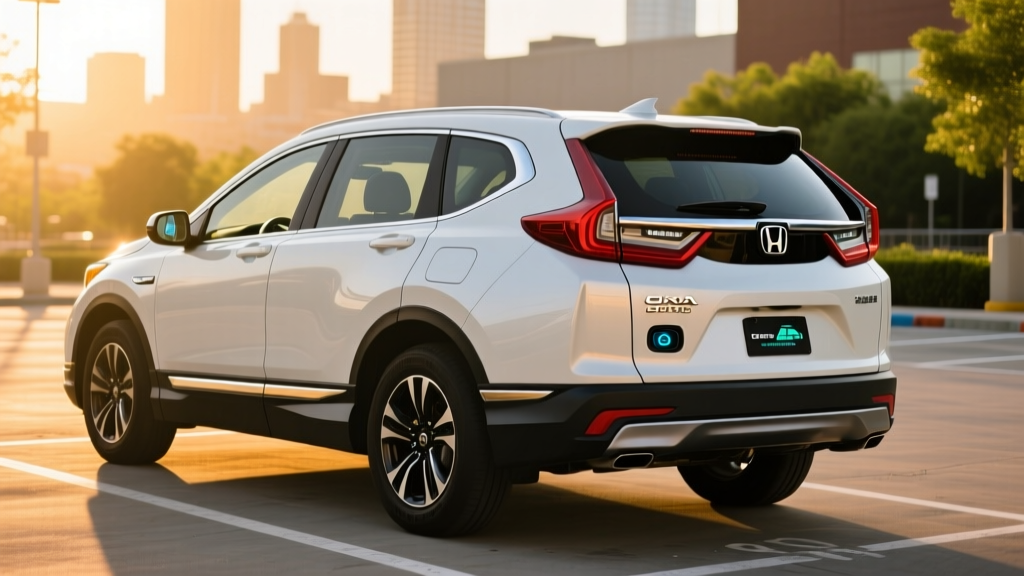
Quick Verdict: The 2024 Honda CR-V Hybrid Sport-L Delivers Where It Counts
The 2024 Honda CR-V Hybrid Sport-L occupies a compelling middle ground for SUV buyers who want meaningful fuel savings without the upfront cost or lifestyle adjustments of a plug-in hybrid or full electric vehicle. With an EPA-estimated 40 MPG combined, a refined two-motor hybrid system producing 204 horsepower, and Honda's reputation for long-term durability, the Sport-L trim specifically adds leather-trimmed seats, a power tailgate, and wireless Apple CarPlay/Android Auto to the already well-equipped Sport Hybrid package.
At a starting MSRP of $39,345 (including destination), the CR-V Hybrid Sport-L undercuts many competing hybrid SUVs while delivering top-tier fuel economy. It does not qualify for the federal §30D EV tax credit — that benefit is reserved for plug-in hybrids and battery-electric vehicles — but its lower purchase price and strong resale value make the total cost of ownership highly competitive over five years of ownership.
This guide breaks down every number that matters: real-world MPG versus EPA estimates, the hybrid powertrain architecture, battery longevity and warranty coverage, and how the CR-V Hybrid Sport-L stacks up against PHEV and full EV alternatives for different buyer profiles.
2024 Honda CR-V Hybrid Sport-L: Key Specifications at a Glance
| Specification | Value |
|---|---|
| Powertrain | 2.0L 4-cylinder + 2 electric motors (series-parallel hybrid) |
| Combined Horsepower | 204 hp |
| Combined Torque | 247 lb-ft (electric motor) |
| Drivetrain | AWD (standard on Sport-L) |
| EPA MPG (City / Highway / Combined) | 40 / 34 / 37 (AWD) |
| Fuel Tank Capacity | 14.0 gallons |
| Total Driving Range | ~518 miles (EPA estimate) |
| 0–60 mph | ~7.6 seconds (estimated) |
| Cargo Volume (behind rear seats / max) | 36.3 / 76.5 cu ft |
| Towing Capacity | 1,000 lbs |
| Starting MSRP (incl. destination) | $39,345 |
| Federal Tax Credit Eligibility | Not eligible (conventional HEV) |
| Hybrid Battery Warranty | 8 years / 100,000 miles |
Source: fueleconomy.gov and Honda Newsroom official specifications.
Fuel Economy: EPA Estimates vs. Real-World MPG
| Driving Scenario | City MPG | Highway MPG | Combined MPG |
|---|---|---|---|
| EPA Estimate | 40 | 34 | 37 |
| Real-World (mixed suburban/highway) | 38–42 | 30–33 | 34–37 |
| Real-World (cold weather, short trips) | 32–36 | 28–31 | 30–33 |
Honda's fourth-generation two-motor hybrid system excels in city driving, where the electric motors handle most low-speed propulsion and the 2.0L Atkinson-cycle engine primarily acts as a generator. This is why the city EPA rating (40 MPG) exceeds the highway rating (34 MPG) — a hallmark of series-parallel hybrid architecture.
In real-world driving, owners frequently report matching or even exceeding the 40 MPG city figure in warm-weather stop-and-go traffic. The regenerative braking system recaptures energy during deceleration, and the engine shuts off at stops, eliminating idle fuel consumption entirely.
Highway fuel economy is the hybrid's relative weak point. At sustained 70–80 mph speeds, the engine must directly drive the wheels through a fixed gear ratio, and aerodynamic drag reduces efficiency. Expect 30–33 MPG on long highway trips — still meaningfully better than the gas-only CR-V AWD's 29 MPG combined, but not the dramatic advantage you'll see around town.
Cold weather impacts all vehicles, but hybrids feel it more acutely on short trips. The engine must run to generate cabin heat (the CR-V Hybrid lacks a heat pump), and the battery operates less efficiently at low temperatures. On sub-freezing commutes under 5 miles, expect combined MPG to drop to the low 30s. Once the powertrain reaches operating temperature on longer drives, efficiency recovers closer to EPA estimates.
How the CR-V Hybrid Powertrain Works: HEV vs. PHEV Explained
The 2024 CR-V Hybrid Sport-L is a conventional hybrid electric vehicle (HEV). This distinction matters enormously for buyers cross-shopping electrified SUVs, because the ownership experience differs fundamentally from a plug-in hybrid (PHEV) or battery-electric vehicle (BEV).
HEV vs. PHEV: What's the Difference?
Conventional Hybrid (HEV) — CR-V Hybrid Sport-L: The small battery (~1.1 kWh) charges exclusively through regenerative braking and the gasoline engine. You never plug it in. The electric motors assist the engine and enable brief electric-only driving at low speeds, but the gas engine remains the primary energy source. Fuel savings come from smarter energy management, not from grid electricity.
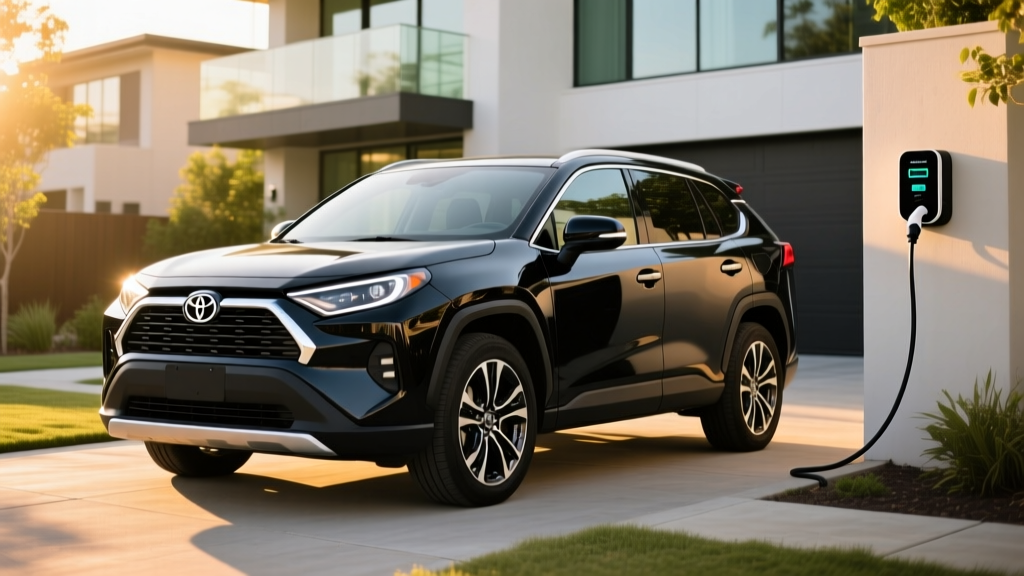
Plug-in Hybrid (PHEV) — e.g., Toyota RAV4 Prime: A larger battery (~18 kWh) can be plugged into a wall outlet or charger, providing 30–42 miles of pure electric driving before the gas engine engages. PHEVs can qualify for federal tax credits (up to $7,500 under §30D) but cost significantly more upfront and require access to charging infrastructure to realize their full efficiency potential.
Key takeaway: The CR-V Hybrid Sport-L requires zero behavioral change from a gas car. You fuel it at gas stations and never think about charging. The trade-off is that it cannot drive on electricity alone for meaningful distances and does not qualify for plug-in vehicle tax incentives.
Honda's hybrid system uses a 2.0-liter DOHC Atkinson-cycle inline-four engine paired with two electric motors. In most driving conditions below ~45 mph, the vehicle operates in EV Drive mode (electric motors only, powered by the engine-generator) or Hybrid Drive mode (engine generates electricity, motors drive the wheels). Only at steady highway cruising does the system engage Engine Drive mode, where a lock-up clutch connects the engine directly to the front wheels for maximum efficiency.
The combined system output of 204 hp and 247 lb-ft of electric motor torque provides confident acceleration for merging and passing. The CR-V Hybrid Sport-L is not sporty in the enthusiast sense, but it never feels underpowered — a common complaint with earlier-generation hybrid SUVs.
Battery Longevity, Warranty, and Replacement Costs
Hybrid Battery Warranty Coverage
Federal emissions warranty: 8 years / 100,000 miles (required by EPA for hybrid battery and emissions components in all 50 states).
California and CARB-adopting states: 10 years / 150,000 miles for hybrid battery and related components.
What's covered: The hybrid battery pack, battery management system, inverter, and electric drive motors. If the battery degrades below a functional threshold or fails outright, Honda replaces it at no cost during the warranty period.
Hybrid battery anxiety remains one of the most common concerns among first-time hybrid buyers, but the data consistently shows that modern lithium-ion hybrid batteries outlast their warranty periods by wide margins. Honda's hybrid systems have proven exceptionally durable — the company's earlier IMA (Integrated Motor Assist) systems in the Insight and Civic Hybrid logged hundreds of thousands of miles with minimal battery failures, and the current two-motor architecture uses a smaller, less stressed battery pack that cycles far less aggressively than a PHEV or BEV battery.
The CR-V Hybrid's battery pack is approximately 1.1 kWh — tiny compared to a BEV's 60–100 kWh pack. Because the battery management system keeps the state of charge within a narrow operating window (typically 40–80%), the cells experience minimal degradation from deep cycling. Most Honda hybrid owners never need a battery replacement during the vehicle's lifetime.
If replacement is needed out of warranty, expect to pay between $2,500 and $4,500 for a new hybrid battery pack installed at a Honda dealership, including labor. Third-party refurbishers offer remanufactured packs for $1,500–$2,500. For context, a full BEV battery replacement can cost $10,000–$20,000+, making the hybrid's smaller battery a significantly lower financial risk.
Pricing, Trims, and Tax Credit Eligibility
The 2024 Honda CR-V Hybrid is available in three trims, all with standard AWD:
| Trim | MSRP (incl. destination) | Key Features |
|---|---|---|
| Sport Hybrid | $35,395 | 18" wheels, heated seats, 7" touchscreen, Honda Sensing suite |
| Sport-L Hybrid | $39,345 | Leather-trimmed seats, power tailgate, wireless CarPlay/Android Auto, 9" touchscreen |
| Sport Touring Hybrid | $42,695 | Bose 12-speaker audio, navigation, heated steering wheel, wireless charging, ventilated front seats |
Source: Honda Automobiles
Federal Tax Credit: Not Eligible
The 2024 Honda CR-V Hybrid Sport-L is a conventional hybrid (HEV) and does not qualify for the IRS §30D Clean Vehicle Credit. That credit — up to $7,500 — applies only to plug-in electric vehicles (BEVs and PHEVs) that meet battery sourcing, MSRP cap, and buyer income requirements under current IRS rules.
However, the CR-V Hybrid's lower MSRP (roughly $8,000–$15,000 less than comparable PHEVs like the RAV4 Prime or Tucson PHEV) means the effective purchase price is competitive even without a tax credit. Some states and utilities offer modest rebates for hybrid purchases — check your local programs.
CR-V Hybrid Sport-L vs. PHEV vs. Full EV: Which Fits Your Life?
Choosing between a conventional hybrid, plug-in hybrid, and battery-electric SUV depends on your driving patterns, charging access, and budget. Here's a practical decision framework:
Choose the CR-V Hybrid (HEV) if:
- You lack reliable home or workplace charging access
- You want maximum fuel savings with zero lifestyle change
- Your budget is under $40,000
- You frequently drive long highway trips where PHEV electric range adds little value
- You plan to keep the vehicle 8+ years and want proven, low-maintenance reliability
Choose a PHEV (e.g., RAV4 Prime) if:
- You have Level 2 home charging and a short daily commute (<40 miles)
- You want to drive mostly on electricity but need gas flexibility for road trips
- You qualify for the $7,500 federal tax credit and the math favors a PHEV
- You're willing to pay $8,000–$12,000 more upfront for electric-only driving
Choose a Full EV (e.g., Ioniq 5, Model Y) if:
- You have reliable home Level 2 charging
- Your daily driving is under 250 miles and you road-trip infrequently
- You want the lowest per-mile fuel cost and minimal maintenance
- You qualify for the full $7,500 credit, offsetting the higher purchase price
- You value instant torque, one-pedal driving, and zero tailpipe emissions
Real-World Ownership: What CR-V Hybrid Sport-L Owners Report
The CR-V Hybrid Sport-L's appeal extends beyond fuel economy. The Sport-L trim's leather interior, power liftgate, and 9-inch touchscreen with wireless smartphone integration deliver a premium feel without stepping up to the Sport Touring. Honda Sensing — the brand's Level 2 driver-assistance suite — is standard across all trims and includes adaptive cruise control, lane-keeping assist, blind-spot monitoring, and automatic emergency braking.
Owners consistently praise the hybrid powertrain's smoothness. Unlike some competitors that produce noticeable engine drone under acceleration, Honda's e-CVT system modulates engine RPM more naturally, and the electric motor's 247 lb-ft of torque fills in the low-end response that CVTs often lack.
Cargo space is competitive at 36.3 cubic feet behind the rear seats (76.5 cu ft with seats folded), though the hybrid battery's placement under the cargo floor eliminates the spare tire — a tire repair kit is included instead. The AWD system, which uses a rear-mounted electric motor rather than a mechanical driveshaft, provides confident traction in rain and light snow without the fuel economy penalty of a traditional AWD system.
Insurance costs for the CR-V Hybrid Sport-L run slightly higher than the gas-only CR-V EX-L (roughly 5–10% more, depending on your state and profile), reflecting the hybrid system's replacement cost. However, the CR-V Hybrid retains strong resale value — typically 55–60% of MSRP after three years, according to industry depreciation data — which helps offset the modest insurance premium increase.
Frequently Asked Questions
How many MPG does the 2024 Honda CR-V Hybrid Sport-L actually get?
The EPA rates the AWD CR-V Hybrid Sport-L at 40 city / 34 highway / 37 combined MPG. In real-world mixed driving, most owners report 34–37 MPG combined. City-heavy drivers often see 38–42 MPG, while sustained highway driving at 75+ mph drops to 30–33 MPG. Cold weather and short trips reduce these figures by 10–15%.
Does the CR-V Hybrid need to be plugged in?
No. The CR-V Hybrid is a conventional hybrid (HEV). Its small battery charges through regenerative braking and the gasoline engine. You fuel it exclusively at gas stations — no plug, no charging cable, no behavioral change required.
Is the Honda CR-V Hybrid reliable, and what does battery replacement cost?
Honda's hybrid systems have an excellent long-term reliability record. The hybrid battery is covered by an 8-year/100,000-mile warranty (10 years/150,000 miles in CARB states). Out-of-warranty battery replacement costs $2,500–$4,500 at a dealer, or $1,500–$2,500 from a third-party refurbisher. Most hybrid batteries last well beyond their warranty period.
Does the 2024 CR-V Hybrid qualify for any federal tax credit?
No. The IRS §30D Clean Vehicle Credit applies only to plug-in electric vehicles (BEVs and PHEVs). The CR-V Hybrid is a conventional HEV and is not eligible. Its lower MSRP relative to PHEVs partially offsets this — a RAV4 Prime starts around $44,000 before any credit, while the CR-V Hybrid Sport-L starts at $39,345 with no credit needed.
How does the CR-V Hybrid compare to the gas-only CR-V?
The gas-only 2024 CR-V AWD is rated at 27 city / 32 highway / 29 combined MPG. The Hybrid Sport-L improves city efficiency by 48% (40 vs. 27 MPG) and combined by 28% (37 vs. 29 MPG). The hybrid also delivers more torque (247 lb-ft vs. 179 lb-ft) for smoother acceleration. The price premium for the hybrid powertrain is roughly $3,000–$4,000 over a similarly equipped gas model, which most drivers recoup in fuel savings within 3–5 years depending on mileage and local gas prices.
Can the CR-V Hybrid Sport-L tow?
Yes, but capacity is limited to 1,000 pounds — adequate for a small utility trailer or a pair of jet skis, but not enough for a camper or boat. If towing is a priority, the gas-only CR-V AWD rates for 1,500 pounds, and competing SUVs like the Toyota RAV4 Hybrid tow up to 1,750 pounds.