Quick Verdict: The 2024 CR-V Hybrid Is Honda's Efficiency Sweet Spot
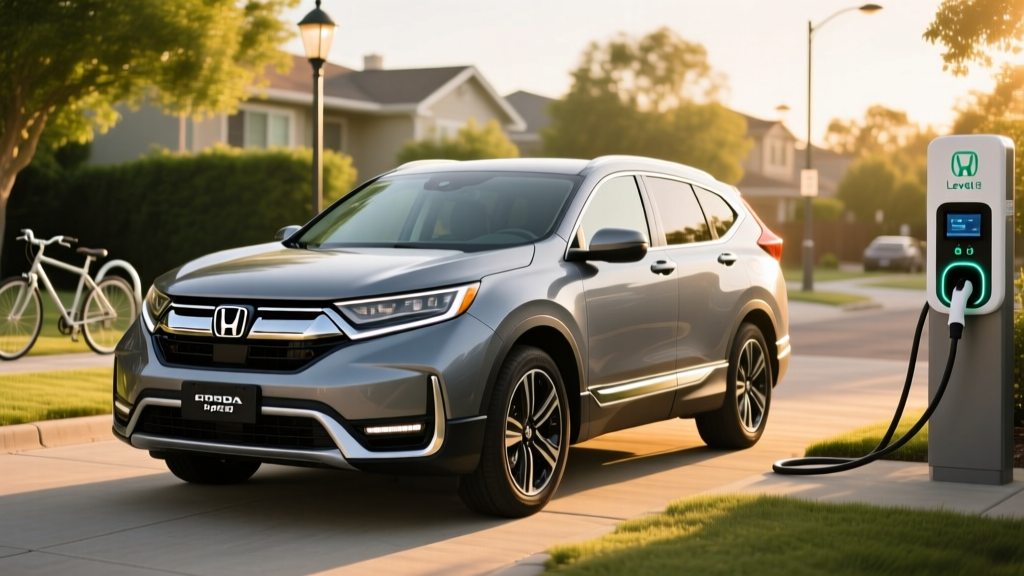
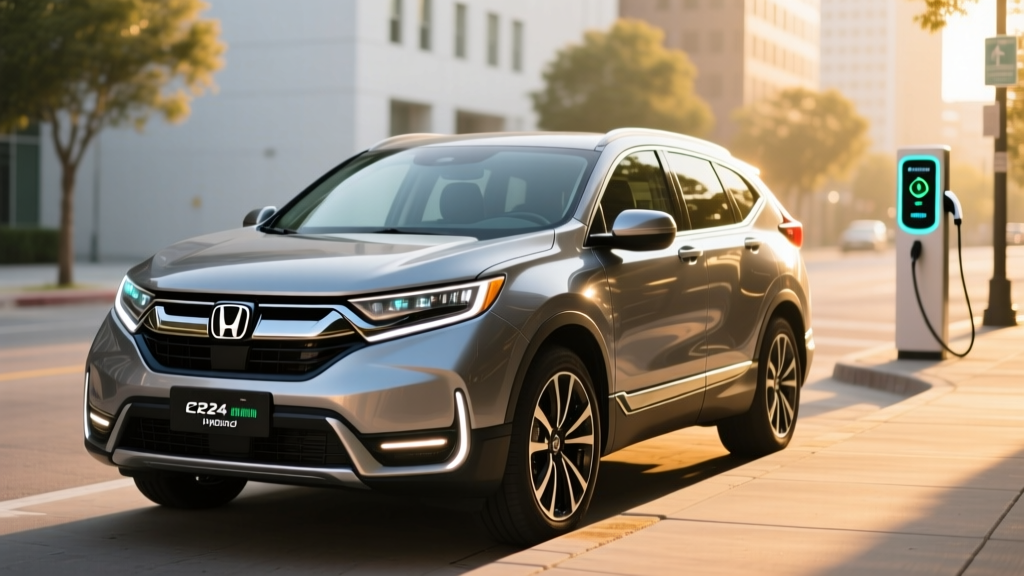
The 2024 Honda CR-V Hybrid pairs a 2.0-liter four-cylinder with a two-motor hybrid system to deliver 204 horsepower and up to 40 MPG combined — all without a plug. For buyers who want SUV practicality, all-wheel drive, and fuel savings without changing their refueling habits, the CR-V Hybrid occupies a compelling middle ground between a conventional gas crossover and a full battery-electric vehicle.
Honda redesigned the CR-V for the 2023 model year, and the 2024 carryover retains the same fourth-generation two-motor hybrid powertrain. The hybrid is available in three trims — Sport, Sport-L, and Sport Touring — starting at $35,395 (including destination). If you're cross-shopping the CR-V Hybrid 2024 lineup against the Toyota RAV4 Hybrid, Hyundai Tucson Hybrid, or even plug-in alternatives, this guide gives you every number you need to decide.
HEV vs. PHEV vs. EV: Where Does the CR-V Hybrid Fit?
Before diving into specs, it's essential to distinguish between the three electrified powertrain types on the market, because Honda only offers the CR-V as a conventional hybrid (HEV) or a gasoline-only model — there is no plug-in hybrid (PHEV) CR-V.
Conventional Hybrid (HEV) — CR-V Hybrid
- No plug required. The small battery recharges through regenerative braking and the gasoline engine.
- Range: 430+ miles per tank.
- Best for: Drivers without home charging access who want lower fuel costs with zero behavior change.
Plug-In Hybrid (PHEV) — e.g., Toyota RAV4 Prime
- Plug-in capable. Larger battery (typically 15–20 kWh) provides 30–42 miles of electric-only driving.
- Requires a Level 2 home charger to maximize value.
- Best for: Drivers with short commutes and garage charging who want EV-like daily driving plus gas backup.
Battery Electric Vehicle (BEV) — e.g., Hyundai Ioniq 5, Tesla Model Y
- No gasoline. 250–350+ miles of EPA range from a 60–80+ kWh battery.
- Requires reliable home or workplace charging for most owners.
- Best for: Drivers with consistent charging access who want zero tailpipe emissions and lowest per-mile fuel cost.
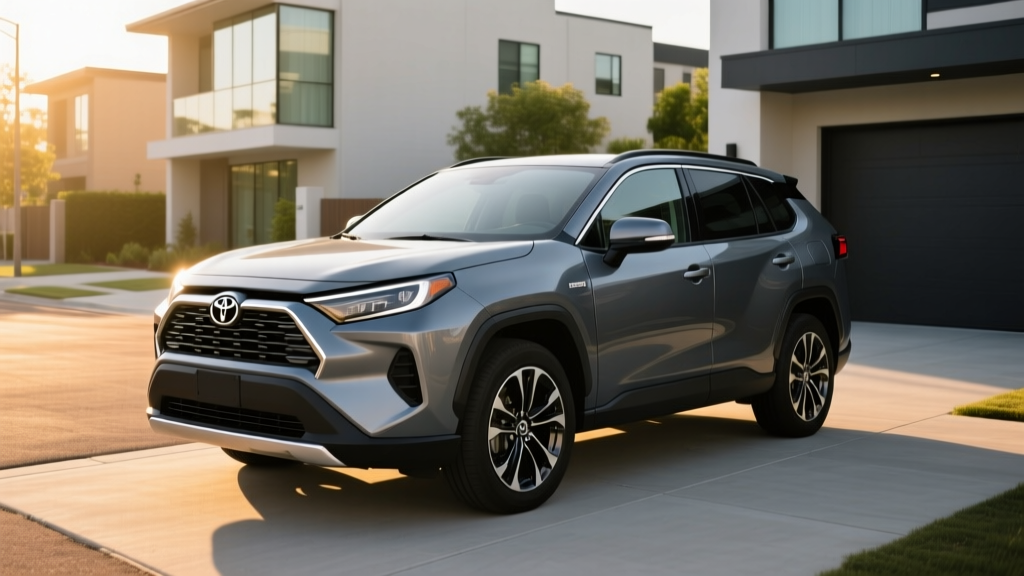
If you're comparing the 2024 CR-V Hybrid against the RAV4 Prime (PHEV), remember: the RAV4 Prime requires home charging infrastructure to realize its electric-range advantage. If you can't install a Level 2 charger, the CR-V Hybrid's no-plug simplicity is a feature, not a limitation.
Fuel Economy: EPA Ratings and Real-World MPG
The EPA rates the 2024 Honda CR-V Hybrid at 40 MPG city, 34 MPG highway, and 37 MPG combined for front-wheel-drive (FWD) trims. The all-wheel-drive (AWD) versions — which account for the majority of CR-V Hybrid sales in snow-belt states — drop slightly to 40 MPG city, 34 MPG highway, and 37 MPG combined for the Sport and Sport-L trims, while the Sport Touring (AWD standard) rates at 40/34/37 MPG as well.
| Trim / Drivetrain | City MPG | Highway MPG | Combined MPG |
|---|---|---|---|
| Sport (FWD) | 43 | 36 | 40 |
| Sport (AWD) | 40 | 34 | 37 |
| Sport-L (FWD) | 43 | 36 | 40 |
| Sport-L (AWD) | 40 | 34 | 37 |
| Sport Touring (AWD) | 40 | 34 | 37 |
Source: EPA fueleconomy.gov
Real-World MPG: What Owners Actually Report
Honda's two-motor hybrid system excels in stop-and-go city driving, where regenerative braking recaptures energy and the electric motor handles low-speed propulsion. In real-world mixed driving, owners on Fuelly and CR-V forums commonly report 36–42 MPG combined, with city-heavy commutes occasionally pushing into the mid-40s. Highway-only road trips at 75+ MPH tend to yield 31–34 MPG, as aerodynamic drag and the engine's direct-drive mode reduce the hybrid advantage at sustained high speeds.
In cold weather (below 30°F), expect a 5–10% reduction in fuel economy as the engine runs more frequently to provide cabin heat and warm the catalytic converter. This is normal hybrid behavior and far less severe than the 20–30% range loss a full EV experiences in the same conditions.
Powertrain and Performance: 204 HP, Two-Motor Hybrid System
The 2024 CR-V Hybrid uses Honda's fourth-generation two-motor hybrid system, which pairs a 2.0-liter Atkinson-cycle four-cylinder engine with two electric motors. Unlike traditional hybrid systems that use a planetary gearset (like Toyota's Hybrid Synergy Drive), Honda's system operates primarily as a series hybrid at low and moderate speeds — the engine generates electricity that powers the drive motor — and switches to direct engine drive via a lock-up clutch at highway cruising speeds.
| Specification | Detail |
|---|---|
| Engine | 2.0L Atkinson-cycle DOHC 4-cylinder |
| Engine Output | 145 hp @ 6,100 rpm / 134 lb-ft torque |
| Drive Motor | 181 hp / 247 lb-ft torque |
| Combined System Output | 204 hp / 247 lb-ft torque |
| Hybrid Battery | ~1.06 kWh lithium-ion (self-charging HEV) |
| Transmission | Direct-drive (no conventional transmission) |
| Drivetrain | FWD or AWD (electronic rear motor assist) |
| 0–60 MPH | ~7.6 seconds (AWD) |
| Towing Capacity | 1,000 lbs (not rated for heavy towing) |
| Fuel Tank | 14.0 gallons |
| Total Range (AWD, combined) | ~518 miles |
The 204 combined horsepower figure represents a meaningful upgrade over the non-hybrid CR-V's 190-hp turbocharged 1.5-liter engine. The electric motor's instant 247 lb-ft of torque gives the Hybrid noticeably stronger off-the-line acceleration than the gas model, particularly in city merging and passing situations. The AWD system uses a rear-mounted electric motor rather than a mechanical driveshaft, reducing parasitic losses.
Pricing, Trims, and Tax Credit Eligibility
The 2024 Honda CR-V Hybrid is offered in three trims, all positioned above the base gas-only LX and EX models:
| Trim | Drivetrain | MSRP (incl. destination) |
|---|---|---|
| Sport | FWD or AWD | $35,395 (FWD) / $36,895 (AWD) |
| Sport-L | FWD or AWD | $37,695 (FWD) / $39,195 (AWD) |
| Sport Touring | AWD only | $42,195 |
Federal Tax Credit: Not Eligible
The 2024 Honda CR-V Hybrid is a conventional hybrid (HEV), not a plug-in electric vehicle. Under IRS §30D, only battery electric vehicles (BEVs) and plug-in hybrid electric vehicles (PHEVs) with a minimum battery capacity of 7 kWh qualify for the federal clean vehicle credit. The CR-V Hybrid does not qualify for any federal EV tax credit.
Some states offer their own incentives for hybrid purchases, but these are increasingly rare as state programs shift toward full EVs. Check your state's energy office or DMV website for any remaining hybrid rebates. A qualified tax professional can confirm whether any local incentives apply to your situation. See IRS §30D clean vehicle credit rules for current federal requirements.
Reliability, Battery Warranty, and Long-Term Ownership Costs
Hybrid reliability is a top concern for buyers considering their first electrified vehicle. The good news: Honda's two-motor hybrid system is one of the most proven in the industry, with over a decade of deployment across the Accord Hybrid, Insight, and CR-V Hybrid lineups.
Honda Hybrid Battery Warranty
- Hybrid battery: 8 years / 100,000 miles (10 years / 150,000 miles in CARB states including CA, NY, MA, and others)
- Hybrid system components: 8 years / 100,000 miles
- Powertrain warranty: 5 years / 60,000 miles
- Bumper-to-bumper: 3 years / 36,000 miles
Honda covers the hybrid battery against capacity loss below a specified threshold and against defects. In practice, Honda hybrid batteries from the 2010s are routinely lasting 150,000–200,000+ miles with minimal degradation, thanks to the small battery size and conservative state-of-charge window (the system never fully charges or fully depletes the pack).
Should the hybrid battery eventually require replacement out of warranty, expect a cost of approximately $2,000–$4,000 for a refurbished or new unit from Honda, plus labor. Third-party hybrid battery refurbishers offer replacements for $1,500–$2,500. This is significantly less than a full EV battery replacement ($10,000–$20,000+), reflecting the CR-V Hybrid's much smaller ~1 kWh pack.
For context, the non-hybrid CR-V's 1.5L turbo engine and CVT transmission carry their own long-term maintenance costs (turbo wear, CVT fluid changes) that the hybrid's simpler direct-drive system largely avoids. The hybrid's regenerative braking also extends brake pad life — many owners report original brake pads at 60,000+ miles.
Who Should Choose the CR-V Hybrid vs. a Full EV or Gas Car?
Choose the CR-V Hybrid If:
- You lack home or workplace EV charging access
- You regularly take long road trips and don't want to plan around charging stops
- You live in a cold climate where EV range loss is a concern
- You want AWD and 40 MPG city without paying PHEV premiums
- You want lower fuel costs with zero behavioral change
- Your budget tops out around $37,000–$42,000 for a compact SUV
Consider a Full EV (e.g., Ioniq 5, Model Y) If:
- You have reliable Level 2 home charging
- Your daily commute is under 50 miles round-trip
- You want to qualify for the $7,500 federal tax credit (subject to §30D rules)
- You want the lowest per-mile fuel cost (~$0.04–$0.06/mi on home electricity vs. ~$0.12–$0.15/mi for the CR-V Hybrid at 37 MPG)
- You want zero tailpipe emissions and minimal drivetrain maintenance
The Fuel Cost Math: CR-V Hybrid vs. Gas CR-V vs. EV
At 12,000 miles/year and $3.50/gallon regular fuel:
- Gas-only CR-V (28 MPG combined): ~$1,500/year in fuel
- CR-V Hybrid (37 MPG combined): ~$1,135/year in fuel — saving ~$365/year
- Comparable EV (110 MPGe, $0.14/kWh home charging): ~$510/year in electricity — saving ~$990/year vs. gas
The Hybrid saves meaningful money over gas, but a full EV with home charging saves nearly three times as much annually. The trade-off is upfront cost and charging infrastructure. Over 5 years, the CR-V Hybrid saves ~$1,825 in fuel versus the gas model — enough to offset much of its ~$1,500 price premium over a comparable gas trim.
Cargo, Interior, and Daily Practicality
The hybrid powertrain does not compromise cargo space. The CR-V Hybrid offers 36.3 cubic feet behind the rear seats and 76.5 cubic feet with the rear seats folded — identical to the gas-only CR-V. Honda packages the hybrid battery beneath the cargo floor without intruding into the cabin or eliminating the spare tire well (a compact spare is included).
The Sport Touring trim adds a 9-inch touchscreen with wireless Apple CarPlay and Android Auto, a 12-speaker Bose audio system, heated rear seats, and a hands-free power tailgate. All trims include Honda Sensing (adaptive cruise control, lane-keeping assist, automatic emergency braking, and traffic sign recognition) as standard equipment. This is a Level 1/Level 2 driver-assistance suite — it does not replace an attentive driver.
Frequently Asked Questions
How many MPG does the 2024 Honda CR-V Hybrid get?
The EPA rates the AWD CR-V Hybrid at 40 city / 34 highway / 37 combined MPG. The FWD version achieves 43 city / 36 highway / 40 combined. Real-world owner reports cluster around 36–42 MPG combined, with city-heavy driving trending toward the upper end and sustained highway driving at 75+ MPH pulling toward the lower end.
Does the CR-V Hybrid need to be plugged in?
No. The 2024 CR-V Hybrid is a conventional hybrid (HEV). Its small lithium-ion battery recharges automatically through regenerative braking and the gasoline engine. You refuel it at any gas station, exactly like a non-hybrid vehicle. Honda does not currently offer a plug-in hybrid (PHEV) version of the CR-V.
Is the CR-V Hybrid reliable? What is battery replacement cost?
Honda's two-motor hybrid system has an excellent reliability track record spanning over a decade across multiple models. The hybrid battery is covered by an 8-year/100,000-mile warranty (10 years/150,000 miles in CARB states). Out-of-warranty replacement costs approximately $2,000–$4,000 for a new or refurbished battery — far less than an EV battery replacement. Many Honda hybrid batteries exceed 150,000 miles without issues.
Does the 2024 CR-V Hybrid qualify for any tax credit?
No. Under current IRS §30D rules, only plug-in electric vehicles (BEVs and PHEVs) with at least 7 kWh of battery capacity qualify for the federal clean vehicle credit. The CR-V Hybrid's ~1 kWh battery makes it ineligible. Some states may offer minor hybrid incentives, but these are increasingly uncommon. Consult a tax professional for guidance specific to your situation.
CR-V Hybrid vs. RAV4 Hybrid: which is better?
The Toyota RAV4 Hybrid rates at 41 MPG combined (AWD) — slightly ahead of the CR-V Hybrid's 37 MPG combined AWD rating. The RAV4 Hybrid starts at a similar price (~$33,000) and offers a PHEV variant (RAV4 Prime, 42 miles electric-only range). However, the CR-V Hybrid provides a more refined ride, a more modern interior, and stronger acceleration (204 hp vs. 219 hp combined, but Honda's electric-motor-dominant system feels more responsive in city driving). Both are excellent choices; the decision often comes down to brand preference and dealer availability.
How does the CR-V Hybrid perform in snow and cold weather?
The AWD system uses an electric rear motor that provides instant torque to the rear wheels when slip is detected, making the CR-V Hybrid confident in light to moderate snow. In extreme cold (below 20°F), expect fuel economy to drop 5–10% as the engine runs more frequently for cabin heat. Unlike a full EV, the CR-V Hybrid's range is not significantly impacted by cold weather — you still have a 14-gallon tank and 450+ miles of range.
For official EPA fuel economy data, visit fueleconomy.gov. For Honda's current specifications and pricing, see Honda's CR-V Hybrid page. Safety ratings are available at NHTSA.gov.