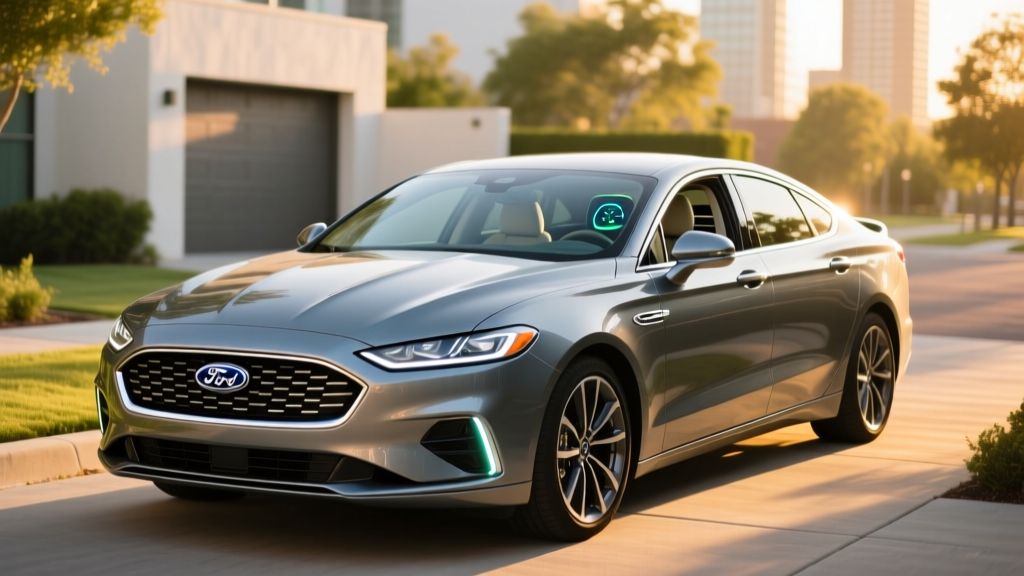
The Ford Fusion was discontinued after the 2020 model year, which means there is no new 2024 Ford Fusion Hybrid rolling off assembly lines. Yet the search for a "2024 Ford Fusion Hybrid" remains one of the most persistent queries among midsize sedan shoppers — and for good reason. The Fusion Hybrid (HEV) and Fusion Energi (PHEV) built between 2017 and 2020 remain some of the most capable, comfortable, and efficient used hybrid sedans available in 2026. Whether you're cross-shopping the used market or comparing the Fusion's DNA to Ford's current hybrid lineup (the Maverick and Escape hybrids share much of the same powertrain architecture), understanding what the Fusion Hybrid offers is essential.
This guide covers the final-generation Fusion Hybrid and Fusion Energi with the exact specs, real-world MPG data, battery longevity facts, and 2026 used-market pricing you need to make an informed decision.
HEV vs PHEV: Fusion Hybrid vs Fusion Energi Explained
Ford offered two electrified Fusions in the final generation. Confusing them is the most common buyer mistake, so let's separate them clearly:
Fusion Hybrid (HEV)
No plug required. The conventional hybrid recharges its small battery through regenerative braking and the gasoline engine. You fuel it like any other car — it simply uses less gas.
- 1.4 kWh lithium-ion battery (usable ~1.0 kWh)
- No electric-only driving beyond brief low-speed assist
- EPA: 43 city / 41 highway / 42 combined MPG
- Total range: ~550+ miles per tank
Fusion Energi (PHEV)
Plug-in capable. The Energi carries a larger battery you can charge from a wall outlet, enabling genuine electric-only driving before the gas engine engages.
- 7.6 kWh lithium-ion battery (usable ~5.8 kWh in later models)
- EPA electric-only range: 26 miles
- EPA: 103 MPGe (electric+gas) / 42 MPG combined (gas-only)
- Total combined range: ~610 miles
The HEV suits drivers who want maximum simplicity and have no charging access. The Energi rewards those with a home outlet and a short commute — that 26-mile electric range covers most daily errands without burning a drop of gas.
Fuel Economy: EPA Ratings and Real-World MPG
The Fusion Hybrid's EPA ratings varied slightly by model year within the final generation. Here are the figures for the 2019–2020 models, which represent the most commonly available used examples in 2026:
| Model | City MPG | Highway MPG | Combined MPG | MPGe (if PHEV) |
|---|---|---|---|---|
| Fusion Hybrid S/SE | 43 | 41 | 42 | — |
| Fusion Hybrid Titanium | 43 | 41 | 42 | — |
| Fusion Energi (gas-only mode) | 43 | 41 | 42 | 103 MPGe |
Source: fueleconomy.gov
Real-World MPG: What Owners Actually See
Hybrid sedans like the Fusion tend to meet or exceed their EPA city rating in stop-and-go traffic, where regenerative braking recaptures the most energy. Owner-reported data on Fuelly and hybrid forums consistently shows:
- City driving: 42–47 MPG (many owners beat the 43 EPA city figure)
- Highway cruising (70+ mph): 36–40 MPG (hybrids lose their advantage at sustained high speeds)
- Mixed commuting: 40–44 MPG combined
- Cold weather (below 32°F): Expect a 10–15% drop, landing around 36–38 MPG combined until the cabin and battery warm up
The Fusion Energi in regular charge-depleting mode (plugging in nightly) typically achieves 1.5–2.5 gallons per week for a 20-mile-each-way commuter — effectively running on electricity most weekdays.
Powertrain Specs: Engine, Motor, and Combined Output
| Specification | Fusion Hybrid (HEV) | Fusion Energi (PHEV) |
|---|---|---|
| Engine | 2.0L Atkinson-cycle I4 | 2.0L Atkinson-cycle I4 |
| Engine HP | 141 hp @ 6,000 rpm | 141 hp @ 6,000 rpm |
| Electric Motor | 88 kW (118 hp) | 88 kW (118 hp) |
| Combined System HP | 195 hp | 195 hp |
| Transmission | eCVT (planetary gearset) | eCVT (planetary gearset) |
| Battery Capacity | 1.4 kWh Li-ion | 7.6 kWh Li-ion |
| 0–60 mph | ~8.1 seconds | ~8.4 seconds |
| Drivetrain | FWD | FWD |
| Fuel Tank | 13.5 gal | 14.0 gal |
| Cargo Volume | 12.0 cu ft | 8.2 cu ft (battery intrusion) |
The eCVT is not a traditional belt-and-cone CVT — it uses a planetary gearset to blend engine and motor power with no rubber-band feeling. Acceleration is linear and adequate for merging, though the Fusion Hybrid is tuned for efficiency, not sportiness. The Energi's extra battery mass accounts for its slightly slower 0–60 time and the significant cargo-space penalty (the larger pack sits behind the rear seats).
Fusion Energi Charging: Plug-In Times and Electric Range
The Fusion Energi's 7.6 kWh battery (with approximately 5.8 kWh usable to protect longevity) delivers an EPA-rated 26 miles of electric-only range. Here's how charging works:
| Charging Method | Power | Full Charge Time | Miles Added/Hour |
|---|---|---|---|
| Level 1 (120V household outlet) | 1.4 kW | ~5.5 hours | ~5 mi/hr |
| Level 2 (240V home/public) | 3.3 kW (max onboard) | ~2.5 hours | ~10 mi/hr |
| DC Fast Charge | Not supported — no DC fast-charge port | ||
The Fusion Energi uses a standard J1772 connector for Level 1 and Level 2 AC charging. It cannot accept DC fast charging — a limitation common to PHEVs of this era. However, given the small 7.6 kWh battery, a full charge overnight on a basic 120V outlet is entirely practical. Most Energi owners plug in nightly at home and rarely visit public chargers.
Battery Warranty, Lifespan, and Replacement Cost
Hybrid Battery Warranty Coverage
Ford's hybrid battery warranty: 8 years / 100,000 miles (whichever comes first) in most states. In California Air Resources Board (CARB) states — including CA, CT, ME, MA, NJ, NY, OR, RI, VT, WA — the warranty extends to 10 years / 150,000 miles.
For a 2019–2020 Fusion Hybrid purchased used in 2026, original factory warranty coverage may still apply if the vehicle has under 100,000 miles (or 150,000 in CARB states). Always verify with a Ford dealer using the VIN.
Real-world battery longevity: The Fusion Hybrid's lithium-ion pack has proven durable. Taxi fleets and high-mileage owners have reported 150,000–200,000+ miles on the original hybrid battery with minimal capacity loss. Unlike early nickel-metal-hydride (NiMH) packs in first-gen hybrids, these Li-ion cells benefit from Ford's conservative state-of-charge window (the car never fully charges or fully depletes the pack, which dramatically extends cycle life).
Replacement cost if out of warranty:
- OEM Ford replacement battery: $2,500–$4,000 (part only, varies by source)
- Full dealer-installed replacement: $4,000–$6,500 including labor
- Aftermarket/reconditioned options: $1,500–$3,000 installed at independent hybrid shops
The Fusion Energi's larger 7.6 kWh pack costs more to replace ($5,000–$8,000 dealer-installed) but follows the same warranty schedule. Given the proven longevity of these packs, most used buyers will never face a replacement — but it's worth budgeting for on vehicles approaching 120,000+ miles outside warranty.
2026 Used-Market Pricing and Tax Credit Reality
Since the Fusion Hybrid is no longer produced new, you'll find it exclusively on the used market. Here's what pricing looks like in early 2026:
| Model / Trim | Typical Mileage | Price Range (2026) |
|---|---|---|
| 2017–2018 Fusion Hybrid SE | 70,000–100,000 | $12,000–$16,000 |
| 2019–2020 Fusion Hybrid SE/Titanium | 40,000–75,000 | $16,000–$22,000 |
| 2019–2020 Fusion Energi (PHEV) | 40,000–70,000 | $15,000–$21,000 |
Federal Tax Credit: Used EV/PHEV Credit (§25E)
The Fusion Energi (PHEV) may qualify for the federal used clean vehicle credit under IRS §25E — up to $4,000 or 30% of the sale price, whichever is less. Key eligibility rules as of 2026:
- Sale price must be $25,000 or less
- Buyer income caps: $75,000 single / $112,500 head of household / $150,000 joint
- Vehicle must be at least 2 model years old
- Must purchase from a licensed dealer (private-party sales excluded)
- Buyer can claim this credit only once every 3 years
The conventional Fusion Hybrid (HEV) does not qualify for any federal tax credit — neither §30D (new vehicles) nor §25E (used), as these require plug-in capability with a minimum battery capacity.
Source: IRS.gov §25E Used Clean Vehicle Credit. Tax eligibility is individual — consult a tax professional before relying on credit availability.
Fusion Hybrid vs Full EV vs Gas: Which Should You Choose?
Choose the Fusion Hybrid if…
- You lack home charging access
- You want 40+ MPG with zero behavior change
- You drive 15,000+ miles/year and want low fuel cost without range planning
- Budget is $15K–$22K for a reliable sedan
- You take regular road trips beyond charger infrastructure
Choose the Fusion Energi (PHEV) if…
- You have a garage/driveway for nightly Level 1 or Level 2 charging
- Your daily commute is under 30 miles round-trip
- You want electric commuting with gas backup for long trips
- You want to potentially claim the $4,000 used-EV credit
- You can accept reduced trunk space (8.2 cu ft)
Choose a Full EV (e.g., Tesla Model 3) if…
- You have reliable home Level 2 charging
- You want zero tailpipe emissions and minimal maintenance
- Your daily drive is under 200 miles with access to DC fast charging for road trips
- You want stronger acceleration and lower per-mile energy cost
- Budget allows $25K+ for a used EV
The Fusion Hybrid occupies a pragmatic sweet spot: it delivers near-Prius efficiency in a quieter, more refined midsize sedan with Ford's available Co-Pilot360 safety suite (automatic emergency braking, lane-keeping, blind-spot monitoring on higher trims). It won't match a Model 3's performance or per-mile electricity cost, but it eliminates every form of range anxiety while cutting your fuel bill roughly in half compared to a gas-only Camry or Accord of the same era.
Reliability, Safety, and What to Check Before Buying Used
The final-generation Fusion Hybrid (2017–2020) has a strong reliability record. The 2.0L Atkinson-cycle engine is under-stressed and proven, and Ford's hybrid transaxle has no belts, torque converter, or traditional wear items to fail. Common maintenance items are limited to brake pads (which last 80,000+ miles thanks to regen), coolant service, and standard fluid changes.
Safety: The 2020 Fusion earned a 5-star overall rating from NHTSA and a Top Safety Pick designation from IIHS when equipped with the optional forward-collision warning system.
Pre-purchase checklist for a used Fusion Hybrid:
- Verify hybrid battery state of health (SoH) via an OBD-II scanner or Ford dealer diagnostic
- Confirm remaining powertrain/hybrid warranty via VIN lookup
- Check for the 12V auxiliary battery age — hybrids still use a standard 12V battery for electronics, and a dead 12V will prevent the car from starting even if the hybrid pack is healthy
- Inspect for any open recalls (Ford issued a few related to brake fluid and seatbelt pretensioners on 2017–2019 models)
- Review service records for coolant flush intervals on the hybrid system
Frequently Asked Questions
How many MPG does the Ford Fusion Hybrid get?
The EPA rates the 2019–2020 Fusion Hybrid at 43 city / 41 highway / 42 combined MPG. In real-world driving, owners regularly report 42–47 MPG in city conditions and 36–40 MPG on the highway. Cold weather can reduce these figures by 10–15%.
How far can the Fusion Energi go on electric only?
The Fusion Energi (PHEV) has an EPA-rated 26 miles of electric-only range on a full charge. At highway speeds or in cold weather, expect 18–22 miles. Once the battery is depleted, it operates as a conventional hybrid at 42 MPG combined.
Does the Fusion Hybrid need to be plugged in?
No. The Fusion Hybrid (HEV) never plugs in — it charges its battery through regenerative braking and the gasoline engine. Only the Fusion Energi (PHEV) has a plug-in port for its larger battery.
Is the Fusion Hybrid reliable, and what does battery replacement cost?
Yes. The final-generation Fusion Hybrid has above-average reliability for its class, with hybrid batteries commonly lasting 150,000+ miles. Out-of-warranty battery replacement runs $4,000–$6,500 at a dealer or $1,500–$3,000 at an independent hybrid specialist. Ford's hybrid battery warranty covers 8 years/100,000 miles (10 years/150,000 miles in CARB states).
Does the Ford Fusion Hybrid qualify for a tax credit?
The conventional Fusion Hybrid (HEV) does not qualify for any federal tax credit. The Fusion Energi (PHEV) may qualify for the federal used clean vehicle credit (§25E) of up to $4,000 when purchased from a dealer for $25,000 or less, subject to buyer income limits. Consult a tax professional to confirm eligibility based on your situation. See IRS §25E guidelines for current rules.
How does the Fusion Hybrid compare to a Toyota Camry Hybrid?
The 2020 Camry Hybrid LE is rated at 52 MPG combined (vs. the Fusion's 42), giving Toyota a significant efficiency edge. However, the Fusion offers a quieter cabin, more available luxury features on the Titanium trim, and comparable reliability. If maximum MPG is the priority, the Camry Hybrid wins. If ride quality and tech features matter more, the Fusion Hybrid is compelling — especially at used-market discounts.
Can I still get a Ford hybrid sedan in 2026?
Ford discontinued all sedan production (Fusion, Fiesta, Focus) to focus on SUVs and trucks. If you want a new Ford hybrid, the closest current options are the Ford Maverick Hybrid (42 MPG combined, starting ~$28,000) and the Ford Escape Hybrid (37–40 MPG, starting ~$34,000). For a sedan, you'll need to shop the used Fusion Hybrid market or look at Toyota/Honda/Hyundai new hybrid sedans.