Quick Verdict: The Escape PHEV Bridges the Gap
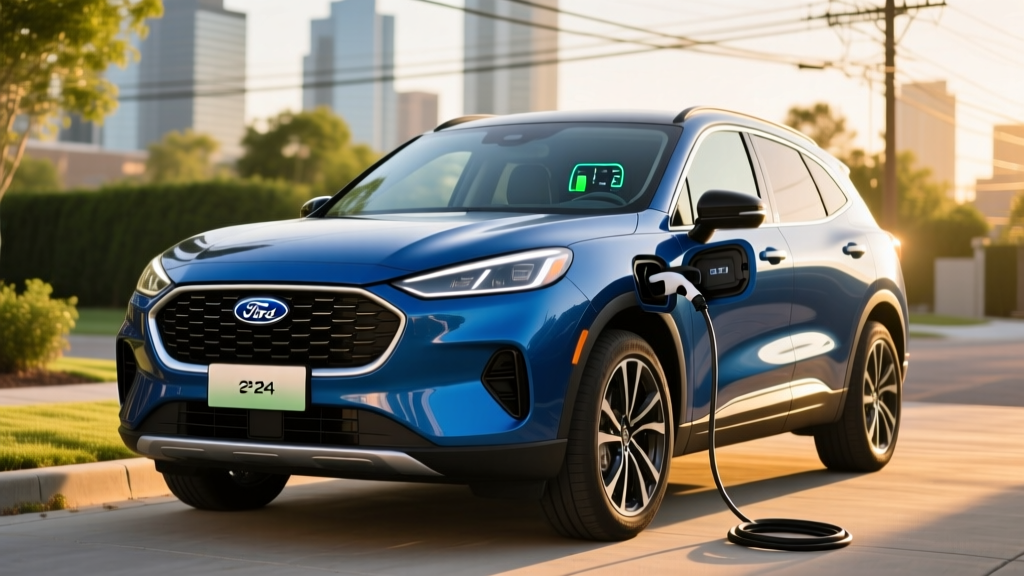
The 2024 Ford Escape Plug-In Hybrid targets buyers who want meaningful electric-only commuting without committing to a full battery-electric vehicle. With an EPA-rated 37 miles of electric-only range and 105 MPGe combined when running on battery power, it covers most daily commutes without burning a drop of gasoline. Once the battery depletes, the 2.5-liter Atkinson-cycle four-cylinder and hybrid system deliver 40 MPG combined — competitive with the conventional Escape Hybrid.
For 2026 buyers shopping the used or certified pre-owned market (the 2024 model year is no longer sold new), the Escape PHEV remains a compelling value, especially if you can charge at home and your commute falls within that 37-mile electric window.
| Spec | Value |
|---|---|
| EPA Electric-Only Range | 37 miles |
| EPA MPGe (EV Mode) | 105 MPGe combined |
| EPA MPG (Hybrid/Charge-Sustaining) | 40 city / 37 highway / 40 combined |
| Battery Capacity | 14.4 kWh (usable) |
| Battery Chemistry | NMC (Nickel Manganese Cobalt) |
| Combined System Horsepower | 210 hp |
| Engine | 2.5L Atkinson-cycle I4 + permanent-magnet electric motor |
| Transmission | eCVT (planetary gearset) |
| Level 2 Charge Time (0–100%) | ~3.5 hours at 3.3 kW (120V: ~10–11 hours) |
| DC Fast Charging | Not available |
| Drivetrain | FWD only (AWD not offered on PHEV) |
| 0–60 mph | ~8.2 seconds (est.) |
| Cargo Volume | 34.4 cu ft (rear seats up) / 60.8 cu ft (folded) |
| Base MSRP (2024) | $38,800 (PHEV base) |
| Battery Warranty | 8 years / 100,000 miles |
HEV vs PHEV: What's the Difference on the Escape?
Ford sells the Escape in three powertrain flavors for this generation: gas-only, conventional hybrid (HEV), and plug-in hybrid (PHEV). The distinction matters for your wallet and your daily routine.
| Attribute | Escape Hybrid (HEV) | Escape Plug-In Hybrid (PHEV) |
|---|---|---|
| Needs to plug in? | No — self-charging via regen & engine | Yes — plug in to access electric-only range |
| Electric-only driving | Brief, low-speed only (~1 mile) | Up to 37 miles at highway speeds |
| Battery size | 1.1 kWh | 14.4 kWh |
| Combined system HP | 210 hp | 210 hp |
| EPA MPG (combined) | 39 MPG | 40 MPG (gas) / 105 MPGe (electric) |
| AWD available? | Yes | No (FWD only) |
| Starting MSRP (2024) | ~$32,400 | ~$38,800 |
The conventional Escape Hybrid never needs to be plugged in. It uses a small 1.1 kWh battery that recharges through regenerative braking and the gas engine. You drive it exactly like a gas car — just with better fuel economy, especially in city traffic where the electric motor assists heavily.
The PHEV adds a much larger 14.4 kWh battery and a more capable electric motor integration, enabling sustained electric-only driving at speeds up to about 85 mph. If you plug in nightly, you may go weeks without visiting a gas station. But if you never plug it in, you're simply carrying around 600+ pounds of extra battery weight, and your fuel economy will actually be slightly worse than the lighter HEV variant.
Electric-Only Range and Real-World Efficiency
The EPA rates the 2024 Escape PHEV at 37 miles of electric-only range. In real-world testing, that number holds up reasonably well in mild weather (60–80°F) with moderate acceleration and speeds under 65 mph. Expect the following deviations:
- Highway driving (70+ mph): Range drops to approximately 28–32 miles due to increased aerodynamic drag.
- Cold weather (below 40°F): Cabin heating draws from the battery, reducing range to roughly 25–30 miles. The Escape PHEV uses a resistance heater rather than a heat pump, which is less efficient in cold conditions.
- Aggressive acceleration / hilly terrain: Expect 30–33 miles as the motor works harder.
Once the battery depletes to its buffer threshold (roughly 10–12% state of charge), the vehicle seamlessly transitions to hybrid mode. Here, the EPA rates it at 40 MPG combined (40 city / 37 highway). In our experience, city driving often exceeds the EPA estimate — 42–45 MPG is common in stop-and-go traffic where regenerative braking recaptures energy frequently. Highway cruising at 75 mph tends to land closer to 35–37 MPG.
For context, fueleconomy.gov lists the combined MPG at 40 and MPGe at 105 for the 2024 model year.
Charging: What You Need to Know
The Escape PHEV's 14.4 kWh battery is modest by full-EV standards, which means charging is straightforward and affordable.
| Level | Power | Connector | Time (0–100%) | Best For |
|---|---|---|---|---|
| Level 1 (120V household) | ~1.2 kW | Standard J1772 | 10–11 hours | Overnight top-up, no install needed |
| Level 2 (240V home/public) | 3.3 kW (vehicle-limited) | J1772 | ~3.5 hours | Home wallbox, workplace charging |
| DC Fast Charge | N/A | N/A | N/A | Not supported on this vehicle |
A critical detail: the Escape PHEV's onboard charger maxes out at 3.3 kW. Even if you plug into a 7.2 kW or 11.5 kW Level 2 station, the vehicle will only draw 3.3 kW. This is a hardware limitation of the vehicle's charger, not the station. A full Level 2 charge takes roughly 3.5 hours — fast enough to fully replenish during a workday or overnight.
Level 1 charging from a standard 120V outlet is viable for many PHEV owners. If your daily commute is 20–25 miles round trip, plugging into a standard garage outlet overnight (10+ hours) will replenish most or all of your daily electric usage without any electrical installation cost.
Important: kW (kilowatt) measures charging power — how fast energy flows. kWh (kilowatt-hour) measures battery capacity — how much energy is stored. The Escape PHEV has a 14.4 kWh battery and charges at a peak of 3.3 kW.
Powertrain Performance
The 2024 Escape PHEV pairs a 2.5-liter Atkinson-cycle inline-four with a permanent-magnet synchronous electric motor integrated into the eCVT transmission. Combined system output is 210 horsepower.
The Atkinson-cycle engine prioritizes efficiency over peak power — it produces less horsepower per displacement than a conventional Otto-cycle engine but extracts more energy from each combustion event. The electric motor fills in the low-end torque gap, providing responsive acceleration from a stop.
The 0–60 mph time of approximately 8.2 seconds is adequate for merging and passing but won't feel sporty. The eCVT delivers seamless, shift-free acceleration — there are no fixed gear ratios, just a continuously variable planetary gearset that blends engine and motor power. Some drivers find the eCVT drone under hard acceleration less refined than a stepped automatic, but it's a trade-off for efficiency.
One notable limitation: the Escape PHEV is front-wheel drive only. If you need AWD — for snow-belt climates or rough terrain — you'll need to look at the conventional Escape Hybrid (AWD available) or a competitor like the Toyota RAV4 Prime (AWD standard).
Pricing, Tax Credits, and Ownership Costs
The 2024 Escape PHEV launched with a base MSRP of approximately $38,800 (before destination). Higher trims pushed the price into the low-to-mid $40,000 range. As a 2024 model-year vehicle, it is now available on the used and certified pre-owned market.
Federal Tax Credit Eligibility
Under IRS §30D rules, the 2024 Ford Escape PHEV did not qualify for the full $7,500 federal tax credit when purchased new. The vehicle's battery sourcing and critical mineral content did not meet the thresholds established by the Inflation Reduction Act for the 2024 tax year. This was a significant disadvantage versus some competitors.
For 2026 buyers purchasing a used Escape PHEV, the used clean vehicle credit (IRC §25E) may apply: up to $4,000 or 30% of the sale price (whichever is lower), subject to income caps ($75,000 single / $150,000 joint), a dealer-sale requirement, and a sale price cap of $25,000. Always verify current rules at irs.gov and consult a tax professional.
Battery Warranty & Replacement Cost
Ford covers the Escape PHEV's high-voltage battery for 8 years or 100,000 miles (whichever comes first), with a capacity retention threshold of approximately 70%. If the battery degrades below that threshold within the warranty period, Ford will repair or replace it at no cost.
Out-of-warranty replacement cost for the 14.4 kWh pack is estimated at $4,000–$7,000 including labor, based on current parts pricing and dealer rates. However, PHEV battery packs in this size class have shown strong longevity — degradation of 10–15% over 100,000 miles is typical, meaning most owners will never face a full replacement.
The conventional hybrid components (motor, eCVT, power electronics) carry a separate 8-year/100,000-mile warranty.
Who Should Choose the Escape PHEV?
Pros
- 37-mile EV range covers most commutes gas-free
- 105 MPGe in electric mode keeps running costs low
- No range anxiety — gas engine backs you up for road trips
- Level 1 charging is viable (no expensive install required)
- Strong city MPG (40+) even in hybrid mode
- Competitive cargo space for the compact SUV segment
Cons
- FWD only — no AWD option
- 3.3 kW charge cap slows Level 2 charging vs. rivals
- No DC fast charging capability
- Did not qualify for the $7,500 federal credit when new
- Premium over the conventional HEV takes years to recoup
- Resistance heater (no heat pump) reduces winter EV range
Escape PHEV vs Hybrid vs Full EV — Which Fits You?
Choose the Escape PHEV if: You can charge at home (even Level 1), your daily commute is under 35 miles round-trip, and you want electric daily driving without giving up the flexibility of a gas engine for road trips. You don't need AWD.
Choose the conventional Escape Hybrid if: You can't charge at home, you need AWD, or your daily mileage far exceeds 37 miles. The HEV is lighter, simpler, and nearly as efficient on the highway without any plug-in routine.
Choose a full EV (like the Ford Mustang Mach-E or Hyundai Ioniq 5) if: You want zero tailpipe emissions, have reliable home charging, your daily driving is under 250 miles, and you want to eliminate oil changes and gas station visits entirely. Full EVs also qualify for the $7,500 federal credit (subject to current-year eligibility) and offer significantly lower per-mile fuel costs.
Reliability and Long-Term Ownership
Ford's hybrid powertrain has accumulated years of real-world data, particularly from the Fusion Hybrid and Escape Hybrid fleets used extensively in taxi and ride-share service. The eCVT planetary gearset is mechanically simpler than a conventional automatic transmission — there are no clutches or bands to wear — and has proven durable well past 200,000 miles in fleet use.
The 14.4 kWh NMC battery pack is liquid-cooled, which helps manage thermal stress and slows degradation compared to passively cooled packs. Based on data from similar Ford PHEV platforms (Fusion Energi, earlier Escape PHEV), expect roughly 10–15% capacity loss over the first 100,000 miles under normal use. This translates to a reduction from 37 miles of EV range to approximately 31–33 miles after a decade of typical driving.
Common maintenance items on the Escape PHEV are minimal versus a gas-only vehicle: no transmission fluid changes on the eCVT at normal intervals, regenerative braking extends brake pad life significantly (60,000–100,000 miles before replacement is common), and the engine runs less frequently, potentially extending oil life. Ford recommends oil changes every 10,000 miles or 12 months.
Frequently Asked Questions
How many MPG does the 2024 Ford Escape Plug-In Hybrid get?
The EPA rates it at 105 MPGe combined in electric mode and 40 MPG combined (40 city / 37 highway) once the battery depletes and the vehicle operates as a conventional hybrid. Real-world city driving in hybrid mode often exceeds 40 MPG thanks to regenerative braking.
How far can the Escape PHEV go on electric only?
The EPA rates it at 37 miles of electric-only range. Real-world results vary: expect 28–32 miles at sustained highway speeds and 25–30 miles in cold weather below 40°F. In mild conditions around town, you may hit or slightly exceed 37 miles.
Does the 2024 Escape PHEV qualify for a federal tax credit?
When sold new, the 2024 Escape PHEV did not qualify for the $7,500 §30D credit due to battery sourcing requirements. On the used market in 2026, the IRC §25E used-vehicle credit of up to $4,000 may apply if the sale price is $25,000 or less and you meet income limits. Check current rules at irs.gov.
Is the Escape PHEV battery reliable, and what does replacement cost?
Ford covers the high-voltage battery for 8 years / 100,000 miles with a ~70% capacity retention guarantee. Real-world degradation is typically 10–15% over 100,000 miles. Out-of-warranty replacement is estimated at $4,000–$7,000, but most owners will never need one.
Can I charge the Escape PHEV at home with a regular outlet?
Yes. Level 1 charging on a standard 120V outlet takes about 10–11 hours for a full charge — sufficient for overnight replenishment if your daily electric driving is under 30 miles. A 240V Level 2 station cuts the time to ~3.5 hours, but the vehicle's onboard charger is capped at 3.3 kW.
Should I get the Escape PHEV or a full EV?
If you can charge at home, your commute is under 35 miles, and you occasionally take longer road trips where charging infrastructure is uncertain, the PHEV offers a practical bridge. If your daily driving is consistently under 250 miles and you have reliable home charging, a full EV will deliver lower running costs, stronger performance, and a larger federal tax credit.
Does the Escape PHEV have all-wheel drive?
No. The 2024 Escape PHEV is front-wheel drive only. If AWD is essential, consider the conventional Escape Hybrid (AWD available) or the Toyota RAV4 Prime PHEV (AWD standard).