Quick Verdict: The Efficiency Champion in a Practical Sedan
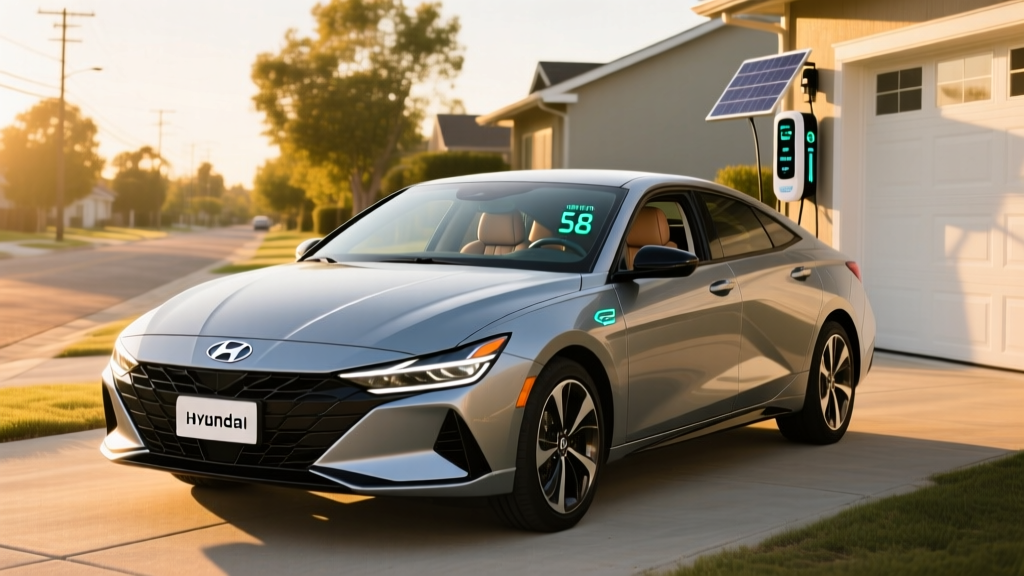
The 2024 Hyundai Elantra Hybrid delivers up to 54 MPG combined in its Blue trim, making it one of the most fuel-efficient non-plug-in sedans available. With a starting MSRP around $26,250, a proven 1.6-liter hybrid powertrain, and Hyundai's 10-year/100,000-mile hybrid battery warranty, it occupies a narrow but compelling lane: buyers who want maximum fuel savings without plugging in, without range anxiety, and without paying EV premiums.
This is a conventional hybrid (HEV), not a plug-in. You never plug it in — it charges its small battery through regenerative braking and the gasoline engine. If you're looking for electric-only driving, you'd need a PHEV or full EV instead. But if your goal is to cut fuel costs to roughly $1,100–$1,300 per year while driving a well-equipped compact sedan, the Elantra Hybrid is hard to beat on pure economics.
EPA Fuel Economy and Real-World MPG
| Trim | City MPG | Highway MPG | Combined MPG | Annual Fuel Cost* |
|---|---|---|---|---|
| Blue | 51 | 58 | 54 | ~$1,150 |
| Limited | 49 | 52 | 50 | ~$1,250 |
*Based on 15,000 miles/year, 55% city driving, and $3.50/gallon regular unleaded. Source: fueleconomy.gov.
Hybrids routinely exceed their EPA city estimates in stop-and-go traffic because regenerative braking recovers energy that gas cars waste as heat. Owners on fuel-tracking platforms like Fuelly report averages of 52–56 MPG in mixed driving for the Blue trim. Highway-only driving at 75+ MPH tends to drop efficiency to 45–48 MPG because the electric motor contributes less at sustained high speeds and aerodynamic drag dominates. In cold weather (below 30°F), expect a 5–10% dip as the engine runs more frequently to maintain cabin heat and battery temperature.
The Blue trim's 58 MPG highway figure is exceptional — it's one of the highest highway ratings of any non-plug-in vehicle sold in the U.S. The Limited trim sacrifices 4 combined MPG largely due to its larger 17-inch alloy wheels, additional sound insulation weight, and more power-drawing accessories (ventilated seats, larger infotainment screen, Bose audio).
Powertrain: Engine, Motor, and Combined Output
| Engine | 1.6L GDI 4-cylinder (Atkinson cycle) |
| Engine Output | 104 hp / 109 lb-ft torque |
| Electric Motor | 32 kW permanent-magnet synchronous |
| Motor Output | 43 hp / 125 lb-ft torque |
| Combined System Output | 139 hp / 195 lb-ft torque |
| Transmission | 6-speed dual-clutch automatic (DCT) |
| Drivetrain | Front-wheel drive |
| Hybrid Battery | 1.32 kWh lithium-ion polymer |
| 0–60 MPH | ~8.2 seconds (est.) |
| Curb Weight | ~3,031 lbs (Blue) |
Hyundai uses a parallel hybrid architecture: both the gasoline engine and electric motor can drive the front wheels, either independently or together. The 6-speed dual-clutch transmission (DCT) is a deliberate choice over the continuously variable transmissions (CVTs) used by Toyota and Honda in their hybrids. The DCT delivers more natural-feeling acceleration with defined shift points, avoiding the "rubber band" drone common to CVTs under hard acceleration.
The 139 combined horsepower won't win drag races — this is an efficiency-first powertrain. But the 195 lb-ft of combined torque, with the electric motor's instant 125 lb-ft available from zero RPM, makes city merging and low-speed passing feel adequately responsive. The trade-off is that highway passing at 65–80 MPH requires a downshift and a noticeable rev climb as the 1.6-liter engine works harder without electric assist at those speeds.
HEV vs. PHEV vs. Full EV: Which Is Right for You?
| Factor | HEV (Elantra Hybrid) | PHEV (e.g., Prius Prime) | Full EV (e.g., Bolt EV) |
|---|---|---|---|
| Plug-in Required? | No | Yes (for EV range) | Yes |
| Electric-Only Range | ~1 mile (low speed) | 25–44 miles | 200–350+ miles |
| Total Range | ~550+ miles | ~400–600 miles | 200–350 miles |
| Home Charging Needed | No | Recommended (120V or 240V) | Yes (240V strongly recommended) |
| Annual Fuel/Energy Cost | ~$1,150–$1,250 | ~$600–$1,100 | ~$500–$800 |
| Upfront Price Premium | Low (~$1,500 over gas) | Medium (~$4,000–$7,000) | High (~$10,000+) |
| Federal Tax Credit | None | Up to $7,500 (§30D) | Up to $7,500 (§30D) |
| Best For | No home charging, long trips | Short commutes + home charging | Home charging, daily commuting |
The Elantra Hybrid is the right call if you can't charge at home (apartment living, street parking, no garage outlet), drive more than 300 miles regularly, or want the lowest upfront cost while still cutting fuel bills significantly. It's also the pragmatic choice in regions with extreme cold where EV range loss (20–40%) and PHEV electric-range shrinkage become frustrating.
Choose a PHEV if you have home charging access and a commute under 40 miles round-trip — you'll do most daily driving on electricity while keeping a gas tank for road trips. Choose a full EV if you have reliable home Level 2 charging, mostly drive under 250 miles per day, and want to eliminate gasoline entirely.
Pricing, Trims, and Tax Credit Eligibility
| Trim | MSRP | Key Equipment |
|---|---|---|
| Blue | $26,250 | 16" alloys, 8" touchscreen, wireless CarPlay/Android Auto, SmartSense ADAS suite, LED headlights |
| Limited | $29,650 | 17" alloys, 10.25" dual screens, leather seats, Bose 8-speaker audio, Highway Driving Assist, ventilated front seats |
Prices include destination charge. Source: Hyundai USA.
- The 2024 Elantra Hybrid is a conventional HEV — it does not qualify for the IRS §30D Clean Vehicle Credit (up to $7,500), which applies only to plug-in vehicles (PHEVs and BEVs) with battery capacity ≥7 kWh.
- The Elantra Hybrid's 1.32 kWh battery is far below the §30D threshold.
- No federal income-tax incentive is available for conventional hybrids as of current IRS rules.
- Some states may offer minor incentives for high-efficiency vehicles, but these are uncommon for HEVs. Check your state's energy office for specifics.
The lack of a federal tax credit is the Elantra Hybrid's main financial disadvantage versus a PHEV like the Toyota Prius Prime (which can qualify for up to $3,750 under §30D). However, the Elantra Hybrid's lower MSRP — roughly $6,000–$8,000 less than a Prius Prime — often means the total first-year cost is still lower even without the credit, especially for buyers who itemize deductions or whose income exceeds §30D caps ($150K single / $300K joint for new vehicles).
Reliability, Battery Warranty, and Long-Term Costs
- Coverage: 10 years / 100,000 miles (whichever comes first) for the hybrid battery pack and hybrid system components.
- Capacity Threshold: Hyundai covers defects and significant capacity loss that impairs hybrid system function. There is no published specific degradation percentage trigger (unlike EV warranties that specify 70% retention).
- Powertrain Warranty: 10 years / 100,000 miles for the engine, transmission, and hybrid motor.
- New Vehicle Warranty: 5 years / 60,000 miles bumper-to-bumper.
- Original Owner: The 10/100K warranty applies to the original owner; it reduces to 5 years / 60,000 miles for subsequent owners on most model years.
Hyundai's hybrid powertrain has proven durable since its introduction in the Sonata Hybrid (2011) and Ioniq Hybrid (2017). The 1.6L GDI engine paired with the DCT has been used across the Elantra Hybrid, Kona Hybrid (international), and Tucson Hybrid lineups with no widespread failure patterns reported to NHTSA. The lithium-ion polymer battery pack is small (1.32 kWh) and operates within a narrow state-of-charge window — typically 40%–80% — which dramatically reduces degradation stress compared to full EV batteries that cycle from 10%–90%+.
Battery replacement cost: If the hybrid battery fails outside warranty (after 10 years / 100K miles), replacement costs typically range from $2,000–$3,500 for parts and labor at a Hyundai dealer. Independent hybrid specialists may offer refurbished packs for $1,200–$2,000. Given the small pack size and conservative charge management, outright failure before 150,000+ miles is uncommon based on long-term owner reports.
Maintenance costs are low: the Elantra Hybrid requires the same oil changes (every 7,500–10,000 miles with synthetic), tire rotations, and cabin filter replacements as a conventional gas car. There's no transmission fluid change interval specified under normal use for the DCT, and regenerative braking significantly extends brake pad life — many hybrid owners report original brake pads lasting 80,000–100,000 miles.
Interior, Tech, and Safety
The Elantra Hybrid shares its interior with the standard Elantra, which means a spacious cabin for the compact segment (42.3 inches of front legroom, 38.0 inches rear) and a 14.2 cubic-foot trunk — only slightly smaller than the gas model's 14.4 cu ft due to the hybrid battery placement under the rear seat.
Both trims come standard with Hyundai SmartSense, which includes:
- Forward Collision-Avoidance Assist with pedestrian/cyclist detection
- Lane Keeping Assist and Lane Following Assist
- Blind-Spot Collision-Avoidance Assist
- Rear Cross-Traffic Collision-Avoidance Assist
- Driver Attention Warning
- Safe Exit Warning
The Limited trim adds Highway Driving Assist (HDA), which combines adaptive cruise control with lane centering on divided highways. HDA is an SAE Level 2 system — it requires continuous driver supervision, hands on the wheel, and eyes on the road. It does not self-drive.
The IIHS rated the 2024 Elantra (including hybrid variants) as a Top Safety Pick when equipped with specific headlights, earning Good ratings in all crashworthiness tests.
Driving Impressions and Ownership Practicalities
On the road, the Elantra Hybrid feels composed and quiet for its price class. The DCT shifts cleanly, and the transition between electric-only and engine-assisted driving is nearly imperceptible at low speeds — a significant refinement over earlier Hyundai hybrid systems that had noticeable engagement clunks. Steering is light and accurate, though not sporty. Ride quality is firm but controlled; road imperfections are felt but not jarring.
The Blue trim's low-rolling-resistance tires contribute to its 54 MPG rating but trade some grip in wet conditions. If you live in a rainy climate, consider upgrading to all-season touring tires at first replacement — you'll lose perhaps 1–2 MPG but gain meaningful wet and light-snow traction.
One practical note: the Elantra Hybrid does not offer all-wheel drive. If you need AWD in a hybrid compact, the Toyota Prius AWD (50 combined MPG) is the primary alternative, though it costs roughly $2,000–$3,000 more at equivalent trims.
- Class-leading 54 MPG combined (Blue trim)
- Low starting MSRP with strong standard equipment
- 10-year/100K-mile hybrid battery and powertrain warranty
- No plug-in required — fuel anywhere, no charging logistics
- Natural-feeling DCT (no CVT drone)
- Spacious rear seat and usable trunk
- Comprehensive standard ADAS suite
- No federal tax credit eligibility
- Modest 139 hp — highway passing requires patience
- No AWD option
- Limited trim loses 4 MPG for premium features
- Only two trims available — limited customization
- Small 1.32 kWh battery limits electric-only assist to low speeds
Who Should Buy the 2024 Elantra Hybrid?
- Choose the Elantra Hybrid Blue if: You want the absolute lowest fuel cost in a non-plug-in sedan, your commute involves significant city/stop-and-go driving, and you don't need AWD or sporty acceleration. At $26,250 MSRP and ~54 MPG, your cost per mile for fuel drops to roughly $0.065 — about 40% less than a typical 30 MPG gas compact.
- Choose the Elantra Hybrid Limited if: You want the hybrid efficiency plus premium comfort features (leather, ventilated seats, Bose audio, Highway Driving Assist) and accept the 4 MPG trade-off. The $3,400 upcharge also adds roughly $45/month to a 60-month loan at 6% APR.
- Look elsewhere if: You have home charging and a short commute (a PHEV like the Prius Prime gives you 25–44 miles of electric-only driving for near-zero daily fuel cost), you need AWD (Prius AWD), or you want stronger acceleration and are willing to spend more (Honda Accord Hybrid at 192 hp, 48 combined MPG).
Frequently Asked Questions
How many MPG does the 2024 Elantra Hybrid get?
The EPA rates the Blue trim at 51 city / 58 highway / 54 combined MPG, and the Limited trim at 49 city / 52 highway / 50 combined MPG. Real-world owner averages cluster around 52–56 MPG for the Blue trim in mixed driving, with highway-only trips at 75+ MPH yielding 45–48 MPG.
Does the Elantra Hybrid need to be plugged in?
No. The Elantra Hybrid is a conventional hybrid (HEV), not a plug-in hybrid (PHEV). Its 1.32 kWh battery charges entirely through regenerative braking and the gasoline engine. You simply fill it with regular unleaded gasoline like any other car.
Does the 2024 Elantra Hybrid qualify for a federal tax credit?
No. The IRS §30D Clean Vehicle Credit applies only to plug-in electric vehicles (PHEVs and BEVs) with battery capacity of at least 7 kWh. The Elantra Hybrid's 1.32 kWh battery does not meet this threshold. No federal tax incentive is currently available for conventional hybrids. Consult a tax professional for state-specific incentives.
How long will the hybrid battery last, and what does replacement cost?
Hyundai warranties the hybrid battery for 10 years / 100,000 miles for the original owner. The small battery operates in a conservative charge window (roughly 40%–80%), which minimizes degradation. Out-of-warranty replacement typically costs $2,000–$3,500 at a dealer or $1,200–$2,000 through an independent hybrid specialist. Based on long-term data from Hyundai's hybrid lineup, premature battery failure before 150,000+ miles is rare.
How does the Elantra Hybrid compare to the Toyota Prius?
The 2024 Toyota Prius LE achieves 57 combined MPG (57 city / 56 highway) and starts around $28,550 — roughly $2,300 more than the Elantra Hybrid Blue. The Prius offers slightly better combined efficiency and an available AWD system, but the Elantra Hybrid counters with a lower price, a more conventional sedan silhouette (the Prius has a hatchback), a traditional trunk, and a longer 10-year powertrain warranty vs. Toyota's 8-year/100K hybrid battery coverage. Both are excellent; the choice often comes down to styling preference and whether you value the hatchback's cargo flexibility.
Is the Elantra Hybrid reliable?
Hyundai's 1.6L hybrid powertrain has been in production since 2017 (Ioniq Hybrid) with no systemic reliability issues reported in NHTSA complaint databases or major owner surveys. The DCT has proven more durable than early-generation dual-clutch transmissions from other manufacturers. Hyundai's 10-year/100,000-mile hybrid system warranty provides strong long-term protection.
Can the Elantra Hybrid drive on electric power alone?
Only at very low speeds (under ~25 MPH) for short distances (roughly 0.5–1 mile) when the battery is sufficiently charged. The 1.32 kWh battery is too small to sustain meaningful electric-only driving. For substantial EV-mode range, you need a PHEV with a larger battery (typically 8–18 kWh).