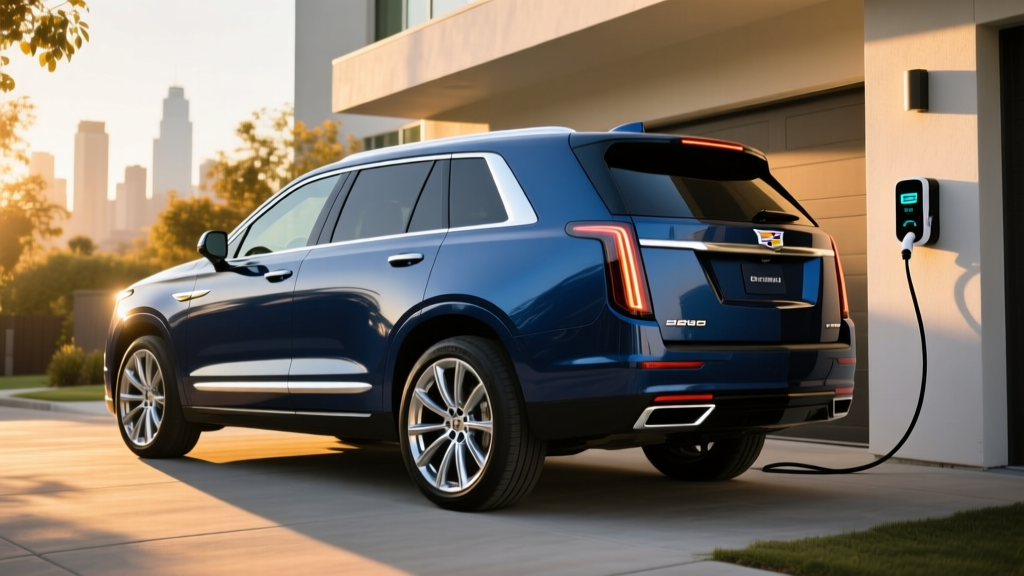
The Cadillac Escalade remains America's flagship full-size luxury SUV, but as buyers increasingly seek electrified powertrains, one question surfaces repeatedly: does a 2024 Cadillac Escalade hybrid exist? The short answer is no — for the 2024 model year, Cadillac does not offer the Escalade as a conventional hybrid (HEV) or plug-in hybrid (PHEV). However, GM has confirmed a next-generation Escalade PHEV is in development, and the current Escalade lineup still warrants a close look for buyers weighing efficiency against luxury and capability.
This guide covers every 2024 Escalade powertrain, explains why the hybrid variant hasn't arrived yet, details what we know about the upcoming PHEV, and helps you decide whether to buy the current gas model, wait for the plug-in, or pivot to an alternative like the Cadillac Lyriq or a competitor's hybrid SUV.
2024 Cadillac Escalade Powertrain Options: Gas Only for Now
The 2024 Escalade is offered with two engine choices, neither of which is electrified:
| Spec | 6.2L V8 (Standard) | 3.0L Duramax I6 Turbo-Diesel |
|---|---|---|
| Horsepower | 420 hp | 277 hp |
| Torque | 460 lb-ft | 460 lb-ft |
| Transmission | 10-speed automatic | 10-speed automatic |
| EPA City MPG (2WD) | 14 mpg | 20 mpg |
| EPA Highway MPG (2WD) | 19 mpg | 26 mpg |
| EPA Combined MPG (2WD) | 16 mpg | 22 mpg |
| EPA Combined (4WD) | 16 mpg | 22 mpg |
| Towing Capacity | 8,000 lbs | 8,000 lbs |
| Fuel Tank | 24 gal | 24 gal |
| Base MSRP (2024) | ~$83,895 | ~$85,895 |
Source: fueleconomy.gov (EPA estimates for 2024 Escalade 2WD). Real-world MPG for the 6.2L V8 tends to cluster around 13–15 mpg combined in mixed driving, with highway-only trips occasionally reaching 18–19 mpg. The Duramax diesel is the efficiency standout in the current lineup, delivering up to 26 mpg highway — a meaningful advantage for high-mileage owners.
HEV vs PHEV: What Cadillac Buyers Need to Know
Before discussing what's coming, it's critical to understand the distinction between hybrid types, since the terms are often conflated in marketing and search results:
Conventional Hybrid (HEV)
- Uses a small battery (1–2 kWh) recharged by regenerative braking and the engine
- No plug required — you never need to charge it externally
- Electric-only driving limited to very low speeds and short distances
- Improves MPG by 20–40% over a gas-only equivalent
- Example: Toyota Grand Highlander Hybrid (35 mpg combined)
Plug-In Hybrid (PHEV)
- Uses a larger battery (15–30+ kWh) that can be charged via a plug
- Offers 20–50 miles of electric-only range before the gas engine engages
- Operates as a conventional hybrid once the battery is depleted
- May qualify for the federal §30D tax credit (up to $7,500) if sourcing and MSRP requirements are met
- Example: Jeep Grand Cherokee 4xe (25 mi EV range, 56 MPGe)
The upcoming Escalade electrified variant is expected to be a PHEV, not a conventional HEV. This makes sense given GM's Ultium-based PHEV architecture and the luxury segment's growing demand for electric-only commuting capability in large SUVs.
The Upcoming Escalade PHEV: What We Know
General Motors confirmed in late 2023 that an Escalade PHEV is in development, likely arriving with the next-generation Escalade (expected for the 2026 or 2027 model year). While Cadillac has not published final specifications, here's what industry reporting and GM's existing PHEV platforms suggest:
- Architecture: Expected to use a variant of GM's body-on-frame PHEV system, similar to the technology planned for the next-generation Tahoe/Suburban electrified models.
- Electric-only range: Likely 30–45 miles based on competitor benchmarks (the BMW X7 xDrive50e PHEV achieves ~33 miles; the Range Rover PHEV achieves ~48 miles).
- Battery size: Estimated 20–30 kWh usable capacity.
- Charging: Level 2 AC charging expected (7–11 kW); DC fast charging is uncommon in PHEVs this size due to battery size constraints.
- Combined horsepower: Likely 450+ hp with combined engine and electric motor output.
- MSRP: Expected to start above $95,000, with top trims potentially exceeding $130,000.
Note: These are preliminary estimates based on GM's PHEV platform disclosures and competitor analysis. Final specifications will not be confirmed until Cadillac's official reveal. We will update this article when official data is published.
How Many MPG Does the Current Escalade Get?
For the 2024 model year, the Escalade's fuel economy depends entirely on which engine you choose:
| Powertrain | City | Highway | Combined | Est. Annual Fuel Cost* |
|---|---|---|---|---|
| 6.2L V8 (2WD) | 14 mpg | 19 mpg | 16 mpg | ~$4,350 |
| 6.2L V8 (4WD) | 14 mpg | 18 mpg | 16 mpg | ~$4,350 |
| 3.0L Duramax Diesel (2WD) | 20 mpg | 26 mpg | 22 mpg | ~$3,200 |
| 3.0L Duramax Diesel (4WD) | 20 mpg | 26 mpg | 22 mpg | ~$3,200 |
*Annual fuel cost estimates based on 15,000 miles/year, 55% city / 45% highway, and national average fuel prices per fueleconomy.gov. Diesel pricing varies significantly by region.
In real-world driving, owners of the 6.2L V8 report combined figures of 13–15 mpg, with city-heavy commutes dipping to 11–12 mpg. Highway cruising at 70–75 mph yields 17–19 mpg. The Duramax diesel consistently exceeds its EPA estimates in real-world use, with many owners reporting 24–27 mpg on highway trips — a key reason it accounts for a growing share of Escalade orders.
Does the 2024 Escalade Qualify for Any Tax Credit?
No. The 2024 Cadillac Escalade is not a hybrid or plug-in hybrid, so it does not qualify for the federal §30D new clean vehicle tax credit. That credit applies only to new BEVs and PHEVs that meet battery sourcing, critical minerals, MSRP cap, and buyer income requirements as defined by the IRS.
§30D Tax Credit Requirements (for reference when the PHEV launches):
- Vehicle must be a new BEV or PHEV with minimum battery capacity of 7 kWh
- MSRP cap: $80,000 for SUVs, vans, and pickup trucks — the Escalade PHEV will likely exceed this cap, disqualifying it from the federal credit
- Buyer income cap: $300,000 (married filing jointly), $225,000 (head of household), $150,000 (single)
- Battery components and critical minerals must meet North American sourcing thresholds (increasing annually through 2029)
- Credit can be transferred to the dealer at point of sale for an immediate price reduction
Given the Escalade's pricing, even the PHEV variant is unlikely to qualify for the federal credit unless the base MSRP somehow falls under $80,000 — which is extremely unlikely for this segment. Buyers should not factor a $7,500 credit into their purchase planning for any Escalade variant.
Reliability, Battery Warranty, and Long-Term Costs
Since the 2024 Escalade has no hybrid battery, traditional hybrid battery concerns don't apply to this model year. However, for buyers considering the upcoming PHEV, here's what to expect based on GM's existing hybrid and EV warranty coverage:
Current 2024 Escalade Warranty
- Bumper-to-bumper: 4 years / 50,000 miles
- Powertrain: 6 years / 70,000 miles
- Hybrid/EV battery (N/A for 2024): GM typically covers hybrid and EV batteries for 8 years / 100,000 miles with a capacity retention threshold (usually 60–70% of original capacity)
For the upcoming PHEV, expect GM to provide an 8-year / 100,000-mile battery warranty consistent with its Chevrolet Volt and Bolt precedent. Hybrid battery replacement costs for full-size SUV PHEVs typically range from $8,000 to $15,000 out of warranty, though most batteries outlast the warranty period with minimal degradation when properly maintained.
The current 6.2L V8 and 3.0L Duramax engines have strong reliability track records. The 6.2L is a proven pushrod V8 with decades of service history, while the Duramax inline-six turbo-diesel has earned praise for durability in GM's full-size truck and SUV lineup since its 2020 introduction.
Hybrid vs PHEV vs EV: Which Fits Your Lifestyle?
Choose the current 2024 Escalade (gas) if:
- You need maximum towing capacity (8,000 lbs) today
- You don't have access to home or workplace charging
- You drive long distances frequently and don't want to plan around charging stops
- You want the Duramax diesel's 22–26 mpg as the best available efficiency
Wait for the Escalade PHEV if:
- You have a short commute (under 40 miles round-trip) and can charge at home
- You want electric-only daily driving with gas-engine flexibility for road trips
- You value reduced fuel costs and lower tailpipe emissions in city driving
- You're not in a rush — the PHEV likely won't arrive before the 2026–2027 model year
Consider a full EV (Cadillac Lyriq or competitor) if:
- You have reliable home Level 2 charging and your trips rarely exceed 250 miles
- You want the lowest possible operating cost and zero tailpipe emissions
- You don't need three-row seating or 8,000-lb towing
- The Lyriq (314 mi EPA range, starting ~$58,590) meets your space requirements
Competitor Hybrid SUVs Available Now
If you need a large luxury hybrid SUV today and can't wait for the Escalade PHEV, these alternatives are already on sale:
| Model | Type | EPA Combined | EV Range (PHEV) | Base MSRP (2024) |
|---|---|---|---|---|
| BMW X7 xDrive50e | PHEV | 22 mpg / 56 MPGe | ~33 mi | ~$107,000 |
| Range Rover P460e | PHEV | 21 mpg / 46 MPGe | ~48 mi | ~$115,000 |
| Toyota Grand Highlander Hybrid | HEV | 35 mpg | N/A | ~$45,000 |
| Jeep Grand Cherokee L 4xe | PHEV (announced) | TBD | ~25 mi (est.) | TBD |
The BMW X7 PHEV and Range Rover PHEV are the closest competitors to an eventual Escalade PHEV, though neither matches the Escalade's interior volume or American luxury brand positioning. The Grand Highlander Hybrid offers outstanding efficiency but lacks the luxury tier and body-on-frame capability.
Pros and Cons: The 2024 Escalade and the Hybrid Question
Pros
- Class-leading interior space, technology, and luxury
- Duramax diesel offers 22–26 mpg — the best efficiency currently available
- 8,000-lb towing capacity with both engine options
- Super Cruise hands-free driving available (SAE Level 2)
- Strong resale value and brand cachet
- PHEV variant confirmed for the next generation
Cons
- No hybrid or PHEV option for 2024
- 6.2L V8 returns only 14–16 mpg combined in real-world driving
- High fuel costs — estimated $4,350/year for the V8 at current prices
- Base price above $83,000; well-equipped examples exceed $110,000
- PHEV variant is 1–2 model years away at minimum
- Unlikely to qualify for federal EV/PHEV tax credit due to MSRP cap
Frequently Asked Questions
Is there a hybrid version of the 2024 Cadillac Escalade?
No. The 2024 Escalade is available only with a 6.2L V8 gasoline engine or a 3.0L Duramax turbo-diesel inline-six. Neither is a hybrid. Cadillac has confirmed a PHEV variant is in development for the next-generation Escalade.
How many MPG does the 2024 Escalade get?
The 6.2L V8 achieves an EPA-estimated 14 city / 19 highway / 16 combined mpg (2WD). The 3.0L Duramax diesel achieves 20 city / 26 highway / 22 combined mpg. Real-world V8 figures often fall to 13–15 mpg combined; the diesel frequently exceeds its EPA highway estimate.
How far will the Escalade PHEV go on electric only?
Cadillac has not published official specifications. Based on GM's PHEV platform capabilities and competitor benchmarks (BMW X7 PHEV: ~33 mi, Range Rover PHEV: ~48 mi), a reasonable estimate is 30–45 miles of electric-only range. We will update when official figures are released.
Does the 2024 Escalade qualify for any federal tax credit?
No. The federal §30D clean vehicle credit applies only to new BEVs and PHEVs. The 2024 Escalade has no electrified powertrain. Even the upcoming PHEV variant is likely to exceed the $80,000 MSRP cap for SUVs, making it ineligible. Consult a tax professional for your specific situation.
Is the 2024 Escalade reliable, and what about long-term costs?
The 6.2L V8 and 3.0L Duramax are proven powertrains with strong reliability records. GM covers the powertrain for 6 years / 70,000 miles. The diesel variant offers significantly lower fuel costs (~$3,200/year vs ~$4,350 for the V8). Maintenance costs are in line with other luxury full-size SUVs — expect higher insurance premiums and premium fuel requirements.
Should I buy the 2024 Escalade now or wait for the PHEV?
If you need a new Escalade today and don't have home charging, the Duramax diesel is the best efficiency option available. If you can wait 1–2 years and have reliable home Level 2 charging, the PHEV could offer meaningful fuel savings on daily commutes while preserving the Escalade's range and towing capability for longer trips.
What's the difference between the Escalade and the Cadillac Lyriq?
The Lyriq is a fully electric midsize crossover (314 mi EPA range, two rows, ~$58,590 starting). The Escalade is a body-on-frame full-size SUV with three rows, 8,000-lb towing, and no electric option for 2024. They serve fundamentally different use cases — the Lyriq is an EV commuter and family hauler; the Escalade is a luxury people-mover and tow vehicle.