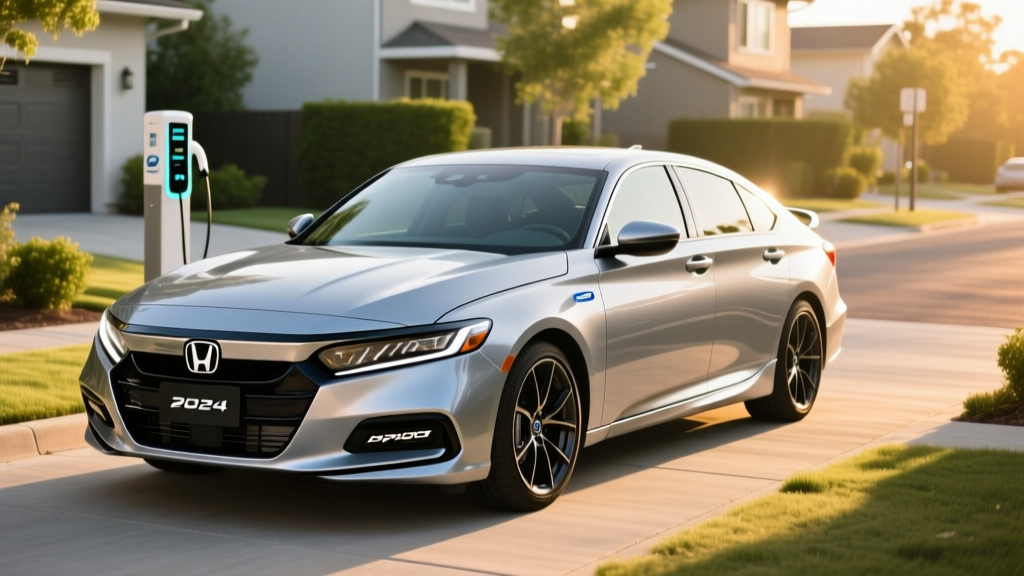
The Honda Accord has been a midsize sedan benchmark for decades, but the 2024 Accord Hybrid Sport occupies a specific niche that deserves close examination: it's the sportiest trim in a hybrid-only lineup that prioritizes efficiency without asking buyers to plug in. If you've been searching for a 2024 Accord Hybrid Sport and wondering whether its 46 MPG EPA combined rating holds up in real-world commuting, whether the hybrid battery is a long-term liability, or how it stacks up against plug-in hybrids and full EVs, this guide breaks down every number that matters.
Honda made a decisive move with the 11th-generation Accord: the Sport, Sport-L, and EX-L trims are now hybrid-only. There is no turbocharged gas alternative at these trim levels. That means understanding the two-motor hybrid system, its real-world fuel economy behavior, and its long-term ownership costs is essential before signing a purchase agreement.
HEV vs PHEV: Where the Accord Hybrid Sport Fits
Before evaluating specs, it's critical to understand what the 2024 Accord Hybrid Sport is — and what it is not. This is a conventional hybrid electric vehicle (HEV), not a plug-in hybrid (PHEV). The distinction matters for daily ownership:
| Feature | HEV (Accord Hybrid Sport) | PHEV (e.g., Toyota Prius Prime) | BEV (e.g., Hyundai Ioniq 6) |
|---|---|---|---|
| Plug-in charging required? | No — gas only | Yes — for electric range | Yes — exclusively |
| Electric-only range | ~1 mile at low speed | 25–44 miles typical | 250–360+ miles |
| Fueling/charging | Gas station only | Gas + plug-in | Charger only |
| Federal tax credit (§30D) | Not eligible | Up to $7,500 (if qualified) | Up to $7,500 (if qualified) |
| Best for | No home charging access; long commutes | Short commutes + road trips | Home charging + daily driving |
The Accord Hybrid Sport generates all its electrical energy internally through regenerative braking and the gasoline engine. You never plug it in. You never need to think about charging infrastructure. You simply fill up at a gas station and drive. For buyers who lack access to home or workplace charging, this is a significant advantage over PHEVs and BEVs, which lose much of their economic benefit when charged exclusively on gasoline.
Powertrain Specs: Two-Motor Hybrid System
The 2024 Accord Hybrid Sport uses Honda's fourth-generation two-motor hybrid system, which is fundamentally different from the traditional planetary-gear setups found in older hybrids. Here's the exact hardware:
| Specification | 2024 Accord Hybrid Sport |
|---|---|
| Engine | 2.0L DOHC Atkinson-cycle inline-4 |
| Engine horsepower | 146 hp @ 6,100 rpm |
| Engine torque | 134 lb-ft @ 4,500 rpm |
| Drive motor output | 181 hp / 247 lb-ft |
| Combined system output | 204 hp / 247 lb-ft |
| Transmission | e-CVT (no fixed gears in EV/drive modes) |
| Drivetrain | Front-wheel drive |
| 0–60 mph (est.) | ~7.5 seconds |
| Hybrid battery | Lithium-ion, ~1.1 kWh (nominal) |
| Curb weight | ~3,477 lbs |
The system operates primarily as a series hybrid at low and moderate speeds: the gasoline engine spins a generator motor, which produces electricity that powers the drive motor connected to the wheels. The engine doesn't directly drive the wheels until highway cruising speeds, where a lock-up clutch engages for efficiency. This means the car feels like an EV around town — instant torque from the 247 lb-ft electric motor, smooth and quiet — while the gasoline engine handles sustained highway loads where it's most efficient.
Compared to the previous-generation Accord Hybrid's 212 hp combined output, the 2024 model's 204 hp represents a slight reduction. In practice, the difference is negligible. The new system is more compact, lighter, and delivers torque more linearly. The Sport trim's paddle shifters allow simulated gear "steps" for drivers who want more engagement, though these don't change the underlying e-CVT behavior.
Fuel Economy: EPA Ratings vs Real-World MPG
Fuel economy is the Accord Hybrid Sport's headline feature. Here are the official numbers from fueleconomy.gov:
| Driving Condition | EPA Rating |
|---|---|
| City | 46 MPG |
| Highway | 41 MPG |
| Combined | 44 MPG |
The Accord Hybrid's city-heavy EPA advantage (46 city vs 41 highway) is typical of series-dominant hybrid systems that rely on electric drive at lower speeds. In real-world testing and owner reports:
- City commuting (stop-and-go): 44–50 MPG — many drivers exceed the EPA city estimate because regenerative braking is maximized in traffic
- Mixed suburban driving: 40–45 MPG
- Highway cruising (70–80 mph): 37–42 MPG — aerodynamic drag and sustained engine load reduce efficiency
- Cold weather (below 30°F): 35–40 MPG — the engine runs more frequently for cabin heat and battery warming
With a 14.8-gallon fuel tank, total range is approximately 650–700 miles in mixed driving, or up to 750+ miles in city-dominant conditions. That's a meaningful advantage over most EVs and PHEVs for drivers who regularly take long road trips through areas with sparse charging infrastructure.
One nuance worth highlighting: the Accord Hybrid Sport uses 19-inch alloy wheels, which carry a slight efficiency penalty compared to the EX-L's 17-inch wheels. The EX-L hybrid achieves 48 MPG combined versus the Sport's 44 MPG combined — a 4 MPG difference driven entirely by wheel and tire selection. If maximum fuel economy is your priority over sportier aesthetics, the EX-L is the more efficient choice within the hybrid lineup.
Hybrid Battery Longevity, Warranty, and Replacement Cost
The hybrid battery is the single largest concern prospective buyers raise about any hybrid vehicle. Here's what the data shows for Honda's system:
- Hybrid battery warranty: 8 years / 100,000 miles (10 years / 150,000 miles in CARB states including CA, CT, ME, MA, NJ, NY, OR, RI, VT, WA)
- Capacity retention threshold: Honda covers the battery if it falls below approximately 60–70% of original capacity during the warranty period
- Hybrid system components: 8 years / 100,000 miles (power control unit, drive motor, generator motor)
- Conventional powertrain warranty: 5 years / 60,000 miles
Honda's lithium-ion hybrid battery pack is compact (~1.1 kWh) and operates within a conservative state-of-charge window — typically between 20% and 80% — which dramatically reduces degradation compared to the deep cycling seen in full EVs. The battery is never fully charged or fully depleted in normal operation. This buffer management strategy is the primary reason Honda hybrid batteries routinely last 150,000–200,000+ miles before requiring service.
Replacement cost if out of warranty: A new OEM hybrid battery for the Accord runs approximately $2,000–$3,500 including installation at a Honda dealer. Aftermarket and refurbished options are emerging at $1,200–$2,000. For context, this is substantially less than EV traction battery replacements ($8,000–$20,000+), and the hybrid battery's small size means labor time is shorter.
Historical data from the previous-generation Accord Hybrid (2014–2022) and the Insight (which shares the same hybrid architecture) shows battery failure rates well below 5% within the first 150,000 miles. This is a mature, well-proven system — not a first-generation experiment.
Pricing, Trim Levels, and Tax Credit Eligibility
The 2024 Accord Hybrid Sport is positioned as a mid-tier value trim. Here's the MSRP breakdown:
| Trim (Hybrid Only) | MSRP (incl. destination) | Key Features |
|---|---|---|
| Sport | $34,990 | 19" wheels, sport pedals, black accents, 10.2" touchscreen, wireless CarPlay/Android Auto |
| Sport-L | $36,690 | Leather-trimmed seats, heated front seats, heated steering wheel, wireless charging |
| EX-L | $37,390 | 17" wheels, leather, power passenger seat, 48 MPG combined (highest efficiency) |
The 2024 Accord Hybrid Sport does not qualify for the federal §30D new clean vehicle tax credit. Under current IRS rules, the §30D credit applies only to plug-in electric vehicles (BEVs and PHEVs) with sufficient battery capacity. Conventional hybrids like the Accord Hybrid are excluded.
Some states offer their own incentives for hybrid vehicles, though these are less common than EV incentives. Check your state's energy or environmental agency website for current programs. A few states (e.g., Colorado) have offered hybrid rebates in certain years, but availability varies significantly by jurisdiction and tax year.
Accord Hybrid Sport vs Alternatives: Which Should You Choose?
The Accord Hybrid Sport competes against three distinct categories. Here's how it compares:
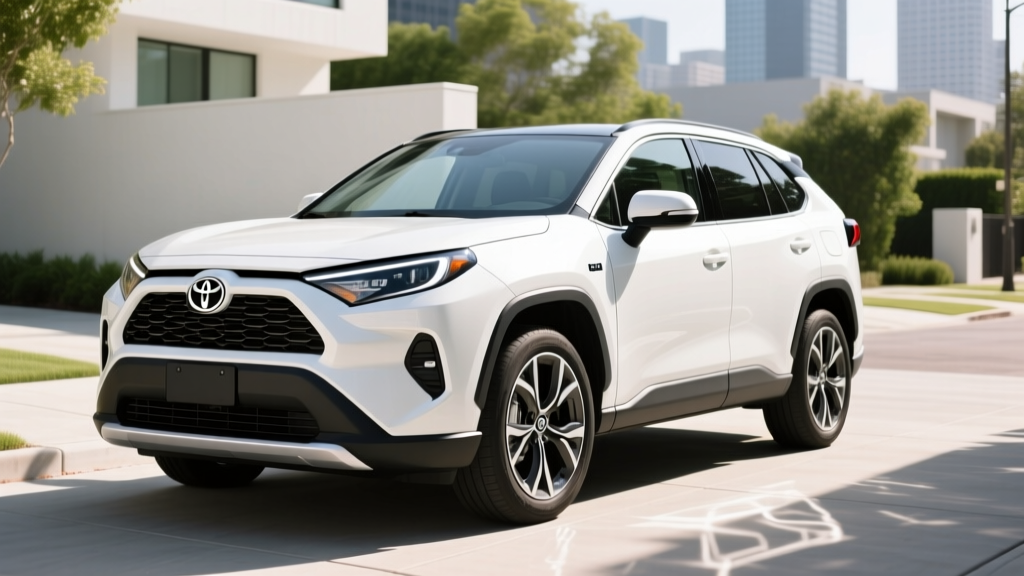
Verdict: Close competitors. The Camry Hybrid offers AWD (Accord is FWD only) and slightly higher combined MPG in some trims. The Accord Hybrid has more rear-seat legroom and a larger trunk. Both are proven, reliable choices. Choose the Accord for interior space; choose the Camry for available AWD.
Verdict: Different use cases. The Prius Prime offers 44 miles of electric-only range and qualifies for up to $7,500 in federal tax credits (subject to income and sourcing rules). If you can charge at home and your commute is under 40 miles, the Prius Prime can operate as an EV daily while retaining gas backup. If you can't charge at home, the Accord Hybrid is the better financial choice.
Verdict: EVs offer lower per-mile energy costs and stronger acceleration, but require charging access. The Accord Hybrid makes sense if you lack reliable home charging, regularly drive 400+ miles in a day, live in an area with limited public charging, or want to avoid the higher insurance premiums that EVs currently carry (typically 15–25% above comparable gas/hybrid models).
- You don't have access to home or workplace Level 2 charging
- Your daily driving mix includes substantial city and stop-and-go traffic
- You regularly take road trips exceeding 300+ miles
- You want near-EV driving feel without any plug-in requirement
- You value Honda's reliability track record and dealer network
- You can install a Level 2 home charger and want to minimize gasoline use
- Your daily commute is under 40 miles round-trip (PHEV sweet spot)
- You want to claim the $7,500 federal tax credit (subject to eligibility)
- You want to eliminate tailpipe emissions in daily driving
Driving Impressions and Daily Ownership Notes
The Accord Hybrid Sport's two-motor system delivers a driving experience that genuinely surprises first-time hybrid drivers. The 247 lb-ft of electric torque is available from zero RPM, which means acceleration from stops is immediate and confident. Honda's hybrid system doesn't have the rubber-band "drone" associated with older e-CVTs because the engine only directly drives the wheels at steady highway speeds. Around town, it operates like a range-extended EV.
The Sport trim's 19-inch wheels and slightly firmer suspension tuning give it more composure in corners than the EX-L, though the trade-off is a marginally firmer ride over broken pavement and the 4 MPG combined efficiency penalty noted earlier. Road noise is present at highway speeds — a common Honda characteristic — but the 11th-generation chassis is noticeably quieter than its predecessor thanks to additional sound deadening and acoustic glass.
Honda Sensing (the brand's ADAS suite) is standard on all trims and includes adaptive cruise control, lane-keeping assist, blind-spot monitoring, and rear cross-traffic alert. This is an IIHS Top Safety Pick+ rated vehicle. Note that Honda Sensing is an SAE Level 2 driver-assistance system — you must keep your hands on the wheel and eyes on the road at all times. It is not a self-driving system.
Pros and Cons at a Glance
- 46 city MPG — often exceeded in real stop-and-go traffic
- No plug-in charging required; 650+ mile total range
- EV-like driving feel with instant electric torque
- Spacious rear seat (40.8" legroom) and 16.7 cu-ft trunk
- Mature, proven hybrid system with strong reliability data
- IIHS Top Safety Pick+ rating
- 10.2" touchscreen with wireless Apple CarPlay and Android Auto
- No AWD option (Camry Hybrid offers it)
- No federal tax credit eligibility
- 19" wheels reduce MPG vs EX-L trim by 4 MPG combined
- Road noise noticeable at highway speeds
- Modest 204 hp — adequate but not quick for a "Sport" badge
- No DC fast charging capability (not applicable — it's an HEV)
Frequently Asked Questions
How many MPG does the 2024 Accord Hybrid Sport actually get?
The EPA rates it at 46 city / 41 highway / 44 combined. In real-world city driving, many owners report 44–50 MPG. Highway cruising at 75+ mph typically yields 37–42 MPG. Cold weather reduces these figures by roughly 5–8 MPG due to increased engine runtime for cabin heating.
Does the Accord Hybrid need to be plugged in?
No. The 2024 Accord Hybrid Sport is a conventional hybrid (HEV). It charges its small lithium-ion battery exclusively through regenerative braking and the gasoline engine. You fuel it at a gas station like any other car. There is no plug, no charging port, and no electric-only driving range beyond approximately one mile at very low speeds.
How long will the hybrid battery last and what does replacement cost?
Honda's hybrid battery is warrantied for 8 years/100,000 miles (10 years/150,000 miles in CARB states). Real-world data from previous-generation Honda hybrids shows most batteries lasting 150,000–200,000+ miles. Out-of-warranty replacement costs approximately $2,000–$3,500 for a new OEM battery including installation.
Does the 2024 Accord Hybrid Sport qualify for any tax credit?
It does not qualify for the federal §30D clean vehicle tax credit, which is limited to plug-in vehicles (BEVs and PHEVs). Some states may offer hybrid-specific incentives, but these vary widely by jurisdiction and tax year. Consult a tax professional and your state's energy agency for current programs.
How does the Accord Hybrid compare to a PHEV like the Prius Prime?
The Prius Prime offers 44 miles of electric-only range and qualifies for the federal tax credit (up to $7,500, subject to eligibility). If you can charge at home daily, a PHEV may use less gasoline overall. If you can't charge at home, the Accord Hybrid is the more practical and cost-effective choice — a PHEV driven exclusively on gasoline typically gets worse MPG than a purpose-built HEV like the Accord.
Is the Accord Hybrid Sport fast?
With 204 combined horsepower and 247 lb-ft of electric torque, the Accord Hybrid Sport reaches 0–60 mph in approximately 7.5 seconds. It's adequate for merging and passing but not sporty in the way a turbocharged sedan or EV would be. The "Sport" designation refers to styling and suspension tuning, not straight-line performance.