Quick Verdict: The Venza Hybrid at a Glance
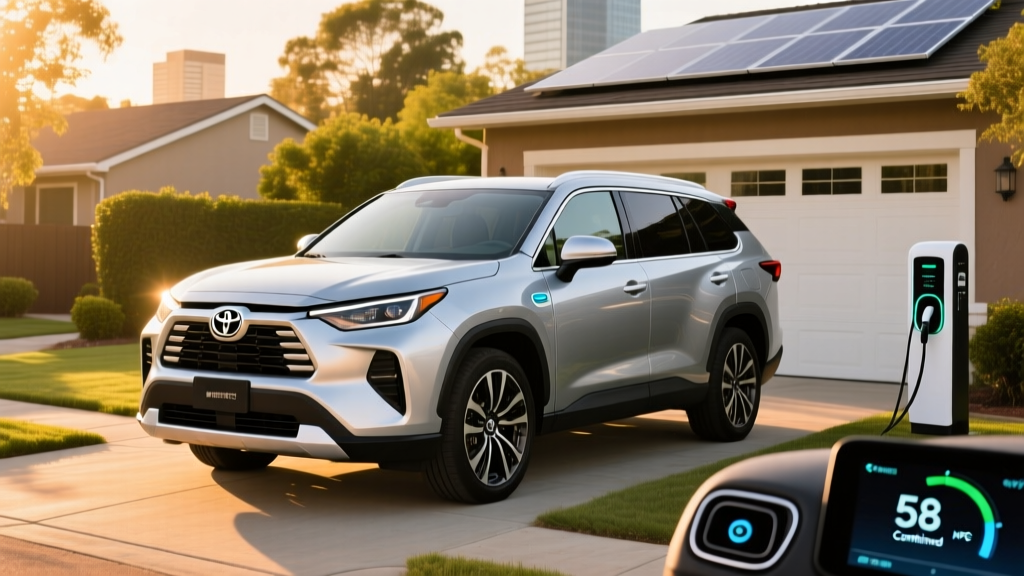
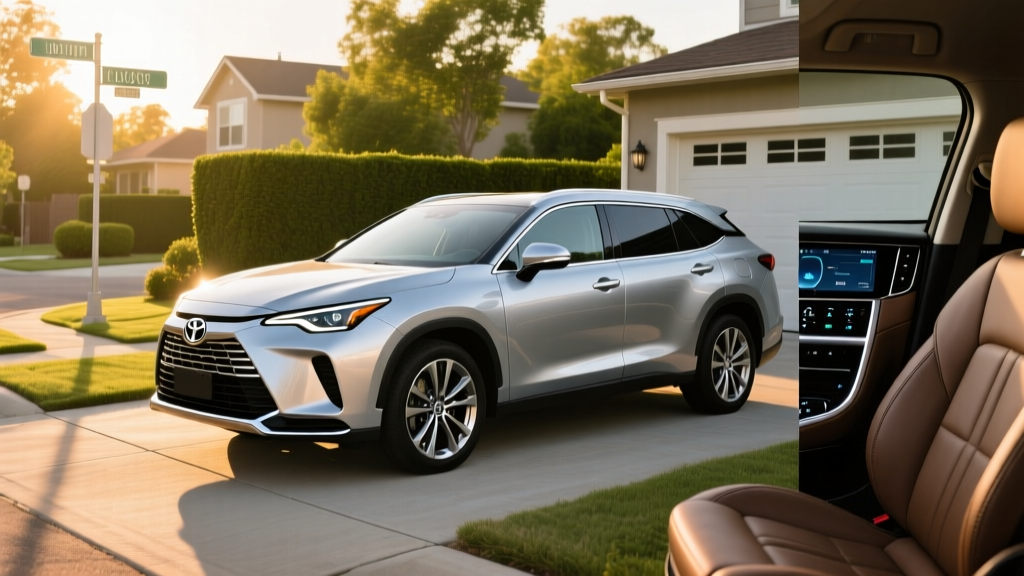
The 2023 Toyota Venza hybrid occupies a specific niche: a midsize crossover that prioritizes fuel efficiency and refinement over cargo space or sporty dynamics. With an EPA-estimated 39 MPG combined and standard all-wheel drive across every trim, it delivers real-world economy that many compact sedans can't match — without requiring a plug, a behavior change, or any range anxiety. For 2023, Toyota offered the Venza in LE, XLE, and Limited trims before discontinuing it after the model year to make room for other lineup changes. That makes the 2023 Venza a compelling option on the used and certified-pre-owned market in 2026.
This is a conventional hybrid electric vehicle (HEV), not a plug-in hybrid (PHEV). You never plug it in. The gasoline engine and regenerative braking system recharge the small hybrid battery automatically during driving. If you want electric-only driving capability, you'd need to look at a PHEV like the Toyota RAV4 Prime instead.
| Specification | Value |
|---|---|
| Powertrain Type | Conventional Hybrid (HEV) — no plug |
| Engine | 2.5L inline-4 Atkinson cycle |
| Combined Horsepower | 219 HP (net system) |
| Drivetrain | AWD (electronic on-demand rear motor) |
| EPA MPG (City / Hwy / Combined) | 40 / 37 / 39 MPG |
| Fuel Tank Capacity | 14.5 gallons |
| Total Driving Range | ~565 miles (EPA est.) |
| 0–60 MPH | ~7.6 seconds |
| Cargo Volume (rear seats up/down) | 28.8 / 55.1 cu ft |
| Hybrid Battery Warranty | 10 years / 150,000 miles |
| Original Base MSRP (LE trim) | $34,620 |
| Original Top MSRP (Limited trim) | $42,765 |
Fuel Economy: EPA Ratings vs. Real-World MPG
The EPA rates the 2023 Toyota Venza hybrid at 40 MPG city, 37 MPG highway, and 39 MPG combined across all trims. These figures are identical regardless of whether you choose the LE, XLE, or Limited — Toyota's hybrid system doesn't vary by trim level.
Source: EPA Fuel Economy Guide — 2023 Toyota Venza AWD
| Driving Condition | EPA Rating | Real-World Expectation |
|---|---|---|
| City | 40 MPG | 41–45 MPG (hybrids excel in stop-and-go) |
| Highway | 37 MPG | 33–36 MPG (aero drag and sustained speed reduce advantage) |
| Combined | 39 MPG | 37–42 MPG depending on driving mix |
| Cold Weather (below 32°F) | Not EPA-rated | 34–37 MPG (engine runs more for cabin heat) |
Why Hybrids Often Beat EPA City Estimates
Conventional hybrids like the Venza thrive in city driving because the electric motor handles low-speed acceleration — the least efficient operating range for a gasoline engine. Every time you brake, regenerative braking recovers kinetic energy and stores it in the hybrid battery. In heavy traffic with frequent stops, the Venza's engine shuts off entirely at times, running on electric power alone at low speeds. Many owners report city MPG in the low-to-mid 40s, particularly in warm weather with moderate use of climate control.
Highway driving tells a different story. At sustained speeds above 65 MPH, aerodynamic drag dominates and the gasoline engine carries the full load. The Venza's 37 MPG highway rating trails some competitors like the Honda CR-V Hybrid (38 MPG highway) but remains strong for a midsize AWD crossover.
Hybrid vs. Plug-In Hybrid: What Venza Buyers Need to Know
The 2023 Venza is a conventional hybrid (HEV). It has no plug, no electric-only driving mode of meaningful distance, and no external charging capability. This is an important distinction because some buyers confuse HEVs with plug-in hybrids (PHEVs).
| Feature | 2023 Venza (HEV) | 2023 RAV4 Prime (PHEV) |
|---|---|---|
| Plug-in Charging Required? | No — never plugs in | Yes — Level 1 or Level 2 |
| Electric-Only Range | Less than 1 mile at low speed | 42 miles (EPA est.) |
| Combined Horsepower | 219 HP | 302 HP |
| Battery Capacity | ~1.6 kWh (NiMH) | 18.1 kWh (lithium-ion) |
| Level 2 Charge Time | N/A | ~2.5 hours (240V, 32A) |
| DC Fast Charging | No | No |
| EPA Combined (gas-only mode) | 39 MPG | 38 MPG (after battery depleted) |
| MPGe (electric + gas) | N/A | 94 MPGe |
| Federal Tax Credit (§30D) | Not eligible | Eligible (up to $7,500, subject to rules) |
| Original Base MSRP | $34,620 | $43,090 |
The bottom line: If you have access to home or workplace charging and want daily electric-only commutes, the RAV4 Prime is the superior choice — if you can find one and absorb the higher price. If you want simplicity, lower upfront cost, and no charging behavior change, the Venza HEV is the practical pick.
Powertrain and Driving Dynamics
The Venza uses Toyota's fourth-generation hybrid system, pairing a 2.5-liter Atkinson-cycle four-cylinder engine with three electric motor-generators: two at the front axle and one at the rear. The rear motor provides electronic on-demand all-wheel drive — there's no mechanical driveshaft connecting the front and rear axles. Combined net output is 219 horsepower.
The Atkinson-cycle engine prioritizes thermal efficiency over peak power, producing modest horsepower on its own. The electric motors fill in the torque gap, particularly from a stop. Acceleration to 60 MPH takes approximately 7.6 seconds — adequate for merging and passing but not brisk by modern crossover standards. The continuously variable transmission (eCVT) operates smoothly without shift steps, though it produces the characteristic engine drone under hard acceleration that Toyota's hybrid system tuning hasn't fully eliminated.
The AWD system activates the rear motor automatically when front-wheel slip is detected or during hard acceleration from low speeds. In normal cruising, the rear motor disengages to minimize parasitic losses and preserve fuel economy. This system works transparently — you won't notice it engaging during rain or light snow.
Pricing, Trims, and Tax Credit Eligibility
When new, the 2023 Venza started at $34,620 for the LE trim and topped out at $42,765 for the Limited with available options. As of 2026, the Venza is only available on the used and certified-pre-owned market. Expect pricing between $26,000 and $36,000 depending on trim, mileage, and condition.
Federal Tax Credit Status
The 2023 Toyota Venza hybrid does not qualify for the federal §30D new clean vehicle tax credit. Under IRS rules, conventional hybrids (HEVs) are not eligible — only plug-in hybrid electric vehicles (PHEVs) and battery electric vehicles (BEVs) with sufficient battery capacity qualify. The IRS §30D credit requires a minimum 7 kWh battery capacity and external plug-in charging capability, neither of which the Venza HEV has.
For used-vehicle purchases in 2026, the Used Clean Vehicle Credit (§25E) offers up to $4,000 or 30% of the sale price (whichever is less) — but again, only for qualifying PHEVs and BEVs. The Venza HEV is excluded. No federal incentive applies to purchasing a used conventional hybrid.
Some states offer their own hybrid incentives or HOV lane access for hybrids, but these vary by jurisdiction. Check your state's DMV or energy office for current programs.
Battery Warranty, Lifespan, and Replacement Cost
Toyota Hybrid Battery Warranty: 10 years or 150,000 miles (whichever comes first) for 2020 and newer model years. This covers the hybrid battery pack against defects and capacity loss below a defined threshold.
Toyota's hybrid battery warranty is among the strongest in the industry and applies from the original in-service date. For a 2023 Venza, that warranty extends through the 2033 model year or 150,000 miles. The warranty is transferable to subsequent owners, which supports resale value on the used market.
How Long Do Toyota Hybrid Batteries Actually Last?
Toyota has been refining its hybrid battery technology since the original Prius in 1997. The Venza uses a nickel-metal hydride (NiMH) hybrid battery pack of approximately 1.6 kWh — far smaller than a PHEV or BEV battery. Because the battery is small and the hybrid system manages charge/discharge cycles conservatively (never allowing a full 0% or 100% state of charge), degradation is minimal.
Real-world data from Toyota's hybrid fleet suggests most hybrid battery packs last well beyond 150,000 miles. Many Prius and Camry Hybrid owners report original batteries reaching 200,000+ miles without replacement. The Venza's system is mechanically similar and benefits from the same engineering maturity.
Battery Replacement Cost
If replacement is needed outside of warranty, a new OEM Toyota hybrid battery for the Venza typically costs between $2,000 and $3,500 including parts and labor at a dealership. Independent hybrid specialists may offer refurbished or reconditioned packs for $1,200 to $2,000. This is a fraction of the cost of replacing a full EV battery pack ($8,000–$20,000+), reflecting the Venza's much smaller battery capacity.
Who Should Buy the Venza Hybrid — And Who Shouldn't
Choose the 2023 Venza Hybrid if:
- You want 39+ MPG without changing your fueling habits or installing a home charger
- You drive a mix of city and highway and want AWD for inclement weather
- You prioritize a quiet, refined ride over sporty handling or maximum cargo space
- You want Toyota's long-term reliability track record and strong hybrid warranty
- You're shopping the used/CPO market and want a well-equipped midsize crossover under $35,000
Look elsewhere if:
- You need maximum cargo room — the Venza's 28.8 cu ft (seats up) trails the RAV4 Hybrid (37.5 cu ft)
- You want electric-only commuting — consider the RAV4 Prime PHEV or a full BEV
- You want a third row — the Venza seats five only
- You prioritize acceleration — the Venza's 7.6-second 0–60 is adequate, not quick
- You want the latest infotainment — the 2023 Venza's system is functional but dated compared to 2025+ models
Venza Hybrid vs. Full EV vs. Gas Car: The Ownership Math
At 39 MPG combined and with regular unleaded fuel at approximately $3.30/gallon (2026 national average), the Venza's fuel cost works out to roughly $0.085 per mile. A comparable gas-only midsize crossover averaging 26 MPG combined would cost about $0.127 per mile. Over 15,000 annual miles, the Venza saves approximately $630 per year in fuel.
Compared to a full EV like the Hyundai Ioniq 5 (averaging $0.04–$0.06 per mile on home charging), the Venza costs more per mile to fuel — but avoids the higher upfront purchase price, home charger installation ($500–$2,000), and any range-planning on road trips. The Venza makes sense for buyers who lack reliable home charging access or who frequently take long trips through areas with sparse DC fast-charging infrastructure.
Reliability and Safety Ratings
Toyota's hybrid powertrain is one of the most proven in the automotive industry. The 2.5L Atkinson-cycle engine and eCVT have fewer wear components than a conventional powertrain — no traditional automatic transmission with clutch packs, no turbocharger, no starter motor (the hybrid motor-generators handle engine starting). The Venza shares its platform and powertrain with the RAV4 Hybrid, one of the highest-volume hybrid vehicles sold in the United States.
The 2023 Venza earned a TOP SAFETY PICK rating from the Insurance Institute for Highway Safety (IIHS), with Good ratings in all crashworthiness tests. Standard Toyota Safety Sense 2.5 includes pre-collision braking with pedestrian detection, lane departure alert with steering assist, full-speed adaptive cruise control, and automatic high beams.
Standard maintenance intervals are straightforward: oil changes every 10,000 miles or 12 months using 0W-16 synthetic oil, tire rotations at the same interval, and cabin/engine air filter replacements as needed. There is no hybrid-specific maintenance required — no battery coolant flushes on a scheduled basis under normal conditions.
Frequently Asked Questions
How many MPG does the 2023 Toyota Venza hybrid get?
The EPA rates the 2023 Venza hybrid at 40 MPG city, 37 MPG highway, and 39 MPG combined. In real-world city driving with frequent stops, many owners report 41–45 MPG thanks to regenerative braking. Highway driving at sustained speeds above 70 MPH typically yields 33–36 MPG. Cold weather below freezing can reduce combined MPG to the mid-30s as the engine runs more frequently to provide cabin heat.
Does the Venza hybrid need to be plugged in?
No. The 2023 Venza is a conventional hybrid (HEV), not a plug-in hybrid. You never plug it in. The hybrid battery recharges through regenerative braking and the gasoline engine during normal driving. You fuel it exactly like a conventional gas car — at any gas station, with regular 87-octane unleaded.
How far can the Venza drive on electric power alone?
Less than one mile at very low speeds (under 25 MPH). The Venza's ~1.6 kWh hybrid battery is far too small for meaningful electric-only driving. It uses the electric motor to assist acceleration and enable engine-off coasting, not to drive distances on electricity. If you want 40+ miles of electric-only range, you need a PHEV like the RAV4 Prime.
Does the 2023 Venza hybrid qualify for any tax credit?
No federal tax credit applies to the Venza hybrid. The IRS §30D new clean vehicle credit and §25E used vehicle credit both require plug-in capability and a minimum battery capacity that only PHEVs and BEVs meet. The Venza, as a conventional HEV, is not eligible. Check your state's incentive programs — some states offer rebates or HOV lane access for hybrids, but these vary by jurisdiction.
Is the Toyota Venza hybrid reliable? What does a battery replacement cost?
Toyota's hybrid system is among the most reliable powertrains in the industry, with over 25 years of continuous refinement. The hybrid battery is covered by a 10-year/150,000-mile warranty (transferable). Real-world data suggests most Toyota hybrid batteries last 150,000–200,000+ miles. If replacement is needed outside warranty, expect to pay $2,000–$3,500 for a new OEM pack at a dealer, or $1,200–$2,000 for a refurbished pack at an independent hybrid shop. This is far less than a full EV battery replacement.
How does the Venza hybrid compare to the RAV4 Hybrid?
Both use Toyota's 2.5L hybrid AWD system, but the RAV4 Hybrid produces 219 HP (same as Venza) while offering significantly more cargo space (37.5 vs. 28.8 cu ft behind the rear seats). The RAV4 Hybrid is EPA-rated at 40 MPG combined — virtually identical to the Venza. The Venza trades cargo utility for a slightly more refined ride, a standard panoramic glass roof on higher trims, and a more car-like driving position. If cargo space matters, the RAV4 Hybrid is the better choice. If you prefer a quieter, more premium feel and don't need maximum utility, the Venza is worth considering.
Why was the Venza discontinued?
Toyota discontinued the Venza after the 2023 model year as part of a lineup consolidation. The RAV4 Hybrid and the newly refreshed Highlander Hybrid cover the midsize hybrid crossover segment more effectively, and the Venza's relatively low sales volume didn't justify continued production alongside them. This discontinuation makes the 2023 model the final Venza, which may support long-term collector interest and CPO availability.
Pros
- 39 MPG combined with AWD standard — excellent efficiency for the class
- No plug-in required — zero behavior change from a gas car
- 10-year/150,000-mile hybrid battery warranty, transferable to second owners
- Quiet, composed ride quality with strong build quality
- Standard Toyota Safety Sense 2.5 with full-speed adaptive cruise
- Strong used-market availability after 2023 discontinuation
Cons
- Cargo space (28.8 cu ft) trails RAV4 Hybrid and most midsize competitors
- No federal tax credit eligibility (HEV, not PHEV/BEV)
- 219 HP is adequate but not quick — 7.6-second 0–60
- Infotainment system feels dated compared to 2025+ Toyota models
- Five-passenger seating only — no third-row option
- Discontinued after 2023 — long-term parts availability may narrow