The 2023 Toyota Prius hybrid arrived as a full redesign that finally shed the econobox stigma. With sharper styling, a more powerful fifth-generation hybrid powertrain, and an EPA rating of up to 57 MPG combined, it reset expectations for what a mainstream hybrid could be. Now in 2026, with thousands of miles of real-world owner data behind it, we can evaluate the 2023 Toyota Prius hybrid not on brochure promises but on actual fuel economy, battery longevity, and total cost of ownership.
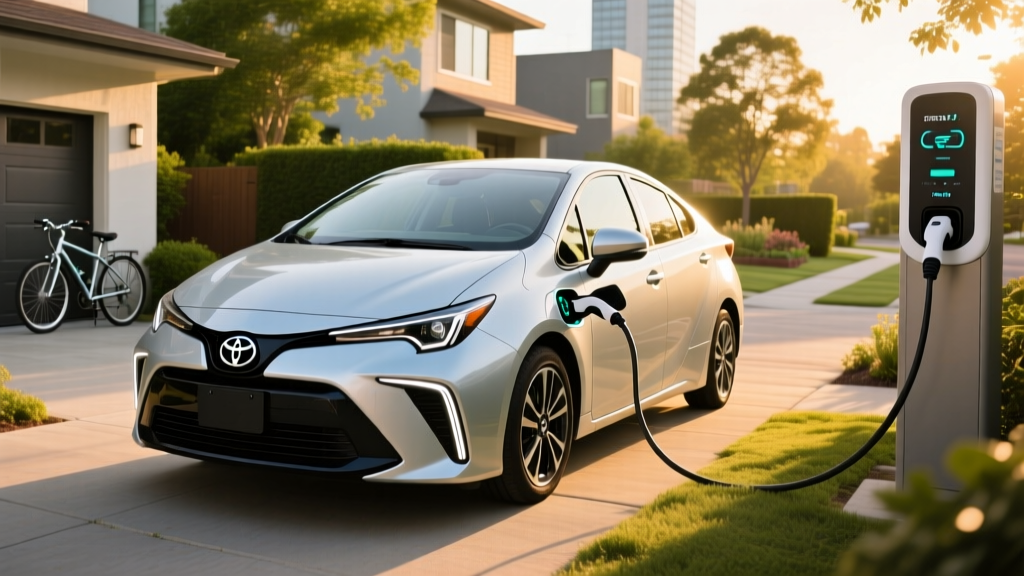
This guide covers the conventional hybrid (HEV) version of the 2023 Prius. Toyota also sells the Prius Prime, a plug-in hybrid (PHEV) variant with electric-only range — we address the differences where relevant so you can decide which powertrain fits your driving pattern.
HEV vs PHEV: Which 2023 Prius Is Right for You?
Before diving into specs, it is essential to distinguish the two Prius models. Confusion here is common, and choosing the wrong one can mean either paying for capability you never use or missing out on electric-only commuting.
| Feature | 2023 Prius (HEV) | 2023 Prius Prime (PHEV) |
|---|---|---|
| Powertrain type | Conventional hybrid — no plug | Plug-in hybrid — charges via outlet or station |
| EPA combined MPG (hybrid mode) | 52–57 MPG | 48–52 MPG (after battery depleted) |
| Electric-only range | N/A (electric assist only) | 39–44 miles (EPA) |
| Battery capacity | ~0.9 kWh (small buffer) | 13.6 kWh usable (lithium-ion) |
| Plug-in charging | Not required or supported | Level 1 (~4 hr) / Level 2 (~2 hr); no DC fast charge |
| Combined horsepower | 194 hp (FWD) / 196 hp (AWD) | 220 hp |
| Federal tax credit (§30D) | Not eligible | Up to $7,500 (subject to income/MSRP/sourcing rules) |
| Base MSRP (2023) | ~$27,450 (LE trim) | ~$32,675 (SE trim) |
The HEV is the simpler choice: you refuel with gasoline, the hybrid system recovers energy through regenerative braking, and you never think about charging. The PHEV rewards drivers who can plug in nightly and commute under 40 miles round-trip — those drivers may go months without visiting a gas station.
Fuel Economy: EPA Ratings and Real-World MPG
Fuel efficiency is the primary reason most buyers choose the Prius. The 2023 Toyota Prius hybrid delivers strong EPA numbers across all trims, but real-world results vary depending on driving conditions.
| Trim / Drivetrain | City (EPA) | Combined (EPA) | Real-World Expectation | |
|---|---|---|---|---|
| LE (FWD) | 57 MPG | 56 MPG | 57 MPG | 52–60 MPG |
| XLE / Limited (FWD) | 52 MPG | 52 MPG | 52 MPG | 47–55 MPG |
| LE / XLE (AWD-e) | 49 MPG | 50 MPG | 49 MPG | 44–52 MPG |
Real-world context: Toyota hybrids historically overperform their EPA city ratings in stop-and-go traffic, where regenerative braking recovers the most energy. Owners on fueleconomy.gov report average combined figures between 50 and 58 MPG for the LE trim. Highway-dominant commutes at 75+ MPH tend to drop efficiency to the mid-to-high 40s, as the 2.0-liter engine operates more frequently outside its optimal efficiency band.
Cold weather reduces fuel economy by roughly 5–10% due to increased engine warm-up cycles and cabin heating demands. In sub-freezing climates, expect the LE to average 48–52 MPG combined during winter months.
Powertrain and Performance Specs
The fifth-generation Prius uses Toyota's latest Hybrid Synergy Drive with a 2.0-liter inline-four engine — a significant upgrade from the 1.8-liter in the previous generation. The result is noticeably stronger acceleration without sacrificing efficiency.
| Specification | 2023 Prius LE (FWD) | 2023 Prius XLE/Limited (FWD) | 2023 Prius AWD-e |
|---|---|---|---|
| Engine | 2.0L inline-4 + electric motor(s) | ||
| Combined output | 194 hp | 194 hp | 196 hp |
| 0–60 mph | ~7.2 sec | ~7.2 sec | ~7.0 sec |
| Drivetrain | FWD | FWD | AWD (electronic rear motor) |
| Transmission | eCVT (planetary gearset) | ||
| Curb weight | ~3,032 lbs | ~3,097 lbs | ~3,131 lbs |
| Cargo volume (rear seats up) | ~23.8 cu ft | ||
The 0–60 time of roughly 7.2 seconds is a dramatic improvement over the outgoing Prius (which took over 10 seconds). Merging onto highways and passing slower traffic no longer requires planning. The AWD-e variant adds a small rear electric motor that engages automatically during low-traction conditions — it is not a performance AWD system but improves confidence in rain and light snow.
Battery Warranty, Lifespan, and Replacement Cost
Battery longevity remains the top concern for hybrid buyers, even though modern hybrid batteries are far more durable than early-generation units.
2023 Toyota Prius Hybrid Battery Warranty
- Hybrid battery coverage: 10 years / 150,000 miles (whichever comes first) in all 50 states — upgraded from the previous 8-year/100,000-mile standard
- Hybrid system components: 8 years / 100,000 miles (inverter, control module, battery ECU)
- Battery chemistry: Lithium-ion (Li-ion) for all 2023 trims — lighter and more energy-dense than the NiMH packs in older Prius models
Real-world lifespan data: Based on fleet data from prior-generation Prius models with lithium-ion packs, Toyota hybrid batteries commonly last 150,000–200,000+ miles before significant degradation. The 2023 model's battery is relatively small (~0.9 kWh usable), which means it cycles less deeply than a PHEV or EV battery — shallow cycling dramatically extends cell life.
Replacement cost if out of warranty: A new OEM hybrid battery pack for the 2023 Prius is estimated at $2,500–$4,000 installed at a Toyota dealer. Third-party refurbished packs are available for $1,500–$2,500. For context, most owners will never face this expense within the vehicle's typical ownership life.
Pricing, Trims, and Tax Credit Eligibility
The 2023 Toyota Prius hybrid was offered in three main trims. Prices below reflect original MSRP at launch.
- LE (base, FWD or AWD): $27,450–$28,850 MSRP
- XLE (mid, FWD or AWD): $30,695–$32,095 MSRP
- Limited (top, FWD only): $34,695 MSRP
Federal tax credit: The conventional Prius HEV does not qualify for the federal §30D clean vehicle credit. That credit applies only to plug-in electric vehicles (BEVs and PHEVs) with sufficient battery capacity. If the $7,500 credit is a priority, the Prius Prime PHEV may qualify — but eligibility depends on the buyer's adjusted gross income, the vehicle's MSRP cap ($55,000 for sedans under §30D), battery component sourcing, and critical mineral requirements. Always verify current rules at IRS.gov or consult a tax professional before purchasing.
State incentives: Some states offer rebates or HOV lane access for hybrids, though most incentive programs have shifted toward PHEVs and BEVs. Check your state's energy office or DMV for current programs.
Reliability and Ownership Costs
Toyota's hybrid powertrain is among the most proven in the industry, with over 25 years of Prius production data backing it. The 2023 model carries forward that reputation.
IIHS safety: The 2023 Prius earned the TOP SAFETY PICK designation from the Insurance Institute for Highway Safety, with Good ratings in all crashworthiness tests.
Maintenance advantages over gas-only cars:
- Regenerative braking reduces wear on friction brake pads — many Prius owners report original brake pads lasting 80,000–100,000 miles
- No conventional starter motor or alternator to replace (the hybrid motor-generator handles both functions)
- The eCVT has no belts, clutches, or traditional transmission fluid to service at short intervals
Estimated 5-year total cost of ownership (based on 15,000 miles/year, $3.50/gallon regular, and average insurance):
- Fuel cost: ~$3,900–$4,500 (compared to $7,500–$9,000 for a 28-MPG gas compact)
- Maintenance: ~$2,000–$2,800 over 5 years
- Insurance: ~$6,000–$8,000 (varies significantly by driver and state)
- Total estimated fuel savings vs. a 28-MPG gas car: $3,500–$5,000 over 5 years
2023 Prius Hybrid vs PHEV vs Full EV: Decision Framework
Choosing between a conventional hybrid, a plug-in hybrid, and a battery-electric vehicle depends on your driving habits, charging access, and budget. Here is a practical framework:
Choose the 2023 Prius (HEV) if:
- You lack reliable access to home or workplace charging
- You want maximum simplicity — no plugs, no charging apps, no range planning
- Your budget is under $30,000 and you want proven reliability
- You drive a mix of city and highway miles and want 50+ MPG without behavioral changes
Choose the 2023 Prius Prime (PHEV) if:
- You can charge at home (Level 1 or Level 2) and your daily commute is under 40 miles
- You want electric-only driving for most trips but need gas flexibility for road trips
- You may qualify for the §30D federal tax credit, which can offset the higher MSRP
Choose a full BEV (e.g., Tesla Model 3, Hyundai Ioniq 6) if:
- You have reliable home Level 2 charging
- Your daily driving is under 250 miles and you are comfortable with public DC fast charging for road trips
- You want zero tailpipe emissions and the lowest per-mile energy cost (~$0.04–$0.06/mile on home electricity vs. ~$0.08–$0.10/mile for the Prius HEV on gas)
Pros and Cons
Pros
- Class-leading fuel economy: up to 57 MPG combined (EPA)
- Significantly improved acceleration (7.2 sec 0–60) over prior generation
- 10-year / 150,000-mile hybrid battery warranty in all states
- Low starting MSRP of ~$27,450
- Strong IIHS safety ratings
- Minimal maintenance costs (long brake life, no traditional transmission service)
Cons
- No federal tax credit for the HEV version
- Rear seat headroom is tight for taller passengers due to sloping roofline
- Cargo space (23.8 cu ft) is less than some compact crossover alternatives
- AWD-e is a traction aid, not a performance or off-road system
- Infotainment is functional but lags behind competitors in responsiveness
- Higher trims (Limited) push pricing into PHEV and entry-level BEV territory
Frequently Asked Questions
How many MPG does the 2023 Toyota Prius hybrid get?
The EPA rates the 2023 Prius LE (FWD) at 57 city / 56 highway / 57 combined MPG. The XLE and Limited trims are rated at 52 MPG combined. Real-world owners commonly report 50–60 MPG combined depending on driving conditions. City-dominant driving often yields higher numbers than the EPA estimate thanks to regenerative braking.
Does the 2023 Prius hybrid need to be plugged in?
No. The conventional Prius HEV charges its small hybrid battery entirely through regenerative braking and the gasoline engine. You never plug it in. Only the Prius Prime (PHEV) requires plug-in charging to access its electric-only range.
How far can the 2023 Prius Prime go on electric only?
The 2023 Prius Prime has an EPA-rated electric-only range of 39–44 miles depending on trim and wheel size. After the battery depletes, it operates as a conventional hybrid at approximately 48–52 MPG combined. Total combined range (electric + gas) exceeds 400 miles.
Is the 2023 Prius hybrid reliable, and what does battery replacement cost?
Toyota's hybrid system has over two decades of proven reliability. The 2023 Prius hybrid battery is covered by a 10-year / 150,000-mile warranty. If replacement is needed out of warranty, expect to pay $2,500–$4,000 for a new OEM pack or $1,500–$2,500 for a refurbished unit. Most hybrid batteries last well beyond 150,000 miles based on historical fleet data.
Does the 2023 Toyota Prius hybrid qualify for any tax credit?
The conventional Prius HEV does not qualify for the federal §30D clean vehicle credit — that credit is reserved for plug-in vehicles (PHEVs and BEVs). The Prius Prime PHEV may qualify for up to $7,500 depending on buyer income limits, MSRP caps, and battery sourcing requirements. Always check IRS.gov for current eligibility rules. Some states offer separate hybrid incentives — check your local energy office.
How does the 2023 Prius compare to a full EV for daily commuting?
If you can charge at home, a full EV will cost roughly half as much per mile to fuel (electricity at ~$0.04–$0.06/mile vs. gasoline at ~$0.08–$0.10/mile for the Prius). However, EVs carry higher upfront costs, require charging infrastructure, and may involve range planning for long trips. The Prius HEV is the better choice if you lack home charging, drive very long distances regularly, or want the lowest purchase price with no lifestyle changes.
What is the total range on a full tank of gas?
The 2023 Prius has an 11.4-gallon fuel tank. At 57 MPG combined (LE trim), that yields approximately 650 miles of total range. Real-world range typically falls between 550 and 650 miles depending on driving style and conditions.