Quick Verdict: The Sporty Hybrid Sedan That Still Makes Sense
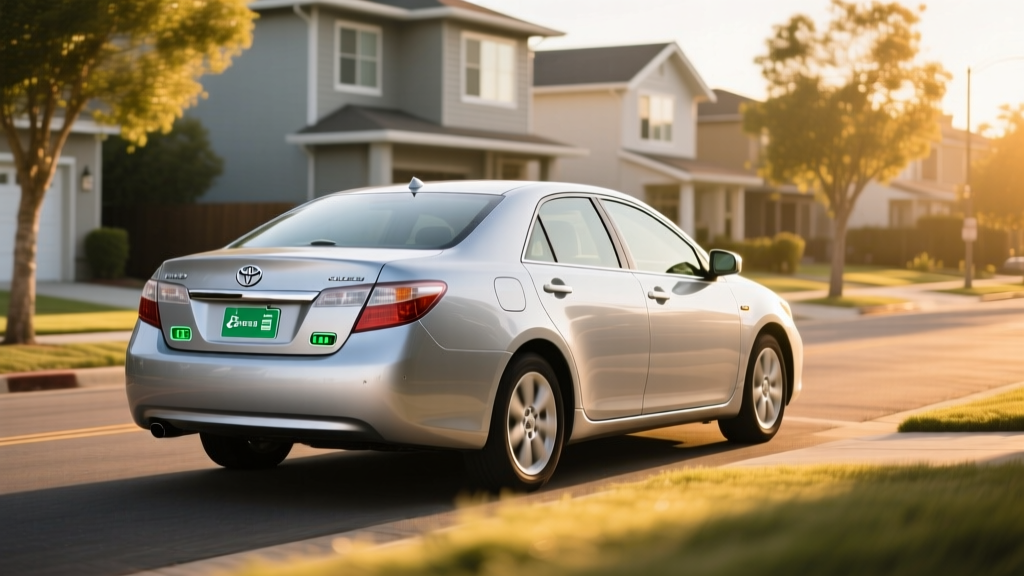
The 2023 Toyota Camry Hybrid XSE occupies a specific niche: buyers who want the fuel-sipping efficiency of a conventional hybrid (HEV) without sacrificing the firmer suspension tuning, larger wheels, and sport-seat bolstering that the XSE trim provides. Now that these models are circulating on the used market in 2026, they represent one of the most cost-efficient midsize sedans you can buy — no plug required, no range anxiety, and a proven hybrid powertrain backed by Toyota's long-standing reliability record.
This is not a plug-in hybrid. The Camry Hybrid XSE is a self-charging HEV that recovers energy through regenerative braking and the gasoline engine. You will never need to plug it in. If you want electric-only driving, you'd need to look at the Toyota RAV4 Prime or Prius Prime (both PHEVs), or a full battery-electric vehicle.
HEV (Conventional Hybrid): Small battery (~1.6 kWh in the Camry Hybrid), charges itself via regen and engine. No plug. Excellent city MPG. Cannot drive on electric power alone for meaningful distances.
PHEV (Plug-in Hybrid): Larger battery (typically 13-18 kWh), plugs into a wall outlet or Level 2 charger, offers 25-44 miles of electric-only range before the gas engine kicks in. The Camry lineup does not currently offer a PHEV variant in the US — for that, see the Prius Prime.
Powertrain and Performance Specs
The 2023 Camry Hybrid XSE pairs Toyota's fifth-generation Hybrid Synergy Drive with a 2.5-liter Dynamic Force four-cylinder engine. Here's what's under the hood:
| Specification | Value |
|---|---|
| Gas Engine | 2.5L DOHC 4-cylinder, 176 hp / 163 lb-ft |
| Electric Motor (FWD) | 88 kW (118 hp) front motor |
| Net Combined Horsepower | 208 hp |
| AWD Option (XSE only) | Rear-mounted 40 kW (54 hp) motor, electronic AWD |
| Transmission | eCVT (planetary gearset, not a belt CVT) |
| Hybrid Battery | ~1.6 kWh lithium-ion (24-module, NiMH on some early-build; Li-ion standard for 2023) |
| 0-60 mph (est.) | ~7.1 seconds (FWD), ~7.3 seconds (AWD) |
| Drivetrain | FWD standard; electronic AWD available on XSE trim |
The AWD system on the XSE is worth noting: it uses a separate rear electric motor (no mechanical driveshaft) that engages automatically under acceleration or low-traction conditions. It adds roughly 1 MPG penalty versus the FWD model and about $1,400 to the original MSRP. For buyers in snow-belt states, it's a practical upgrade that doesn't compromise the hybrid efficiency story significantly.
Fuel Economy: EPA Numbers vs. Real-World MPG
The Camry Hybrid's fuel economy varies by drivetrain. Here's the official EPA data from fueleconomy.gov:
| Configuration | City | Highway | Combined |
|---|---|---|---|
| XSE FWD (18" wheels) | 44 MPG | 47 MPG | 46 MPG |
| XSE AWD (18" wheels) | 44 MPG | 47 MPG | 46 MPG |
| LE Hybrid FWD (16" wheels) | 51 MPG | 53 MPG | 52 MPG |
Why the XSE gets less than the LE: The XSE rides on 18-inch alloy wheels with wider, stickier tires (235/45R18 vs. the LE's 208/65R16), has a sport-tuned suspension, and carries roughly 60 lbs more weight. The trade-off is sharper handling and a more planted feel on back roads.
In mixed suburban/highway driving, owners and long-term testers consistently report 42-48 MPG combined in the XSE FWD — sometimes exceeding the EPA estimate in warm-weather city driving where regenerative braking shines. On sustained 75+ MPH highway runs, expect 40-43 MPG (aerodynamic drag reduces the hybrid advantage at speed). In cold weather (below 30°F), the engine runs more frequently to heat the cabin and maintain battery temperature, dropping observed economy to 36-40 MPG on short trips. The Camry Hybrid does not have a heat pump — cabin heat comes from engine coolant.
HEV vs. PHEV vs. Full EV: Which Powertrain Fits You?
The 2023 Camry Hybrid XSE is an HEV. Here's how it stacks up against the alternatives for a typical midsize-sedan buyer:
| Factor | HEV (Camry Hybrid XSE) |
PHEV (Prius Prime) |
Full EV (Tesla Model 3) |
|---|---|---|---|
| Plug-in Required? | No | Yes (recommended) | Yes (mandatory) |
| Electric-Only Range | ~1 mi at low speed | 44 mi (EPA) | 272-358 mi (EPA) |
| Combined Efficiency | 46 MPG | 52 MPG + 127 MPGe | 132 MPGe |
| Home Charging Needed? | No | Recommended (120V OK) | Yes (240V ideal) |
| Federal Tax Credit (§30D) | Not eligible | Up to $7,500* | Up to $7,500* |
| Road-Trip Convenience | Gas station, 3 min | Gas station, 3 min | DC fast charge, 20-40 min |
| Used Price Range (2026) | $24,000-$30,000 | $30,000-$36,000 | $28,000-$38,000 |
*§30D tax credit eligibility depends on MSRP caps, buyer income limits, battery sourcing requirements, and point-of-sale transfer rules. Consult IRS.gov or a tax professional. Used PHEVs/EVs may qualify for the separate §25E used-vehicle credit (up to $4,000).
Pricing: Original MSRP and 2026 Used-Market Value
When new, the 2023 Camry Hybrid XSE carried the following MSRPs (including destination charge):
- XSE Hybrid FWD: ~$34,190
- XSE Hybrid AWD: ~$35,590
- Common add-ons: panoramic glass roof (+$1,070), JBL premium audio with navigation (+$1,610), advanced technology package
As of early 2026, used-market pricing for a 2023 Camry Hybrid XSE with 20,000-45,000 miles typically falls between $24,000 and $30,000, depending on mileage, condition, and whether it's the FWD or AWD configuration. Well-optioned AWD examples with low miles command the top of that range.
The 2023 Camry Hybrid XSE is a conventional HEV. It did not qualify for the §30D new clean vehicle credit when sold new, and it does not qualify for the §25E used-vehicle credit now. That credit applies only to used EVs and PHEVs with a sale price under $25,000 from a licensed dealer. The Camry Hybrid's advantage is its lower purchase price and zero charging infrastructure cost — you simply fuel it at any gas station.
Reliability, Battery Lifespan, and Warranty Coverage
Toyota's hybrid system is among the most proven in the industry, with over 25 years of continuous refinement since the original 1997 Prius. The 2023 Camry Hybrid benefits from this institutional knowledge.
Toyota covers the hybrid battery and hybrid system components for 10 years or 150,000 miles (whichever comes first) from the date of first use on 2020 and newer models. This is one of the strongest hybrid battery warranties in the industry. For a 2023 model, that coverage extends to approximately 2033 under normal ownership.
Battery Replacement Cost: If the hybrid battery fails outside warranty, a new OEM replacement typically runs $2,500-$4,000 including labor at a Toyota dealer. Independent hybrid specialists and refurbished battery options can reduce this to $1,500-$2,500. In practice, Toyota hybrid batteries routinely last 150,000-200,000+ miles with minimal degradation, as the battery management system keeps state of charge in a conservative 40-80% window to maximize cycle life.
The conventional 12-volt auxiliary battery (a standard lead-agid or AGM unit, separate from the hybrid traction battery) typically needs replacement every 4-6 years at a cost of $150-$250. This is a normal maintenance item identical to any other vehicle.
According to NHTSA records, the 2023 Camry Hybrid has no significant pattern of hybrid-system-related recalls. The IIHS named the 2023 Camry a Top Safety Pick+ when equipped with specific headlights, reflecting excellent crash-test performance.
Interior, Technology, and the XSE Trim Experience
The XSE trim positions itself as the sport-luxury hybrid option in the Camry lineup. Standard and notable features on the 2023 model include:
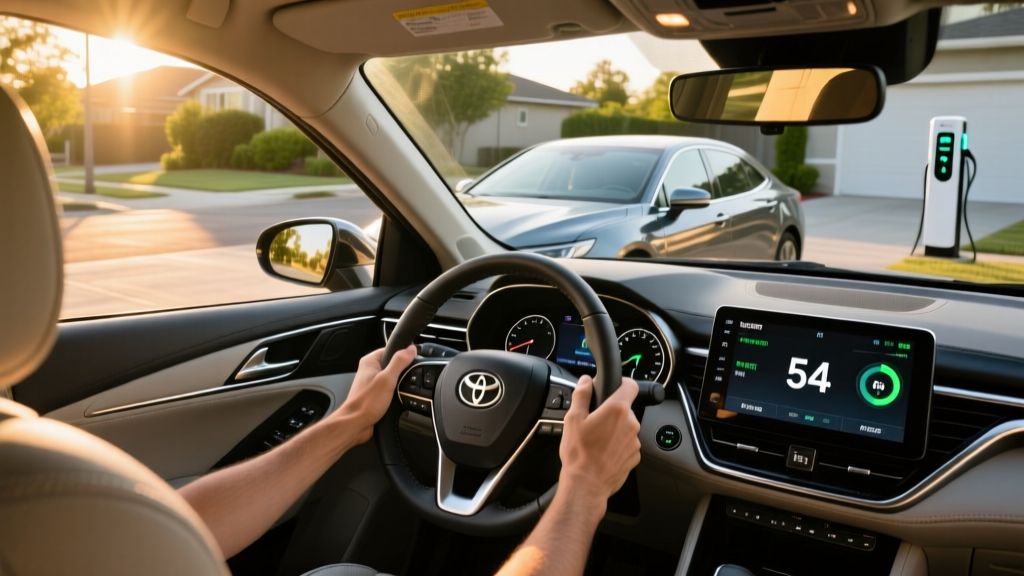
- 9-inch touchscreen with wireless Apple CarPlay and Android Auto
- 12.3-inch digital instrument cluster with hybrid energy-flow display
- SofTex-trimmed sport seats with heated front seats standard
- Leather-trimmed steering wheel with paddle shifters (simulated gear steps in the eCVT)
- Dual-zone automatic climate control
- Toyota Safety Sense 2.5+ (pre-collision, lane-trace assist, full-speed adaptive cruise, road-sign assist)
- Qi wireless charging pad
- Ambient interior lighting
The XSE's sport-tuned suspension and 18-inch wheels deliver noticeably firmer ride quality than the LE or SE trims. You feel more road texture on rough pavement, but body roll is better controlled in corners. For daily commuting on well-maintained roads, it's a worthwhile trade; for potholed urban streets, the LE Hybrid's softer ride and 52 MPG may be more appealing.
Who Should Buy the 2023 Camry Hybrid XSE?
Choose the Camry Hybrid XSE if:
- You want 40+ MPG without ever plugging in or changing your fueling habits
- You prefer a sport-tuned ride and more aggressive styling over maximum efficiency
- You drive 15,000+ miles per year and want to minimize fuel cost without EV infrastructure
- You live in an apartment or lack reliable home/workplace charging access
- You want Toyota's proven hybrid reliability and a 10-year/150,000-mile battery warranty
- You need the option of AWD for snow or rain without a significant MPG penalty
Look elsewhere if:
- You want electric-only driving for short commutes (consider the Prius Prime PHEV)
- You want the absolute lowest fuel cost per mile (a full EV on home solar or cheap utility rates wins)
- You want a soft, luxury-oriented ride (the XSE is intentionally firm)
- You qualify for the §30D or §25E tax credit and want to maximize incentive value
- You want the latest-generation infotainment (the 2025+ Camry Hybrid moved to Toyota's newer Audio Multimedia system)
Frequently Asked Questions
How many MPG does the 2023 Camry Hybrid XSE actually get?
The EPA rates it at 44 city / 47 highway / 46 combined for both FWD and AWD. In real-world mixed driving, owners report 42-48 MPG combined, with city driving often exceeding the EPA estimate thanks to aggressive regenerative braking. Sustained high-speed highway driving (75+ MPH) typically yields 40-43 MPG.
Does the 2023 Camry Hybrid XSE qualify for any federal tax credit?
No. The Camry Hybrid is a conventional HEV, not a plug-in vehicle. The federal §30D clean vehicle credit and the §25E used-vehicle credit both require a vehicle to have a plug and meet battery-capacity thresholds. The Camry Hybrid's advantage is its lower upfront cost and zero charging-infrastructure expense.
Is the Camry Hybrid XSE a plug-in hybrid?
No. It is a conventional hybrid (HEV). The battery charges through regenerative braking and the gasoline engine. There is no charging port and no electric-only driving range beyond very low-speed maneuvering. Toyota does not currently offer a Camry PHEV in the US market.
How long will the hybrid battery last, and what does replacement cost?
Toyota warranties the hybrid battery for 10 years or 150,000 miles. In practice, Toyota hybrid batteries regularly exceed 200,000 miles. If replacement is needed out of warranty, expect $2,500-$4,000 at a dealer, or $1,500-$2,500 through independent hybrid specialists using refurbished modules.
Is the AWD system worth the extra cost on the XSE?
If you regularly drive in snow, rain, or on gravel roads, yes — the electronic AWD adds meaningful traction with only a ~1 MPG penalty and roughly $1,400 in original MSRP. If you live in a dry, mild climate, the FWD version saves weight and cost without any traction compromise in normal conditions.
How does the XSE compare to the Camry Hybrid LE for fuel economy?
The LE Hybrid achieves 51 city / 53 highway / 52 combined — roughly 6 MPG better than the XSE. The difference comes from smaller 16-inch wheels, narrower low-rolling-resistance tires, and a softer suspension tune. If maximum efficiency is your priority, the LE is the clear winner. If driving dynamics and styling matter more, the XSE's 46 MPG is still exceptional for a sport-trim midsize sedan.