Quick Verdict: The Midsize Hybrid Benchmark
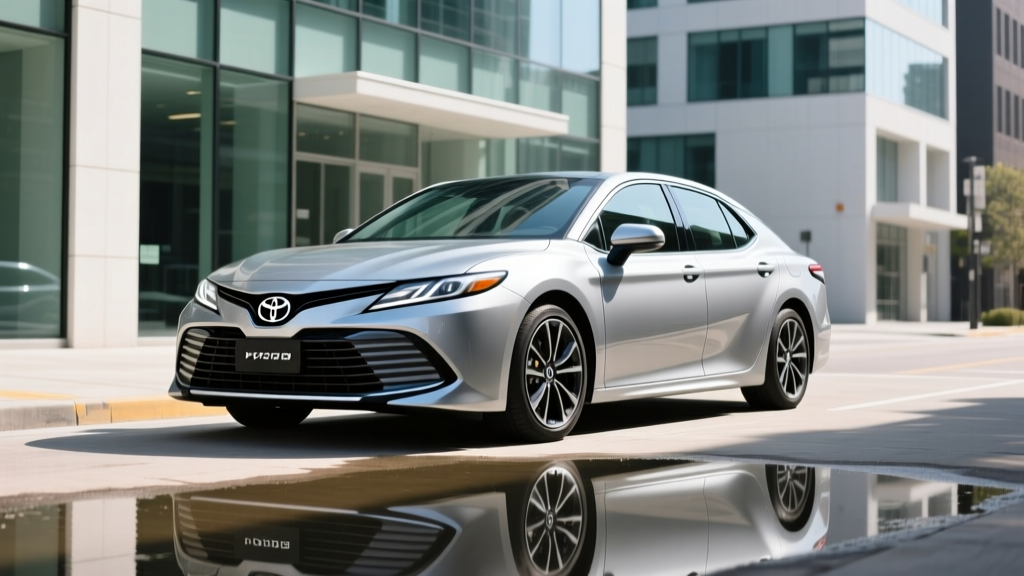
The 2023 Toyota Camry Hybrid remains one of the most compelling arguments for electrification without lifestyle compromise. With EPA ratings reaching 52 MPG city and 53 MPG combined in the LE trim, it extracts maximum efficiency from Toyota's fourth-generation hybrid synergy drive without requiring a plug, a charging routine, or any behavioral change from the driver. For buyers not yet ready to commit to a battery-electric vehicle but unwilling to accept the fuel costs of a conventional midsize sedan, the Camry Hybrid occupies a precise and defensible position in the market.
What sets this generation apart is not just the headline MPG figure — it's the consistency. Unlike turbocharged gas engines that lose efficiency under load, the Camry Hybrid's parallel hybrid system delivers strong city numbers because it relies heavily on its electric motor at low speeds, where internal combustion engines are least efficient. The result is a sedan that routinely exceeds its EPA estimates in stop-and-go urban driving.
HEV vs PHEV: Understanding What the Camry Hybrid Is (and Isn't)
Conventional Hybrid (HEV): The 2023 Toyota Camry Hybrid is a self-charging hybrid. It uses a small 1.6 kWh nickel-metal hydride (NiMH) battery pack that recharges through regenerative braking and the gasoline engine. You never plug it in. The electric motor assists the 2.5-liter four-cylinder engine, enabling electric-only propulsion at very low speeds (typically under 25 mph for short distances), but the primary purpose is efficiency optimization, not electric-only driving.
Plug-in Hybrid (PHEV): A PHEV like the Toyota RAV4 Prime or Prius Prime features a much larger battery (13.6–18.1 kWh), an onboard charger, and a charging port. PHEVs deliver 25–44 miles of genuine electric-only range before the gas engine engages. They qualify for the federal §30D tax credit (up to $7,500) when sourcing and income requirements are met.
Key distinction: The Camry Hybrid does not plug in, does not offer meaningful electric-only range, and does not qualify for the federal EV tax credit. It is a conventional HEV — and that's precisely the point for its target buyer.
Fuel Economy: EPA Ratings vs Real-World MPG
Fuel economy varies by trim due to wheel size, weight, and equipment differences. Here is the complete EPA breakdown for the 2023 model year:
| Trim | City MPG | Highway MPG | Combined MPG | Drivetrain |
|---|---|---|---|---|
| LE | 51 | 53 | 52 | FWD |
| SE / SE Nightshade | 44 | 47 | 46 | FWD |
| XLE | 44 | 47 | 46 | FWD |
| LE AWD | 51 | 53 | 52 | AWD-e |
| SE AWD / XLE AWD | 44 | 47 | 46 | AWD-e |
Source: EPA Fuel Economy
Real-World MPG Expectations
The Camry Hybrid LE's 52 MPG combined is one of the few EPA estimates that owners frequently exceed in practice. In city-heavy driving, real-world figures of 54–58 MPG are common because the hybrid system leverages regenerative braking and electric-motor propulsion at the speeds where gas engines waste the most energy. Highway cruising at 70–80 mph typically yields 45–49 MPG, as aerodynamic drag and sustained engine load reduce the electric motor's contribution. In cold weather (below 30°F), expect a 5–10% reduction as the engine runs more frequently to maintain cabin heat and battery temperature.
Powertrain Specs: Engine, Motor, and Combined Output
| Specification | Detail |
|---|---|
| Gas Engine | 2.5L inline-4 (A25A-FXS), Atkinson cycle |
| Engine Output | 176 hp @ 5,700 rpm / 163 lb-ft @ 5,200 rpm |
| Electric Motor | Permanent-magnet synchronous (front); additional rear motor on AWD-e trims |
| Motor Output | 118 hp (front); 40 hp (rear, AWD-e only) |
| Combined Net Horsepower | 208 hp (FWD); 219 hp (AWD-e) |
| Transmission | Continuously variable (eCVT — planetary gearset, not belt-driven) |
| Hybrid Battery | 1.6 kWh, NiMH (245V nominal) |
| 0–60 mph | ~7.5 seconds (FWD); ~7.1 seconds (AWD-e) |
| Curb Weight | 3,495–3,595 lbs (varies by trim) |
The combined horsepower figure of 208 hp (219 with AWD-e) requires context: in a hybrid system, the engine and motor do not both deliver peak output simultaneously. The net system rating reflects the maximum combined output the powertrain can deliver at any single moment. The result is confident highway merging and adequate passing power, though this is not a performance sedan — the Camry Hybrid prioritizes efficiency over acceleration.
The AWD-e system deserves specific mention. Rather than a mechanical driveshaft, the rear axle is powered by an independent 40-hp electric motor that engages only when slip is detected or during hard acceleration from a stop. This means AWD capability with no fuel-economy penalty versus FWD on the LE trim — a genuinely clever engineering solution.
Battery Warranty, Lifespan, and Replacement Cost
Toyota Hybrid Battery Coverage
Warranty: 10 years or 150,000 miles (whichever comes first), transferable to subsequent owners. This applies nationwide regardless of state emissions requirements, as Toyota standardized the extended coverage starting with the 2020 model year.
Expected Lifespan: Toyota's NiMH hybrid batteries in the Camry have demonstrated exceptional longevity. Fleet data and owner reports indicate that original batteries routinely reach 150,000–200,000 miles with minimal capacity loss. Unlike BEV batteries that degrade noticeably over time, the Camry Hybrid's small battery operates within a narrow state-of-charge window (roughly 40–80%), which dramatically reduces stress on the cells.
Replacement Cost: If replacement becomes necessary outside warranty, a new OEM hybrid battery from Toyota costs approximately $2,000–$3,500 including installation. Third-party refurbished units are available for $1,000–$2,000. This is a fraction of BEV battery replacement costs ($5,000–$20,000+) and a key reason hybrid ownership anxiety is largely unfounded.
The hybrid system's power electronics (inverter, DC-DC converter) carry separate coverage under Toyota's Hybrid System Warranty: 8 years/100,000 miles. In practice, failures of these components are rare, and the overall hybrid powertrain has proven to be one of the most reliable in Toyota's lineup — which is saying something given the brand's reliability reputation.
Pricing, Trims, and Tax Credit Eligibility
| Trim | MSRP (2023) | Federal Tax Credit |
|---|---|---|
| LE Hybrid | $28,455 | Not eligible |
| SE Hybrid | $30,090 | Not eligible |
| SE Nightshade Hybrid | $30,690 | Not eligible |
| XLE Hybrid | $33,495 | Not eligible |
The 2023 Camry Hybrid does not qualify for the IRS §30D federal clean vehicle tax credit. That credit applies exclusively to plug-in electric vehicles (BEVs and PHEVs) with battery capacities of at least 7 kWh that meet domestic sourcing, MSRP, and buyer income requirements. The Camry Hybrid's 1.6 kWh NiMH battery places it firmly outside the credit's scope.
However, the value proposition remains strong on a total-cost-of-ownership basis. At 52 MPG combined and a national average gas price of $3.50/gallon, the Camry Hybrid LE consumes approximately $673 in fuel per 10,000 miles. A comparable gas-only midsize sedan averaging 30 MPG combined would spend $1,167 over the same distance — a $494 annual savings that compounds significantly over a 5–8 year ownership period.
Some states offer their own incentives for hybrid purchases, though these have become less common as incentive programs shift toward BEVs and PHEVs. Check your state's energy office or department of environmental quality for current programs.
Who Should Choose the Camry Hybrid vs a PHEV or Full EV
Choose the Camry Hybrid (HEV) if:
- You lack access to home or workplace charging (apartment, street parking, no garage)
- Your daily commute is under 30 miles but you regularly take road trips exceeding 300 miles
- You want zero behavioral change — no plugging in, no charging apps, no route planning around chargers
- Your budget is under $35,000 and you want maximum fuel savings per dollar spent
- You prioritize proven long-term reliability with minimal maintenance complexity
Choose a PHEV (like the Prius Prime) if:
- You have reliable home Level 2 charging and a commute under 40 miles
- You want electric-only daily driving but gas-engine flexibility for road trips
- You qualify for the §30D tax credit (income under $150K single / $300K joint, vehicle meets sourcing rules)
- You want to experience EV driving dynamics (silent, instant torque) without full commitment
Choose a Full EV (like the Tesla Model 3 or Hyundai Ioniq 6) if:
- You have home charging access and your daily driving is under 250 miles
- You want the lowest per-mile energy cost (electricity at ~$0.14/kWh ≈ $4.50 per 100 miles vs $6.73 for the Camry Hybrid)
- You qualify for the $7,500 federal credit and want to maximize incentive value
- You want zero tailpipe emissions and minimal drivetrain maintenance (no oil changes, no spark plugs)
Pros and Cons
Strengths
- 52 MPG combined (LE) — among the highest of any non-plug-in midsize sedan
- No plug-in required; zero lifestyle or routine adjustment
- 208 hp combined provides confident highway performance
- 10-year/150,000-mile hybrid battery warranty is industry-leading
- Available AWD-e with no fuel-economy penalty on LE trim
- Strong resale value; Toyota hybrid reliability reputation
- Starting MSRP under $29,000 makes it accessible
Limitations
- No federal tax credit eligibility
- Electric-only operation limited to very low speeds and short distances
- SE and XLE trims drop to 46 MPG combined (still excellent, but noticeably less than LE)
- NiMH battery chemistry is older technology (though proven and cost-effective)
- Infotainment system lags behind competitors in responsiveness and UI design
- No DC fast-charging capability (not applicable to HEVs, but worth noting for comparison shoppers)
Frequently Asked Questions
How many MPG does the 2023 Toyota Camry Hybrid get?
The EPA rates the Camry Hybrid LE at 51 city / 53 highway / 52 combined MPG. SE, SE Nightshade, and XLE trims are rated at 44 city / 47 highway / 46 combined due to larger wheels, sport-tuned suspension, and additional weight. Real-world city driving often exceeds EPA estimates, with 54–58 MPG achievable in stop-and-go conditions.
Does the Camry Hybrid need to be plugged in?
No. The Camry Hybrid is a conventional HEV, not a plug-in hybrid. Its 1.6 kWh battery charges entirely through regenerative braking and the gasoline engine. There is no charging port, no plug, and no electric-only range to manage.
How far can the Camry Hybrid drive on electric power alone?
Under 1 mile at speeds below approximately 25 mph. The electric motor's primary role is to assist the gasoline engine and enable regenerative braking — not to provide standalone propulsion. If electric-only daily driving is a priority, consider the Toyota Prius Prime (44 miles EV range) or a full BEV.
Is the Camry Hybrid reliable, and what does a battery replacement cost?
Exceptionally reliable. Toyota's hybrid system has been in continuous production since 1997, and the Camry Hybrid's NiMH battery is covered for 10 years/150,000 miles. Real-world data shows original batteries regularly exceeding 150,000 miles. Out-of-warranty replacement costs $2,000–$3,500 for a new OEM unit, or $1,000–$2,000 for a refurbished battery.
Does the 2023 Camry Hybrid qualify for any tax credit?
No. The IRS §30D federal clean vehicle credit applies only to plug-in vehicles (BEVs and PHEVs) with battery capacities of 7 kWh or more. The Camry Hybrid's 1.6 kWh NiMH battery does not meet this threshold. Check your state's energy office for any local hybrid incentives, though these have become uncommon.
Camry Hybrid vs gas Camry — which saves more money?
The Hybrid LE costs approximately $1,500–$2,000 more than a comparably equipped gas Camry LE at purchase. At 15,000 miles per year and $3.50/gallon gas, the Hybrid saves roughly $500–$600 annually in fuel. The breakeven point is approximately 3–4 years, after which the Hybrid continues to deliver savings for the remainder of ownership. Over 8 years and 120,000 miles, total fuel savings typically reach $3,500–$4,500.
How does the Camry Hybrid compare to the Honda Accord Hybrid?
The 2023 Accord Hybrid achieves 48 MPG combined (Sport trim) to 46 MPG combined (EX-L/Touring), slightly trailing the Camry Hybrid LE's 52 MPG. The Accord offers a more refined interior and slightly more engaging driving dynamics, while the Camry Hybrid delivers better peak efficiency and a longer battery warranty (10yr/150K vs 8yr/100K on the Honda). Both are excellent choices; the decision often comes down to styling preference and dealership experience.