Quick Verdict: A Performance SUV That Happens to Be a Plug-In Hybrid
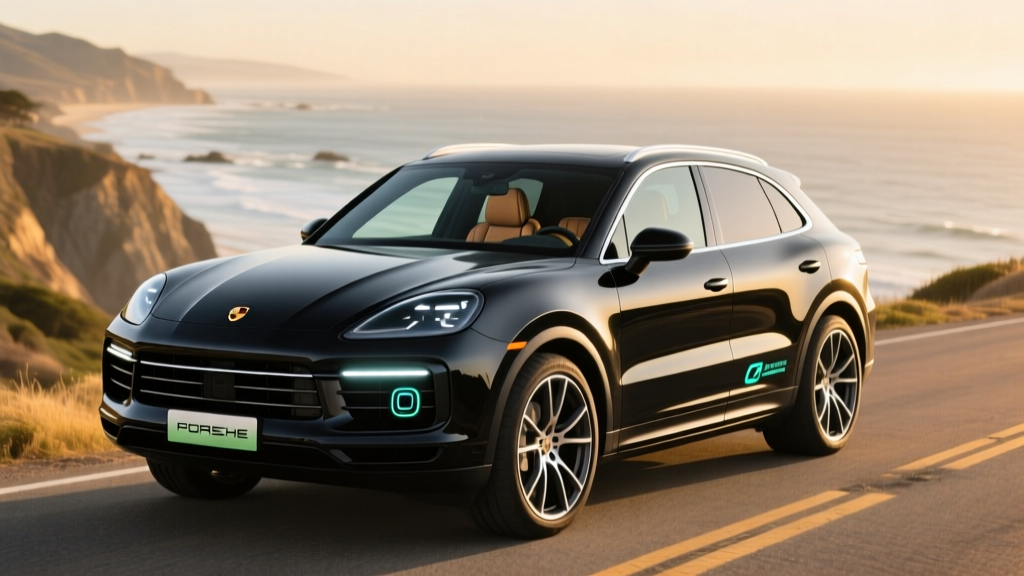
The 2023 Porsche Cayenne E-Hybrid occupies a specific niche: buyers who want Porsche performance dynamics, daily electric-only commuting, and zero range anxiety on road trips. With 670 combined horsepower, a 17.9 kWh battery, and 16 miles of EPA-rated electric range, it is a plug-in hybrid (PHEV) — not a conventional hybrid. That distinction matters enormously for charging expectations, fuel economy, and tax credit eligibility.
As a used purchase in 2026, the 2023 model year represents a value proposition. Original MSRP started around $83,300, but depreciation and the used-EV federal tax credit (up to $4,000 under IRS §25E) can shift the math significantly. Below, we break down every spec that matters — from real-world MPG to battery replacement cost.
HEV vs PHEV: Where the Cayenne E-Hybrid Fits
| Feature | Conventional Hybrid (HEV) | Plug-In Hybrid (PHEV) | Cayenne E-Hybrid |
|---|---|---|---|
| Plugs in? | No — charges via regenerative braking and engine | Yes — external charging required for full EV range | Yes (PHEV) |
| Electric-only range | 0–2 miles (assist only) | 15–50 miles typical | 16 miles EPA |
| Battery size | 1–2 kWh | 8–30 kWh typical | 17.9 kWh (gross) |
| Fuel when battery depleted | Runs on gas continuously, excellent MPG | Runs as conventional hybrid, lower MPG than HEV | ~20 MPG combined (gas-only mode) |
| DC fast charging | N/A | Some models, not all | No — AC only |
The Cayenne E-Hybrid is firmly a PHEV. You plug it in to get the electric-only miles. If you never charge it, you're hauling around a heavy battery for minimal benefit — the gas-only fuel economy is unremarkable for a vehicle this size. This is a critical point: PHEVs reward owners who charge regularly.
Fuel Economy and Electric Range: The Numbers
| Metric | EPA Rating | Real-World Expectation |
|---|---|---|
| MPGe (combined, with charge) | 46 MPGe | 40–48 MPGe (varies with charging frequency) |
| MPG (gas-only, battery depleted) | 21 MPG combined | 18–22 MPG (highway driving, cold weather) |
| City MPG (gas-only) | — | ~20 MPG (regen helps in stop-and-go) |
| Highway MPG (gas-only) | — | ~21 MPG (aerodynamic drag hurts at 70+ mph) |
| Electric-only range | 16 miles | 12–15 miles (highway or cold weather) |
| Total combined range | ~380 miles | ~340–370 miles depending on conditions |
The 46 MPGe figure is meaningful only if you start most trips with a full battery and your daily driving stays within or near the 16-mile electric window. For a 10-mile round-trip commute with nightly charging, you may burn almost no gasoline for weeks. On a 400-mile road trip with no charging stops, expect the 3.0-liter V6 to deliver roughly 20–21 MPG — respectable for a 5,200-lb performance SUV, but not Prius territory.
Real-world range reality: The EPA's 16-mile electric estimate assumes moderate temperatures and mixed driving. In winter conditions (below 40°F), expect 11–13 miles of electric range due to cabin heating demands and reduced battery efficiency. Highway driving at 75 mph also cuts electric range to roughly 12–13 miles. Porsche's thermal management system helps, but physics wins in cold weather.
Powertrain and Performance Specs
| Specification | 2023 Cayenne E-Hybrid |
|---|---|
| Engine | 3.0L turbocharged V6 (335 hp / 332 lb-ft) |
| Electric motor | Integrated into 8-speed Tiptronic (134 hp / 295 lb-ft) |
| Combined output | 455 hp / 516 lb-ft (standard) · 670 hp / 663 lb-ft (Turbo S E-Hybrid) |
| 0–60 mph | 4.7 seconds (standard) · 3.5 seconds (Turbo S) |
| Top speed | 157 mph (standard) · 183 mph (Turbo S) |
| Drivetrain | All-wheel drive (AWD) |
| Battery (gross/usable) | 17.9 kWh gross / ~14.1 kWh usable |
| Battery chemistry | NMC (nickel manganese cobalt) |
| Transmission | 8-speed Tiptronic automatic |
| Curb weight | ~5,270 lbs |
The E-Hybrid's electric motor is sandwiched between the engine and transmission, enabling seamless transitions between electric-only, hybrid, and engine-only modes. Porsche's E-Power mode defaults to electric-first driving up to 84 mph. The Hybrid Auto mode lets the car decide the optimal blend — useful on longer trips where you want to preserve battery for city driving at your destination.
For the Turbo S E-Hybrid variant, the 4.0-liter twin-turbo V8 combined with the electric motor produces 670 hp — making it one of the most powerful PHEVs ever sold. The performance is genuinely supercar-rivaling while retaining the practicality of an SUV.
Charging: What You Need to Know
| Charging Level | Power (kW) | Time (0–100%) | Miles Added per Hour |
|---|---|---|---|
| Level 1 (120V household) | ~1.4 kW | ~12 hours | ~4 miles/hr |
| Level 2 (240V, 7.2 kW onboard charger) | 7.2 kW | ~2.5 hours | ~18 miles/hr |
| DC Fast Charging | Not supported — AC charging only | ||
The Cayenne E-Hybrid uses a standard J1772 connector for Level 1 and Level 2 AC charging. It does not support DC fast charging — a limitation shared by most PHEVs due to their smaller battery packs. At 7.2 kW, a Level 2 home charger replenishes the 17.9 kWh battery in roughly 2.5 hours, which is practical for overnight or workplace top-ups.
For home charging, a 240V Level 2 wallbox (such as the Porsche Mobile Charger Connect or a third-party unit like ChargePoint Home Flex) is strongly recommended. Level 1 charging from a standard outlet works but is painfully slow for daily use. Expect to spend $500–$1,500 on a Level 2 home installation depending on your electrical panel's capacity and the distance from panel to charger location. A licensed electrician should assess whether your panel needs an upgrade — older 100A panels may require a $1,500–$3,000 service upgrade to support a dedicated 40A/50A circuit.
According to fueleconomy.gov, the Cayenne E-Hybrid's onboard charger caps at 7.2 kW, so installing a 48A or higher charger won't speed things up — the vehicle is the bottleneck, not the station.
Battery Warranty, Lifespan, and Replacement Cost
Porsche Hybrid Battery Warranty: 8 years / 100,000 miles (whichever comes first), covering defects and capacity loss below a defined threshold. Porsche warrants the high-voltage battery to retain at least 70% of its original capacity during the warranty period. For the 2023 model year, this coverage extends through 2031.
NMC battery chemistry in the Cayenne E-Hybrid is well-proven. Real-world degradation data from earlier Cayenne E-Hybrid generations (2019–2022) suggests roughly 8–12% capacity loss over 5 years of typical use — meaning the 16-mile electric range may drop to 13–14 miles by year five. This is gradual and rarely catastrophic.
If replacement is needed out of warranty, the high-voltage battery pack costs approximately $12,000–$18,000 including parts and labor at a Porsche dealer. However, full replacements are rare; individual module repairs or reconditioning can cost $3,000–$6,000. Porsche's 8-year/100,000-mile warranty provides substantial coverage, and for a 2023 model purchased in 2026, roughly 5 years and ~70,000 miles of warranty remain.
The conventional 12V auxiliary battery is separate and follows standard automotive replacement intervals (3–5 years, ~$250–$400).
Pricing, Depreciation, and Tax Credits
| Trim | Original MSRP (2023) | Estimated Used Price (2026) |
|---|---|---|
| Cayenne E-Hybrid (base) | $83,300 | $58,000–$66,000 |
| Cayenne E-Hybrid Coupe | $88,600 | $62,000–$72,000 |
| Cayenne Turbo S E-Hybrid | $170,300 | $115,000–$135,000 |
As a 2023 model purchased used in 2026, the Cayenne E-Hybrid may qualify for the IRS §25E used clean vehicle credit — up to $4,000 or 30% of the sale price (whichever is lower). Key eligibility requirements from irs.gov:
- Sale price cap: Vehicle must sell for $25,000 or less — this effectively disqualifies most Cayenne E-Hybrid examples, which trade well above that threshold
- Buyer income limits: AGI must not exceed $75,000 (single), $112,500 (head of household), or $150,000 (joint)
- Battery requirement: Vehicle must have a battery capacity of at least 7 kWh (the Cayenne's 17.9 kWh qualifies)
- Dealer requirement: Must be purchased from a licensed dealer, not private party
- Model year rule: Vehicle must be at least 2 model years old (2023 qualifies in 2026)
Bottom line on tax credits: The $25,000 sale price cap is the dealbreaker. Unless you find an unusually high-mileage or damaged Cayenne E-Hybrid under $25,000, the used-EV credit won't apply. The new-vehicle §30D credit (up to $7,500) is no longer available on a 2023 model purchased in 2026. Consult a tax professional for your specific situation.
Ownership costs beyond purchase price: expect insurance premiums 15–25% higher than a gas Cayenne due to repair costs and battery value. Maintenance is comparable to other Porsche models — plan for $1,200–$2,000/year in scheduled service. Fuel savings versus the gas Cayenne are modest unless you charge daily and stay within the electric range.
Who Should Buy This vs a Full EV or Gas SUV
Choose the Cayenne E-Hybrid if:
- Your daily commute is under 20 miles and you can charge at home nightly
- You want Porsche driving dynamics but need an SUV for family/cargo
- You take regular road trips where EV charging infrastructure is sparse
- You want to reduce fuel consumption without committing to full electric
Choose a full EV (e.g., Porsche Taycan Cross Turismo, Tesla Model X, BMW iX) if:
- You have reliable home Level 2 charging
- Your daily driving is under 250 miles
- You want to eliminate gasoline entirely and minimize maintenance
- You're eligible for the full $7,500 §30D credit on a new EV purchase
Choose a gas Cayenne (or conventional hybrid SUV) if:
- You cannot charge at home or work
- You don't want to manage charging habits
- Your budget prioritizes lower purchase price over fuel savings
Pros
- 455–670 hp with seamless electric torque fill
- 16 miles electric covers most short commutes
- No range anxiety — gas engine for long trips
- Porsche build quality and driving dynamics
- 8-year/100,000-mile hybrid battery warranty
- Regenerative braking extends brake life
Cons
- 16-mile electric range is short vs competitors (RAV4 Prime: 42 mi)
- No DC fast charging
- Gas-only MPG (~20) is poor when battery is depleted
- $83K+ original MSRP; used prices still steep
- Tax credit effectively unavailable due to price caps
- Heavy curb weight (5,270 lbs) impacts tire wear and braking
Frequently Asked Questions
How many MPG does the 2023 Porsche Cayenne E-Hybrid get?
The EPA rates it at 46 MPGe combined when operating in electric-assisted mode with a charged battery. Once the battery is depleted and the vehicle runs on gasoline alone, expect approximately 21 MPG combined. Real-world results vary: city driving with frequent regenerative braking can push gas-only MPG to around 20, while sustained highway driving at 75+ mph may drop it to 18–19 MPG.
How far can the Cayenne E-Hybrid go on electric only?
The EPA rates the electric-only range at 16 miles. In real-world conditions — particularly cold weather or highway speeds — expect 12–15 miles. This covers short commutes and errands but is significantly less than PHEV competitors like the Toyota RAV4 Prime (42 miles) or the Jeep Wrangler 4xe (21 miles).
Is the 2023 Cayenne E-Hybrid reliable?
Porsche's hybrid powertrain has proven durable since the Panamera E-Hybrid and first-gen Cayenne E-Hybrid. The NMC battery is warrantied for 8 years/100,000 miles with a 70% capacity retention guarantee. Common issues are minor — typically related to infotainment software or air suspension rather than the hybrid system. J.D. Power and owner forums report strong reliability for the E-Hybrid variant specifically. Budget for premium maintenance costs ($1,200–$2,000/year).
What does a Cayenne E-Hybrid battery replacement cost?
A full high-voltage battery replacement runs approximately $12,000–$18,000 at a Porsche dealer. However, complete replacements are uncommon; individual cell module repairs cost $3,000–$6,000. The 8-year/100,000-mile warranty covers capacity loss below 70%, so a 2023 model retains coverage through 2031.
Does the 2023 Cayenne E-Hybrid qualify for a tax credit in 2026?
The new-vehicle §30D credit is no longer available for a 2023 model purchased in 2026. The used-vehicle §25E credit (up to $4,000) requires a sale price of $25,000 or less — a threshold the Cayenne E-Hybrid does not meet in typical market conditions. State-level incentives vary by jurisdiction; check your state's energy office or afdc.energy.gov for local programs. Always consult a tax professional before claiming credits.
Can I charge the Cayenne E-Hybrid at a public DC fast charger?
No. The Cayenne E-Hybrid supports only AC charging (Level 1 at 120V and Level 2 at 240V/7.2 kW). It uses a J1772 connector and cannot accept DC fast charging. This is standard for most PHEVs — the 17.9 kWh battery is too small to justify DC fast-charge hardware.
Hybrid vs PHEV vs EV — which is right for me?
A conventional hybrid (HEV) like the Toyota Highlander Hybrid requires no plug-in and delivers consistent MPG improvements — ideal if you lack charging access. A PHEV like the Cayenne E-Hybrid offers short electric-only range for daily commuting plus a gas engine for long trips — ideal if you can charge at home but travel beyond EV range regularly. A full EV (BEV) eliminates gasoline entirely with 200–350+ miles of range — ideal if you have home charging and want minimal maintenance. The Cayenne E-Hybrid is a PHEV: it rewards regular charging and punishes neglect.