Quick Verdict: The Outlander PHEV Bridges Two Worlds
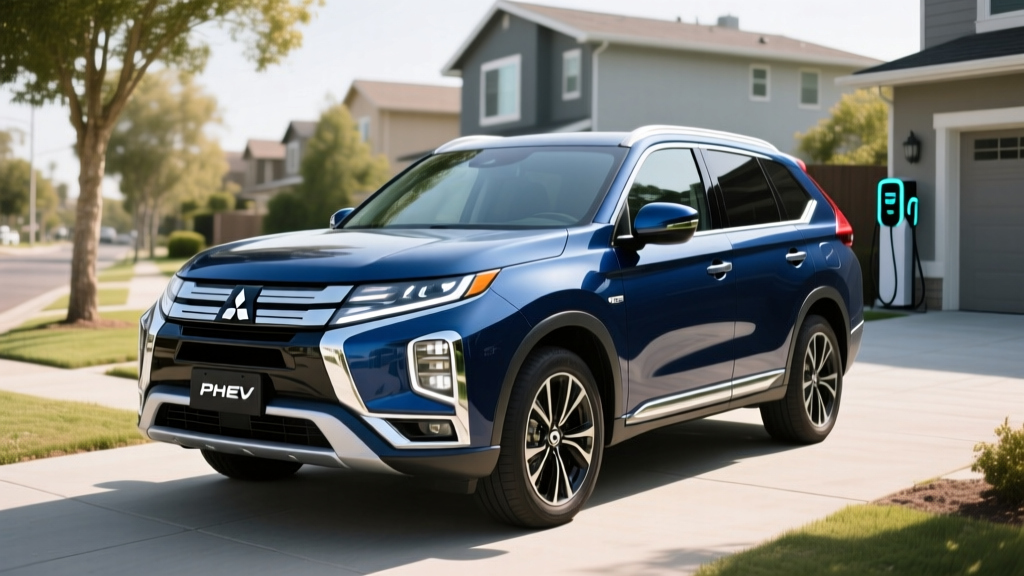
The 2023 Mitsubishi Outlander PHEV occupies a specific niche: a three-row plug-in hybrid SUV that offers genuine electric-only commuting range without sacrificing the flexibility of a gasoline engine for longer trips. With an EPA-estimated 38 miles of electric-only range and 25 MPG combined when the engine kicks in, it targets buyers who want EV-like daily driving but aren't ready to commit to a full battery-electric vehicle.
For 2023, Mitsubishi delivered a complete redesign with improved electric range, more power, and DC fast-charging capability—a rarity among PHEVs. But how does it stack up against full EVs, conventional hybrids, and the real-world demands of ownership?
HEV vs PHEV: Understanding the Outlander's Powertrain
Conventional Hybrid (HEV)
Regenerates energy through braking and engine operation. No plug required. Smaller battery (typically 1-2 kWh). Cannot drive on electric-only power for meaningful distances. Example: Toyota Highlander Hybrid.
Plug-in Hybrid (PHEV) — Outlander PHEV
Larger battery (20 kWh) that charges via plug. Can drive 38 miles on electricity alone before the gasoline engine activates. Requires regular charging to maximize efficiency and value. Falls back to hybrid operation when battery depletes.
The distinction matters for ownership costs. The Outlander PHEV only delivers its efficiency advantage if you plug it in regularly. Drive it without charging, and you're hauling extra battery weight for 25 MPG—a figure some conventional hybrids match or exceed.
Electric Range, MPG, and Real-World Efficiency
| Metric | EPA Estimate | Real-World Expectation |
|---|---|---|
| Electric-only range | 38 miles | 32-36 miles (highway/cold weather) |
| MPGe (electric + gas) | 64 MPGe | Varies with charging frequency |
| Gas-only MPG (combined) | 25 MPG | 23-27 MPG |
| Gas-only MPG (city) | 25 MPG | 24-26 MPG |
| Gas-only MPG (highway) | 26 MPG | 24-28 MPG |
| Total range (electric + gas) | 402 miles | 370-420 miles |
The 38-mile electric range covers most daily commutes. According to EPA data, the average American drives 37 miles per day. If you charge nightly and stay within that electric envelope, you'll rarely burn gasoline during the week.
Real-world electric range drops to 32-36 miles in cold weather or at sustained highway speeds. The Outlander PHEV's heat pump helps preserve range in winter, but battery chemistry still loses 10-15% efficiency below freezing. Highway driving at 70+ mph also reduces electric range due to aerodynamic drag.
When the 2.4-liter gasoline engine activates, expect 25 MPG combined. This is competitive for a three-row SUV but not exceptional—the Toyota Highlander Hybrid achieves 35 MPG combined without a plug. The Outlander's efficiency advantage only materializes with regular charging.
Battery, Charging, and Powertrain Specs
| Specification | 2023 Outlander PHEV |
|---|---|
| Battery capacity | 20 kWh (lithium-ion) |
| Electric motors | Dual motor (front + rear) |
| Combined system horsepower | 248 hp |
| Gasoline engine | 2.4L 4-cylinder (126 hp) |
| Level 1 charging (120V) | ~8 hours (0-100%) |
| Level 2 charging (240V) | ~3.5 hours (0-100%) |
| DC fast charging | Yes (CHAdeMO connector) |
| DC fast charge time | ~38 minutes (0-80%) |
| 0-60 mph | 7.0 seconds |
| Drivetrain | AWD (standard) |
The 2023 Outlander PHEV's DC fast-charging capability sets it apart from most competitors. Using a CHAdeMO connector, you can add 80% charge in roughly 38 minutes—useful for road trips or apartment dwellers without home charging access. However, CHAdeMO infrastructure is declining in the U.S. as CCS and NACS (Tesla's connector) dominate new installations.
Level 2 charging at home takes about 3.5 hours, making overnight charging straightforward. The dual-motor AWD system provides 248 combined horsepower, delivering confident acceleration and all-weather capability. The S-AWC (Super All-Wheel Control) system can torque-vector between rear wheels, improving handling on winding roads.
Pricing and Tax Credit Eligibility
The 2023 Mitsubishi Outlander PHEV started at $41,090 for the ES trim, ranging up to $47,590 for the GT Premium. These prices include destination charges but exclude options.
Federal Tax Credit Status (2023 Models)
The 2023 Outlander PHEV qualified for a partial federal tax credit of $3,750 under pre-Inflation Reduction Act rules, as it met battery-component requirements but not critical-mineral sourcing thresholds. However, tax credit eligibility depends on your tax liability, income, and whether you purchased new or used.
For current-year purchases, consult IRS §30D guidelines or a tax professional. Rules changed significantly after April 2023, and most PHEVs now face stricter MSRP caps ($80,000 for SUVs), income limits ($150,000 single / $300,000 joint), and battery-sourcing requirements that disqualify many models.
State incentives vary widely. California, Colorado, and New York offer additional rebates for PHEVs, while many states provide no incentive. Check your state's energy office or Alternative Fuels Data Center for local programs.
Reliability, Warranty, and Battery Lifespan
Mitsubishi backs the Outlander PHEV's battery with a 10-year/100,000-mile warranty, covering defects and capacity loss below 70%. The powertrain receives similar coverage: 10 years/100,000 miles. Basic vehicle warranty is 5 years/60,000 miles.
Long-term reliability data for the 2023 redesign is still accumulating. The previous-generation Outlander PHEV (2018-2022) showed average reliability in Consumer Reports ratings, with some owners reporting issues with the twin-climate-control system and infotainment glitches. Mitsubishi's overall brand reliability ranks mid-pack among mainstream manufacturers.
PHEV battery replacement costs range from $8,000 to $12,000 out of warranty, though most batteries outlast their warranty periods. Lithium-ion degradation typically follows a curve: 5-10% capacity loss in the first 2-3 years, then slower degradation. Real-world data from earlier Outlander PHEVs suggests 80-85% capacity retention at 100,000 miles.
Who Should Choose the Outlander PHEV?
Pros
- 38-mile electric range covers most commutes
- Three-row seating (rare for PHEVs)
- DC fast charging capability
- Standard AWD with torque vectoring
- No range anxiety for long trips
- 10-year battery warranty
Cons
- 25 MPG gas-only is mediocre for a hybrid
- CHAdeMO connector limits public charging options
- Third row is cramped for adults
- Higher price than gas-only Outlander
- Efficiency advantage disappears without regular charging
- Limited tax credit eligibility under current rules
Choose the Outlander PHEV if:
- You have home charging access and a commute under 35 miles
- You need three rows but want some electric driving
- You take occasional long trips where EV charging infrastructure is sparse
- You live in an area with harsh winters where EV range loss is a concern
Consider a full EV instead if:
- You have reliable home charging and mostly drive under 250 miles daily
- You want lower operating costs and minimal maintenance
- You qualify for the full $7,500 federal tax credit on a BEV
- You prioritize environmental impact (PHEVs still burn gas)
Consider a conventional hybrid if:
- You lack home charging access
- You won't commit to plugging in regularly
- You want better gas-only MPG (Highlander Hybrid: 35 MPG)
- You want lower upfront cost without PHEV complexity
Frequently Asked Questions
How many MPG does the 2023 Outlander PHEV get?
The EPA rates it at 25 MPG combined (25 city / 26 highway) when operating as a hybrid after the battery depletes. With regular charging, you may use little to no gasoline for daily driving under 38 miles.
How far can it go on electric only?
The EPA estimates 38 miles of electric-only range. Real-world range is typically 32-36 miles depending on temperature, speed, and terrain. Cold weather and highway driving reduce range.
Does the 2023 Outlander PHEV qualify for a tax credit?
When new in 2023, it qualified for a partial $3,750 federal credit under pre-IRA rules. Current tax credit eligibility for used or new purchases varies based on income, MSRP caps, and battery-sourcing requirements. Consult IRS guidelines or a tax professional.
Is the Outlander PHEV reliable?
Long-term data for the 2023 redesign is limited. The previous generation showed average reliability. Mitsubishi provides a 10-year/100,000-mile battery and powertrain warranty, which is competitive.
What does battery replacement cost?
Out-of-warranty PHEV battery replacement costs $8,000-$12,000. However, most batteries retain 80-85% capacity at 100,000 miles and last well beyond their warranty period.
Can I charge it at Tesla Superchargers?
No. The Outlander PHEV uses CHAdeMO for DC fast charging and J1772 for Level 2. Tesla Superchargers use NACS connectors, which are incompatible without adapters (not currently available for CHAdeMO vehicles).
Hybrid vs PHEV vs EV — which fits me?
Choose a conventional hybrid if you lack charging access. Choose a PHEV if you can charge at home and want electric commuting with gas-engine flexibility. Choose a full EV if you have charging access, drive under 250-300 miles daily, and want the lowest operating costs.