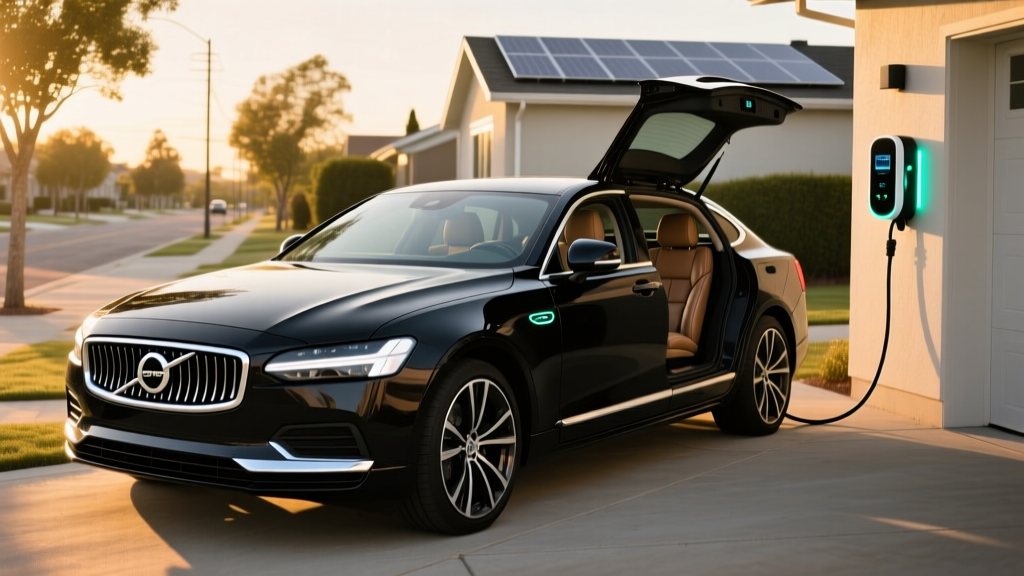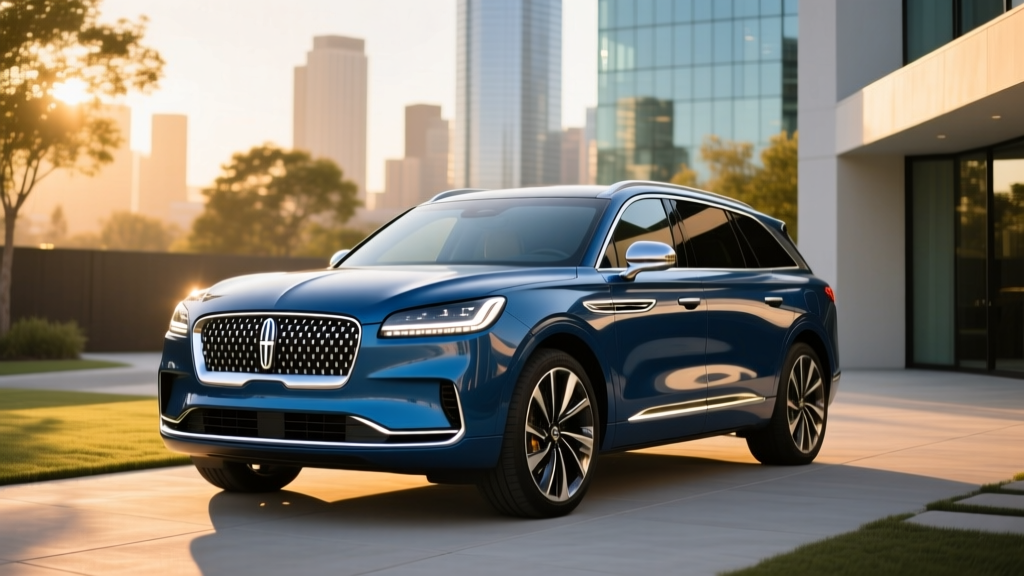
The 2023 Lincoln Aviator Grand Touring — Lincoln's name for its plug-in hybrid variant — attempts a difficult balancing act: deliver luxury-SUV comfort and serious horsepower while offering a meaningful electric-only commute. With 494 combined horsepower and a 13.6 kWh battery, it's one of the more powerful PHEVs in its class. But with just 18 miles of EPA-rated electric range, buyers need to know exactly what they're signing up for before writing the check.
This guide breaks down the real-world efficiency, charging logistics, powertrain specs, warranty coverage, and tax-credit eligibility for the 2023 Lincoln Aviator plug-in hybrid — and helps you decide whether it beats a conventional hybrid, a full EV, or sticking with gas.
HEV vs PHEV: What the Aviator Grand Touring Actually Is
Lincoln sold the 2023 Aviator in two electrified-adjacent forms, and confusing them is easy:
Conventional Hybrid (HEV)
The standard Aviator uses a twin-turbo 3.0L V6 with no electrification. Lincoln did not offer a conventional self-charging hybrid for the 2023 Aviator. Competitors like the Toyota Highlander Hybrid and Volvo XC90 Recharge (which is a PHEV) fill those slots differently.
Plug-In Hybrid (PHEV) — Grand Touring
The Aviator Grand Touring pairs the 3.0L twin-turbo V6 with a 100 kW (134 HP) electric motor integrated into the 10-speed automatic transmission. A 13.6 kWh lithium-ion battery (roughly 11.5 kWh usable) provides limited electric-only driving. You must plug it in to access that electric range — otherwise, it operates as a heavy, less-efficient gas SUV.
Key distinction: A conventional hybrid (HEV) never needs plugging in — it recovers energy through regenerative braking and the engine. A PHEV like the Aviator Grand Touring can run on gasoline alone, but you lose most of its efficiency and cost advantage if you never charge it.
Powertrain Specs: 494 HP From a Luxury SUV
| Specification | 2023 Aviator Grand Touring (PHEV) |
|---|---|
| Engine | 3.0L twin-turbo V6 |
| Engine Output | 400 HP / 415 lb-ft torque |
| Electric Motor | 100 kW (134 HP) integrated in 10-speed auto |
| Combined System Output | 494 HP / 630 lb-ft torque |
| Transmission | 10-speed automatic |
| Drivetrain | RWD standard; AWD available |
| Battery (Total / Usable) | 13.6 kWh / ~11.5 kWh |
| Battery Chemistry | Lithium-ion (NMC) |
| 0–60 mph | ~5.5 seconds (est.) |
| Towing Capacity | Up to 5,600 lbs (AWD, w/ Class IV) |
| Cargo Volume (behind 3rd row) | 18.3 cu ft |
The Grand Touring's 630 lb-ft of combined torque is genuinely impressive — it outmuscles the BMW X5 xDrive45e and matches some performance SUVs. The electric motor fills in the torque gap while the turbos spool, making acceleration feel seamless. This isn't an efficiency-first PHEV; it's a performance PHEV that happens to have a short electric commute mode.
Fuel Economy and Electric-Only Range: The Numbers
| Metric | EPA Rating | Real-World Expectation |
|---|---|---|
| Electric-Only Range | 18 miles | 14–17 mi (highway/cold); 17–20 mi (city/mild) |
| MPGe (electric + gas combined) | 56 MPGe | Varies heavily by charging frequency |
| Gas-Only City MPG | 23 MPG | 20–22 MPG (heavy traffic, AWD) |
| Gas-Only Highway MPG | 24 MPG | 22–25 MPG (steady cruise, flat terrain) |
| Gas-Only Combined MPG | 23 MPG | 21–23 MPG typical mixed driving |
| Total Combined Range | ~430 miles | 380–420 mi depending on conditions |
According to fueleconomy.gov, the 2023 Aviator Grand Touring achieves 56 MPGe when factoring in electric operation and 23 MPG combined on gasoline alone. That combined MPG figure is middling — roughly on par with a non-hybrid four-cylinder midsize SUV, which tells you the Aviator's weight (nearly 5,200 lbs) and performance tuning work against efficiency once the battery is depleted.
Real-World Range Reality Check
The EPA's 18-mile electric range assumes moderate temperatures and mixed driving. In winter conditions (below 32°F), expect that to drop to roughly 12–14 miles due to battery resistance and cabin heating demands. If your one-way commute is under 15 miles and you charge at home every night, you'll rarely touch gasoline. If your commute is 30+ miles, the PHEV advantage shrinks considerably, and you're mostly driving a heavy gas SUV.
Charging: Level 2 Only, No DC Fast Charging
| Charging Level | Power | Time (0–100%) | Availability |
|---|---|---|---|
| Level 1 (120V household) | ~1.4 kW | ~8–9 hours | Standard outlet |
| Level 2 (240V home/public) | ~3.3 kW (onboard charger limit) | ~3.5–4 hours | Home wallbox or public L2 |
| DC Fast Charging | N/A | N/A | Not supported |
The Aviator Grand Touring's onboard charger maxes out at approximately 3.3 kW, which is modest by 2026 PHEV standards. A full charge on a Level 2 home station takes about 3.5 to 4 hours. For overnight charging, this is perfectly adequate — plug in when you get home, and it's full by morning. But it means midday top-ups at public Level 2 chargers are only partially useful unless you're parked for several hours.
Critically, the Aviator PHEV does not support DC fast charging. This is common for PHEVs with smaller batteries but worth knowing if you expected road-trip quick-charge capability. On long trips, you'll simply drive on gasoline — which is fine, given the 430-mile total range.
Pricing, Trims, and Tax Credit Eligibility
The 2023 Aviator Grand Touring was offered in three trims, with original MSRP pricing as follows:
- Reserve: ~$69,805
- Black Label: ~$82,890
- Grand Touring (base PHEV): started around $67,000 (discontinued early in the cycle; most buyers found Reserve or Black Label)
By 2026, used examples typically list between $42,000 and $62,000 depending on mileage, trim, and condition.
Federal Tax Credit Status
Does the 2023 Lincoln Aviator Grand Touring qualify for the §30D federal EV tax credit?
- ❌ New purchase credit: No. The Aviator Grand Touring was discontinued after the 2023 model year, and even when new, its battery sourcing and critical-mineral composition did not meet the full §30D requirements for the $7,500 credit. It was eligible for a partial credit (up to $3,750) for a brief period under pre-2023 transition rules.
- ✅ Used EV credit (§25E): Potentially yes. If purchasing from a dealer in 2026 for $25,000 or less (unlikely given current market pricing), the used clean-vehicle credit of up to $4,000 (30% of sale price) could apply — subject to buyer income caps ($75K single / $150K joint) and the vehicle being at least two model years old.
- ⚠️ State incentives: Vary by jurisdiction. Some states offer rebates for PHEVs with 15+ miles of electric range. Check your state's energy office or the AFDC state law database.
For definitive federal credit rules, consult IRS.gov §30D guidelines or a qualified tax professional. Point-of-sale transfer is available for eligible new vehicles, but since the Aviator Grand Touring is no longer produced, this applies only to remaining used inventory.
Reliability, Battery Warranty, and Replacement Cost
High-Voltage Battery Warranty
Lincoln covers the 2023 Aviator Grand Touring's hybrid battery under the federally mandated emissions/hybrid component warranty:
- Hybrid Battery: 8 years / 100,000 miles (whichever comes first)
- Hybrid System Components: 8 years / 100,000 miles (inverter, electric motor, control modules)
- Powertrain (engine + transmission): 6 years / 70,000 miles
- Battery Degradation Threshold: Warranty covers replacement if capacity drops below ~60–70% of original (exact threshold per Lincoln service bulletin)
PHEV batteries in this size class (13–15 kWh) have proven reasonably durable. NMC chemistry degrades faster than LFP under extreme heat and repeated full-charge cycling, but the Aviator's thermal management system and conservative usable buffer (~85% of total capacity) help mitigate calendar degradation. Most owners report minimal range loss in the first 3–5 years.
Out-of-warranty battery replacement cost: Based on comparable Ford/Lincoln PHEV packs, expect $8,000–$12,000 for a full high-voltage battery replacement at a dealership. Individual module replacement (if only a few cells fail) can reduce this to $2,000–$4,000. Third-party hybrid battery refurbishers may offer lower pricing, though availability for the Aviator-specific pack is limited as of 2026.
General Reliability
The Aviator's platform (shared with the Ford Explorer) has an average reliability record. The twin-turbo 3.0L V6 has been generally stout, though some owners report coolant intrusion issues on early-build engines. The PHEV system adds complexity — the electric motor, inverter, and additional cooling circuits are potential failure points beyond what a standard Aviator carries. NHTSA recall data should be checked for any specific VIN before purchasing used.
Who Should Buy the Aviator PHEV vs. a Full EV or Gas SUV
Choose the 2023 Aviator Grand Touring (PHEV) If:
- Your daily commute is under 18 miles round-trip and you can charge at home nightly
- You need three-row luxury SUV space and 5,600-lb towing — areas where most EVs still fall short or cost significantly more
- You want electric around-town driving but gasoline freedom for road trips without charging-infrastructure planning
- Performance matters — 494 HP and 630 lb-ft make this one of the quickest SUVs in its price range
Choose a Full EV (e.g., Rivian R1S, Tesla Model X, BMW iX) If:
- You have reliable home charging and your daily driving is under 250 miles
- You want lower per-mile fuel costs (electricity at $0.12/kWh ≈ $0.04/mi vs. gasoline at $3.50/gal ≈ $0.17/mi)
- You want to eliminate oil changes, transmission fluid, and spark plugs
- You qualify for the full $7,500 federal tax credit on a new EV
Choose a Conventional Gas SUV If:
- You cannot charge at home (apartment, street parking) — a PHEV without charging is just a heavier, thirstier gas car
- Your budget is tighter — a standard Aviator or Explorer ST costs $15,000–$25,000 less
- You drive primarily highway miles where PHEV electric range is irrelevant
Pros and Cons at a Glance
Pros
- 494 HP / 630 lb-ft — genuinely quick for a three-row SUV
- Luxurious interior with available 30-way Perfect Position seats
- Quiet, refined ride quality with adaptive suspension
- 18 miles of electric range covers many short commutes
- No range anxiety on road trips — gasoline fallback is seamless
- 5,600-lb towing capacity (AWD)
Cons
- 18-mile electric range is below 2026 PHEV averages (many now offer 30–40 mi)
- 23 MPG combined on gas is unimpressive for a hybrid
- 3.3 kW onboard charger limits Level 2 speed
- No DC fast charging capability
- Discontinued after 2023 — parts and service may become harder long-term
- High base price with no meaningful federal tax credit
- Third-row space is tight for adults
Frequently Asked Questions
How many MPG does the 2023 Lincoln Aviator plug-in hybrid get?
The EPA rates the Aviator Grand Touring at 23 MPG combined (23 city / 24 highway) when running on gasoline alone, and 56 MPGe when factoring in electric operation. Real-world gas-only driving typically yields 21–23 MPG combined. If you charge daily and your commute is under 18 miles, you may use very little gasoline — but on long road trips, expect the 23 MPG figure.
How far can the Aviator Grand Touring go on electric only?
The EPA rates it at 18 miles of electric-only range. In real-world conditions, expect 14–17 miles in cold weather or at highway speeds, and up to 19–20 miles in mild city driving. This covers a short commute but falls well short of PHEVs like the Toyota RAV4 Prime (42 mi) or the newer Jeep Wrangler 4xe (21 mi).
Does the 2023 Aviator plug-in hybrid qualify for a federal tax credit?
Not for new purchases — the model is discontinued. When new, it qualified for a partial credit under pre-2023 transition rules but not the full $7,500 under current §30D requirements due to battery sourcing. For used purchases in 2026, the §25E used clean-vehicle credit (up to $4,000) may apply if the sale price is under $25,000 and buyer income limits are met — though current market pricing makes this unlikely.
Is the Aviator PHEV reliable, and what does battery replacement cost?
Reliability is average for the segment. The high-voltage battery is warranted for 8 years / 100,000 miles. Out-of-warranty replacement costs approximately $8,000–$12,000 at a dealership. The 3.0L twin-turbo engine has been generally reliable, though check for open recalls on any used example.
Can I charge the Aviator Grand Touring at a DC fast charger?
No. The Aviator PHEV only supports Level 1 (120V) and Level 2 (240V) AC charging. Its onboard charger is limited to approximately 3.3 kW, meaning a full Level 2 charge takes about 3.5–4 hours. DC fast charging is not available — this is typical for PHEVs with smaller battery packs.
Hybrid vs PHEV vs EV — which is right for me?
A conventional hybrid (HEV) requires no plugging in and offers modest efficiency gains — best for drivers without home charging. A PHEV like the Aviator Grand Touring gives you a short electric commute (18 mi) plus gasoline range — ideal if you can charge at home and mostly drive locally but need road-trip flexibility. A full EV (BEV) offers the lowest per-mile cost and zero tailpipe emissions but requires charging planning on longer trips. If your daily drive is under 18 miles and you have a garage outlet, the Aviator PHEV works. If you drive 50+ miles daily, a full EV or a PHEV with 35+ miles of range would serve you better.
What happens if I never plug in the Aviator Grand Touring?
It will operate as a conventional (though heavy) gas SUV, getting roughly 23 MPG combined. You'll miss the entire efficiency and cost advantage of the PHEV system, and you'll be carrying 500+ lbs of unused battery and motor weight. If you cannot charge at home or work, a standard gas Aviator or a conventional hybrid from another brand is a smarter purchase.