Quick Verdict: Two Hybrids, Two Very Different Missions
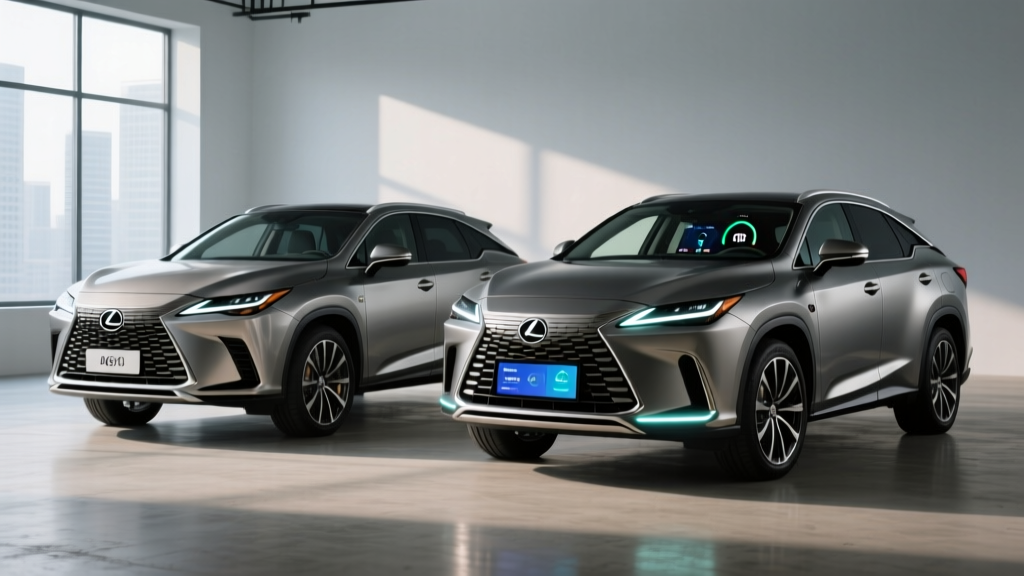
When Lexus redesigned the RX for the 2023 model year, it offered buyers something increasingly rare in the midsize luxury SUV segment: a choice between a proven conventional hybrid and a plug-in hybrid with meaningful electric-only range. The 2023 Lexus RX Hybrid lineup splits into the RX 350h (a self-charging HEV) and the RX 450h+ (a plug-in hybrid, or PHEV). Both use Lexus's 2.5-liter four-cylinder hybrid architecture, but their powertrains, batteries, and ownership experiences diverge sharply.
If you want a set-it-and-forget-it luxury hybrid that sips fuel without ever plugging in, the RX 350h delivers a combined 36 MPG across a lineup starting near $52,000. If you have home charging access and a short commute, the RX 450h+ can cover 37 miles on electricity alone before its gas engine ever fires — but it commands a steep premium and, as of the 2026 tax year, does not qualify for the federal §30D EV credit.
HEV vs PHEV: What's the Difference in the 2023 RX?
Conventional Hybrid (RX 350h): The gasoline engine and electric motor work together seamlessly. The battery recharges through regenerative braking and engine power. You never plug it in. Think of it as a highly efficient gas car.
Plug-in Hybrid (RX 450h+): A larger battery pack stores enough energy for extended electric-only driving. You plug it in at home or at public Level 2 chargers to replenish that battery. Once the electric range is depleted, it operates as a conventional hybrid.
| Attribute | RX 350h (HEV) | RX 450h+ (PHEV) |
|---|---|---|
| Powertrain | 2.5L I4 + 2 electric motors (AWD) | 2.5L I4 + electric motors (AWD) |
| Combined Horsepower | 246 hp | 302 hp |
| 0-60 mph | 7.4 seconds | 6.2 seconds |
| Battery | ~1.6 kWh (NiMH, self-charging) | 18.1 kWh (lithium-ion, plug-in) |
| EPA Electric-Only Range | N/A (no plug) | 37 miles |
| EPA Combined MPG / MPGe | 36 MPG | 65 MPGe (elec+gas) / 35 MPG (gas only) |
| Total Driving Range | ~570 miles | ~440 miles (gas) + 37 mi (electric) |
| DC Fast Charging | No | No (Level 2 AC only) |
| Level 2 Charge Time (0-100%) | N/A | ~2.5 hours (240V / 32A) |
| Base MSRP (at launch) | $52,250 | $62,550 |
Fuel Economy: Real-World MPG vs the EPA Sticker
| Model | City | Highway | Combined |
|---|---|---|---|
| RX 350h AWD | 37 MPG | 34 MPG | 36 MPG |
| RX 450h+ AWD (charge-depleted) | 36 MPG | 34 MPG | 35 MPG |
| RX 450h+ AWD (with electric) | 65 MPGe combined | ||
Source: fueleconomy.gov
Real-World MPG Reality Check: The RX 350h's 37 MPG city figure is one area where hybrids often beat their EPA rating. Stop-and-go traffic maximizes regenerative braking, which recharges the battery and lets the electric motor do more of the work. Expect 37-40 MPG in urban driving. Highway driving is a different story: at 75+ mph sustained speeds, the gasoline engine carries the load, and you'll likely see 31-33 MPG — below the 34 MPG highway sticker. Cold weather (below 30°F) typically drops combined MPG by 3-5 points due to cabin heating demands and reduced battery efficiency.
For the RX 450h+, the 37-mile electric range assumes moderate temperatures and gentle acceleration. In winter or aggressive driving, expect 28-32 miles before the engine kicks in. Once the battery is depleted, the 35 MPG combined rating holds — this is essentially the same hybrid system as the 350h, just carrying a heavier battery pack.
Powertrain and Performance Specs
Both RX Hybrid models share a 2.5-liter inline-four Atkinson-cycle engine, but the electric assist differs substantially.
RX 350h: The 2.5L engine produces 184 hp on its own, supplemented by front and rear electric motors for a combined system output of 246 hp. Lexus's e-AWD system uses the rear motor to provide all-wheel drive without a mechanical driveshaft. The result is competent, if not thrilling, acceleration — 0-60 mph in 7.4 seconds. Power delivery is smooth and linear, with the CVT keeping the engine in its efficient band.
RX 450h+: Lexus tuned the PHEV's electric motors and larger battery for more aggressive assist. Combined output jumps to 302 hp, dropping the 0-60 time to 6.2 seconds. The extra 56 hp is immediately noticeable in passing maneuvers and highway merging. The PHEV also offers selectable driving modes: EV Mode (electric-only up to ~80 mph), EV/HV Mode (blends power sources), and Auto AI Mode (learns your route and manages battery accordingly).
| Specification | RX 350h | RX 450h+ |
|---|---|---|
| Engine | 2.5L DOHC 16-valve I4 | 2.5L DOHC 16-valve I4 |
| Engine HP | 184 hp @ 6,000 rpm | 181 hp @ 6,000 rpm |
| Front Motor Output | 134 hp / 199 lb-ft | 174 hp / 199 lb-ft |
| Rear Motor Output | 54 hp / 89 lb-ft | 54 hp / 89 lb-ft |
| Net Combined HP | 246 hp | 302 hp |
| Transmission | eCVT | eCVT |
| Drivetrain | AWD (e-AWD) | AWD (e-AWD) |
| Towing Capacity | Not rated for towing | Not rated for towing |
Charging the RX 450h+: What PHEV Buyers Need to Know
The RX 450h+ charges exclusively via AC — there is no DC fast-charging capability, which is a notable omission compared to some competitors (the Toyota RAV4 Prime, which shares this platform, also lacks DC fast charging).
Using the included 120V Level 1 cord, a full charge takes roughly 10 hours — viable only for overnight top-offs if you drive less than the 37-mile range daily. Upgrading to a 240V Level 2 home charger (such as a ChargePoint Home Flex or Tesla Wall Connector with a J1772 adapter) cuts that to approximately 2.5 hours at 32 amps / 7.7 kW.
Public Level 2 charging is available at shopping centers, workplaces, and parking garages, but at typical public rates of $0.30-$0.50 per kWh, the economics are less favorable than home charging at an average of $0.13-$0.17 per kWh. At 18.1 kWh per full charge, home charging costs roughly $2.35-$3.08, translating to about $0.06-$0.08 per electric mile — a significant savings over premium gasoline at $3.80-$4.50 per gallon.
Pricing, Trims, and Tax Credit Eligibility
The 2023 RX Hybrid launched with the following MSRP structure (destination included):
- RX 350h Premium: $52,250
- RX 350h Premium+: $54,750
- RX 350h Luxury: $58,650
- RX 450h+ Premium: $62,550
- RX 450h+ Luxury: $67,350
Federal Tax Credit Status (2026 tax year):
- The RX 350h (HEV) does not qualify for the §30D federal EV tax credit — conventional hybrids are ineligible.
- The RX 450h+ (PHEV) does not qualify for the §30D credit. The credit requires at least 7 kWh of battery capacity (which the 450h+ meets at 18.1 kWh), but the vehicle must also satisfy critical-mineral and battery-component sourcing requirements under the Inflation Reduction Act. The 2023 RX 450h+ does not meet these sourcing thresholds, reducing its credit to $0.
- Some states offer separate rebates or HOV-lane access for PHEVs — check your state's energy office or the AFDC state incentive database for specifics.
- Always verify current eligibility with a tax professional and the IRS §30D guidance page, as rules change annually.
Battery Warranty, Reliability, and Replacement Costs
Hybrid Battery Warranty: Lexus covers the hybrid battery in both the RX 350h and RX 450h+ for 10 years or 150,000 miles (whichever comes first) in all 50 states. This is among the longest hybrid battery warranties in the luxury segment. The basic vehicle warranty is 4 years / 50,000 miles, and the powertrain warranty is 6 years / 70,000 miles.
Lexus's hybrid systems have an exceptional reliability track record spanning two decades since the original RX 400h. The RX 350h uses a nickel-metal hydride (NiMH) battery pack — a mature, well-proven chemistry that degrades slowly and predictably. The RX 450h+ uses a lithium-ion pack, which offers higher energy density but is subject to gradual capacity loss over charge cycles.
Real-world data from Lexus and Toyota hybrids suggests battery packs routinely last 150,000-200,000+ miles before needing replacement. When the time comes, out-of-warranty hybrid battery replacement for the RX 350h typically runs $3,000-$5,000 (parts and labor). The RX 450h+ lithium-ion pack is more expensive: expect $6,000-$9,000 based on current pricing for comparable Toyota/Lexus PHEV packs.
Lexus ranked #1 in J.D. Power's 2025 U.S. Vehicle Dependability Study, and the RX nameplate has historically been one of the brand's most reliable models. The IIHS awarded the 2023 RX a Top Safety Pick rating with acceptable crashworthiness scores across the board.
Who Should Buy the 2023 Lexus RX Hybrid?
Choose the RX 350h (HEV) if:
- You don't have reliable access to home or workplace charging.
- You want a luxury SUV with low fuel costs and zero behavior change — just fill up less often.
- Your budget is closer to $52,000-$58,000.
- You prioritize proven long-term reliability and low maintenance costs.
- You drive a mix of city and highway and want consistent 33-38 MPG.
Choose the RX 450h+ (PHEV) if:
- You have a garage or driveway with 240V Level 2 charging access.
- Your daily round-trip commute is under 35 miles — you could drive months without burning gas.
- You want the performance bump (302 hp, 6.2-second 0-60).
- You frequently take longer road trips and don't want range anxiety from a full EV.
- You're willing to pay the ~$10,000 premium over the 350h.
Choose a full EV (like the Lexus RZ 450e or Tesla Model Y) if:
- You have reliable home charging and want zero tailpipe emissions.
- Your daily driving rarely exceeds 200 miles, or you're comfortable with DC fast charging on road trips.
- You want lower per-mile fuel costs and minimal maintenance (no oil changes, fewer moving parts).
RX 350h Pros
- 36 MPG combined with no plug-in required
- Lower starting price ($52,250)
- Proven NiMH battery longevity
- Smooth, quiet ride quality
- Strong resale value
RX 350h Cons
- Modest 246 hp — not a performance SUV
- No DC fast charging or EV mode
- No federal tax credit eligibility
- Not rated for towing
RX 450h+ Pros
- 37 miles of electric-only range
- 302 hp — genuinely quick for a luxury hybrid
- Daily commutes can be gas-free
- 35 MPG even after battery is depleted
RX 450h+ Cons
- $10,300 premium over the 350h
- No DC fast charging
- No federal tax credit (sourcing rules)
- Heavier battery reduces cargo efficiency
Frequently Asked Questions
How many MPG does the 2023 Lexus RX 350h hybrid get?
The EPA rates the RX 350h at 37 MPG city, 34 MPG highway, and 36 MPG combined. In real-world urban driving, owners frequently report 37-40 MPG thanks to regenerative braking. Highway driving at 75+ mph typically yields 31-33 MPG.
How far can the RX 450h+ go on electric only?
The EPA rates the RX 450h+ at 37 miles of electric-only range. In moderate temperatures and gentle driving, expect 33-37 miles. In cold weather or with aggressive acceleration, that drops to 28-32 miles. Once the battery is depleted, the vehicle seamlessly transitions to hybrid mode at 35 MPG combined.
Hybrid vs PHEV vs EV — which fits my lifestyle?
If you can't charge at home, the conventional hybrid (RX 350h) is the clear choice — zero behavior change, great MPG. If you have home charging and a short commute, the PHEV (RX 450h+) gives you electric driving daily with a gas safety net for road trips. A full EV makes sense if you have home charging, want the lowest operating costs, and don't mind planning around DC fast chargers for longer trips.
Is the 2023 Lexus RX Hybrid reliable?
Lexus consistently ranks at or near the top of J.D. Power dependability studies, and the RX hybrid powertrain has two decades of refinement. The hybrid battery is covered for 10 years / 150,000 miles. Based on historical Toyota/Lexus hybrid data, battery packs commonly last 150,000-200,000+ miles.
What does a Lexus RX hybrid battery replacement cost?
Out of warranty, expect $3,000-$5,000 for the RX 350h (NiMH pack) and $6,000-$9,000 for the RX 450h+ (lithium-ion pack), including parts and labor. However, most Lexus hybrid batteries outlast the vehicle's useful life under normal driving conditions.
Does the 2023 Lexus RX Hybrid qualify for any tax credit?
The RX 350h (conventional hybrid) does not qualify for the federal §30D clean vehicle credit. The RX 450h+ (PHEV) meets the battery capacity threshold but does not satisfy the IRA's critical-mineral and battery-component sourcing requirements, making it ineligible for the federal credit as of the 2026 tax year. State-level incentives may apply — check the AFDC incentive database for your state.
Can I DC fast charge the RX 450h+?
No. The RX 450h+ supports AC charging only — Level 1 (120V) or Level 2 (240V). A full Level 2 charge takes approximately 2.5 hours. This is common among compact/midsize PHEVs but worth noting if you expected quick public top-ups.