Quick Verdict: The 2023 Sportage Hybrid at a Glance
The 2023 Kia Sportage Hybrid occupies a compelling middle ground in the compact SUV segment. It delivers genuine fuel savings over its gas-only sibling without the range anxiety, charging infrastructure dependency, or price premium of a full battery-electric vehicle. For buyers who want to cut fuel costs today without changing their driving or fueling habits, this is one of the most practical hybrid SUVs on the market.
Kia offers the Sportage in two electrified flavors for 2023: a conventional hybrid (HEV) and a plug-in hybrid (PHEV). Both share the same turbocharged 1.6-liter powertrain architecture, but they diverge significantly on battery size, electric-only capability, and pricing. Below, we break down exactly what you get — with real numbers, real-world expectations, and the ownership realities that spec sheets don't always surface.
2023 Sportage Hybrid vs. Sportage PHEV: Side-by-Side Specs
| Specification | Sportage Hybrid (HEV) | Sportage Plug-In Hybrid (PHEV) |
|---|---|---|
| Powertrain | 1.6L Turbo I4 + electric motor | 1.6L Turbo I4 + electric motor |
| Combined Horsepower | 227 HP | 261 HP |
| Transmission | 6-speed automatic | 6-speed automatic |
| Drivetrain | AWD standard | AWD standard |
| Battery Capacity | 1.49 kWh (small buffer) | 13.8 kWh |
| EPA Fuel Economy (City/Hwy/Combined) | 42 / 44 / 43 MPG (SX-Prestige) or 38 / 38 / 38 MPG (LX) | 84 MPGe combined; 35 MPG gas-only |
| Electric-Only Range (PHEV) | N/A — not plug-in | 34 miles (EPA) |
| Total Driving Range | ~430–480 miles | ~430 miles combined |
| Charging (PHEV Level 2) | N/A | ~3.5 hours (240V, 3.3 kW onboard charger) |
| DC Fast Charging | N/A | Not available |
| 0–60 MPH | ~7.2 seconds | ~6.7 seconds |
| Cargo Volume (rear seats up) | 39.5 cu ft | 34.5 cu ft (battery intrusion) |
| Starting MSRP | ~$28,590 (LX) / ~$31,590 (EX) | ~$39,090 (X-Line) |
Fuel Economy: EPA Numbers and Real-World MPG
The 2023 Sportage Hybrid's fuel economy varies by trim, which is unusual and worth understanding. The SX-Prestige trim, equipped with a more aerodynamic wheel design and slightly different tuning, achieves an EPA-estimated 42 city / 44 highway / 43 combined MPG, according to fueleconomy.gov. The lower LX trim, with larger wheels and different equipment, drops to 38 / 38 / 38 MPG.
This trim-dependent split matters because most buyers gravitate toward mid-range and upper trims. If you choose the EX or SX, verify the specific EPA rating for that configuration.
Real-World MPG: What Owners Actually See
Hybrids tend to perform better in city driving than their EPA estimates suggest, because stop-and-go traffic maximizes regenerative braking and electric motor usage. Conversely, sustained highway speeds reduce the hybrid advantage. Based on owner-reported data and independent testing:
- City driving: Expect 40–46 MPG in the SX-Prestige, often exceeding the EPA estimate
- Highway driving (70–75 MPH): Expect 36–41 MPG — slightly below the EPA highway number
- Cold weather penalty: Hybrids lose roughly 10–15% efficiency in freezing temperatures due to engine warm-up cycles and reduced battery efficiency. Expect 34–38 MPG combined in winter conditions
- Mixed commuting: Most owners report 38–42 MPG combined across seasons
For the PHEV variant, the 84 MPGe rating applies when the battery is charged and you're driving within the electric range. Once the battery depletes, you're operating as a conventional hybrid at roughly 35 MPG combined — still respectable, but the fuel savings shrink significantly if you rarely plug in.
Sportage PHEV: Electric-Only Range and Charging Realities
The 2023 Sportage Plug-In Hybrid carries a 13.8 kWh lithium-ion battery pack, delivering an EPA-estimated 34 miles of electric-only range. For context, the average American one-way commute is roughly 16 miles, according to FHWA data — meaning most PHEV owners can complete their daily commute on electricity alone, provided they charge at home overnight.
Charging the PHEV
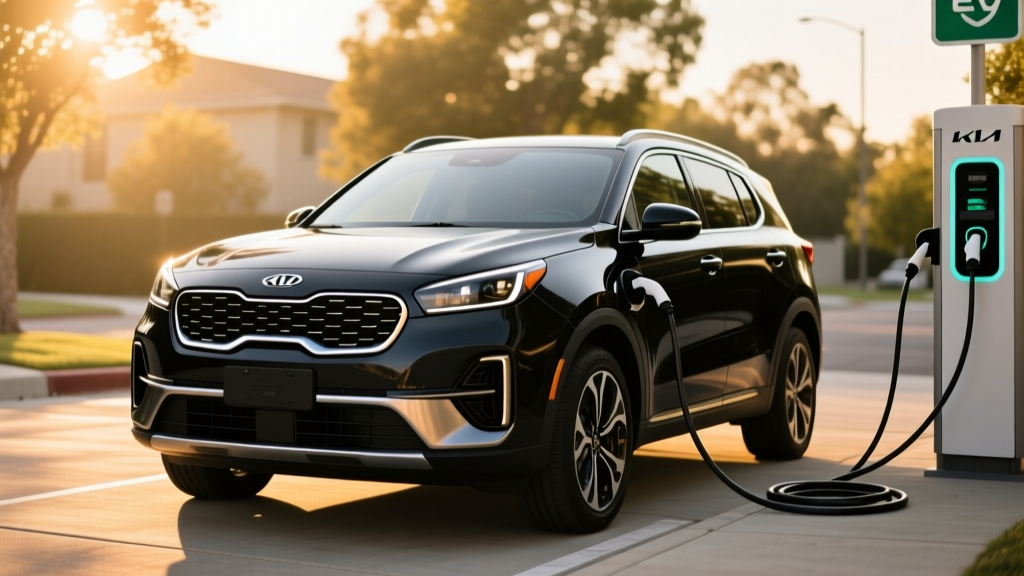
The Sportage PHEV uses a standard J1772 connector and has a 3.3 kW onboard charger. This means:
- Level 1 (120V household outlet): Approximately 10–11 hours for a full charge — feasible for overnight if you start with a partially depleted battery
- Level 2 (240V home charger or public station): Approximately 3.5 hours for a full 0–100% charge
- DC Fast Charging: Not supported. The PHEV's relatively small battery and 3.3 kW onboard charger make DC fast charging unnecessary and cost-prohibitive for Kia to include
The 3.3 kW onboard charger is the limiting factor. Even if you plug into a 7.2 kW or 11.5 kW Level 2 station, the Sportage PHEV will only draw 3.3 kW. This is common for PHEVs but worth knowing if you're investing in a high-power home charger primarily for this vehicle.
Powertrain Performance and Driving Impressions
Both the HEV and PHEV pair a turbocharged 1.6-liter four-cylinder engine with an electric motor integrated into the transmission housing. The HEV produces a combined 227 horsepower, while the PHEV bumps that to 261 horsepower thanks to a more powerful electric motor.
The HEV's 0–60 MPH time of approximately 7.2 seconds is adequate for merging and passing but won't win any stoplight races. The PHEV's 6.7-second sprint feels noticeably quicker, particularly in electric-only mode where torque delivery is instant. Both variants use a 6-speed automatic transmission rather than the continuously variable transmission (CVT) found in many competitors — a choice that gives the Sportage Hybrid more natural-feeling acceleration without the rubber-band effect some drivers dislike in CVTs.
All-wheel drive is standard across all Sportage Hybrid and PHEV trims. The system uses an electronically controlled coupling to send torque to the rear wheels when slip is detected, and it's sufficient for rain, light snow, and gravel roads. This is not a hardcore off-roader, but it handles typical winter commuting competently.
Pricing, Trims, and Tax Credit Eligibility
Sportage Hybrid (HEV) Pricing
| Trim | Starting MSRP | Key Features |
|---|---|---|
| LX | $28,590 | AWD, 8-inch touchscreen, wireless CarPlay/Android Auto |
| EX | $31,590 | Panoramic curved display, heated front seats, smart liftgate |
| SX-Prestige | $36,190 | Leather, panoramic sunroof, Harman Kardon audio, ventilated seats |
Sportage PHEV Pricing
| Trim | Starting MSRP | Key Features |
|---|---|---|
| X-Line | $39,090 | 34-mi EV range, 18-inch wheels, heated steering wheel |
| X-Line Prestige | $43,090 | Head-up display, 360-degree camera, premium audio |
Federal Tax Credit: Does the Sportage Hybrid or PHEV Qualify?
Here's where the news is mixed for 2023 Sportage buyers:
- Sportage Hybrid (HEV): Does not qualify for the federal §30D clean vehicle tax credit. Conventional hybrids are ineligible — the credit applies only to plug-in vehicles (BEVs and PHEVs) with sufficient battery capacity.
- Sportage Plug-In Hybrid (PHEV): Also does not currently qualify for the full $7,500 federal tax credit. Under the Inflation Reduction Act's battery sourcing and critical mineral requirements (detailed at irs.gov), the Sportage PHEV's battery components do not meet the domestic-sourcing thresholds required for the full credit. Some partial credit eligibility may apply depending on model year production date and your personal income limits, but buyers should not count on receiving the full $7,500.
Always verify current eligibility before purchasing. Tax credit rules under §30D have MSRP caps ($80,000 for SUVs), buyer income caps ($150,000 single / $300,000 joint), and battery sourcing requirements that change periodically. Consult a tax professional for your specific situation.
Battery Warranty, Reliability, and Long-Term Costs
Hybrid Battery Longevity: What the Data Shows
Modern lithium-ion hybrid batteries are designed to last the life of the vehicle under normal use. Unlike early-generation hybrids from the 2000s that saw battery failures around 100,000–150,000 miles, current-generation systems from Kia, Toyota, and Hyundai routinely exceed 200,000 miles without significant capacity loss. The Sportage Hybrid's 1.49 kWh battery is small and conservatively managed — it never charges to 100% or discharges to 0%, which dramatically extends cycle life.
For the PHEV's larger 13.8 kWh pack, degradation is a more relevant concern because you're cycling through a larger percentage of capacity daily. Expect roughly 10–15% capacity loss over 10 years of typical use, which would reduce electric-only range from 34 miles to approximately 29–31 miles — still useful for most commutes.
Battery Replacement Cost
If the hybrid battery does fail outside of warranty, replacement costs typically range from $2,000 to $4,000 for the HEV and $5,000 to $8,000 for the PHEV, including parts and labor. However, given Kia's 10-year/100,000-mile warranty coverage and the proven longevity of modern hybrid batteries, most original owners will never face this expense. It's a concern primarily for second- or third-owners who purchase high-mileage examples outside the warranty window.
Overall Reliability
The 2023 Sportage Hybrid benefits from Kia's improved build quality over the past decade. The turbocharged 1.6L engine is shared across multiple Kia/Hyundai models and has a solid track record. Consumer Reports and J.D. Power give the Sportage line average to above-average reliability ratings. The hybrid system adds complexity but eliminates components found in gas-only vehicles — there's no traditional starter motor or alternator to fail, and regenerative braking reduces wear on the friction brake pads.
Sportage Hybrid vs. PHEV vs. Full EV: Which Should You Choose?
The decision between a conventional hybrid, a plug-in hybrid, and a full battery-electric vehicle depends on your driving patterns, charging access, and budget. Here's a practical framework:
Choose the Sportage Hybrid (HEV) if:
- You cannot charge at home (apartment, street parking, no garage)
- You want fuel savings with zero behavior change — just fill up with gas as usual
- Your budget is under $35,000
- You drive more than 15,000 miles per year and want maximum range per tank
- You live in a rural area with limited public charging infrastructure
Choose the Sportage PHEV if:
- You can install a Level 2 charger at home or have reliable workplace charging
- Your daily round-trip commute is under 30 miles
- You want EV-like daily driving but need gas flexibility for road trips
- You want more power (261 HP vs. 227 HP) and don't mind the price premium
- You want to reduce — but not eliminate — gasoline purchases
Choose a Full EV (like the Kia EV6 or Hyundai Ioniq 5) if:
- You can charge at home and want to eliminate gasoline entirely
- You want the lowest per-mile fuel cost (electricity is typically $0.04–$0.06/mile vs. $0.12–$0.16/mile for a 40 MPG hybrid)
- You qualify for the $7,500 federal tax credit on an eligible EV
- You want near-zero maintenance (no oil changes, no spark plugs, minimal brake wear)
- You're comfortable planning longer road trips around DC fast-charging stops
Pros and Cons of the 2023 Sportage Hybrid
Pros
- Excellent real-world fuel economy, often exceeding EPA in city driving
- Standard AWD across all trims — uncommon for the segment
- Spacious interior with up to 39.5 cu ft of cargo room (HEV)
- 10-year/100,000-mile hybrid battery warranty
- Natural-feeling 6-speed automatic (no CVT drone)
- Competitive starting price under $29,000
Cons
- Lower trims (LX) have notably worse MPG than SX-Prestige
- No federal tax credit eligibility for HEV; limited for PHEV
- PHEV lacks DC fast charging
- PHEV cargo space reduced to 34.5 cu ft due to battery
- Acceleration adequate but not quick (7.2 sec 0–60 HEV)
- 3.3 kW onboard charger limits PHEV charging speed
Frequently Asked Questions
How many MPG does the 2023 Sportage Hybrid get?
The EPA rates the Sportage Hybrid SX-Prestige at 42 city / 44 highway / 43 combined MPG. The base LX trim is rated lower at 38/38/38 MPG. Real-world results typically range from 36–46 MPG depending on driving conditions, with city driving yielding the best results.
How far can the Sportage PHEV go on electric only?
The EPA rates the 2023 Sportage PHEV at 34 miles of electric-only range. In real-world conditions, expect 28–32 miles in warm weather and 22–28 miles in cold weather. Once the battery depletes, the gas engine takes over and you get roughly 35 MPG as a conventional hybrid.
Does the 2023 Sportage Hybrid qualify for any tax credit?
The conventional Sportage Hybrid (HEV) does not qualify for the federal §30D clean vehicle tax credit — it applies only to plug-in vehicles. The Sportage PHEV may qualify for partial credit depending on battery sourcing rules, but it does not currently meet the full $7,500 threshold. Always check current IRS guidelines and consult a tax professional before relying on credit eligibility.
Is the Sportage Hybrid reliable, and what does battery replacement cost?
The Sportage Hybrid has average to above-average reliability ratings. Kia's 10-year/100,000-mile hybrid battery warranty (10 years/150,000 miles in CARB states) provides strong protection. Out-of-warranty battery replacement runs $2,000–$4,000 for the HEV and $5,000–$8,000 for the PHEV, but modern hybrid batteries routinely exceed 200,000 miles without major issues.
Do I need to plug in the Sportage Hybrid?
No. The conventional Sportage Hybrid (HEV) charges its small battery through regenerative braking and the gasoline engine. You never plug it in. Only the Sportage Plug-In Hybrid (PHEV) requires plugging in to access its electric-only range, though it can also operate as a regular hybrid if you don't charge it.
Sportage Hybrid vs. Toyota RAV4 Hybrid — which is better?
The Toyota RAV4 Hybrid achieves slightly better EPA fuel economy (41/38/40 MPG combined vs. the Sportage's 43 combined on SX-Prestige) and has a longer track record. The Sportage Hybrid counters with a more modern interior, a longer standard warranty (10 years vs. Toyota's 5 years for powertrain), and a lower starting price. Both are strong choices — the RAV4 is the proven veteran, while the Sportage offers newer tech and better warranty coverage.