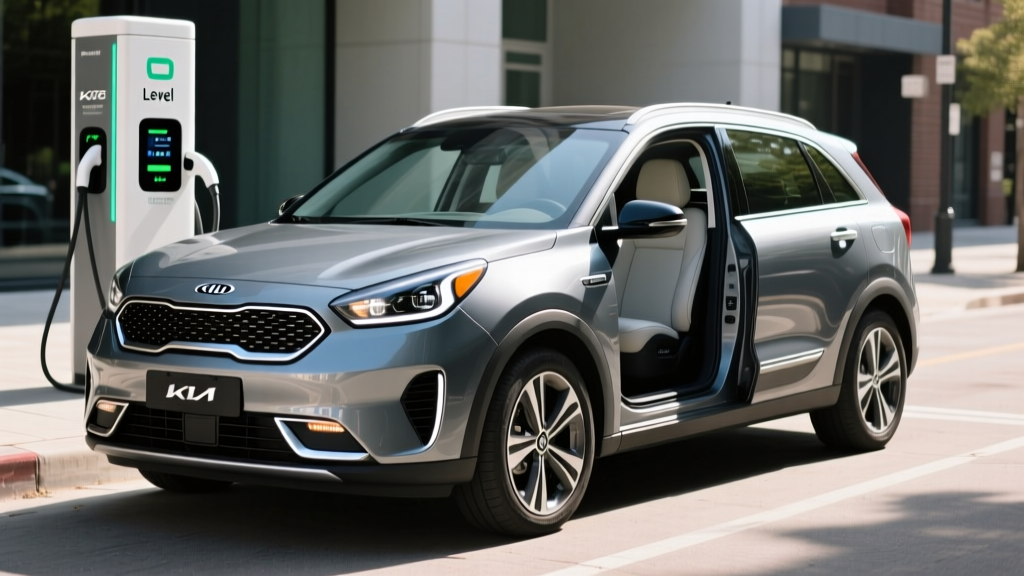
The 2023 Kia Niro Hybrid occupies a specific niche: a compact crossover that prioritizes fuel efficiency above all else, without requiring you to plug in, change your driving habits, or pay an EV premium. Redesigned for the 2023 model year on Kia's third-generation K platform, the Niro HEV delivers EPA-estimated fuel economy that rivals dedicated hybrids like the Toyota Prius — but with a more practical crossover body style and Kia's industry-leading warranty.
If you're cross-shopping the 2023 Kia Niro Hybrid against plug-in hybrids or full EVs, the decision comes down to three variables: your daily commute distance, whether you have home charging access, and how much upfront cost you're willing to absorb. This guide breaks down every number that matters.
2023 Kia Niro Hybrid Fuel Economy: EPA vs. Real World
The conventional hybrid (HEV) version of the 2023 Niro is the volume seller, and its efficiency figures are the primary reason buyers choose it. Here's what the EPA rates it at, along with what you can expect in practice.
| Trim | City MPG | Highway MPG | Combined MPG |
|---|---|---|---|
| LX / EX | 53 | 54 | 53 |
| EX Touring / SX / SX Touring | 49 | 52 | 50 |
Source: EPA Fuel Economy
The higher trims (EX Touring, SX, SX Touring) carry a 2-3 MPG penalty due to larger 18-inch alloy wheels, a power sunroof, and additional equipment weight. If maximum fuel economy is your priority, the LX and EX trims with 16-inch wheels are the efficiency sweet spot.
HEV vs. PHEV: Which Niro Should You Choose?
Kia sells the Niro in three electrified flavors: the conventional hybrid (HEV), the plug-in hybrid (PHEV), and the all-electric Niro EV. Here's how the HEV and PHEV stack up side by side.
| Specification | Niro Hybrid (HEV) | Niro Plug-In Hybrid (PHEV) |
|---|---|---|
| Powertrain | 1.6L GDI 4-cyl + 32 kW electric motor | 1.6L GDI 4-cyl + 62 kW electric motor |
| Combined Horsepower | 139 hp | 180 hp |
| Battery Capacity | 1.56 kWh (lithium-ion polymer) | 11.1 kWh (lithium-ion polymer) |
| Electric-Only Range | N/A — not plug-in | 33 miles (EPA) |
| Total Range | ~590 miles | ~430 miles (gas) + 33 mi (electric) |
| Combined MPG / MPGe | 53 MPG (LX/EX) | 48 MPG (gas) / 108 MPGe (combined) |
| Charging Required? | No — self-charging via regen | Yes — Level 1 (120V) ~9 hrs; Level 2 (240V) ~2.75 hrs |
| DC Fast Charging | N/A | No DC fast charge capability |
| Starting MSRP (2023) | $26,940 (LX) | $34,090 (LX) |
The HEV is the right call if you lack home charging access, want the lowest purchase price, drive more than 40 miles daily, or simply want to refuel at gas stations without thinking about charging. The small 1.56 kWh battery charges entirely through regenerative braking and engine power — you never plug it in.
The PHEV makes sense if your daily commute is under 33 miles round-trip, you have a garage or driveway with a 120V or 240V outlet, and you want near-EV operating costs on weekdays with gas-engine flexibility for road trips. The PHEV's larger 11.1 kWh battery enables genuine electric-only driving at speeds up to about 65 mph before the engine engages.
Powertrain and Performance Details
The 2023 Niro Hybrid pairs Kia's 1.6-liter GDI four-cylinder engine (producing 104 hp and 111 lb-ft of torque on its own) with a 32 kW (43 hp) electric motor integrated into the 6-speed dual-clutch automatic transmission. Combined system output is 139 horsepower and 195 lb-ft of torque.
This is not a performance-oriented vehicle. The 0-60 mph time sits in the mid-9-second range — adequate for merging and city driving, but you'll notice the lack of urgency during highway passing maneuvers. The dual-clutch transmission is a notable differentiator from Toyota's e-CVT approach in the Prius and Corolla Hybrid; shifts are more direct and traditional, which some drivers prefer for a more natural feel, though there's occasional low-speed hesitation that CVTs typically avoid.
The hybrid system uses a parallel architecture, meaning both the engine and electric motor can drive the wheels simultaneously or independently. At low speeds and light loads, the Niro can creep on electric power alone for short distances (typically under 1 mile), but this is not comparable to the sustained electric-only range of the PHEV.
Pricing, Trims, and Tax Credit Eligibility
| Trim | MSRP (2023) | Key Features |
|---|---|---|
| LX | $26,940 | 16" wheels, 8" touchscreen, wireless CarPlay/Android Auto, Smart Cruise Control |
| EX | $29,640 | Smart power liftgate, Smart Key, heated front seats, 10.25" cluster |
| EX Touring | $32,140 | 18" wheels, sunroof, leatherette seats, navigation |
| SX | $32,440 | Harman Kardon audio, highway driving assist, LED headlights |
| SX Touring | $34,740 | Full leather, ventilated front seats, heated steering wheel, blind-spot view monitor |
Destination charges added $1,295 to all trims. Kia's aggressive dealer discounting in many markets brought well-equipped EX models into the $27,000-$28,000 range at launch, making the Niro Hybrid one of the most affordable hybrid crossovers available.
Battery Warranty, Reliability, and Replacement Cost
The 1.56 kWh lithium-ion polymer battery in the HEV is far smaller and less stressed than a full EV pack. It operates within a narrow state-of-charge window (roughly 40-80% SoC) managed by the hybrid control system, which significantly reduces degradation. Real-world data from Kia's earlier Niro generations (2017-2022) shows minimal capacity loss over 100,000+ miles in most cases.
If replacement is needed outside warranty, a new OEM hybrid battery pack for the Niro HEV typically costs between $2,000 and $3,500 including labor — a fraction of EV battery replacement costs. Third-party refurbished packs may be available for less as the vehicle ages. For comparison, the Niro PHEV's larger 11.1 kWh battery would cost considerably more to replace ($5,000-$7,000 estimated).
Reliability ratings for the 2023 Niro are generally strong. Kia's hybrid powertrain has proven durable across two prior Niro generations, and the 2023 redesign carries over proven mechanical components with updated packaging. The main reliability concerns reported by owners involve infotainment software glitches rather than powertrain issues.
Who Should Buy the 2023 Kia Niro Hybrid?
Choose the Niro Hybrid (HEV) If:
- You want 50+ MPG without plugging in or changing routines
- You live in an apartment or lack home charging access
- Your budget is under $30,000 for a new hybrid crossover
- You drive a mix of city and highway with no fixed short commute
- You want crossover ride height with Prius-level efficiency
Consider the Niro PHEV or a Full EV If:
- Your commute is under 33 miles and you have home charging (PHEV)
- You want to minimize or eliminate gasoline use (PHEV/EV)
- You qualify for federal or state plug-in vehicle tax credits (PHEV/EV)
- You want stronger acceleration — the PHEV has 180 hp vs. 139 hp
- You drive under 40 miles daily and can charge overnight (EV)
The 2023 Niro Hybrid's closest competitors include the Toyota Prius (57 MPG combined, lower seating position), Hyundai Ioniq Hybrid (discontinued after 2022, similar platform), and Toyota Corolla Cross Hybrid (42 MPG combined, AWD). The Niro stands out for combining hatchback-crossover practicality with best-in-class hybrid efficiency and Kia's 10-year warranty.
Pros and Cons at a Glance
Pros
- 53 MPG combined EPA (LX/EX) — top-tier hybrid efficiency
- 10-year/100,000-mile hybrid battery and powertrain warranty
- Practical crossover ride height with 22.8 cu ft cargo volume
- Affordable starting price under $27,000
- Standard wireless Apple CarPlay and Android Auto (8" screen trims)
- Dual-clutch transmission avoids CVT drone
Cons
- 139 hp feels sluggish during highway merging
- No all-wheel-drive option (FWD only)
- Higher trims lose 2-3 MPG to larger wheels and added weight
- Road noise is noticeable at highway speeds
- Rear seat space is tighter than some compact crossovers
- No federal tax credit for the HEV version
Frequently Asked Questions
How many MPG does the 2023 Kia Niro Hybrid get?
The EPA rates the Niro Hybrid LX and EX trims at 53 city / 54 highway / 53 combined MPG. Higher trims with 18-inch wheels (EX Touring, SX, SX Touring) are rated at 49 city / 52 highway / 50 combined MPG. In real-world city driving with frequent stops, many owners report matching or slightly exceeding these numbers thanks to regenerative braking.
Does the Niro Hybrid need to be plugged in?
No. The conventional Niro Hybrid (HEV) charges its 1.56 kWh battery entirely through regenerative braking and the gasoline engine. You refuel it like any other car at a gas station. Only the Niro Plug-In Hybrid (PHEV) requires plugging in to access its 33-mile electric-only range.
How far can the Niro PHEV go on electric only?
The 2023 Kia Niro PHEV has an EPA-rated 33 miles of electric-only range from its 11.1 kWh battery pack. This is sufficient for most daily commutes. Once the battery is depleted, the PHEV operates as a conventional hybrid rated at 48 MPG combined. Total range (electric + gas) exceeds 460 miles. The PHEV charges in about 2 hours 45 minutes on a Level 2 (240V) charger or roughly 9 hours on a standard 120V outlet. It does not support DC fast charging.
Is the 2023 Kia Niro Hybrid reliable?
Kia's hybrid system has demonstrated strong reliability across multiple Niro generations. The 2023 model uses proven mechanical components with a redesigned body. The 10-year/100,000-mile hybrid battery warranty provides significant long-term protection. Most reported issues involve infotainment software rather than the powertrain. Third-party reliability surveys from Consumer Reports and J.D. Power have rated the Niro hybrid system favorably.
What does it cost to replace the Niro Hybrid battery?
Outside of warranty coverage, replacing the 2023 Niro HEV's 1.56 kWh hybrid battery pack typically costs $2,000 to $3,500 including labor at a Kia dealership. This is significantly less than EV or PHEV battery replacement due to the smaller pack size. The 10-year/100,000-mile warranty (150,000 miles in CARB states) means most owners will never face this expense.
Does the 2023 Kia Niro Hybrid qualify for a tax credit?
The conventional Niro Hybrid (HEV) does not qualify for the federal §30D Clean Vehicle Credit, which requires plug-in capability and minimum battery capacity. The Niro PHEV may qualify depending on current IRS battery-sourcing and critical-mineral requirements, which changed multiple times during 2023-2024. Check IRS.gov for the latest eligible vehicle list. Some states and utilities offer additional rebates for hybrids or PHEVs — check your local programs.
How does the Niro Hybrid compare to the Toyota Prius?
The 2023 Toyota Prius achieves up to 57 MPG combined (LE trim) and offers an available AWD powertrain, but it's a low-slung liftback rather than a crossover. The Niro Hybrid provides easier entry/exit, a more upright seating position, and 22.8 cu ft of cargo space behind the rear seats (vs. the Prius's 23.8 cu ft). The Prius is slightly more efficient and quicker (especially the 196-hp AWD variant), while the Niro wins on crossover practicality and Kia's longer warranty.