Quick Verdict: The Grand Cherokee 4xe in a Nutshell
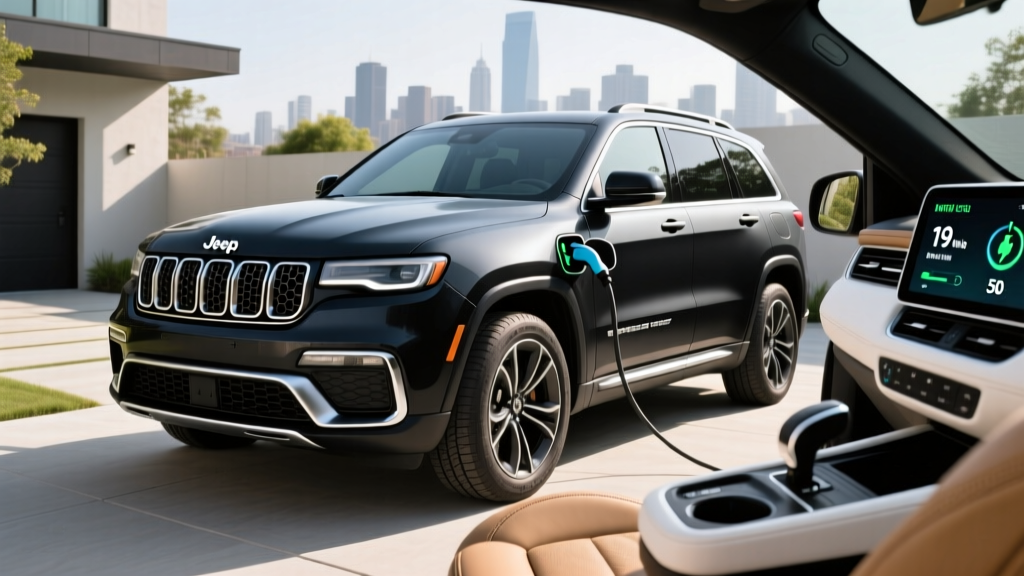
The 2023 Jeep Grand Cherokee 4xe is a plug-in hybrid (PHEV) that pairs a 2.0-liter turbocharged four-cylinder engine with two electric motors and a 17.3 kWh battery pack. It produces a combined 375 horsepower and 470 lb-ft of torque — more than the V6 gas model — while delivering an EPA-rated 25 miles of electric-only range and 56 MPGe when the battery is charged. Once the battery depletes, it operates as a conventional hybrid at an EPA-rated 23 MPG combined. For midsize SUV buyers who want electric commuting capability without range anxiety on road trips, the 4xe occupies a practical middle ground. But its real-world efficiency depends heavily on whether you plug in regularly.
HEV vs PHEV: What the Grand Cherokee 4xe Actually Is
Jeep sells the Grand Cherokee in two electrified flavors, and the distinction matters for your wallet and daily routine:
Conventional Hybrid (HEV)
The standard Grand Cherokee does not come as a traditional self-charging hybrid for the 2023 model year. If you want a non-plug-in hybrid midsize SUV from Stellantis, you would look at competitors like the Toyota Highlander Hybrid. The Grand Cherokee lineup offers either a gas-only powertrain (3.6L V6 or 5.7L V8) or the 4xe plug-in hybrid.
Plug-In Hybrid (PHEV) — The 4xe
The 4xe has a larger battery (17.3 kWh) and a charge port. You plug it in at home or at public Level 2 stations to get up to 25 miles of pure electric driving. When the battery runs out, the gas engine takes over and the vehicle functions like a conventional hybrid. You never have to plug it in — it will still drive on gas alone — but plugging in is how you unlock the efficiency and cost savings.
Fuel Economy: EPA Ratings and Real-World MPG
Here is the official EPA fuel economy breakdown for the 2023 Grand Cherokee 4xe, sourced from fueleconomy.gov:
| Metric | EPA Rating |
|---|---|
| MPGe (electric + gas combined) | 56 MPGe |
| Electric-only range | 25 miles |
| Gas-only combined MPG | 23 MPG |
| Gas-only city MPG | 23 MPG |
| Gas-only highway MPG | 24 MPG |
| Total combined range (electric + gas) | ~440 miles |
| Fuel tank capacity | 16.0 gallons |
Real-World MPG vs EPA
The 23 MPG gas-only combined rating is modest for a hybrid, but expected given the Grand Cherokee's 5,100-pound curb weight and boxy aerodynamics. In real-world driving:
- City driving on a depleted battery: Expect 22–25 MPG. The hybrid system recovers energy through regenerative braking, which helps in stop-and-go traffic.
- Highway cruising on a depleted battery: Expect 22–26 MPG at 70 mph. The turbo four-cylinder is less strained at steady speed than in city driving, but the SUV's frontal area works against it.
- Daily commuting within 25 miles (plugged in nightly): You may use zero gasoline for weeks. Owners with short commutes and regular charging report effectively 80–100+ MPGe over a tank of gas because the engine rarely engages.
- Cold weather (below freezing): Electric-only range drops to roughly 18–20 miles due to battery chemistry limitations and cabin heating demands. Gas-only MPG can fall to 20–21 MPG combined in severe cold.
Powertrain and Performance Specs
| Specification | 2023 Grand Cherokee 4xe |
|---|---|
| Engine | 2.0L turbocharged I-4 |
| Electric motors | 2 (one integrated in transmission, one on engine) |
| Combined horsepower | 375 hp |
| Combined torque | 470 lb-ft |
| Transmission | 8-speed automatic (TorqueFlite) |
| Drivetrain | 4WD standard |
| 0–60 mph | |
| Towing capacity | 6,000 lbs |
| Battery capacity | 17.3 kWh (lithium-ion, NMC chemistry) |
| Onboard charger | 7.4 kW (Level 2 AC) |
| DC fast charging | Not supported |
| Curb weight | ~5,100 lbs |
The 375 hp output makes the 4xe the most powerful Grand Cherokee outside the high-performance variants. The electric motor fills in torque at low RPM, giving strong off-the-line acceleration that the gas-only V6 (293 hp) cannot match. The 6,000-pound towing capacity is adequate for most boat and camper trailers, though the V8 gas model rates higher at 7,200 pounds.
Charging: Times, Connectors, and Home Setup
The 4xe uses a standard J1772 connector for AC charging. It does not support DC fast charging — a notable limitation if you were hoping for quick top-ups on road trips. Here is what charging looks like in practice:
| Charging Level | Power | Time (0–100%) | Notes |
|---|---|---|---|
| Level 1 (120V household outlet) | ~1.4 kW | ~12 hours | Adequate for overnight if you start partially charged |
| Level 2 (240V home or public) | 7.4 kW (max) | ~2.5 hours | Recommended for daily use; full charge before bed |
Because the battery is only 17.3 kWh, even a standard 120V outlet can replenish a meaningful amount overnight — roughly 12–15 miles of electric range in 10 hours. However, a Level 2 home charger is strongly recommended. A 240V/32A circuit delivers the full 7.4 kW, filling the battery in about 2.5 hours. This means you can charge during off-peak evening rates and wake up to a full battery every morning.
Home installation cost: A Level 2 charger installation typically runs $800–$2,000 depending on your electrical panel capacity, wiring distance, and local permit requirements. If your panel needs an upgrade from 100A to 200A service, add $1,500–$3,000. Always consult a licensed electrician for a site-specific quote.
Pricing, Trims, and Tax Credit Eligibility
The 2023 Grand Cherokee 4xe launched across several trims. Original MSRP figures (before destination charges):
- 4xe (base): ~$59,495
- 4xe Trailhawk: ~$66,495
- 4xe Overland: ~$68,495
- 4xe Summit: ~$71,495
- 4xe Summit Reserve: ~$76,495
Federal Tax Credit (§30D)
For the 2023 tax year, the Grand Cherokee 4xe was eligible for a partial federal tax credit under IRS §30D — typically $3,750 due to battery component and critical mineral sourcing requirements that took effect in April 2023. Key eligibility rules (verify current status at irs.gov):
- MSRP cap: SUVs must have an MSRP at or below $80,000. The Summit Reserve trim approaches this limit — confirm the as-equipped window sticker.
- Buyer income cap: Modified AGI must not exceed $150,000 (single), $225,000 (head of household), or $300,000 (married filing jointly).
- Battery sourcing: The credit amount depends on whether battery components and critical minerals meet North American sourcing thresholds. These thresholds tighten each year.
- Point-of-sale transfer: Beginning in 2024, buyers can transfer the credit to the dealer for an upfront price reduction. For 2023 purchases, the credit was claimed on your tax return.
Important: Tax credit rules change annually and depend on your individual tax situation. Consult a tax professional and check the latest IRS guidance before purchasing.
Battery Warranty, Reliability, and Replacement Costs
Hybrid Battery Warranty
Jeep covers the 4xe's high-voltage battery pack for 8 years or 100,000 miles (whichever comes first) against defects and excessive capacity loss. In California Air Resources Board (CARB) states, the warranty extends to 10 years or 150,000 miles. The warranty typically guarantees the battery will retain at least 70% of its original capacity during the coverage period.
Reliability Outlook
The 4xe powertrain has been in the Jeep Wrangler 4xe since 2021, giving Stellantis several years of real-world data. Common concerns reported by owners and tracked by reliability analysts include:
- Electrical system gremlins: Some early-build 4xe owners reported software-related issues with the hybrid control module, charge port communication, and instrument cluster displays. Most were addressed via dealer software updates.
- Build quality variability: The Grand Cherokee's interior quality is a step above prior Jeep products, but panel gaps and infotainment lag have appeared in owner surveys.
- Powertrain mechanical: The 2.0L turbo engine and 8-speed transmission are proven units with no widespread failure patterns. The electric motors have few moving parts and are generally reliable.
Battery Replacement Cost
Out of warranty, a full high-voltage battery replacement for the Grand Cherokee 4xe is estimated at $8,000–$12,000 including parts and labor. However, PHEV batteries rarely require full replacement within the first 10–15 years. NMC chemistry degrades gradually — expect roughly 85–90% capacity retention after 5 years of normal use, assuming regular Level 2 charging and avoiding prolonged storage at 100% or 0% state of charge.
Who Should Choose the Grand Cherokee 4xe vs a Full EV or Gas SUV
Pros
- 25 miles electric-only covers most daily commutes without gasoline
- 375 hp and 470 lb-ft — strongest acceleration in the non-SRT lineup
- 6,000-lb towing capacity with 4WD standard
- No range anxiety on road trips — gas engine takes over seamlessly
- Premium interior with available luxury trims (Summit Reserve)
- Trailhawk trim offers genuine off-road capability with electric low-end torque
Cons
- Only 25 miles of electric range — shorter than rivals like the Toyota RAV4 Prime (42 mi)
- No DC fast charging — impractical to charge on road trips
- 23 MPG gas-only is unimpressive for a hybrid (heavy vehicle)
- Starting MSRP near $60K — expensive before incentives
- Partial federal tax credit ($3,750) due to battery sourcing rules
- Third-row seat unavailable on 4xe (battery packaging)
Which Powertrain Fits Your Life?
Choose the Grand Cherokee 4xe (PHEV) if: You have home charging access, your daily commute is under 25 miles round-trip, you need towing and off-road capability, and you take road trips where charging infrastructure is sparse.
Choose a full EV (like the Rivian R1S or Tesla Model X) if: You have reliable home charging, your daily driving exceeds 25 miles, you want zero gasoline purchases, and you don't need to tow more than 5,000–7,500 lbs.
Choose the gas-only Grand Cherokee (V6) if: You cannot charge at home, you drive mostly highway miles where hybrid advantages diminish, and you want a lower purchase price (starting ~$40K less than the 4xe).
Frequently Asked Questions
How many MPG does the 2023 Jeep Grand Cherokee 4xe get?
The EPA rates the Grand Cherokee 4xe at 56 MPGe when using both electric and gas power, and 23 MPG combined (23 city / 24 highway) when operating on gasoline alone after the battery is depleted. Real-world gas-only MPG typically falls between 21–26 depending on driving conditions, terrain, and temperature.
How far can the Grand Cherokee 4xe drive on electric only?
The EPA rates the 4xe at 25 miles of electric-only range. In real-world conditions — especially highway speeds above 65 mph or temperatures below freezing — expect 18–22 miles. In mild city driving, some owners report stretching it to 27–28 miles by using aggressive regenerative braking and minimizing climate control use.
Does the Grand Cherokee 4xe qualify for a tax credit?
For 2023, the Grand Cherokee 4xe qualified for a partial federal tax credit of $3,750 under IRS §30D, subject to buyer income limits (up to $300K joint) and the $80K SUV MSRP cap. Battery sourcing requirements limited the credit from the full $7,500. Always verify current eligibility on fueleconomy.gov and consult a tax professional.
Is the Grand Cherokee 4xe reliable, and what does a battery replacement cost?
The 4xe powertrain has been in production since 2021 (Wrangler 4xe first). Early reports show typical Jeep electrical-software quirks but no systemic powertrain failures. The high-voltage battery is warranted for 8 years/100,000 miles (10/150,000 in CARB states). Out-of-warranty battery replacement is estimated at $8,000–$12,000, though full replacements within the first decade are rare.
Can the Grand Cherokee 4xe DC fast charge?
No. The 4xe only supports AC charging via J1772 at up to 7.4 kW (Level 2). A full charge takes approximately 2.5 hours on a 240V Level 2 station. This is typical for PHEVs with smaller battery packs, but it means you cannot quickly top up at DC fast-charging stations on road trips.
Do I have to plug in the Grand Cherokee 4xe?
No. If you never plug it in, the 4xe operates as a conventional hybrid using its gas engine and regenerative braking to manage the battery. You will get 23 MPG combined — decent for a 5,100-lb 4WD SUV, but you will miss the electric-only commuting benefit and the cost savings that make the PHEV premium worthwhile. To maximize value, plan to plug in nightly at home.
Does the 4xe have a third row?
No. The high-voltage battery pack is mounted under the rear cargo floor, which eliminates the third-row seat option available on gas-only Grand Cherokee models. If you need three rows, you will need the gas V6 Grand Cherokee L or look at a competitor like the Kia Sorento PHEV (which offers a third row, though tight).