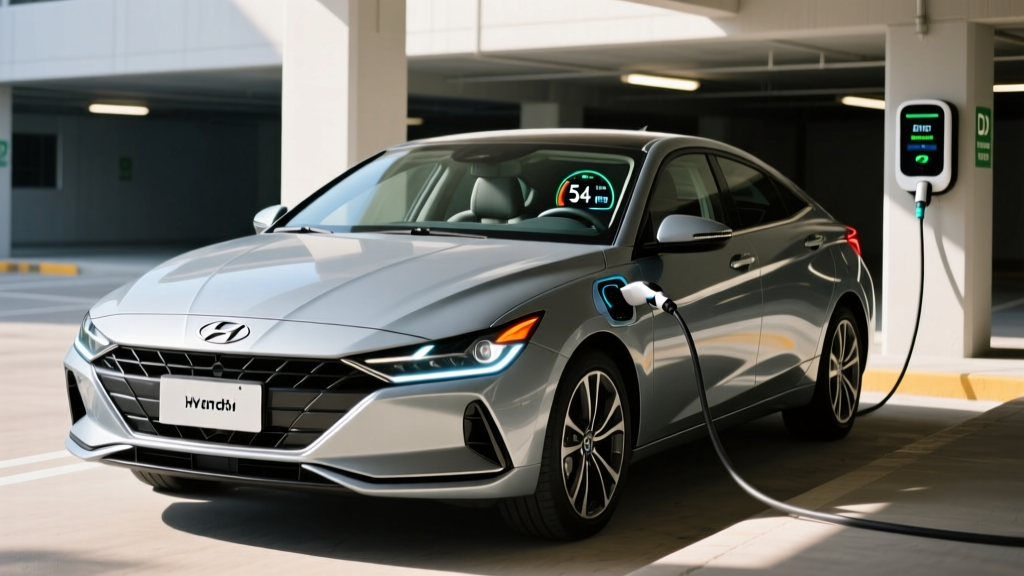
The 2023 Hyundai Elantra Hybrid occupies a specific niche: a compact sedan that squeezes maximum efficiency from a conventional hybrid powertrain without requiring a plug, a charging routine, or a lifestyle change. With an EPA-estimated 54 MPG combined, it undercuts the Toyota Prius on paper and challenges buyers to consider whether a full EV or plug-in hybrid is actually necessary for their commute. This review breaks down the real-world fuel economy, powertrain behavior, battery longevity, and ownership economics to help you decide if this HEV is the right fit.
Quick Verdict: Who the 2023 Hyundai Elantra Hybrid Is For
The Elantra Hybrid is engineered for drivers who want EV-like efficiency without charging infrastructure. If you live in an apartment without plug access, drive in stop-and-go city traffic, or simply don't want to think about charging, this conventional hybrid (HEV) delivers 50+ MPG with zero behavioral change. It is not a plug-in hybrid — you cannot charge it from a wall outlet, and it has no meaningful electric-only range. Think of it as a gas car that's been optimized to sip fuel, not an electric car with a backup engine.
Bottom line: The 2023 Elantra Hybrid is a strong pick for urban commuters and high-mileage drivers who lack home charging access. Skip it if you want electric-only driving or qualify for EV tax credits — a PHEV or BEV will serve you better in those cases.
HEV vs PHEV: Understanding the 2023 Elantra Hybrid's Powertrain
Hyundai sells the Elantra in gas-only, hybrid (HEV), and historically plug-in hybrid (PHEV) configurations. For the 2023 model year in the U.S., the Elantra is offered as a conventional hybrid only — the PHEV variant was discontinued after the 2022 model year. Here's what that distinction means in practice:
| Feature | HEV (2023 Elantra Hybrid) | PHEV (e.g., Prius Prime) | BEV (e.g., Ioniq 6) |
|---|---|---|---|
| Plug-in charging | No — self-charging via regen & engine | Yes — Level 1/2 AC | Yes — Level 1/2/DC fast |
| Electric-only range | ~1 mile at low speed | 25-44 miles typical | 250-360+ miles |
| Fuel source | Gasoline + regenerative braking | Gasoline + grid electricity | Grid electricity only |
| Battery size | 1.32 kWh (small buffer) | 10-14 kWh usable | 55-85+ kWh usable |
| Federal tax credit | Not eligible (§30D requires plug-in) | Up to $7,500 if eligible | Up to $7,500 if eligible |
The Elantra Hybrid's 1.32 kWh lithium-ion polymer battery is small by design. It captures energy during braking and deceleration, then deploys it to assist the gas engine during acceleration or to power the car at very low speeds. You'll never need to find a charger — the system manages itself entirely.
Fuel Economy: EPA Ratings and Real-World MPG
The headline number is 54 MPG combined, but the city/highway split reveals where this powertrain excels. Like all hybrids, the Elantra Hybrid thrives in stop-and-go traffic where regenerative braking recaptures energy that a gas car would waste as heat.
| Trim | City MPG | Highway MPG | Combined MPG |
|---|---|---|---|
| Blue (base hybrid) | 53 | 56 | 54 |
| Limited (top hybrid) | 49 | 52 | 50 |
Source: EPA Fuel Economy
The Blue trim's higher rating comes from lighter weight (no leather, fewer electronics) and lower-resistance tires. The Limited trim's 4 MPG penalty is the cost of premium features — a tradeoff worth considering.
Real-World MPG: What to Actually Expect
EPA estimates are laboratory-controlled. In real-world testing, conventional hybrids often exceed their EPA city ratings because actual stop-and-go traffic generates more regenerative opportunities than the test cycle assumes. Highway driving is a different story — sustained high speeds reduce the hybrid advantage because the electric motor contributes less at 70+ MPH and aerodynamic drag dominates.
- City driving (real-world): Expect 52-58 MPG. Owners frequently report beating the EPA city estimate in warm weather.
- Highway driving (real-world): Expect 44-50 MPG at 70-75 MPH. The hybrid system provides minimal assist at sustained speed.
- Cold weather penalty: Roughly 5-10% reduction. The engine runs more often to provide cabin heat, reducing electric-motor assist time. Expect 46-50 MPG combined in freezing temperatures.
- Combined real-world average: Most owners land between 48-54 MPG depending on commute mix and climate.
Powertrain Specs: Engine, Motor, and Combined Output
| Specification | 2023 Elantra Hybrid |
|---|---|
| Engine | 1.6L GDI 4-cylinder Atkinson-cycle |
| Engine horsepower | 104 HP @ 5,700 RPM |
| Electric motor | 32 kW permanent-magnet synchronous |
| Motor horsepower | 43 HP |
| Combined system output | 139 HP / 195 lb-ft torque |
| Transmission | 6-speed dual-clutch automatic (DCT) |
| Drivetrain | Front-wheel drive |
| 0-60 MPH | ~8.5 seconds (estimated) |
| Battery | 1.32 kWh lithium-ion polymer |
| Fuel tank | 11.1 gallons |
| Total range (EPA est.) | ~600 miles (Blue trim) |
The 6-speed dual-clutch transmission (DCT) is a notable choice. Most competitors — including the Prius — use a continuously variable transmission (CVT). The DCT gives the Elantra Hybrid more natural shift feel and avoids the "rubber-band" drone common to CVTs under hard acceleration. The tradeoff is occasional low-speed hesitation when the transmission decides between gears, a characteristic of most DCTs.
The 1.6L Atkinson-cycle engine prioritizes efficiency over peak power. It runs a late intake-valve-closing strategy that sacrifices some low-end torque for better thermal efficiency. The 32 kW electric motor fills that torque gap off the line, giving the car adequate responsiveness in city driving. At highway speeds, the engine does most of the work alone.
Pricing, Trims, and Tax Credit Eligibility
| Trim | 2023 MSRP | Key Features |
|---|---|---|
| Blue | $25,550 | 16" alloy wheels, 8" touchscreen, wireless CarPlay/Android Auto, SmartSense ADAS suite |
| Limited | $29,650 | 17" wheels, leather seats, 10.25" digital cluster + nav, Bose audio, Highway Driving Assist |
Does the 2023 Elantra Hybrid Qualify for a Federal Tax Credit?
No. The federal §30D Clean Vehicle Credit applies only to plug-in electric vehicles (BEVs and PHEVs) with a minimum battery capacity of 7 kWh. The Elantra Hybrid's 1.32 kWh battery and lack of a charge port make it ineligible. This is a consistent rule across all conventional hybrids — the Toyota Prius, Honda Accord Hybrid, and Ford Maverick Hybrid are similarly excluded.
Some states and municipalities offer their own incentives for high-efficiency vehicles, but these vary widely and change frequently. Check your state's energy office or the Alternative Fuels Data Center for current local programs. A few utilities offer rebates for any vehicle exceeding 45 MPG, but these are rare and typically modest ($200-$500).
Federal §30D credit eligibility checklist (for reference):
- ✅ Vehicle must be a plug-in BEV or PHEV — Elantra Hybrid fails this requirement
- ✅ Battery capacity ≥ 7 kWh — Elantra Hybrid has 1.32 kWh
- ✅ MSRP under $55,000 (sedans) — price would qualify, but powertrain does not
- ✅ Buyer income under $150K single / $300K joint — irrelevant here
- ✅ Battery minerals and components must meet sourcing thresholds — irrelevant here
Source: IRS §30D Guidelines
Battery Warranty, Reliability, and Replacement Costs
Hyundai Hybrid Battery Warranty: 10 years / 100,000 miles (whichever comes first) for the original owner. Transfers to subsequent owners as 10 years / 100,000 miles from the original in-service date in most states, though California-emissions states may extend this further.
Hyundai's hybrid battery warranty is among the best in the industry, matching or exceeding Toyota's 10-year/150,000-mile coverage in California-emissions states (which cover 15 states plus D.C.). For the original owner, the 10-year/100,000-mile term provides long-term peace of mind.
How Long Do Hybrid Batteries Actually Last?
Modern hybrid batteries rarely fail catastrophically. The 1.32 kWh pack in the Elantra Hybrid is small and operates within a narrow state-of-charge window (roughly 40-80%), which dramatically reduces stress on the cells. This shallow-cycling strategy is why hybrid batteries routinely last 150,000-200,000+ miles with minimal degradation.
Unlike full EVs, where battery degradation directly reduces your driving range, a hybrid battery that loses 20% capacity simply means slightly less electric-motor assist and marginally lower MPG — not a stranded vehicle. Most owners never notice the difference.
Battery Replacement Cost
If the hybrid battery does fail outside of warranty, replacement costs for the Elantra Hybrid typically range from $2,000 to $3,500 including parts and labor. This is lower than most EV battery replacements because the pack is small and accessible. Refurbished or aftermarket packs may reduce this cost further. Given the 10-year warranty and the battery's inherent longevity, this is a low-probability expense for most owners.
Overall reliability for the Elantra Hybrid has been solid. Hyundai's hybrid powertrain has fewer moving parts than a conventional automatic (the DCT has no torque converter), and the Atkinson-cycle engine runs under less stress than a standard Otto-cycle engine. The IIHS rated the 2023 Elantra a Top Safety Pick when equipped with specific headlights.
Ownership Economics: Fuel Savings vs. a Gas Elantra
Let's run the numbers. Assuming 15,000 miles per year, $3.50/gallon gas, and a 55% city / 45% highway driving mix:
| Cost Factor | 2023 Elantra Hybrid (Blue, 54 MPG) | 2023 Elantra Gas (SE, 37 MPG) |
|---|---|---|
| Annual fuel cost | ~$972 | ~$1,419 |
| 5-year fuel cost | ~$4,860 | ~$7,095 |
| MSRP (base) | $25,550 | $21,625 |
| Price premium for hybrid | $3,925 | |
| 5-year fuel savings | ~$2,235 | |
| Break-even timeline | ~8.8 years at 15K mi/yr | |
At current fuel prices and typical mileage, the hybrid's $3,925 premium takes roughly 9 years to recoup through fuel savings alone. However, this calculation doesn't account for the hybrid's typically higher resale value, which can shorten the effective payback period. If gas prices rise above $4.00/gallon or you drive more than 20,000 miles per year, the math shifts significantly in the hybrid's favor — break-even drops to 5-6 years.
Hybrid vs PHEV vs EV: Which Powertrain Fits You?
Choose the 2023 Elantra Hybrid (HEV) if:
- You don't have access to home or workplace charging
- Your commute is mostly city / stop-and-go traffic
- You want maximum simplicity — no plugs, no apps, no charging planning
- You drive 12,000-20,000 miles per year and want to minimize fuel cost
Choose a PHEV (e.g., Toyota Prius Prime, Hyundai Tucson PHEV) if:
- You have Level 2 home charging and a commute under 30 miles
- You want electric-only daily driving with gas backup for road trips
- You may qualify for the $7,500 federal tax credit (check IRS §30D rules for income and sourcing requirements)
Choose a full EV (e.g., Hyundai Ioniq 6, Tesla Model 3) if:
- You have reliable home Level 2 charging
- Your daily driving is under 250 miles and you can plan road-trip charging
- You want the lowest per-mile "fuel" cost (~$0.04-0.06/mile on home electricity vs $0.10/mile in this hybrid)
- You want to eliminate oil changes and reduce maintenance
Pros and Cons
Pros
- 54 MPG EPA combined (Blue trim) — among the highest of any non-plug-in vehicle
- No charging required — zero lifestyle change from a gas car
- 600+ mile total range on a single tank
- 10-year/100,000-mile hybrid battery warranty
- DCT avoids the CVT drone common in competitors
- Comprehensive SmartSense ADAS suite standard (AEB, lane-keep, adaptive cruise)
- Strong real-world city MPG — often exceeds EPA estimate
Cons
- No federal tax credit eligibility
- Modest 139 HP — adequate, not quick (0-60 ~8.5 sec)
- Highway MPG drops significantly at 75+ MPH
- Limited trim loses 4 MPG vs Blue for premium features
- DCT can hesitate in low-speed stop-and-go
- No AWD option (unlike Prius)
- Hybrid premium takes ~9 years to recoup at average mileage
Frequently Asked Questions
How many MPG does the 2023 Hyundai Elantra Hybrid get?
The Blue trim achieves 53 city / 56 highway / 54 combined MPG per the EPA. The Limited trim rates at 49/52/50. In real-world city driving, many owners report 52-58 MPG, while highway driving at 70+ MPH typically yields 44-50 MPG.
Can I plug in the 2023 Elantra Hybrid to charge it?
No. The 2023 Elantra Hybrid is a conventional hybrid (HEV), not a plug-in hybrid (PHEV). It has no charge port. The battery charges itself through regenerative braking and the gas engine. Hyundai discontinued the Elantra PHEV after the 2022 model year in the U.S.
Is the 2023 Elantra Hybrid reliable?
Yes. Hyundai's hybrid system has proven reliable in long-term use. The 1.6L Atkinson-cycle engine runs under low stress, and the small hybrid battery operates in a narrow charge window that minimizes degradation. The 10-year/100,000-mile hybrid battery warranty provides additional protection. The IIHS named it a Top Safety Pick with qualifying headlights.
What does it cost to replace the hybrid battery?
Out-of-warranty replacement typically costs $2,000-$3,500 including parts and labor. However, hybrid battery failure is uncommon before 150,000+ miles, and the 10-year/100,000-mile warranty covers most owners through the vehicle's primary ownership period.
Does the Elantra Hybrid qualify for any tax credit?
The 2023 Elantra Hybrid does not qualify for the federal §30D Clean Vehicle Credit because it is not a plug-in vehicle. The credit requires a minimum 7 kWh battery and a charge port. Some state or utility incentives for high-MPG vehicles may apply — check local programs.
How does the Elantra Hybrid compare to the Toyota Prius?
The 2023 Prius (redesigned) rates at 57 MPG combined on the LE trim, slightly edging the Elantra Hybrid Blue's 54 MPG. The Prius also offers AWD (with a slight MPG penalty) and a more powerful 194 HP powertrain. The Elantra Hybrid counters with a more conventional driving feel (DCT vs CVT), a larger trunk, and Hyundai's longer standard warranty. Both are excellent choices — the Prius wins on efficiency and power, the Elantra on driving refinement and cargo space.
Is the hybrid worth the extra cost over the gas Elantra?
It depends on your mileage and fuel prices. At 15,000 miles/year and $3.50/gallon, the ~$3,925 hybrid premium takes about 9 years to recoup. If you drive 20,000+ miles/year or gas prices exceed $4.00, the payback drops to 5-6 years. The hybrid also tends to hold resale value better, which partially offsets the premium.