Quick Verdict: A High-Efficiency Sedan That Doesn't Ask You to Plug In
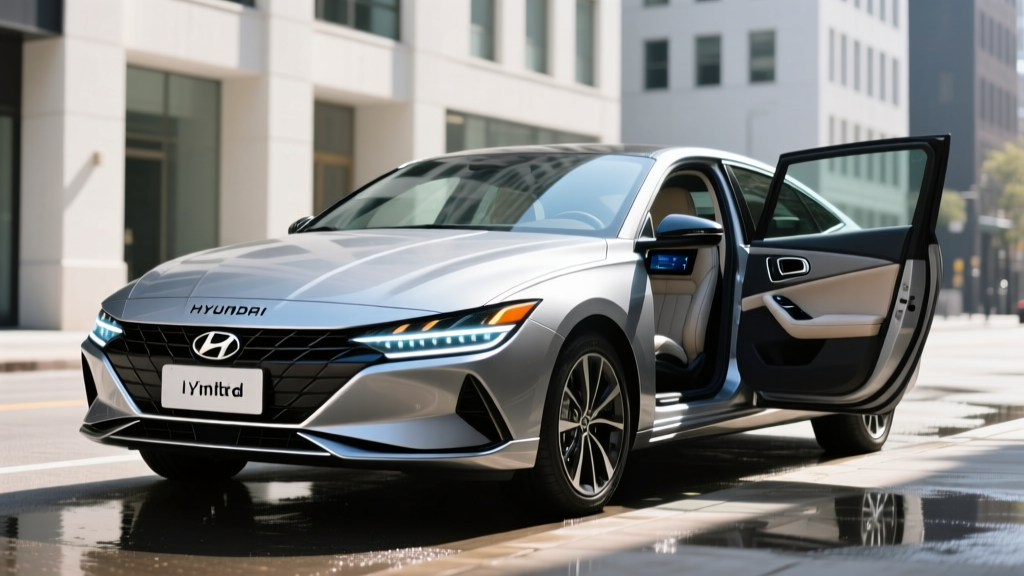
The 2023 Hyundai Elantra Hybrid Limited is a conventional hybrid electric vehicle (HEV) — meaning it recharges its small battery through regenerative braking and the gasoline engine. You never plug it in. For buyers who want dramatic fuel savings without changing their refueling habits, the Elantra Hybrid Limited delivers an EPA-estimated 54 MPG combined with a premium-trim interior that punches above its price class. It's not a plug-in hybrid, and it's not an EV. It's a bridge technology executed with impressive precision.
| Spec | 2023 Elantra Hybrid Limited |
|---|---|
| Powertrain | 1.6L GDI 4-cyl + permanent-magnet electric motor |
| Combined Horsepower | 139 hp |
| Combined Torque | 195 lb-ft |
| Transmission | 6-speed dual-clutch automatic (DCT) |
| Hybrid Battery | 1.56 kWh lithium-ion polymer (not plug-in) |
| EPA City MPG | 53 |
| EPA Highway MPG | 56 |
| EPA Combined MPG | 54 |
| Fuel Tank | 11.1 gallons |
| Total Range | ~600 miles |
| 0-60 mph | ~8.6 seconds (est.) |
| Base MSRP (Limited) | $29,250 (2023 launch price) |
| Hybrid Battery Warranty | 10 years / 100,000 miles |
HEV vs. PHEV vs. EV: What the Elantra Hybrid Actually Is
Hyundai sells electrified vehicles across three categories, and confusing them is the single most common mistake shoppers make. Here's how the Elantra Hybrid Limited fits in:
| Type | Plug In? | Electric-Only Range | Example (Hyundai) |
|---|---|---|---|
| HEV (Conventional Hybrid) | No — self-charging via regen + engine | ~1 mile at low speed | Elantra Hybrid |
| PHEV (Plug-in Hybrid) | Yes — Level 1 or Level 2 | 25-40 miles typical | Tucson PHEV |
| BEV (Battery Electric) | Yes — Level 2 or DC fast | 200-350+ miles | Ioniq 6 |
The 2023 Elantra Hybrid Limited is strictly an HEV. Its 1.56 kWh lithium-ion polymer battery is far too small for meaningful electric-only driving — it exists to assist the gasoline engine during acceleration, capture energy during braking, and enable brief engine-off coasting. You fuel it exclusively at the gas pump.
Because it's an HEV, there is no electric-only range to report, no plug, no charging time, and no DC fast-charge capability. If you want 25-40 miles of electric commuting before the gas engine kicks in, you need a PHEV — and Hyundai doesn't offer the Elantra as a plug-in for the 2023 model year.
Fuel Economy: 54 MPG EPA, and Real-World Often Beats It
According to fueleconomy.gov, the 2023 Elantra Hybrid Limited earns:
| Driving Cycle | EPA Estimate | Real-World Expectation |
|---|---|---|
| City | 53 MPG | 55-60+ MPG (hybrids excel in stop-and-go) |
| Highway | 56 MPG | 50-54 MPG (aero drag and sustained speed reduce regen benefit) |
| Combined | 54 MPG | 52-57 MPG depending on driving mix |
The counterintuitive part of hybrid fuel economy: city MPG often exceeds highway MPG. That's because regenerative braking recovers kinetic energy every time you slow for a light, and the electric motor handles low-speed crawling where gas engines are least efficient. On a 70-mph interstate run, the Elantra Hybrid operates more like a conventional sedan — the engine runs continuously and the hybrid system provides less benefit.
In mixed suburban-and-city driving, many owners report exceeding the 54 MPG combined figure, particularly in warm weather. Cold climates (below 35°F) reduce fuel economy by roughly 5-10% as the engine runs longer to heat the cabin and the battery operates less efficiently.
Powertrain Deep Dive: 139 HP Through a Dual-Clutch Transmission
The Elantra Hybrid pairs a 1.6-liter GDI 4-cylinder engine (104 hp, 109 lb-ft) with a 32 kW permanent-magnet synchronous electric motor (43 hp, 125 lb-ft) integrated into the transmission housing. Combined output is 139 horsepower and 195 lb-ft of torque.
Unlike Toyota's planetary-gear eCVT hybrid system, Hyundai uses a 6-speed dual-clutch automatic transmission (DCT). This is a deliberate engineering choice: the DCT provides more direct, gear-based acceleration feel compared to the rubber-band sensation some drivers associate with eCVTs. The trade-off is occasional low-speed hesitation — a characteristic of all dual-clutch designs — though Hyundai's tuning minimizes it well.
The electric motor fills torque gaps during gear changes and provides initial launch thrust, which is why the Elantra Hybrid feels quicker from a stoplight than its 139 hp figure suggests. The 0-60 mph time of approximately 8.6 seconds won't embarrass you in merging situations, though it's not sporty by any measure.
Pricing, Tax Credits, and Total Ownership Cost
The 2023 Elantra Hybrid Limited launched at an MSRP of $29,250 (including destination). The Limited trim is the top hybrid grade and includes leather seats, a 10.25-inch digital instrument cluster, a 10.25-inch infotainment touchscreen with navigation, Bose premium audio, Highway Driving Assist, and Smart Cruise Control with Stop & Go.
Federal Tax Credit: Not Eligible
Under IRS §30D rules, the federal plug-in electric vehicle tax credit applies only to PHEVs and BEVs with battery capacities of at least 7 kWh and plug-in capability. The Elantra Hybrid's 1.56 kWh battery and HEV powertrain make it ineligible for the $7,500 federal tax credit. Some states offer separate hybrid rebates, but these are increasingly rare as incentive budgets shift toward full EVs. Check your state energy office for current programs.
Even without a tax credit, the ownership economics are compelling. At $3.50/gallon gas and 12,000 miles/year, a 30 MPG conventional sedan costs ~$1,400/year in fuel. The Elantra Hybrid Limited at 54 MPG costs ~$778/year — a savings of roughly $622 per year or $3,110 over five years. That nearly closes the price gap with a gas-only Elantra SEL (MSRP ~$22,550, ~35 MPG combined).
Insurance costs for the Elantra Hybrid Limited run roughly 5-10% higher than the gas equivalent due to higher repair costs for hybrid-specific components, but this varies significantly by carrier and driver profile.
Battery Warranty, Reliability, and Replacement Cost
Hyundai backs the Elantra Hybrid's lithium-ion polymer battery pack with a 10-year / 100,000-mile warranty (10 years/unlimited miles for the original owner in some states). This covers defects and capacity loss below a threshold typically set around 70% of original capacity. Hyundai's hybrid battery warranty is among the strongest in the industry, matching Toyota's coverage.
Regarding reliability: Hyundai's 1.6L GDI hybrid powertrain has been in service since the Ioniq Hybrid (2017) with no widespread failure patterns reported. The DCT transmission is the component most likely to generate complaints — some owners note low-speed shudder in early production units, though Hyundai issued software updates to address this.
If the hybrid battery requires replacement out of warranty (typically after 10+ years), expect a cost of $2,000-$3,500 including parts and labor at a dealership. Independent hybrid specialists may offer refurbished packs for $1,500-$2,500. For context, most hybrid batteries last 150,000-200,000+ miles before significant degradation, and many outlast the vehicle itself.
Who Should Choose the Elantra Hybrid Limited?
Choose the Elantra Hybrid Limited if:
- You drive 12,000+ miles per year and want to minimize fuel cost without plugging in
- You live in an apartment or lack home charging access (no plug needed)
- You want a premium small sedan under $30K with strong safety tech
- You take frequent long road trips where EV charging infrastructure is sparse
Look at a PHEV instead if:
- You have home Level 2 charging and a commute under 30 miles (a PHEV covers it on electricity alone)
- You want to qualify for the $7,500 federal tax credit (requires 7+ kWh battery and plug-in)
Look at a full EV instead if:
- You have reliable home charging and want near-zero maintenance
- Your daily driving is under 200 miles and you want to eliminate gas entirely
- You want to maximize federal and state incentives
Pros and Cons
Pros
- 54 MPG combined — among the highest of any non-plug-in sedan
- No plug-in required; zero behavior change from a gas car
- Limited trim is well-equipped: leather, Bose, 10.25" screens, HDA
- 10-year/100,000-mile hybrid battery warranty
- ~600-mile total range between fill-ups
- DCT provides more engaging driving feel than typical eCVT hybrids
Cons
- No federal tax credit eligibility (HEV, not PHEV/BEV)
- 139 hp is adequate but not quick — passing at highway speed requires planning
- DCT can exhibit low-speed hesitation in stop-and-go traffic
- Rear seat headroom is tight due to sloping roofline
- Highway MPG falls below city MPG (opposite of most gas cars)
- No spare tire — tire inflation kit only
Frequently Asked Questions
How many MPG does the 2023 Hyundai Elantra Hybrid Limited get?
The EPA rates it at 53 city / 56 highway / 54 combined MPG. In real-world city and suburban driving, many owners report 55-60 MPG thanks to aggressive regenerative braking. Highway-only driving at 70+ mph typically yields 50-54 MPG.
Does the Elantra Hybrid need to be plugged in?
No. The 2023 Elantra Hybrid is a conventional hybrid (HEV), not a plug-in hybrid (PHEV). Its 1.56 kWh battery recharges through regenerative braking and the gasoline engine. You never plug it in — you only refuel at the gas pump.
Does the 2023 Elantra Hybrid qualify for any tax credit?
No. Under IRS §30D, the federal EV tax credit requires plug-in capability and a battery capacity of at least 7 kWh. The Elantra Hybrid's 1.56 kWh battery disqualifies it. Some states may offer minor hybrid incentives, but these are increasingly rare. Consult a tax professional for your specific situation.
How long will the hybrid battery last?
Hyundai warrants the hybrid battery for 10 years / 100,000 miles. Based on industry data from similar lithium-ion hybrid packs, most last 150,000-200,000+ miles before significant degradation. Out-of-warranty replacement costs $2,000-$3,500 at a dealer.
Is the Elantra Hybrid reliable?
Hyundai's 1.6L hybrid powertrain has been in production since 2017 (Ioniq Hybrid) with no systemic failure patterns. The dual-clutch transmission is the most common source of minor complaints (low-speed shudder), largely addressed through software updates. Overall reliability is competitive with Toyota's hybrid lineup.
How does the Elantra Hybrid compare to the Toyota Prius?
The 2023 Prius (redesigned) earns 57 MPG combined on the LE trim — slightly higher than the Elantra Hybrid's 54 MPG. However, the Prius uses an eCVT (smoother but less engaging), while the Elantra's DCT feels more conventional. The Elantra Hybrid Limited also offers a more premium interior at its price point. Both carry 10-year/100,000-mile hybrid battery warranties.
Can I convert the Elantra Hybrid to a plug-in?
No. The HEV powertrain lacks the larger battery, onboard charger, and charge port required for plug-in operation. If you want plug-in capability in the Hyundai lineup, look at the Tucson PHEV or Ioniq 5 (BEV).