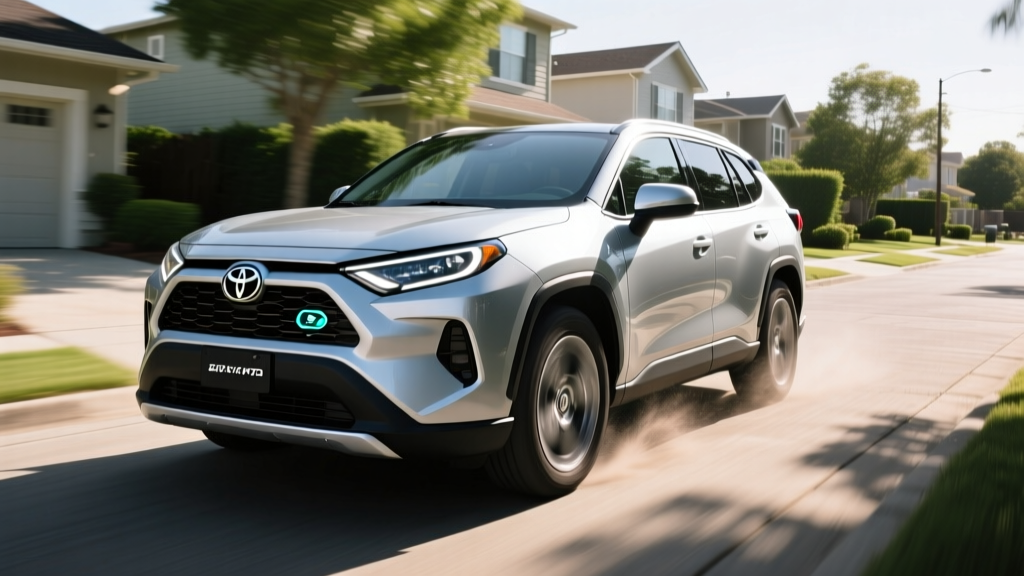
The 2023 Hybrid RAV4 Lineup: Two Very Different Electrified SUVs
Toyota sold over 100,000 RAV4 Hybrids in 2023, making it one of the most popular electrified vehicles in the United States. But the "2023 Hybrid RAV4" badge covers two fundamentally different powertrains: the conventional RAV4 Hybrid (HEV), which never plugs in, and the RAV4 Prime (PHEV), which offers 42 miles of electric-only driving before its gas engine kicks in. Choosing between them — or deciding whether a full EV makes more sense — requires understanding the real numbers, not just the marketing.
This guide breaks down every 2023 RAV4 Hybrid and RAV4 Prime trim with exact EPA figures, real-world fuel economy observations, battery warranty details, and current tax-credit eligibility. If you are shopping for a 2023 model on the used market or comparing it against the refreshed 2024–2026 lineup, the powertrain fundamentals covered here remain directly relevant.
HEV vs PHEV: The Critical Distinction
RAV4 Hybrid (HEV): A self-charging hybrid. The 1.6 kWh nickel-metal hydride (NiMH) battery recharges through regenerative braking and the gas engine. You never plug it in. It operates like a conventional car at the pump but delivers significantly better MPG, especially in city driving where the electric motor handles low-speed propulsion.
RAV4 Prime (PHEV): A plug-in hybrid with an 18.1 kWh lithium-ion battery. You charge it from a wall outlet or Level 2 charger to unlock 42 miles of pure electric driving. Once the battery depletes, it functions as a highly efficient hybrid, achieving 38 MPG combined. The Prime is the more complex, more capable, and more expensive option.
Fuel Economy: EPA Ratings and Real-World MPG
The headline number for the 2023 RAV4 Hybrid is 41 MPG city / 38 MPG highway / 40 MPG combined for the LE trim, per fueleconomy.gov. Higher trims (XLE, XLE Premium, Woodland Edition, Limited) with heavier wheels and all-wheel-drive variations drop slightly to 41/38/40 or 40/37/39 MPG combined.
| Model / Trim | City MPG | Highway MPG | Combined MPG | MPGe (EV Mode) |
|---|---|---|---|---|
| RAV4 Hybrid LE (AWD-e) | 41 | 38 | 40 | N/A |
| RAV4 Hybrid XLE / Limited | 41 | 38 | 40 | N/A |
| RAV4 Hybrid Woodland Ed. | 40 | 37 | 39 | N/A |
| RAV4 Prime SE / XSE (EV mode) | — | — | — | 94 MPGe |
| RAV4 Prime (hybrid mode) | 40 | 36 | 38 | N/A |
Real-World MPG: What Owners Actually See
Toyota's hybrid system excels in stop-and-go traffic, where the electric motor absorbs the workload that wastes fuel in conventional cars. In real-world driving, RAV4 Hybrid owners consistently report 42–45 MPG in city and suburban conditions, exceeding the EPA city estimate. Highway-only trips at 75+ MPH tend to return 34–37 MPG, below the sticker, because aerodynamic drag overwhelms the electric motor's assistance at sustained speed.
For the RAV4 Prime, the math depends entirely on your commute. If you drive 30 miles round-trip and charge nightly, you may burn zero gasoline for months. On a 400-mile road trip with no charging, expect 36–38 MPG once the battery depletes — comparable to the standard hybrid but slightly lower due to the Prime's extra 400+ pounds of battery mass.
RAV4 Prime Range Breakdown: 42 miles electric-only (EPA) + approximately 480 miles on gasoline after depletion = ~520 miles total combined range. In cold weather (below 32°F), expect electric-only range to drop to 32–36 miles due to cabin heating demands and reduced lithium-ion efficiency.
Powertrain Specs: Horsepower, Engines, and Motors
Both 2023 RAV4 hybrid variants use Toyota's 2.5-liter Dynamic Force four-cylinder engine paired with electric motors, but the output differs substantially.
| Specification | RAV4 Hybrid (HEV) | RAV4 Prime (PHEV) |
|---|---|---|
| Engine | 2.5L I4 Atkinson-cycle | 2.5L I4 Atkinson-cycle |
| Engine HP | 176 hp | 177 hp |
| Electric Motor (front) | 118 hp (88 kW) | 180 hp (134 kW) |
| Electric Motor (rear) | 54 hp (40 kW) | 54 hp (40 kW) |
| Combined Net HP | 219 hp | 302 hp |
| 0–60 mph | 7.4 seconds | 5.7 seconds |
| Drivetrain | AWD-e (electronic AWD) | AWD-e (electronic AWD) |
| Transmission | eCVT | eCVT |
| Towing Capacity | 1,750 lbs | 2,500 lbs |
The RAV4 Prime's 302 combined horsepower makes it the quickest RAV4 Toyota has ever sold in the US — quicker, in fact, than many V6 midsize sedans. The standard RAV4 Hybrid's 219 hp is more than adequate for merging and passing, and its eCVT delivers seamless, shift-free acceleration that feels more refined than a traditional automatic.
RAV4 Prime Battery, Charging, and Electric-Only Range
The RAV4 Prime's 18.1 kWh lithium-ion battery pack (approximately 14.5 kWh usable to protect longevity) is the defining feature that separates it from the standard hybrid. Here is how charging works:
| Charging Method | Power | 0–100% Time | Notes |
|---|---|---|---|
| Level 1 (120V household outlet) | ~1.4 kW | ~12 hours | Trickle charge; adequate for overnight if daily driving is under 30 miles |
| Level 2 (240V, SE trim) | 3.3 kW | ~4.5 hours | Standard onboard charger on SE |
| Level 2 (240V, XSE with Premium Pkg) | 6.6 kW | ~2.5 hours | Upgraded onboard charger; requires 32A+ Level 2 station |
| DC Fast Charge | N/A | N/A | RAV4 Prime does NOT support DC fast charging |
The lack of DC fast charging is a deliberate Toyota decision shared by most PHEVs — the battery is small enough that Level 2 covers overnight needs, and adding DC hardware would increase cost and weight. If you need rapid charging on road trips, a full BEV is the correct choice.
Electric-only range of 42 miles (EPA) is best-in-class for a compact SUV PHEV. Competitors like the Hyundai Tucson PHEV (33 miles) and Ford Escape PHEV (37 miles) fall short. In practice, gentle driving at moderate temperatures yields 44–47 miles; aggressive acceleration or cold weather reduces it to 32–38 miles.
Battery Warranty, Reliability, and Replacement Cost
Toyota Hybrid Battery Warranty Coverage
RAV4 Hybrid (HEV): 10 years / 150,000 miles (whichever comes first) on the hybrid battery pack, applicable to all 2020+ model year Toyotas sold in the US. This covers capacity loss below a defined threshold and manufacturing defects.
RAV4 Prime (PHEV): 10 years / 150,000 miles on the lithium-ion traction battery, with a capacity-retention guarantee that Toyota defines as retaining at least 70% of original capacity under normal use.
Hybrid System Components: The inverter, converter, and ECU are covered for 8 years / 100,000 miles under the hybrid system warranty.
How Long Do Toyota Hybrid Batteries Actually Last?
Toyota's hybrid battery track record is among the best in the industry. Data from fleet operators and long-term owners shows that the NiMH packs in the RAV4 Hybrid routinely last 150,000–200,000+ miles before requiring replacement. The lithium-ion pack in the RAV4 Prime is newer to market but benefits from a conservative usable buffer (Toyota locks away roughly 20% of gross capacity at the top and bottom to minimize cycle stress).
If replacement is needed outside warranty, expect the following costs based on current dealer and independent-shop pricing:
- RAV4 Hybrid NiMH pack: $2,500–$4,000 (remanufactured) or $4,500–$6,000 (new OEM)
- RAV4 Prime lithium-ion pack: $6,000–$9,000 (new OEM; remanufactured options are emerging)
According to NHTSA complaint data, premature hybrid battery failure in the 2019–2023 RAV4 Hybrid is rare, with no widespread pattern failures reported. Toyota's 10-year/150,000-mile warranty provides substantial coverage for the typical ownership period.
Pricing, Trims, and Tax Credit Eligibility
The 2023 RAV4 Hybrid was offered in LE, XLE, XLE Premium, Woodland Edition, SE, and Limited trims. The RAV4 Prime came in SE and XSE trims. Original MSRP figures (including destination charge):
| Trim | Model | MSRP (incl. destination) |
|---|---|---|
| LE | Hybrid (HEV) | $32,345 |
| XLE | Hybrid (HEV) | $33,695 |
| XLE Premium | Hybrid (HEV) | $36,075 |
| Woodland Edition | Hybrid (HEV) | $35,420 |
| SE | Hybrid (HEV) | $35,075 |
| Limited | Hybrid (HEV) | $39,445 |
| SE | Prime (PHEV) | $44,440 |
| XSE | Prime (PHEV) | $47,560 |
Federal Tax Credit: Current §30D Rules
Under current IRS §30D Clean Vehicle Credit rules, the RAV4 Prime qualifies for up to $7,500 in federal tax credits when purchased new, provided the buyer meets income thresholds (modified AGI ≤ $150,000 single / $300,000 joint) and the vehicle's MSRP does not exceed $80,000 for SUVs. The RAV4 Prime's MSRP clears that cap easily.
However, the credit is subject to critical-mineral and battery-component sourcing requirements that phase in annually. As of 2024–2026, vehicles must meet increasing percentages of US-sourced or FTA-partner-sourced critical minerals and battery components to qualify for the full $7,500. The RAV4 Prime, assembled in Japan with a mix of global battery sourcing, has seen its eligible credit amount fluctuate. Always verify current-year eligibility on the IRS clean vehicle credit page before purchasing.
The standard RAV4 Hybrid (HEV) does NOT qualify for the §30D federal tax credit, which applies only to plug-in vehicles with at least 7 kWh of battery capacity. The HEV's 1.6 kWh NiMH pack falls well below this threshold.
Point-of-sale transfer: Since January 2024, eligible buyers can transfer the §30D credit to the dealer at purchase, receiving it as an immediate price reduction rather than waiting to claim it on their tax return. This applies to the RAV4 Prime if all sourcing and income requirements are met.
Who Should Buy the 2023 Hybrid RAV4 — And Who Shouldn't
Pros
- Class-leading real-world city MPG (42–45 MPG observed)
- Standard AWD-e across all hybrid trims
- 10-year/150,000-mile hybrid battery warranty
- RAV4 Prime offers 42 miles EV range — covers most commutes gas-free
- 302 hp on Prime; quickest compact SUV PHEV in its class
- Strong resale value; Toyota reliability track record
Cons
- No DC fast charging on Prime (Level 2 only)
- Standard HEV does not qualify for federal tax credit
- Prime availability limited; dealer markups common on 2023 models
- Cabin noise under hard acceleration (eCVT drone)
- Infotainment on 2023 model year is functional but dated vs. rivals
- Prime's added weight reduces highway MPG vs. HEV in hybrid mode
Which Electrified RAV4 Fits Your Life?
Choose the RAV4 Hybrid (HEV) if: You want maximum simplicity — no charging, no plug, no range planning. You drive 30+ miles daily in mixed city/highway conditions and want 40 MPG without changing any habits. You want a lower purchase price and don't need EV-mode driving.
Choose the RAV4 Prime (PHEV) if: You have home charging access (garage or driveway with a 240V outlet), your daily commute is under 42 miles round-trip, and you want to drive on electricity most days while keeping a gas engine for road trips. You qualify for the §30D credit and want to offset the higher MSRP.
Choose a full EV (e.g., Tesla Model Y, Hyundai Ioniq 5) if: You want zero gasoline expenses, have reliable home charging, drive under 250 miles daily, and want access to DC fast charging for road trips. Full EVs have lower maintenance costs but require more charging infrastructure planning.
Frequently Asked Questions
How many MPG does the 2023 RAV4 Hybrid actually get?
The EPA rates the 2023 RAV4 Hybrid LE at 41 city / 38 highway / 40 combined MPG. In real-world driving, owners typically see 42–45 MPG in city and suburban conditions and 34–37 MPG on sustained highway trips above 70 MPH. Cold weather and mountain driving reduce these figures by 3–6 MPG.
How far can the RAV4 Prime go on electric only?
The EPA rates the 2023 RAV4 Prime at 42 miles of electric-only range. In mild weather with gentle driving, 44–47 miles is achievable. In freezing temperatures or with aggressive acceleration, expect 32–38 miles. After the battery depletes, the Prime operates as a conventional hybrid at 38 MPG combined, giving a total range of approximately 520 miles.
Does the RAV4 Hybrid need to be plugged in?
No. The standard RAV4 Hybrid (HEV) is a self-charging hybrid. Its small battery recharges through regenerative braking and the gas engine. You fuel it exactly like a conventional car. Only the RAV4 Prime (PHEV) benefits from being plugged in.
Is the 2023 RAV4 Hybrid reliable, and what does battery replacement cost?
Toyota's hybrid system has a proven reliability record spanning two decades. The 2023 RAV4 Hybrid's NiMH battery is covered by a 10-year/150,000-mile warranty. Out-of-warranty replacement costs $2,500–$6,000 depending on whether you choose a remanufactured or new OEM pack. Premature failure is uncommon based on NHTSA data.
Does the 2023 RAV4 Hybrid or Prime qualify for a tax credit?
The standard RAV4 Hybrid (HEV) does not qualify for the federal §30D clean vehicle credit, which requires a plug-in vehicle with at least 7 kWh of battery capacity. The RAV4 Prime (PHEV) can qualify for up to $7,500, but eligibility depends on the buyer's income, the vehicle's battery sourcing compliance for the specific purchase year, and MSRP caps. Verify current eligibility on IRS.gov before purchasing. For used purchases, the §25E used clean vehicle credit may apply (up to $4,000 or 30% of sale price, whichever is lower, on vehicles under $25,000).
Should I buy the RAV4 Hybrid or a full EV?
If you lack reliable home charging, frequently drive over 300 miles between stops, or live in an area with sparse public charging infrastructure, the RAV4 Hybrid or Prime is the practical choice. If you have a garage with a 240V outlet, commute under 250 miles daily, and want minimal maintenance, a full EV like the Hyundai Ioniq 5 or Tesla Model Y offers lower operating costs and a smoother driving experience.