Quick Verdict: The 2023 CR-V Hybrid Still Sets the Compact SUV Benchmark
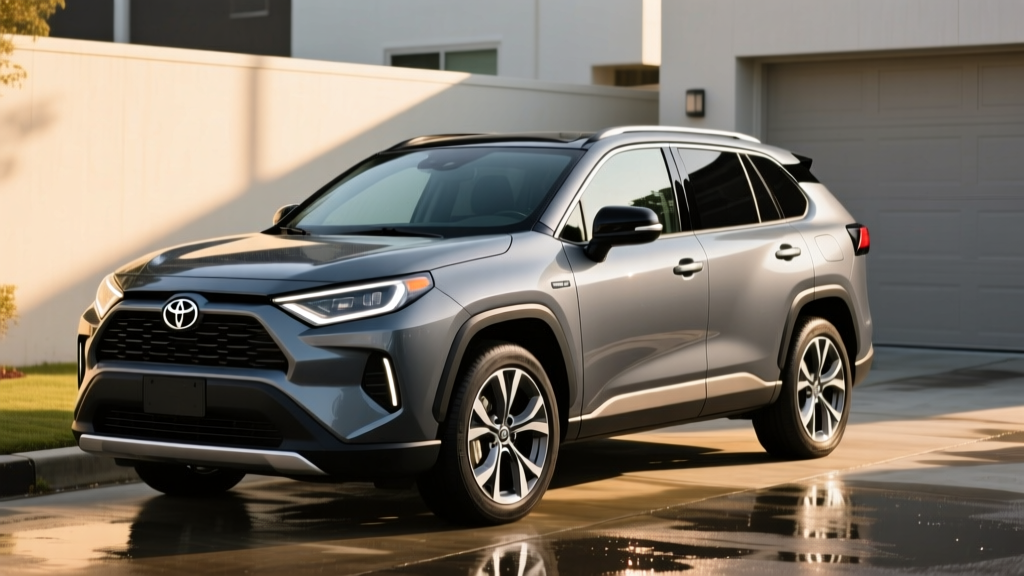
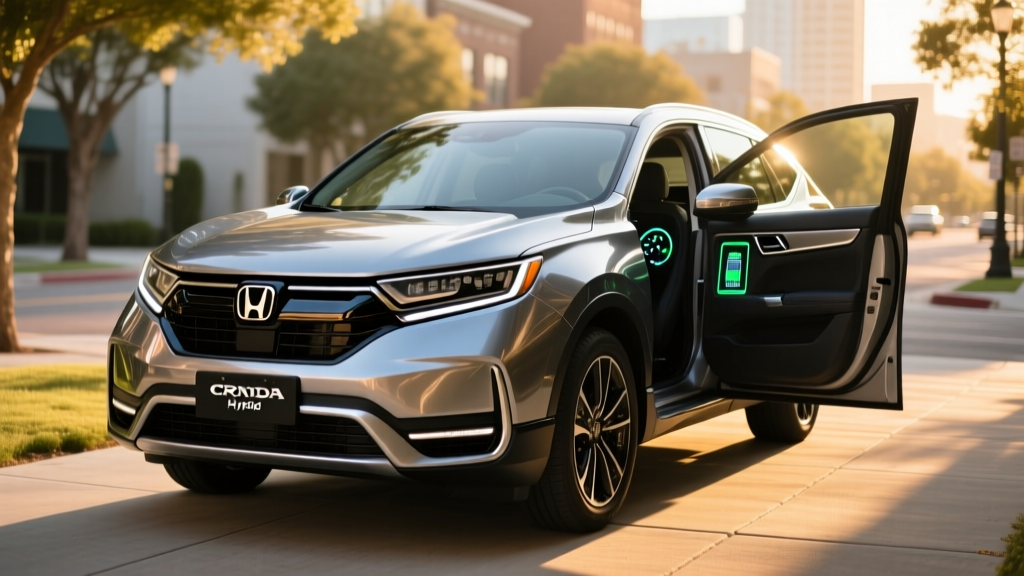
Honda's sixth-generation CR-V arrived for the 2023 model year with a larger footprint, a revised two-motor hybrid system, and an updated interior that pushed the compact SUV upmarket. The hybrid variant — badged as the CR-V Hybrid — pairs a 2.0-liter Atkinson-cycle four-cylinder with Honda's fourth-generation two-motor hybrid system to deliver 204 combined horsepower and an EPA-estimated 40 MPG combined. For buyers navigating the spectrum from conventional gas to full electric, the 2023 CR-V Hybrid occupies a pragmatic middle ground: no plug required, no range anxiety, and fuel economy that consistently beats its EPA estimates in real-world city driving.
Now that the CR-V lineup has expanded through the 2025 and 2026 model years (adding the CR-V e:FCEV hydrogen variant and updated infotainment), the 2023 CR-V Hybrid remains a strong contender on the used and certified-pre-owned market — and its specs still hold up against newer rivals. Here's the complete data-driven breakdown.
HEV vs PHEV: What the CR-V Hybrid Actually Is
Important distinction: The 2023 Honda CR-V Hybrid is a conventional hybrid electric vehicle (HEV), not a plug-in hybrid. It cannot be plugged in, has no electric-only driving mode of meaningful distance, and does not qualify for the federal §30D EV tax credit. Honda does not currently offer a CR-V PHEV in the United States.
Conventional hybrids like the CR-V Hybrid use regenerative braking and engine-driven generation to charge a small battery pack (typically 1.0–1.5 kWh). The electric motor assists the gasoline engine during acceleration and can propel the vehicle at low speeds for very short distances — usually under a mile. The system's primary job is to reduce fuel consumption, not to replace gasoline with grid electricity.
Plug-in hybrids (PHEVs), by contrast, carry larger battery packs (typically 12–20 kWh), offer 25–45 miles of electric-only range, and can be charged from a wall outlet or public charger. The Toyota RAV4 Prime is the closest PHEV competitor to the CR-V Hybrid, offering 42 miles of electric range and 94 MPGe when charged. If you need electric-only commuting capability, a PHEV or full BEV is the path — but if you simply want excellent fuel economy without changing your refueling habits, a conventional HEV like the CR-V Hybrid is the simpler solution.
EPA Fuel Economy and Real-World MPG
The 2023 CR-V Hybrid is rated by the EPA at 40 MPG combined, with front-wheel-drive (FWD) models achieving 43 city / 36 highway and all-wheel-drive (AWD) models rated at 40 city / 35 highway. These figures apply to the Sport and Sport Touring trims, which are the only trims offered with the hybrid powertrain.
| Drivetrain | City MPG | Highway MPG | Combined MPG |
|---|---|---|---|
| FWD (Sport) | 43 | 36 | 40 |
| AWD (Sport / Sport Touring) | 40 | 35 | 37 |
Source: fueleconomy.gov — 2023 Honda CR-V Hybrid AWD
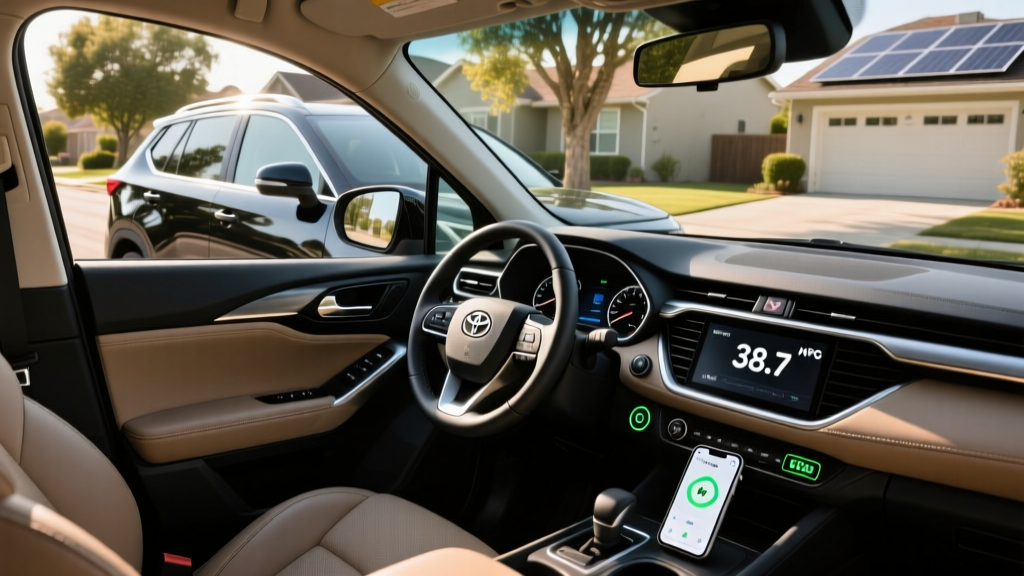
Real-world MPG reality check: Honda's two-motor hybrid system excels in stop-and-go city traffic, where regenerative braking recaptures energy and the electric motor handles low-speed propulsion. In real-world testing by multiple outlets, the CR-V Hybrid AWD routinely returns 38–42 MPG in mixed suburban driving and can exceed 43 MPG on dedicated city routes. Highway fuel economy at sustained 70–75 mph speeds typically drops to 32–34 MPG — a common characteristic of hybrids, which benefit less from electric assist at constant high speeds. In cold weather (below 30°F), expect a 5–10% reduction in fuel economy due to increased engine warm-up cycles and cabin heating demand.
For context, the non-hybrid 2023 CR-V with its 1.5-liter turbocharged engine is EPA-rated at 29 city / 36 highway / 32 combined (FWD). The hybrid's advantage is most pronounced in city driving, where it delivers roughly 38% better fuel economy than its gasoline sibling.
Powertrain: 204 HP Two-Motor Hybrid System
The 2023 CR-V Hybrid uses Honda's fourth-generation two-motor hybrid system, a significant evolution from the prior generation. The system pairs a 2.0-liter Atkinson-cycle inline-four engine with two electric motors — one functioning primarily as a generator and the other as the drive motor. Combined system output is 204 horsepower and 247 lb-ft of torque, with the electric drive motor contributing the majority of low-end torque for responsive off-the-line acceleration.
| Specification | 2023 CR-V Hybrid (AWD) |
|---|---|
| Engine | 2.0L Atkinson-cycle I-4 |
| Combined Horsepower | 204 hp |
| Combined Torque | 247 lb-ft |
| Drive Motor Output | 181 hp / 247 lb-ft |
| Transmission | Direct-drive (e-CVT) |
| Drivetrain | FWD or Real Time AWD |
| 0–60 mph (est.) | ~7.6 seconds |
| Hybrid Battery | ~1.06 kWh, lithium-ion |
| Towing Capacity | 1,000 lbs |
| Cargo Volume (behind rear seats) | 36.3 cu ft |
| Cargo Volume (rear seats folded) | 76.5 cu ft |
The e-CVT (electronically controlled continuously variable transmission) operates differently from a belt-driven CVT. Honda's system uses a direct-drive clutch that mechanically links the engine to the wheels at highway cruising speeds, eliminating the "rubber band" drone associated with older CVTs. In practice, the powertrain feels more like an EV at low speeds — with smooth, linear torque delivery — and transitions to direct engine drive seamlessly above roughly 45 mph.
The Real Time AWD system on hybrid models uses a mechanical driveshaft to the rear axle, engaging the rear wheels when front-wheel slip is detected. This differs from some competitors that use a dedicated rear electric motor for AWD, and it means the CR-V Hybrid's AWD is reactive rather than predictive — adequate for rain and light snow, but not designed for aggressive off-road use.
Pricing, Trims, and Tax Credit Eligibility
When new, the 2023 CR-V Hybrid was offered in two trims: the Sport (starting at $34,290 with destination for FWD, $35,790 for AWD) and the Sport Touring (starting at $38,690 for AWD). By the 2026 model year, these same trims have seen modest price increases, making the 2023 model year an attractive option on the certified-pre-owned (CPO) market.
| Trim | Original MSRP (2023) | Est. CPO Price (2026) |
|---|---|---|
| Sport FWD | $34,290 | $28,000–$31,000 |
| Sport AWD | $35,790 | $29,500–$32,500 |
| Sport Touring AWD | $38,690 | $32,000–$35,500 |
Federal tax credit: The 2023 CR-V Hybrid does not qualify for the IRS §30D Clean Vehicle Credit. That credit applies only to plug-in electric vehicles (BEVs and PHEVs) with battery packs of at least 7 kWh. As a conventional HEV with a ~1 kWh battery, the CR-V Hybrid is ineligible. Some state-level programs offer rebates for hybrids, but these vary by jurisdiction — check your state's energy office or AFDC state incentive database for current availability.
Battery Warranty, Reliability, and Replacement Cost
Hybrid battery longevity is the single most common concern among first-time hybrid buyers. Honda covers the CR-V Hybrid's lithium-ion battery pack with a warranty of 8 years / 100,000 miles in most states, extending to 10 years / 150,000 miles in California Air Resources Board (CARB) states (California, Colorado, Connecticut, Maine, Maryland, Massachusetts, New Jersey, New York, Oregon, Rhode Island, Vermont, Washington, and others adopting CARB standards).
The warranty guarantees that the hybrid battery will retain sufficient capacity to operate the hybrid system as designed. Unlike EV batteries, where degradation directly reduces range, the CR-V Hybrid's small battery acts as a buffer — even moderate degradation (10–15%) will not noticeably affect fuel economy because the system continuously charges and discharges within a narrow state-of-charge window (typically 40–60% SoC). This shallow-cycling strategy dramatically extends cell life.
Real-world failure data is encouraging. Honda's hybrid systems have proven among the most reliable in the industry, with the two-motor architecture having fewer wear components than traditional planetary-gear hybrid transmissions. The IIHS awarded the 2023 CR-V its Top Safety Pick+ rating, and Consumer Reports has consistently rated the CR-V Hybrid as above average for predicted reliability.
If the hybrid battery does require replacement outside warranty, expect a cost of $2,000–$4,000 for a new OEM pack, or $1,000–$2,000 for a refurbished unit. However, based on historical data from Honda's hybrid fleet (Insight, Accord Hybrid, CR-V Hybrid), full battery pack replacement is rare before 150,000–200,000 miles. The far more common maintenance items are the same as any gasoline vehicle: brake pads (which last longer due to regenerative braking), tires, fluids, and the 12V auxiliary battery.
2023 CR-V Hybrid vs PHEV vs EV: Which Fits Your Life?
The right electrified vehicle depends on your driving pattern, charging access, and budget. Here's a practical decision framework:
Choose the 2023 CR-V Hybrid (HEV) if:
- You lack access to home or workplace charging (no garage, no outlet, apartment living)
- Your budget is $28,000–$36,000 and you want a compact SUV with AWD
- You drive a mix of city and highway miles and want 37–40 MPG without behavioral changes
- You want Honda's reliability record and dealer network for long-term ownership
- You don't want to think about charging — ever
Choose a PHEV (e.g., Toyota RAV4 Prime, Hyundai Tucson PHEV) if:
Choose a full EV (e.g., Tesla Model Y, Hyundai Ioniq 5, Ford Mustang Mach-E) if:
- You have reliable home charging (Level 2) and your daily driving is under 250 miles
- You want to eliminate gasoline entirely and minimize per-mile fuel costs (electricity at $0.14/kWh ≈ $4.50 per 100 miles vs. $12–15 per 100 miles on gasoline)
- You qualify for the full $7,500 §30D federal tax credit and want the lowest total cost of ownership over 5 years
Pros and Cons at a Glance
Pros
- 40 MPG combined EPA (FWD); real-world city driving often exceeds 43 MPG
- 204 hp and 247 lb-ft provide confident acceleration for the class
- No plug-in charging required — refuel at any gas station
- Spacious interior with 36.3 cu ft cargo volume (rear seats up)
- IIHS Top Safety Pick+ with standard Honda Sensing ADAS suite
- 8 yr / 100,000 mi hybrid battery warranty (10/150k in CARB states)
- Strong CPO value proposition in 2026 vs. newer, pricier model years
Cons
- No electric-only driving range — 100% gasoline-dependent
- Highway MPG drops to 32–34 at sustained 70+ mph speeds
- No federal tax credit eligibility (HEV, not PHEV/BEV)
- Towing limited to 1,000 lbs (non-hybrid turbo model tows 1,500 lbs)
- Sport Touring trim pushes $39K original MSRP — near luxury-compact territory
- AWD system is mechanical/reactive, not torque-vectoring or off-road focused
Frequently Asked Questions
How many MPG does the 2023 CR-V Hybrid actually get?
The EPA rates the AWD model at 40 city / 35 highway / 37 combined, and the FWD model at 43 city / 36 highway / 40 combined. In real-world mixed driving, most owners report 37–42 MPG, with city-heavy routes frequently exceeding the EPA city estimate. Highway cruising at 75 mph typically yields 32–34 MPG.
Does the 2023 CR-V Hybrid need to be plugged in?
No. The CR-V Hybrid is a conventional HEV, not a plug-in hybrid. Its small lithium-ion battery is charged entirely through regenerative braking and the gasoline engine. You refuel it like any other gas car — at a gas station.
Can the 2023 CR-V Hybrid drive on electric power alone?
Only for very short distances at low speeds (typically under 1 mile, under 25 mph). The system uses the electric motor for initial acceleration and low-speed creep, but the gasoline engine engages quickly. There is no meaningful electric-only range — this is not a PHEV.
Is the CR-V Hybrid reliable, and what does battery replacement cost?
Honda's hybrid system has an excellent reliability track record. The hybrid battery is warrantied for 8 years / 100,000 miles (10 years / 150,000 miles in CARB states). Out-of-warranty replacement costs $2,000–$4,000 for a new OEM pack, but full battery failures are uncommon before 150,000+ miles based on historical fleet data.
Does the 2023 CR-V Hybrid qualify for any tax credit?
No. The federal §30D Clean Vehicle Credit applies only to plug-in vehicles (BEVs and PHEVs) with battery capacity of at least 7 kWh. The CR-V Hybrid's ~1 kWh battery makes it ineligible. Some states offer separate hybrid incentives — check your state's energy office or the Alternative Fuels Data Center for details.
How does the 2023 CR-V Hybrid compare to the Toyota RAV4 Hybrid?
The 2023 Toyota RAV4 Hybrid is EPA-rated at 41 city / 38 highway / 40 combined (AWD standard), giving it a slight highway advantage. The RAV4 Hybrid produces 219 hp vs. the CR-V Hybrid's 204 hp, and Toyota also offers the RAV4 Prime PHEV with 42 miles of electric range. The CR-V Hybrid counters with a more refined interior, greater cargo volume (36.3 vs. 37.6 cu ft — nearly identical), and a more natural-feeling powertrain calibration. Both are class leaders; the choice often comes down to brand preference and dealer experience.
What is the total cost of ownership vs. the gas-only CR-V?
At 15,000 miles per year and $3.50/gallon gasoline, the gas CR-V (32 MPG combined) costs roughly $1,641/year in fuel. The CR-V Hybrid (37 MPG combined) costs about $1,419/year — a savings of approximately $222/year. Over 5 years, that's roughly $1,100 in fuel savings. The hybrid's higher purchase price (roughly $1,500–$2,000 more when new) is partially offset by fuel savings and potentially higher resale value. For buyers who keep vehicles 8–10 years, the hybrid breaks even and then pulls ahead.
Sources: EPA fueleconomy.gov, IIHS, AFDC State Incentives