Quick Verdict: A Hybrid Benchmark That Still Holds Up
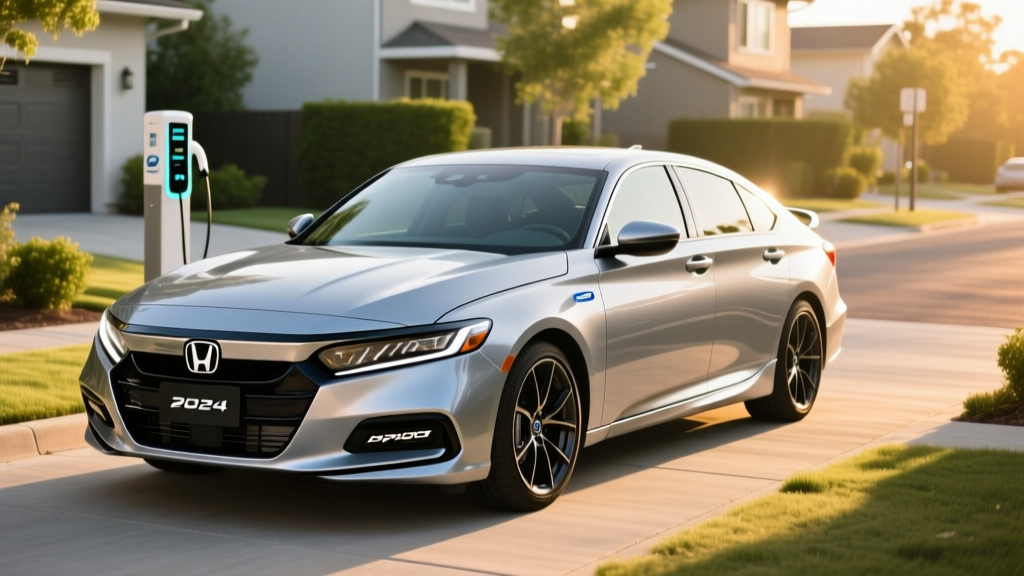
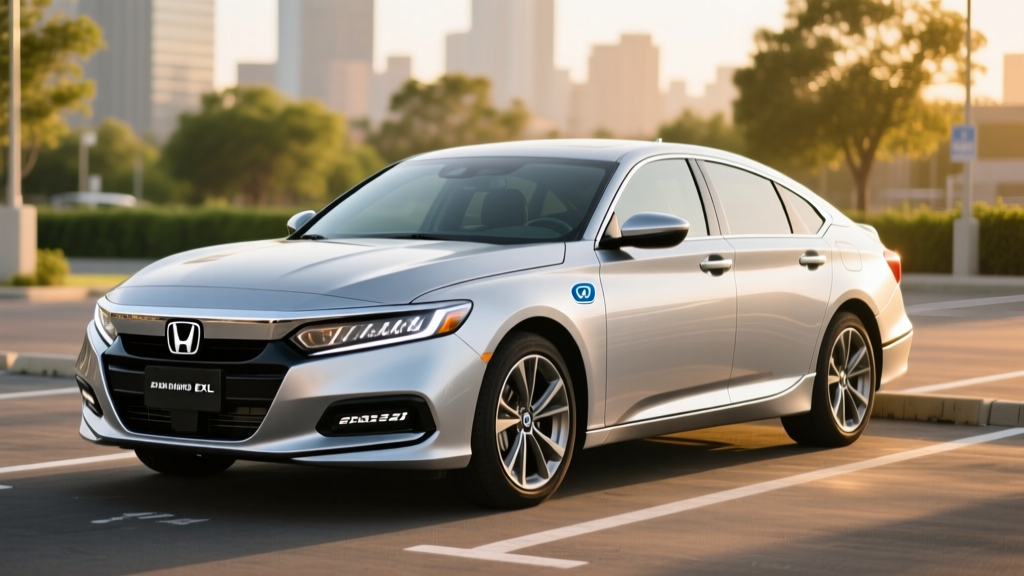
The 2023 Honda Accord Hybrid EX-L occupies a specific sweet spot: it's the highest-trim two-motor hybrid Honda offered before the 2024 redesign introduced the Accord Hybrid Sport-L and above. If you're shopping the used market in 2026, this model delivers 48 MPG combined EPA, a refined two-motor powertrain, and Honda's proven hybrid reliability — all without ever plugging in. It's a conventional hybrid (HEV), not a plug-in, which means zero charging infrastructure anxiety and consistent efficiency whether you drive 10 miles or 400.
With the 2024+ Accord Hybrid redesign now well-established, the 2023 EX-L represents strong value on the used market, typically priced between $24,000 and $29,000 depending on mileage and condition. The question isn't whether it's efficient — it is — but whether a conventional hybrid still makes sense versus a PHEV or full EV in 2026.
Powertrain and Performance: Two-Motor Precision
The 2023 Accord Hybrid EX-L uses Honda's two-motor hybrid system, which operates differently from a traditional parallel hybrid like Toyota's setup. Here's how it works:
- Primary propulsion: A 181-hp electric drive motor powers the front wheels in most driving conditions (EV Drive and Hybrid Drive modes)
- Engine role: The 2.0-liter Atkinson-cycle inline-4 (143 hp, 129 lb-ft) primarily acts as a generator, producing electricity for the drive motor
- Direct engine drive: At sustained highway speeds (roughly 45-80 mph), a lockup clutch connects the engine directly to the wheels for efficiency
- Combined system output: 212 hp (Honda rates the combined peak; the electric motor's 232 lb-ft of torque is available from 0 rpm)
| Specification | Value |
|---|---|
| Engine | 2.0L Atkinson-cycle I-4 |
| Engine Power | 143 hp @ 6,200 rpm |
| Drive Motor Power | 181 hp (135 kW) |
| Drive Motor Torque | 232 lb-ft |
| Combined System Output | 212 hp |
| Hybrid Battery | 1.3 kWh lithium-ion (not plug-in) |
| Transmission | e-CVT (single-speed direct drive + lockup clutch) |
| Drivetrain | Front-wheel drive |
| 0-60 mph | ~7.0 seconds (est.) |
The driving experience is smooth and electric-like around town because the drive motor handles most low-to-medium speed acceleration. The engine only revs up audibly under hard acceleration when the generator needs to produce maximum electricity. This is fundamentally different from older hybrids that felt like a rubber-band CVT drone — Honda's system is one of the more refined in the segment.
Fuel Economy: EPA Ratings vs. Real-World MPG
The EPA rates the 2023 Accord Hybrid at the following fuel economy figures, which apply across all hybrid trims including the EX-L:
| Cycle | EPA Rating |
|---|---|
| City | 48 MPG |
| Highway | 47 MPG |
| Combined | 48 MPG |
Source: fueleconomy.gov
Real-World MPG: What Owners Actually Report
Honda's hybrid system, like most series-parallel designs, tends to meet or slightly exceed its EPA city rating in stop-and-go traffic because regenerative braking recovers energy that gas cars waste as heat. In our experience and aggregated owner data:
- City driving (mixed suburban/urban): 46-52 MPG is typical, with some drivers reporting mid-50s in gentle driving
- Highway cruising (70-75 mph): 42-46 MPG — the engine runs more directly here, and aerodynamic drag reduces efficiency
- Cold weather (below 35°F): Expect a 5-10% reduction (roughly 42-45 MPG combined) as the engine runs more frequently for cabin heat and battery warming
- Aggressive driving / mountain terrain: Low 40s is realistic
Compared to the non-hybrid 2023 Accord 1.5T (30/38/33 MPG EPA), the hybrid's 15 MPG combined advantage translates to approximately 200 fewer gallons per year at 15,000 miles — roughly $600-$750 in annual fuel savings depending on local gas prices.
HEV vs. PHEV vs. EV: Which Powertrain Fits You?
The 2023 Accord Hybrid is a conventional hybrid (HEV). It does not plug in. The small 1.3 kWh battery charges exclusively through regenerative braking and the gasoline engine. This is a critical distinction from plug-in hybrids (PHEVs) like the Toyota RAV4 Prime or full battery-electric vehicles (BEVs).
| Factor | HEV (Accord Hybrid) | PHEV (e.g., RAV4 Prime) | BEV (e.g., Tesla Model 3) |
|---|---|---|---|
| Plug-in Required | No | Yes (for EV range) | Yes (always) |
| Electric-Only Range | ~1 mile (low speed only) | 25-42 miles typical | 250-350+ miles |
| Fuel/Energy Cost per Mile | ~$0.09 (gas) | ~$0.04 (electric) / $0.09 (gas) | ~$0.03-0.05 (electric) |
| Home Charging Needed | No | Recommended (Level 2) | Essential (Level 2) |
| Federal Tax Credit (§30D) | Not eligible | Up to $7,500 (if eligible) | Up to $7,500 (if eligible) |
| Maintenance Complexity | Low (gas engine + simple hybrid) | Moderate (two full systems) | Lowest (no engine) |
| Best For | No home charging access, long highway commutes | Home charging + short daily commute + road trips | Home charging + predictable routes + lowest operating cost |
Who Should Choose the Accord Hybrid EX-L?
Choose this HEV if:
- You lack access to home or workplace charging (apartment, street parking, no garage outlet)
- Your commute involves long highway stretches where PHEV electric range is irrelevant
- You want a midsize sedan with strong resale value and proven reliability
- You drive 15,000+ miles per year and want maximum fuel savings without behavioral changes
- You want the simplicity of a gas-car refueling routine with 40%+ better efficiency
Look at a PHEV or BEV instead if:
- You have Level 2 home charging and a commute under 30 miles (a PHEV covers most trips on electricity)
- You want the lowest possible per-mile energy cost and qualify for the §30D federal tax credit
- You're buying new and want current-year incentives (the 2023 Accord Hybrid is now used-market only)
Pricing, Trims, and Tax Credit Eligibility in 2026
The 2023 Honda Accord Hybrid was offered in three trims. The EX-L sat in the middle:
| Trim | Original MSRP | Key Features |
|---|---|---|
| Sport | $32,990 | 19" wheels, sport-tuned suspension, black accents |
| EX-L | $34,635 | Leather seats, heated front/rear seats, power passenger seat, wireless CarPlay/Android Auto |
| Touring | $38,985 | Navigation, premium audio, wireless charging, ventilated front seats, heated steering wheel |
Used Market Pricing (2026)
As of early 2026, the 2023 Accord Hybrid EX-L trades between $24,000 and $29,000 on the used market depending on mileage (30k-60k miles typical), condition, and region. Certified Pre-Owned (CPO) examples from Honda dealers command a $1,500-$2,500 premium but include extended warranty coverage.
Tax Credit Status
Used EV Credit (§25E): Also does not apply — this credit covers used PHEVs and BEVs only, not conventional hybrids.
State incentives: A handful of states have offered hybrid-specific rebates historically, but most have shifted focus to plug-in vehicles. Check your state energy office or AFDC state law database for current local programs.
Battery Warranty, Reliability, and Replacement Costs
Honda's hybrid battery warranty is a key ownership consideration, especially for a used purchase:
- Coverage: 8 years / 100,000 miles (whichever comes first)
- California-emissions states: 10 years / 150,000 miles (CARB states including CA, CT, ME, MD, MA, NJ, NY, OR, RI, VT, WA, CO, and others adopting CARB standards)
- What's covered: Hybrid battery pack (lithium-ion), power control unit, hybrid motor(s)
- Capacity threshold: Honda does not publish a specific degradation percentage trigger; failure or significant capacity loss that impairs function is covered
Reliability Track Record
Honda's two-motor hybrid system has been in production since the 2014 Accord Hybrid, with continuous refinement. The system has fewer wear components than a traditional automatic transmission (no torque converter, no multi-speed gear set). Key reliability notes:
- Hybrid battery longevity: Honda's lithium-ion hybrid batteries in the Accord have shown strong durability. Failures before 150,000 miles are uncommon based on owner forums and repair databases. The small 1.3 kWh pack undergoes shallow cycling (typically 20-60% state of charge), which is gentle on cell chemistry.
- Replacement cost (out of warranty): A hybrid battery replacement runs approximately $2,000-$3,500 at a Honda dealer (parts + labor). Third-party remanufactured packs are available for $1,500-$2,500. This is significantly cheaper than a full EV battery replacement because the pack is small.
- Common non-hybrid concerns: 12V auxiliary battery (standard lead-accent, ~$200 replacement every 4-5 years), brake wear (reduced due to regen — many owners report 80,000+ miles on original pads), and standard maintenance items.
For a 2023 model purchased in 2026, the factory hybrid warranty still has 5-6 years / 70,000+ miles of remaining coverage, providing substantial protection.
Interior, Technology, and the EX-L Advantage
The EX-L trim's value proposition over the Sport trim centers on comfort and convenience:
- Leather-trimmed seats (perforated, heated front and rear)
- Power-adjustable passenger seat (4-way)
- Wireless Apple CarPlay and Android Auto (Sport requires wired connection)
- 10.2-inch digital instrument cluster with hybrid-specific energy flow displays
- 8-inch touchscreen with HondaLink (note: the 2024+ redesign moved to a 12.3-inch screen)
- Honda Sensing suite: Adaptive cruise control with low-speed follow, lane-keeping assist, collision mitigation braking, traffic sign recognition — this is a SAE Level 2 driver-assist system requiring active driver supervision at all times
Cargo space is 16.7 cubic feet (the hybrid battery sits under the rear seats, preserving trunk volume). Rear seat room is generous at 40.3 inches of legroom — competitive with the Camry Hybrid and larger than the Hyundai Sonata Hybrid.
Ownership Costs: 5-Year Projection
For a buyer purchasing a 2023 Accord Hybrid EX-L in 2026 with ~40,000 miles, here's a realistic 5-year ownership cost estimate (assuming 15,000 miles/year, $3.50/gallon gas, and standard insurance):
| Category | Estimated Cost |
|---|---|
| Purchase Price (used, 40k mi) | $26,500 |
| Fuel (75,000 mi @ 45 MPG avg) | $5,830 |
| Insurance (avg $1,400/yr) | $7,000 |
| Maintenance (oil, filters, tires, brakes) | $2,800 |
| Estimated Depreciation (5 yr) | $8,500 |
| Total 5-Year Cost | ~$50,630 |
| Cost Per Mile (all-in) | ~$0.32/mi (excl. purchase) / ~$0.67/mi (incl. purchase) |
Compared to a similarly-priced used 2023 Accord 1.5T EX-L (33 MPG combined), the hybrid saves roughly $2,200 in fuel over 5 years at these assumptions. The hybrid's higher initial cost (typically $1,500-$2,500 more on the used market) is recovered within 3-4 years of average driving.
Pros, Cons, and Alternatives
Pros
- 48 MPG combined EPA — class-leading for a midsize sedan
- Smooth, electric-motor-dominant driving feel around town
- Strong rear-seat space and trunk volume (no battery intrusion)
- Honda Sensing Level 2 ADAS standard on all trims
- Proven hybrid reliability with 8yr/100k warranty
- Low maintenance costs (regen saves brakes, no traditional transmission)
- No plug-in requirement — works anywhere gas is available
Cons
- Highway MPG drops to low 40s at 75+ mph (aerodynamic drag)
- No federal tax credit eligibility (HEV, not PHEV/BEV)
- Smaller 8-inch touchscreen vs. 2024+ redesign (12.3-inch)
- Engine noise under hard acceleration (generator load)
- No all-wheel-drive option (Toyota Camry Hybrid offers AWD)
- EX-L lacks navigation and premium audio (Touring-only features)
- Used-market only — no new inventory or current incentives
Key Alternatives to Cross-Shop
- Toyota Camry Hybrid (2023): 52 MPG combined EPA, AWD available, slightly less rear-seat room. Strong resale rival.
- Hyundai Sonata Hybrid (2023): 47 MPG combined, solar roof panel on Limited, more aggressive styling, longer warranty (10yr/100k powertrain).
- Toyota Prius (2023+): 57 MPG combined, but smaller (compact class), less cargo/passenger room.
Frequently Asked Questions
How many MPG does the 2023 Honda Accord Hybrid EX-L get?
The EPA rates it at 48 city / 47 highway / 48 combined MPG. Real-world results typically range from 42-52 MPG depending on driving style, terrain, and temperature. City driving often yields results at or above the EPA rating thanks to regenerative braking, while sustained highway speeds above 70 mph tend to produce low-to-mid 40s.
Is the 2023 Accord Hybrid a plug-in hybrid?
No. It is a conventional hybrid (HEV). It has no plug, no electric-only driving range beyond very low-speed crawling (~1 mile at parking-lot speeds), and charges its 1.3 kWh battery entirely through regenerative braking and the gasoline engine. You refuel it exclusively at gas stations. Honda does not currently offer a plug-in Accord in the US market.
Does the 2023 Accord Hybrid qualify for any tax credit?
No. The IRS §30D Clean Vehicle Credit applies only to plug-in electric vehicles (PHEVs and BEVs) that meet battery sourcing, MSRP caps, and buyer income requirements. Conventional hybrids like the Accord Hybrid are not eligible for any federal purchase incentive. The used-vehicle credit (§25E) also excludes non-plug-in hybrids. Check your state's energy office for any remaining local hybrid incentives, though most states have shifted incentive budgets to plug-in vehicles.
How long will the hybrid battery last and what does replacement cost?
Honda covers the hybrid battery for 8 years/100,000 miles (10 years/150,000 miles in CARB states). Real-world data suggests these batteries routinely last 150,000-200,000+ miles before significant degradation. The small 1.3 kWh pack operates in a shallow state-of-charge window (roughly 20-60%), which is gentle on lithium-ion chemistry. Out-of-warranty replacement costs approximately $2,000-$3,500 at a dealer, or $1,500-$2,500 with a third-party remanufactured pack. For a 2023 model purchased in 2026, substantial factory warranty coverage remains.
Hybrid vs. PHEV vs. EV — which is right for me?
Choose this conventional hybrid (HEV) if you lack home/workplace charging access, drive long highway commutes, or want maximum simplicity with no behavioral changes from a gas car. Choose a PHEV (like the RAV4 Prime or upcoming plug-in sedans) if you have Level 2 home charging and a daily commute under 30-40 miles — you'll run mostly on electricity with a gas backup for road trips. Choose a full EV (BEV) if you have reliable home charging, want the lowest per-mile energy cost (~$0.03-0.05/mi vs. ~$0.09/mi for this hybrid), and qualify for the §30D credit on a new purchase. The Accord Hybrid's advantage is zero infrastructure dependency — it works exactly like a gas car, just with 40%+ fewer fill-ups.
Is the Honda Sensing system self-driving?
No. Honda Sensing is an SAE Level 2 driver-assist system. It provides adaptive cruise control, lane-centering, and automatic emergency braking, but the driver must remain fully engaged — hands on or near the wheel, eyes on the road — at all times. It does not navigate intersections, handle construction zones autonomously, or replace driver attention. This is the same automation level as Toyota Safety Sense, Hyundai SmartSense, and Tesla's base Autopilot.