Quick Verdict: The 2023 Highlander Hybrid at a Glance
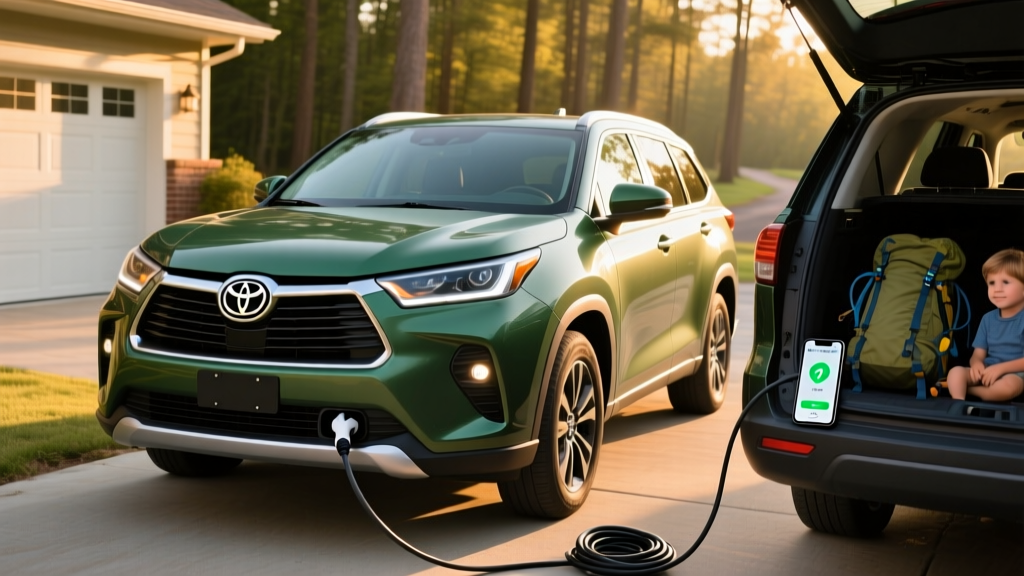
The 2023 Toyota Highlander Hybrid remains one of the most practical three-row family haulers on the market, pairing a 2.5-liter four-cylinder engine with Toyota's proven hybrid synergy drive to deliver an EPA-estimated 35 MPG combined — a figure that's remarkable for a 4,600-pound SUV with seating for up to seven. Unlike a plug-in hybrid (PHEV), this is a conventional hybrid (HEV): it never needs to be plugged in, regenerates energy through braking, and seamlessly switches between electric and gasoline power. For families who want minivan-like efficiency without the minivan stigma — and who aren't ready to commit to a full battery-electric vehicle — the 2023 Highlander Hybrid occupies a compelling sweet spot.
Now that we're well into the 2026 model year, the 2023 Highlander Hybrid is widely available on the used market, typically priced between $35,000 and $48,000 depending on trim and mileage. Toyota's hybrid system has accumulated billions of real-world miles across its lineup, and the fourth-generation Highlander Hybrid benefits from that institutional knowledge. Let's break down the numbers that matter.
EPA Fuel Economy vs. Real-World MPG
The 2023 Highlander Hybrid comes exclusively with all-wheel drive (AWD) — Toyota dropped the front-wheel-drive hybrid option for this generation. Here's how the EPA rates it across all trims (LE through Platinum):
| Driving Cycle | EPA Estimate |
|---|---|
| City | 35 MPG |
| Highway | 35 MPG |
| Combined | 35 MPG |
Source: fueleconomy.gov
Powertrain Specs: How the Hybrid System Works
| Specification | Value |
|---|---|
| Engine | 2.5L inline-4 (Dynamic Force) |
| Engine Output | 186 hp / 186 lb-ft torque |
| Front Electric Motor | 134 hp / 199 lb-ft |
| Rear Electric Motor (AWD) | 54 hp / 89 lb-ft |
| Net System Horsepower | 243 hp |
| Transmission | eCVT (planetary gearset) |
| Hybrid Battery | 1.6 kWh nickel-metal hydride (NiMH) |
| Drivetrain | Electronic AWD (eAWD) |
| 0–60 MPH | ~7.7 seconds |
| Towing Capacity | 3,500 lbs |
The Highlander Hybrid uses Toyota's fourth-generation hybrid system. A key detail: the 1.6 kWh battery pack is small by PHEV or EV standards — it's not designed to drive the vehicle on electricity alone for meaningful distances. Instead, it serves as a buffer, capturing regenerative braking energy and deploying it in short bursts to assist the gasoline engine during acceleration and to enable brief electric-only operation at very low speeds (parking lots, creeping in traffic).
The eAWD system is worth noting: there is no mechanical driveshaft connecting the front and rear axles. The rear electric motor engages independently when the system detects slip or during hard acceleration, providing traction without the weight and friction losses of a traditional AWD system.
HEV vs. PHEV vs. EV: Which Three-Row SUV Fits Your Life?
The 2023 Highlander Hybrid is a conventional HEV — it cannot be plugged in and has no meaningful electric-only range. If you're cross-shopping three-row electrified SUVs, here's how the categories compare:
| Factor | HEV (Highlander Hybrid) | PHEV (e.g., Kia Sorento PHEV) | BEV (e.g., Kia EV9) |
|---|---|---|---|
| Plug-in Required? | No | Optional (benefits from plugging in) | Yes — mandatory |
| Electric-Only Range | ~1 mile at low speed | 30–32 miles | 230–300+ miles |
| Combined Efficiency | 35 MPG | 79 MPGe (electric) / 34 MPG (gas) | 85–89 MPGe |
| Home Charging Needed? | No | Recommended (120V or 240V) | Yes (240V Level 2 strongly recommended) |
| Federal Tax Credit (§30D) | Not eligible | Up to $7,500 (if eligible) | Up to $7,500 (if eligible) |
| Base Price Range (new MSRP, 2023) | $40,220–$50,075 | $50,090–$58,090 | $54,900–$73,900 |
| Best For | No home charging access; long road trips; simplicity | Short daily commute + road trip flexibility | Home charging available; mostly local/suburban driving |
- Choose the Highlander Hybrid (HEV) if: You lack reliable home or workplace charging, regularly drive 400+ miles without stopping, want the lowest purchase price, or prefer zero behavior change from your current gas car.
- Choose a PHEV if: Your daily commute is under 30 miles round-trip, you have a standard 120V outlet at minimum, and you want to eliminate gas use on weekdays while keeping road-trip flexibility.
- Choose a full EV if: You can install a Level 2 home charger, your daily driving is under 250 miles, and you want the lowest per-mile fuel cost and minimal maintenance.
Pricing, Trims, and Tax Credit Eligibility
When new, the 2023 Highlander Hybrid was offered in five trims. Here were the original MSRP figures (including destination charge):
| Trim | MSRP (New) |
|---|---|
| LE | $40,220 |
| XLE | $43,270 |
| XSE | $45,070 |
| Limited | $48,070 |
| Platinum | $50,075 |
Source: Toyota Motor Sales, U.S.A.
Federal Tax Credit Status
The 2023 Highlander Hybrid does not qualify for the federal §30D Clean Vehicle Credit. Under current IRS rules, only plug-in electric vehicles (PHEVs and BEVs) with a battery capacity of at least 7 kWh are eligible. The Highlander Hybrid's 1.6 kWh NiMH pack falls far short of this threshold. This is a common misconception — conventional hybrids have not qualified for the federal EV tax credit since the original Toyota Prius credit phased out over a decade ago.
However, if you're purchasing a used 2023 Highlander Hybrid from a dealer in 2026, you also will not qualify for the used clean vehicle credit (§25E), as that credit similarly requires a plug-in vehicle. Some states and utilities offer their own incentives for hybrid purchases — check your state's energy office or local utility for current programs, as these vary significantly by jurisdiction.
Battery Warranty, Reliability, and Replacement Costs
Toyota's hybrid battery reliability record is among the strongest in the industry. The company has produced over 25 million hybrid vehicles globally since 1997, and catastrophic hybrid battery failure within the warranty period is rare. The NiMH chemistry used in the Highlander Hybrid is less energy-dense than the lithium-ion packs in EVs, but it's extremely durable and tolerant of the shallow charge-discharge cycles that hybrid operation demands.
Out-of-Warranty Replacement Cost
If the hybrid battery fails after the 10-year/150,000-mile warranty expires, replacement costs typically range from $3,000 to $5,000 for a new OEM battery pack installed at a Toyota dealer. Refurbished or reconditioned packs are available from third-party shops for approximately $1,500–$2,500. Individual battery modules can sometimes be replaced for $500–$1,000 if only a few cells have degraded. Given that the Highlander Hybrid's battery is small (1.6 kWh) compared to a full EV pack (60–100+ kWh), replacement costs are proportionally modest.
Long-Term Reliability Indicators
The 2023 Highlander Hybrid carries strong reliability ratings. Consumer Reports has historically given the Highlander Hybrid above-average predicted reliability scores, and the A25A-FXS 2.5-liter engine is one of Toyota's most thoroughly validated powerplants. The eCVT transmission — which is actually a planetary gearset with no belts, clutches, or traditional gears — has proven extremely durable, with few reported failures across Toyota's hybrid fleet.
Ownership Costs: 5-Year Projection
| Cost Category | Highlander Hybrid AWD | Highlander Gas AWD (2.4L Turbo) |
|---|---|---|
| Fuel (15k mi/yr @ $3.40/gal) | $7,286 | $10,714 |
| Maintenance (est.) | $2,800 | $3,200 |
| Insurance (avg.) | $8,400 | $8,100 |
| Depreciation (est. 5-yr) | $18,500 | $19,200 |
| Total (excl. purchase price) | $36,986 | $41,214 |
The hybrid saves approximately $4,200 over five years in operating costs, partially offsetting its higher purchase price. The gas-only 2023 Highlander AWD with the 2.4-liter turbocharged engine is rated at 24 MPG combined, making the hybrid's 35 MPG a 46% improvement in fuel economy. Note: insurance costs for the hybrid are marginally higher due to the specialized hybrid components, though the difference is typically $50–$75/year.
Pros and Cons
Pros
- 35 MPG combined is exceptional for a three-row AWD SUV
- No plug-in required — zero behavior change from a gas car
- 10-year/150,000-mile hybrid battery warranty
- Strong resale value and Toyota reliability reputation
- eAWD provides confident traction without fuel-economy penalty
- 3,500-lb towing capacity adequate for light trailers
Cons
- No federal tax credit eligibility (HEV, not PHEV)
- Four-cylinder engine sounds strained under hard acceleration
- Third-row space is tight for adults on longer trips
- Cargo space behind third row (16.1 cu ft) is modest for the class
- No meaningful electric-only driving capability
- Infotainment system on lower trims uses an 8-inch screen (small by 2023 standards)
Frequently Asked Questions
How many MPG does the 2023 Highlander Hybrid actually get?
The EPA rates it at 35 MPG city, 35 MPG highway, and 35 MPG combined. In real-world driving, city commuters often see 37–39 MPG thanks to frequent regenerative braking, while sustained highway driving at 75+ MPH typically yields 30–33 MPG. Cold weather reduces efficiency by 5–10%.
Does the 2023 Highlander Hybrid need to be plugged in?
No. This is a conventional hybrid (HEV), not a plug-in hybrid (PHEV). The small 1.6 kWh battery recharges entirely through regenerative braking and the gasoline engine. There is no plug, no charging port, and no electric-only range to speak of.
Can I get a plug-in hybrid version of the Highlander?
Toyota does not offer a Highlander PHEV (called the Highlander Prime in concept, but never produced for the US market). If you want a Toyota PHEV with three rows, the closest option is the Toyota Grand Highlander Hybrid (conventional HEV only as of 2024–2026) or stepping to a different brand such as the Kia Sorento PHEV or Mazda CX-90 PHEV.
Is the hybrid battery reliable, and what does replacement cost?
Toyota's NiMH hybrid batteries have an outstanding track record spanning 25+ years. The battery is covered for 10 years / 150,000 miles. Out-of-warranty replacement runs $3,000–$5,000 for a new OEM pack, or $1,500–$2,500 for a refurbished unit. Most hybrid batteries last well beyond the warranty period.
Does the 2023 Highlander Hybrid qualify for any tax credit?
It does not qualify for the federal §30D Clean Vehicle Credit, which requires a plug-in vehicle with at least 7 kWh of battery capacity. Some state or utility programs may offer hybrid incentives — check your local jurisdiction. The IRS outlines current credit eligibility rules at irs.gov.
How does the Highlander Hybrid compare to a full EV three-row SUV?
A BEV like the Kia EV9 (230–300 miles of range, $54,900+) offers lower per-mile fuel costs, near-silent operation, and eligibility for the $7,500 federal tax credit (subject to income, MSRP, and battery-sourcing requirements). However, it requires home charging infrastructure, has higher upfront cost, and demands route planning on road trips exceeding its range. The Highlander Hybrid is the pragmatic choice for buyers who need maximum flexibility with zero charging logistics.
Is the 2023 Highlander Hybrid a good used buy in 2026?
Yes — it's one of the strongest used hybrid values in the three-row segment. A well-maintained 2023 model with 30,000–50,000 miles should still have significant hybrid battery warranty coverage remaining (up to 10 years / 150,000 miles from original sale date). Prioritize a pre-purchase inspection that includes a hybrid battery health check via Toyota's diagnostic system.