Quick Verdict: A Three-Row Hybrid That Actually Delivers
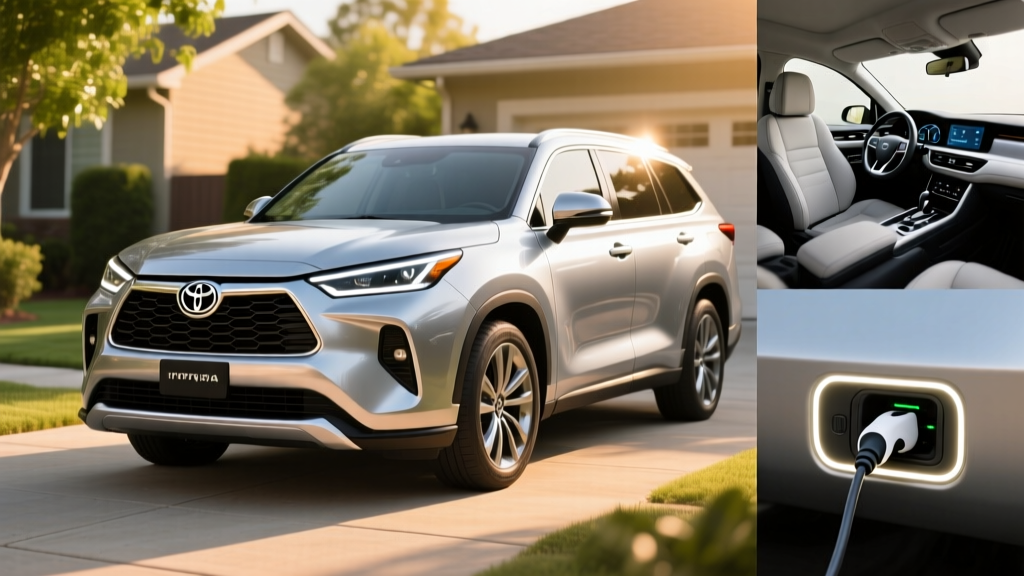
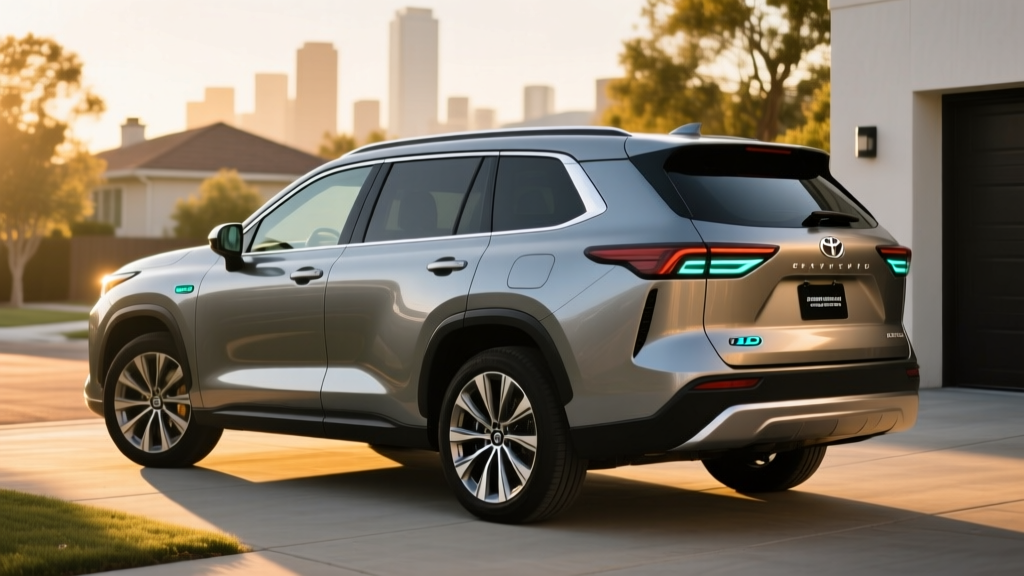
Toyota's 2023 Grand Highlander Hybrid targets families who need three usable rows of seating and cargo space but refuse to accept the fuel bills that come with a 4,700-pound SUV. With an EPA-estimated 36 MPG combined on the standard Hybrid MAX and Hybrid powertrains, it threads the needle between full-size utility and mid-size efficiency. But the real story lies in how Toyota's fourth-generation hybrid system performs under real-world loads — highway cruising, cold mornings, and fully loaded cargo runs — and whether the HEV architecture makes more sense than a PHEV or full EV for your household.
This review covers the conventional hybrid (HEV) version. Toyota does not offer the Grand Highlander as a plug-in hybrid (PHEV), so there is no electric-only driving mode, no plug, and no home charging requirement. If you need EV-only commuting capability, you'll want to look at the RAV4 Prime or the upcoming three-row PHEV alternatives from competitors.
HEV vs PHEV: Where the Grand Highlander Fits
Conventional Hybrid (HEV) — This is the Grand Highlander Hybrid. It uses a gasoline engine paired with electric motors and a small battery (roughly 1.6 kWh usable) that recharges exclusively through regenerative braking and engine power. You never plug it in. The system seamlessly switches between electric and gas power to optimize efficiency.
Plug-In Hybrid (PHEV) — Not available on the Grand Highlander. PHEVs like the Toyota RAV4 Prime carry a larger battery (typically 14–18 kWh) that can be charged from a wall outlet, delivering 25–42 miles of pure electric driving before the gas engine engages. They qualify for partial or full federal tax credits under §30D when new, depending on battery sourcing and income caps.
Full EV (BEV) — Different category entirely. Vehicles like the Kia EV9 offer three rows and zero tailpipe emissions but require home or reliable public charging infrastructure and carry higher upfront costs ($54,900+). Range in cold weather drops 20–30%.
The Grand Highlander Hybrid is strictly an HEV. That means no range anxiety, no charging logistics, no plug — just fill up at any gas station and let the hybrid system do the efficiency work. For families without access to Level 2 home charging, this is often the most practical electrified option.
Fuel Economy: EPA Ratings vs Real-World MPG
| Powertrain | EPA City | EPA Highway | EPA Combined | Real-World Expectation |
|---|---|---|---|---|
| Hybrid (2.5L 4-cyl + motors, FWD) | 37 MPG | 34 MPG | 36 MPG | 33–37 MPG (city-biased driving favors HEV) |
| Hybrid (2.5L 4-cyl + motors, AWD) | 35 MPG | 34 MPG | 35 MPG | 32–35 MPG |
| Hybrid MAX (2.4L turbo + motors, AWD) | 27 MPG | 28 MPG | 27 MPG | 25–28 MPG |
The standard hybrid powertrain pairs a 2.5-liter four-cylinder engine with two front-mounted electric motors (three on AWD trims) for a combined system output of 245 horsepower. This is the efficiency star of the lineup. According to fueleconomy.gov, the FWD hybrid achieves 37 city / 34 highway / 36 combined MPG — remarkable for a vehicle with 97.5 cubic feet of maximum cargo volume.
The Hybrid MAX variant trades efficiency for performance. Its turbocharged 2.4-liter engine and more powerful electric motors produce a combined 362 horsepower and 400 lb-ft of torque, cutting the 0–60 mph time to roughly 6.3 seconds (versus approximately 8.0 seconds for the standard hybrid). The cost at the pump is meaningful: 27 MPG combined versus 36. Over 15,000 miles annually, that's roughly 125 extra gallons per year, or about $400–$500 at current fuel prices.
Real-world MPG note: Conventional hybrids typically exceed their EPA city ratings in stop-and-go traffic because regenerative braking recovers energy that a gas car wastes as heat. On highway-only trips at 75+ mph, expect fuel economy to dip slightly below the EPA highway number. Cold weather (below 30°F) reduces efficiency by roughly 5–10% as the engine runs more frequently to provide cabin heat. In mixed suburban driving, many owners report matching or slightly exceeding the EPA combined figure.
Powertrain and Performance Specs
| Specification | Hybrid (2.5L) | Hybrid MAX (2.4T) |
|---|---|---|
| Engine | 2.5L inline-4 naturally aspirated | 2.4L inline-4 turbocharged |
| Combined System Horsepower | 245 HP | 362 HP |
| Combined Torque | ~186 lb-ft (engine) + motor torque | 400 lb-ft |
| Transmission | eCVT (planetary gearset) | 6-speed automatic |
| Drivetrain | FWD or AWD (electronic rear motor) | AWD standard (Full-Time AWD) |
| 0–60 mph (est.) | ~8.0 seconds | ~6.3 seconds |
| Towing Capacity | 3,500 lbs | 5,000 lbs |
| Hybrid Battery (approx.) | ~1.6 kWh (NiMH or Li-ion, sealed) | ~1.6 kWh (Li-ion, sealed) |
| Plug-In Capable? | No — self-charging HEV | No — self-charging HEV |
The standard hybrid uses Toyota's proven eCVT — not a belt-driven CVT like you'd find in a Subaru, but a planetary gearset that blends engine and motor power without shift shock. It's the same architecture that has powered millions of Prius, Camry Hybrid, and Highlander Hybrid vehicles over two decades. The Hybrid MAX swaps the eCVT for a traditional 6-speed automatic to handle the turbo engine's torque curve and deliver a more conventional driving feel.
For towing, the Hybrid MAX's 5,000-pound capacity is the clear winner if you're pulling a small boat or camping trailer. The standard hybrid's 3,500-pound limit handles a light utility trailer but not much more.
Pricing, Trims, and Tax Credit Eligibility
The 2023 Grand Highlander Hybrid launched with MSRPs ranging from approximately $46,000 (XLE FWD) to over $60,000 (Platinum Hybrid MAX AWD with options). Key trim pricing at launch:
- XLE Hybrid FWD: ~$46,020
- XLE Hybrid AWD: ~$47,420
- Limited Hybrid AWD: ~$51,640
- Platinum Hybrid MAX AWD: ~$58,125
Federal tax credit (§30D) status: The Grand Highlander Hybrid does not qualify for the federal plug-in vehicle tax credit. The §30D credit applies exclusively to plug-in electric vehicles (BEVs and PHEVs) with a minimum battery capacity of 7 kWh and compliant battery sourcing. Because the Grand Highlander Hybrid is a conventional HEV with no plug and a battery far below the 7 kWh threshold, it is ineligible. The same applies to all conventional hybrids regardless of manufacturer.
Hybrid Battery Warranty: Toyota covers the Grand Highlander Hybrid's battery pack for 10 years or 150,000 miles (whichever comes first) under its Hybrid System Warranty. This is an upgrade from the older 8-year/100,000-mile standard that Toyota extended for 2020+ model year hybrids. If the battery fails within this window, replacement is covered at no cost.
State incentives: Some states offer rebates for conventional hybrids, though most incentive programs have shifted toward PHEVs and BEVs. Check your state's energy or environmental agency for current programs — these vary significantly by jurisdiction and change frequently.
Reliability, Battery Lifespan, and Replacement Costs
Toyota's hybrid system is one of the most proven electrified powertrains on the road. The Highlander Hybrid has been in production since 2006, and the fourth-generation system in the Grand Highlander shares architecture with the current Sienna Hybrid and RAV4 Hybrid — vehicles with strong long-term reliability records. Toyota's hybrid batteries are designed to last the life of the vehicle under normal use.
Battery degradation reality: Unlike full EVs where battery capacity loss directly reduces range, a conventional hybrid's small battery (roughly 1.6 kWh) operates in a narrow state-of-charge window — typically between 40% and 80%. This shallow cycling dramatically reduces wear. Real-world data from millions of Toyota hybrids shows that most battery packs retain functional capacity well past 150,000 miles.
Replacement cost if out of warranty: A new OEM hybrid battery pack for a Toyota midsize hybrid typically costs between $2,500 and $4,500 including labor at a dealership. Independent hybrid specialists often offer refurbished packs for $1,500–$2,500. Given the 10-year/150,000-mile warranty, most original owners will never face this expense.
The hybrid system's other components — the electric motors, power control unit (inverter), and eCVT — are also covered under the same hybrid system warranty. The eCVT in particular has no belts, clutches, or friction materials to wear, making it one of the most durable transmission designs in the industry.
Who Should Choose the Grand Highlander Hybrid?
Choose the Grand Highlander Hybrid if:
- You need three rows but want to keep fuel costs below $2,000/year (at 15,000 miles and $3.50/gallon with the standard hybrid)
- You lack access to Level 2 home charging or reliable public charging infrastructure
- You want electrified efficiency with zero behavior change — no plugging in, no route planning around chargers
- You plan to keep the vehicle 8+ years and value Toyota's hybrid reliability track record
- You tow occasionally (3,500 lbs standard hybrid; 5,000 lbs Hybrid MAX)
Consider a PHEV or full EV instead if:
- You have Level 2 home charging and a short commute — a PHEV like the Chrysler Pacifica Hybrid (32 miles EV-only) or a BEV like the Kia EV9 eliminates most daily fuel use
- You want federal tax credit eligibility (up to $7,500 for qualifying PHEVs/BEVs under §30D — check current IRS rules for income caps, MSRP limits, and battery sourcing requirements)
- You prioritize zero tailpipe emissions for daily driving
- You drive fewer than 40 miles daily and can charge nightly — a PHEV may use zero gasoline on most days
Pros
- 36 MPG combined (FWD) in a 3-row SUV — best-in-class efficiency
- No plug-in required; zero infrastructure dependency
- 10-year/150,000-mile hybrid battery warranty
- Proven Toyota hybrid reliability with decades of field data
- Hybrid MAX offers 362 HP and 5,000-lb towing for performance-oriented buyers
- Generous cargo volume (97.5 cu ft max) with usable third row
Cons
- No PHEV option — cannot drive on electric only
- No federal tax credit eligibility (HEV exclusion)
- Hybrid MAX drops to 27 MPG combined — a steep efficiency penalty
- Starting price above $46,000 — higher than non-hybrid three-row competitors
- 245 HP on the standard hybrid feels adequate, not quick, for a 4,700-lb vehicle
Frequently Asked Questions
How many MPG does the 2023 Grand Highlander Hybrid get?
The standard 2.5L hybrid achieves an EPA-estimated 37 city / 34 highway / 36 combined MPG in FWD form, and 35 combined with AWD. The performance-oriented Hybrid MAX is rated at 27 MPG combined. Real-world fuel economy often matches or slightly exceeds EPA city ratings in stop-and-go driving thanks to regenerative braking.
Can the Grand Highlander Hybrid drive on electric power only?
Only at very low speeds for short distances (typically under 1 mile at parking-lot speeds). This is a conventional hybrid (HEV), not a plug-in hybrid. The system uses electric motors to assist the gas engine and capture braking energy, but it does not offer a meaningful electric-only driving mode. If EV-only commuting is a priority, look at PHEV alternatives.
Does the Grand Highlander Hybrid qualify for any tax credit?
No. The federal §30D clean vehicle tax credit applies only to plug-in electric vehicles (BEVs and PHEVs) meeting battery capacity, sourcing, MSRP, and buyer income requirements. As a conventional hybrid with no plug and a battery well below the 7 kWh minimum, the Grand Highlander Hybrid is ineligible. Some states may offer separate hybrid incentives — check your local programs.
How long will the hybrid battery last, and what does replacement cost?
Toyota's hybrid battery is warranted for 10 years or 150,000 miles. The battery operates in a shallow charge cycle (roughly 40–80% state of charge), which minimizes degradation. Most Toyota hybrid batteries last well beyond the warranty period based on historical data from the Prius, Camry Hybrid, and Highlander Hybrid fleets. If replacement is needed out of warranty, expect $2,500–$4,500 at a dealer or $1,500–$2,500 from an independent hybrid specialist.
Is the Grand Highlander Hybrid more reliable than a gas-only version?
Toyota's hybrid system eliminates several components that fail on conventional powertrains: there is no traditional starter motor, no alternator, and the eCVT has no wear-prone belts or clutches. The regenerative braking system also reduces wear on the friction brakes. Combined with Toyota's long-standing hybrid expertise, the hybrid variant is generally considered at least as reliable as the gas-only model, with lower maintenance costs over time.
Hybrid vs PHEV vs EV — which three-row SUV is right for me?
If you have home Level 2 charging and a commute under 35 miles, a PHEV or BEV eliminates most or all daily fuel consumption and may qualify for up to $7,500 in federal tax credits. If you lack reliable charging access, frequently take long road trips, or simply want zero behavior change, the Grand Highlander Hybrid's 36 MPG combined with no plug-in requirement is the most practical electrified three-row option available. Full EVs like the Kia EV9 offer the lowest operating costs but require charging infrastructure planning and carry higher purchase prices.