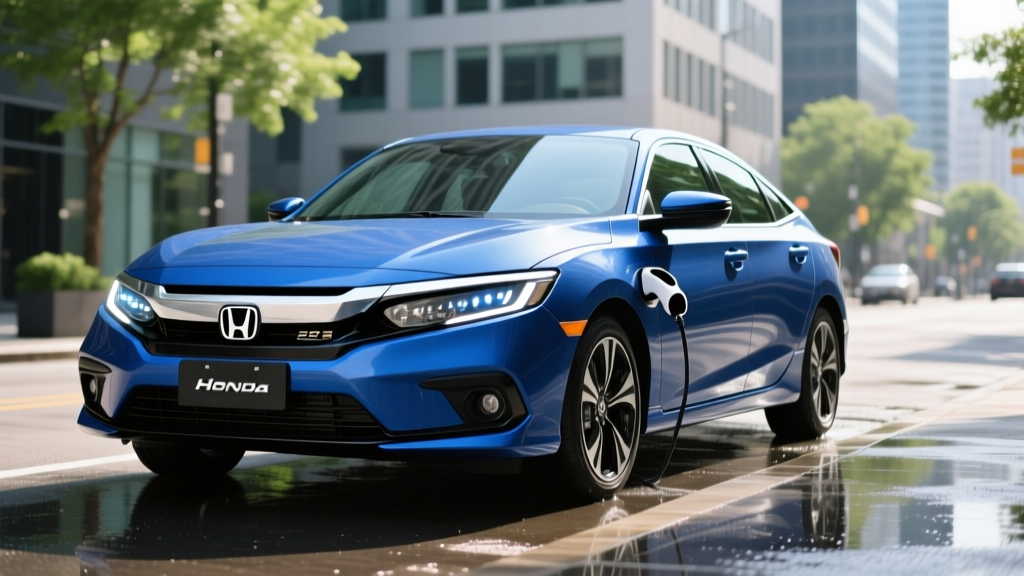
The Honda Civic has been a compact-car staple for decades, but the 2023 Civic Hybrid (officially badged as the Civic e:HEV in some markets and simply the Civic Hybrid in the U.S.) marked a return of Honda's two-motor hybrid system to the Civic lineup after a hiatus. Now that we're in 2026 and used examples are flooding the market, buyers are asking: does the 2023 Civic Hybrid still hold up as one of the most efficient compact sedans you can buy?
Short answer: yes. With an EPA-rated 49 MPG combined, a refined two-motor hybrid powertrain, and Honda's reputation for long-term reliability, the 2023 Civic Hybrid remains a compelling choice for drivers who want maximum fuel economy without plugging in. But it's not a plug-in hybrid (PHEV), and it doesn't qualify for federal EV tax credits. Let's break down exactly what you're getting.
HEV vs PHEV: Where the 2023 Civic Hybrid Fits
Before diving into specs, it's critical to understand what this car is — and what it isn't. The 2023 Civic Hybrid is a conventional hybrid electric vehicle (HEV). It does not have a plug, cannot be charged from an external source, and offers no electric-only driving range beyond very low-speed, short-distance creeping.
Conventional Hybrid (HEV) vs Plug-in Hybrid (PHEV)
| Feature | HEV (2023 Civic Hybrid) | PHEV (e.g., Toyota Prius Prime) |
|---|---|---|
| Plug-in charging | No — charges via regenerative braking and engine | Yes — Level 1/Level 2 AC charging |
| Electric-only range | N/A (motor assists engine; brief EV mode at low speed) | 25–44 miles (model dependent) |
| Battery size | ~1.0 kWh (small, self-charging) | 8.8–13.6 kWh (larger, plug-in) |
| Federal tax credit (§30D) | Not eligible | Up to $7,500 (if eligible) |
| Best for | No home charging access; want simplicity | Home charging available; short commutes |
If you have access to home or workplace Level 2 charging and a commute under 40 miles, a PHEV like the Prius Prime or the Civic's platform-mate (Honda hasn't offered a Civic PHEV in the U.S.) could save more fuel. But if you live in an apartment, park on the street, or simply don't want to think about plugging in, the 2023 Civic Hybrid's self-charging system is the right call.
Fuel Economy: EPA Ratings and Real-World MPG
The headline number is what draws most buyers to this car. Here's the official EPA breakdown for the 2023 Honda Civic Hybrid Sport Touring sedan, sourced from fueleconomy.gov:
| Driving Cycle | EPA MPG |
|---|---|
| City | 50 MPG |
| Highway | 47 MPG |
| Combined | 49 MPG |
Real-World MPG: What Owners Actually See
Hybrids often exceed their EPA city ratings because regenerative braking recaptures more energy in stop-and-go traffic. Based on aggregated owner data from Fuelly and real-world testing by automotive outlets, the 2023 Civic Hybrid typically delivers:
- City/suburban driving: 48–54 MPG (frequently exceeds the 50 MPG EPA city figure)
- Highway cruising (70–75 mph): 42–46 MPG (slightly below the EPA highway rating, as with most hybrids)
- Cold weather (below 35°F): Expect a 5–10% drop due to reduced battery efficiency and increased engine runtime for cabin heat
- Combined real-world average: 46–50 MPG for most drivers
The Civic Hybrid's two-motor system is particularly effective in urban environments. Unlike Toyota's planetary-gear Hybrid Synergy Drive, Honda's system can run the electric motor as the sole drive force at moderate speeds, with the gasoline engine acting primarily as a generator. This results in a more EV-like feel around town.
Powertrain and Performance Specs
The 2023 Civic Hybrid uses Honda's fourth-generation two-motor hybrid system paired with a 2.0-liter Atkinson-cycle four-cylinder engine. Here are the key figures:
| Specification | Value |
|---|---|
| Engine | 2.0L Atkinson-cycle 4-cylinder |
| Engine output | 143 hp / 134 lb-ft torque |
| Drive motor output | 184 hp / 232 lb-ft torque |
| Combined system output | 200 hp / 232 lb-ft torque |
| Transmission | e-CVT (single-speed direct drive with lock-up clutch) |
| 0–60 mph | ~7.2 seconds |
| Drivetrain | Front-wheel drive |
| Hybrid battery | Lithium-ion, ~1.0 kWh (nominal) |
| Curb weight | ~3,145 lbs |
With 200 combined horsepower, the Civic Hybrid is notably quicker than the non-hybrid 2.0L Civic (158 hp) and competitive with the 1.5T turbo model (180 hp). The 232 lb-ft of electric torque is available from near-zero RPM, giving it strong off-the-line acceleration that makes merging and passing effortless. Honda's e-CVT avoids the rubber-band feel of older CVTs thanks to a lock-up clutch that creates a direct mechanical connection at highway speeds.
Trims, Pricing, and Tax Credit Eligibility
The 2023 Civic Hybrid was offered exclusively in the Sport Touring trim in the U.S., positioning it as the top-of-the-line Civic sedan.
| Item | Amount |
|---|---|
| Original MSRP (2023 Civic Hybrid Sport Touring) | $30,295 (including destination) |
| Current used market (2026, ~30k miles) | $22,000–$26,500 |
| Federal §30D new EV tax credit | Not eligible (HEV, not PHEV/BEV) |
| Federal used clean vehicle credit (§25E) | Not eligible (HEVs excluded) |
| State/local incentives | Varies — some states offer rebates for any electrified vehicle; check your state's energy office |
Because the Civic Hybrid is a conventional HEV, it does not qualify for the IRS §30D Clean Vehicle Credit or the §25E used-vehicle credit. These incentives are reserved for plug-in vehicles (BEVs and PHEVs). The higher MSRP of the Sport Touring trim means you're paying for a fully loaded Civic — leather-trimmed seats, Bose 12-speaker audio, wireless Apple CarPlay/Android Auto, Honda Sensing suite, and a 9-inch touchscreen — but the fuel savings offset the premium over a gas Civic LX over time.
Battery Warranty, Reliability, and Replacement Costs
Honda Hybrid Battery Warranty
Hybrid battery: 8 years / 100,000 miles (10 years / 150,000 miles in CARB states including CA, CT, ME, MA, NJ, NY, OR, VT, WA, and others adopting California emissions standards)
Hybrid system components: 8 years / 100,000 miles
Limited powertrain warranty: 5 years / 60,000 miles
Honda's hybrid battery warranty is competitive with Toyota's (which offers 10 years/150,000 miles nationwide on newer models). For a 2023 model, the hybrid battery warranty remains active through at least 2031 or 100,000 miles — and longer in CARB states.
Long-Term Reliability Outlook
Honda's two-motor hybrid system has been in production since the 2014 Accord Hybrid, giving it a decade of real-world refinement. The lithium-ion hybrid battery is small (~1.0 kWh) and operates within a narrow state-of-charge window, which minimizes degradation stress. Based on data from earlier-generation Honda hybrids:
- Hybrid battery failures before 150,000 miles are uncommon
- Out-of-warranty replacement cost (if needed): $2,000–$4,000 for the battery pack, plus labor
- Third-party refurbished batteries are becoming available for older Honda hybrids at $1,200–$2,000
The Civic Hybrid earned an IIHS Top Safety Pick rating for the 2023 model year, and the standard Honda Sensing suite (adaptive cruise, lane-keeping, forward collision warning, automatic emergency braking) is comprehensive. There are no widespread reliability complaints specific to the hybrid system on NHTSA's database.
2023 Civic Hybrid vs the Alternatives
How does this car stack up against other efficiency-focused compacts you might be cross-shopping?
| Vehicle | Type | EPA Combined MPG | Combined HP | Original MSRP | Tax Credit |
|---|---|---|---|---|---|
| 2023 Honda Civic Hybrid | HEV | 49 MPG | 200 hp | $30,295 | None |
| 2023 Toyota Prius | HEV | 57 MPG | 196 hp | $28,545 | None |
| 2023 Toyota Prius Prime | PHEV | 52 MPG + 44 mi EV | 220 hp | $33,445 | Up to $7,500 |
| 2023 Hyundai Elantra Hybrid | HEV | 54 MPG | 139 hp | $25,890 | None |
| 2023 Honda Civic 1.5T | Gas | 35 MPG | 180 hp | $25,050 | None |
The Toyota Prius beats the Civic Hybrid on pure MPG (57 vs 49 combined) and starts at a lower price, but it's a liftback with a different form factor and less engaging driving dynamics. The Prius Prime adds plug-in capability with 44 miles of electric range — a significant advantage if you can charge at home — and may qualify for federal tax credits. The Elantra Hybrid is the efficiency-per-dollar leader but feels less premium inside and offers less power.
The Civic Hybrid's advantage is its combination of sportiness, refinement, and efficiency. It drives like a regular Civic — responsive steering, composed ride, a well-insulated cabin — while delivering hybrid fuel economy. If you value driving engagement alongside efficiency, it's the standout in this segment.
Pros
- 49 MPG combined with strong real-world city performance
- 200 hp makes it the quickest Civic short of the Si/Type R
- Premium Sport Touring interior with full feature list
- No plug-in required — works anywhere gas is available
- Proven Honda hybrid reliability with strong warranty
- Excellent IIHS safety ratings
Cons
- Only available in top Sport Touring trim (~$30K new)
- No federal tax credit eligibility
- Highway MPG trails city MPG (common for hybrids)
- No AWD option (unlike Prius AWD-e)
- Small trunk reduction vs gas Civic due to battery placement
- Some road noise on rough pavement
Who Should Buy the 2023 Civic Hybrid?
Decision Framework: Is the 2023 Civic Hybrid Right for You?
Choose the 2023 Civic Hybrid if:
- You don't have access to home or workplace charging (apartment, street parking)
- You want 45+ MPG without changing your fueling habits
- You prioritize driving dynamics and interior quality alongside efficiency
- You're buying used and want a fully loaded Civic under $26,000
- Your commute is mixed city/highway and under 50 miles daily
Consider a PHEV (Prius Prime) instead if:
- You have Level 2 charging at home or work
- Your commute is under 40 miles and you want to drive mostly on electricity
- You want to reduce gasoline consumption to near-zero on weekdays
Consider a full BEV (e.g., Chevy Bolt, Tesla Model 3) instead if:
- You have reliable home charging and want to eliminate gas entirely
- You qualify for the $7,500 federal tax credit (income and sourcing rules apply)
- Your daily driving is under 250 miles and you rarely road-trip beyond charging infrastructure
Stick with a gas Civic if:
- You drive fewer than 8,000 miles per year (fuel savings won't offset the hybrid premium)
- You're on a strict budget and can find a used gas Civic LX for under $18,000
Frequently Asked Questions
How many MPG does the 2023 Civic Hybrid get?
The EPA rates the 2023 Honda Civic Hybrid at 50 MPG city, 47 MPG highway, and 49 MPG combined. In real-world driving, most owners report 46–50 MPG combined, with city driving often exceeding the EPA figure and sustained highway driving coming in slightly below.
Does the 2023 Civic Hybrid need to be plugged in?
No. The 2023 Civic Hybrid is a conventional HEV (hybrid electric vehicle). It charges its small lithium-ion battery through regenerative braking and the gasoline engine. There is no plug, no charging cable, and no electric-only range to manage.
Does the 2023 Civic Hybrid qualify for a federal tax credit?
No. The IRS §30D Clean Vehicle Credit applies only to plug-in electric vehicles (BEVs and PHEVs). Conventional hybrids like the Civic Hybrid are not eligible for the federal credit or the §25E used-vehicle credit. Some state programs may offer small incentives for hybrid purchases — check your state's energy office or IRS.gov for current rules.
How long will the 2023 Civic Hybrid battery last?
Honda covers the hybrid battery for 8 years/100,000 miles (10 years/150,000 miles in CARB states). Based on Honda's track record with earlier Accord and Insight hybrids, the battery typically lasts 150,000–200,000+ miles before significant degradation. If replacement is needed out of warranty, expect $2,000–$4,000 for the battery pack.
Is the 2023 Civic Hybrid faster than the gas Civic?
Yes. With 200 combined horsepower and 232 lb-ft of torque from the electric motor, the Civic Hybrid hits 0–60 mph in approximately 7.2 seconds — quicker than the 2.0L gas Civic (~8.1 seconds) and comparable to the 1.5T turbo model (~7.3 seconds). The electric torque delivery also makes it feel more responsive in everyday driving.
Hybrid vs PHEV vs EV — which is right for me?
A conventional hybrid (HEV) like the Civic Hybrid is best if you can't charge at home and want maximum simplicity. A PHEV (like the Prius Prime) is ideal if you have home charging and a short commute — you'll drive mostly on electricity with a gas backup. A full EV (BEV) makes sense if you have reliable charging, want to eliminate gas costs entirely, and qualify for tax incentives. The right choice depends on your charging access, commute distance, and budget.
The 2023 Honda Civic Hybrid occupies a specific and valuable niche: it's one of the most efficient gasoline-powered cars you can buy, wrapped in a package that's genuinely enjoyable to drive. It won't qualify for tax credits and it won't drive on electricity alone, but for buyers who want set-it-and-forget-it efficiency with no lifestyle changes, it remains a smart pick — on the used market in 2026 and beyond.