Quick Verdict: The 2022 Toyota Sienna Hybrid at a Glance
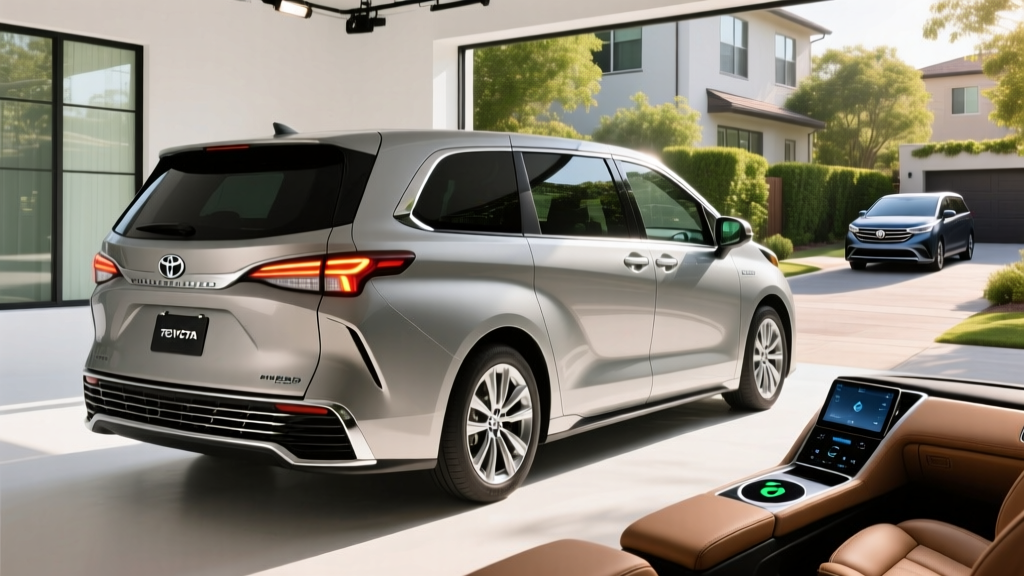
The 2022 Toyota Sienna is exclusively a conventional hybrid (HEV) — there is no plug-in variant and no gas-only version. Toyota made the bold move for the fourth-generation Sienna to ship only with its 2.5-liter four-cylinder hybrid powertrain, and the result is a minivan that delivers an EPA-estimated 36 MPG combined while still offering all-wheel drive, seating for up to eight, and the cargo versatility families demand. For buyers cross-shopping minivans and weighing hybrid vs. full EV, the Sienna occupies a practical middle ground: no plug required, no range anxiety, and fuel costs that undercut every gas-only rival in the segment.
The 2022 Sienna is a conventional hybrid (HEV). It charges its small battery through regenerative braking and the gasoline engine. You never plug it in. A plug-in hybrid (PHEV) like the Toyota RAV4 Prime has a larger battery you charge from a wall outlet for 20–40 miles of electric-only driving before the gas engine takes over. The Sienna does not offer electric-only driving beyond very low-speed, short-distance EV mode crawling. If you want plug-in capability in a Toyota minivan, it doesn't exist — the Sienna is HEV only.
Fuel Economy: EPA Ratings and Real-World MPG
The Sienna's headline number is efficiency. Here's the full EPA breakdown as published on fueleconomy.gov:
| Drivetrain | City MPG | Highway MPG | Combined MPG |
|---|---|---|---|
| FWD (LE, XLE, Limited) | 36 | 36 | 36 |
| AWD (all trims available) | 35 | 36 | 35 |
Real-World MPG vs. EPA Sticker
Toyota's hybrid system excels in stop-and-go city driving, where regenerative braking recaptures energy and the electric motor handles low-speed propulsion. In real-world use, many Sienna owners report 37–40 MPG in mixed suburban driving — slightly exceeding the EPA estimate. Highway-only trips at 75+ mph tend to drop to 30–33 MPG, which is typical for a boxy, 4,600-pound minivan pushing through wind resistance.
Cold weather reduces fuel economy by roughly 5–10% due to cabin heating demands and reduced battery efficiency. Expect 32–34 MPG combined in winter for FWD models. This is still dramatically better than any non-hybrid minivan, which typically averages 22–24 MPG combined in similar conditions.
With a 17.9-gallon fuel tank and 36 MPG combined (FWD), the 2022 Sienna delivers approximately 644 miles of total range per fill-up. In real-world mixed driving, plan for 550–620 miles before needing a gas station. That's two to three fewer fuel stops per year compared to a Chrysler Pacifica gas model rated at 22 MPG combined.
Powertrain Specs: Engine, Motors, and Performance
The 2022 Sienna uses Toyota's fourth-generation hybrid synergy drive system. Here are the hard numbers:
| Specification | Detail |
|---|---|
| Gas Engine | 2.5L inline-4, 189 HP / 176 lb-ft torque |
| Front Electric Motor | 134 HP / 199 lb-ft |
| Rear Electric Motor (AWD only) | 54 HP / 89 lb-ft |
| Combined Net Horsepower | 245 HP (FWD & AWD) |
| Transmission | eCVT (electronically controlled continuously variable) |
| Hybrid Battery | 1.9 kWh nickel-metal hydride (NiMH), sealed |
| 0–60 MPH | ~7.1 seconds (FWD) |
| Towing Capacity | 3,500 lbs (all trims) |
| Curb Weight | 4,585–4,685 lbs |
The 1.9 kWh battery is small by EV standards — it exists to buffer energy between the engine, regenerative braking, and electric motors. You cannot plug in to charge it. The system automatically manages when to use electric-only mode (low-speed creeping, typically under 1 mile at speeds below ~25 mph), when to blend gas and electric, and when to rely primarily on the engine.
Acceleration is adequate for merging and passing, though the Sienna is no performance vehicle. The eCVT delivers smooth, stepless acceleration without the rubber-band feeling of older CVTs. The AWD system uses the independent rear electric motor to send torque to the rear wheels during acceleration and low-traction situations — there is no mechanical driveshaft connecting front and rear axles.
Pricing by Trim and Tax Credit Eligibility
The 2022 Sienna launched with five trims. Here's the original MSRP structure (destination included):
| Trim | FWD MSRP | AWD MSRP |
|---|---|---|
| LE | $35,395 | $36,155 |
| XLE | $40,575 | $41,335 |
| XSE | $42,875 | $43,635 |
| Limited | $47,845 | $48,605 |
| Platinum | $51,375 | $52,135 |
Does the 2022 Sienna Qualify for Federal Tax Credits?
No. The federal §30D clean vehicle credit applies only to plug-in electric vehicles (BEVs and PHEVs) with a minimum battery capacity of 7 kWh and external charging capability. The Sienna's 1.9 kWh NiMH battery does not meet these thresholds. There is no federal tax credit for conventional hybrids under current IRS rules.
Some states and utilities offer rebates or incentives for hybrid purchases, but these vary widely by jurisdiction. Check your state energy office or utility provider for current programs. As a used vehicle (now in 2026), the Sienna also does not qualify for the up-to-$4,000 used clean vehicle credit, which similarly requires plug-in capability.
Hybrid Battery Warranty, Lifespan, and Replacement Cost
- Hybrid Battery: 10 years / 150,000 miles (whichever comes first) — transferable to subsequent owners
- Hybrid System Components: 8 years / 100,000 miles (inverter, converter, control modules)
- Basic New-Vehicle Warranty: 3 years / 36,000 miles
- Powertrain Warranty: 5 years / 60,000 miles
California-emissions states (CA, CT, ME, MA, NJ, NY, OR, RI, VT, WA) may have extended hybrid battery coverage up to 10 years / 150,000 miles under PZEV provisions. Verify your state's specific coverage with Toyota.
How Long Will the Sienna's Hybrid Battery Last?
Toyota's NiMH hybrid batteries have an exceptionally strong longevity record. The Prius, which uses similar chemistry and system architecture, routinely sees original batteries lasting 150,000–200,000+ miles with gradual capacity loss rather than sudden failure. The Sienna's hybrid system is less stressed than a Prius because the vehicle relies more heavily on the gasoline engine for propulsion given its higher weight.
NiMH chemistry degrades more gracefully than early lithium-ion packs. You'll notice a slight fuel-economy decline over time (perhaps 1–2 MPG loss at 100,000+ miles) rather than a catastrophic failure. The battery management system keeps the pack in a narrow state-of-charge window (roughly 40–80%), which significantly extends cycle life.
Hybrid Battery Replacement Cost
If the hybrid battery does fail outside warranty, here's what to expect:
- New OEM Toyota battery: $3,000–$4,000 (parts + labor at a dealership)
- Remanufactured/reconditioned battery: $1,500–$2,500 (aftermarket specialists)
- Individual module replacement: $500–$1,200 (if only a few cells have degraded — requires diagnostic testing)
For context, a conventional minivan transmission replacement often costs $3,500–$5,000. The hybrid system eliminates the traditional transmission entirely — the eCVT has far fewer moving parts and is generally more reliable. Many owners find the hybrid system reduces long-term maintenance costs despite the battery concern.
Reliability and Safety Ratings
Toyota's hybrid powertrain is among the most proven in the automotive industry, with over 20 million hybrid vehicles sold globally since 1997. The fourth-generation Sienna (2021+) shares its TNGA-K platform and hybrid architecture with the RAV4 Hybrid and Camry Hybrid, both of which have strong reliability records tracked by Consumer Reports and J.D. Power.
The 2022 Sienna earned the IIHS Top Safety Pick+ designation — the highest rating from the Insurance Institute for Highway Safety — with Good ratings in all crashworthiness tests. Standard Toyota Safety Sense 2.0 includes:
- Pre-Collision System with Pedestrian Detection
- Full-Speed Range Dynamic Radar Cruise Control
- Lane Departure Alert with Steering Assist
- Lane Tracing Assist
- Automatic High Beams
- Road Sign Assist
Note: Toyota Safety Sense is a Level 2 driver-assistance system under SAE classification. The driver must remain fully engaged, hands on the wheel, eyes on the road at all times. It is not autonomous or self-driving.
Sienna Hybrid vs. Competitors vs. Full EV
| Vehicle | Type | Combined MPG | HP | Starting MSRP |
|---|---|---|---|---|
| Toyota Sienna | HEV | 36 | 245 | $35,395 |
| Chrysler Pacifica Hybrid | PHEV | 30 (gas) / 82 MPGe | 260 | $47,495 |
| Honda Odyssey | Gas V6 | 22 | 280 | $33,040 |
| Kia Carnival | Gas V6 | 22 | 290 | $32,900 |
The Chrysler Pacifica Hybrid is the only PHEV minivan, offering 32 miles of electric-only range from its 16 kWh battery before the gas engine engages. It qualifies for the federal §30D tax credit (up to $7,500, subject to income and sourcing requirements), which narrows the price gap with the Sienna significantly. However, the Pacifica Hybrid sacrifices the Stow 'n Go second-row seating (the battery occupies that space) and has historically had more reliability concerns than Toyota's hybrid system.
Decision Framework: Hybrid vs. PHEV vs. Full EV for Families
Choose the Sienna HEV if:
- You cannot charge at home (apartment, no garage, street parking)
- You regularly drive 400+ miles in a day (road trips, towing)
- You want the lowest-maintenance electrified option with no plug-in routine
- You need maximum cargo/passenger flexibility and AWD availability
Choose a PHEV (like Pacifica Hybrid) if:
- You can install a Level 2 charger at home and most daily driving is under 30 miles
- You want to drive on electricity most weekdays but need gas flexibility for weekends
- You qualify for the federal tax credit and it meaningfully reduces your effective price
Choose a full EV (like the Kia EV9, 270+ mile range) if:
- You have reliable home charging and your daily driving is under 200 miles
- You want zero tailpipe emissions and minimal drivetrain maintenance
- You're willing to plan longer road trips around DC fast-charging stops
- You qualify for the full §30D credit (income, MSRP, and sourcing requirements met)
5-Year Fuel Savings vs. Gas-Only Minivans
Assuming 15,000 miles/year, $3.50/gallon average fuel cost, and EPA combined ratings:
| Vehicle | Combined MPG | Gallons Used | 5-Year Fuel Cost |
|---|---|---|---|
| Toyota Sienna Hybrid | 36 | 2,083 | $7,291 |
| Honda Odyssey | 22 | 3,409 | $11,932 |
| Kia Carnival | 22 | 3,409 | $11,932 |
The Sienna saves approximately $4,600 in fuel costs over five years compared to a gas-only minivan. That nearly closes the price gap with similarly equipped Odyssey and Carnival models, and the savings continue to compound for as long as you own the vehicle.
Pros and Cons
Pros
- Best-in-class fuel economy: 36 MPG combined
- 644-mile total range — fewer fuel stops
- AWD available with independent rear electric motor
- Standard Toyota Safety Sense 2.0 (IIHS TSP+)
- 10-year/150,000-mile hybrid battery warranty
- Smooth, quiet hybrid operation in city driving
- No plug-in required — works with existing habits
- 3,500-lb towing capacity across all trims
Cons
- No electric-only driving beyond low-speed crawling
- 245 HP feels modest when fully loaded at highway speeds
- No federal tax credit eligibility (HEV, not PHEV)
- Second-row seats don't fold into the floor (unlike Pacifica Stow 'n Go)
- Four-cylinder engine can sound buzzy under hard acceleration
- Infotainment system is functional but dated vs. rivals
- AWD adds ~$760 to MSRP and drops MPG by 1
Frequently Asked Questions
How many MPG does the 2022 Toyota Sienna Hybrid get?
The EPA rates the FWD Sienna at 36 city / 36 highway / 36 combined MPG. The AWD version is rated 35/36/35. Real-world results typically match or slightly exceed these figures in mixed suburban driving, with highway-only trips at high speeds dropping to the low 30s.
Can I plug in the Toyota Sienna to charge?
No. The 2022 Sienna is a conventional hybrid (HEV), not a plug-in hybrid (PHEV). The battery charges exclusively through regenerative braking and the gasoline engine. There is no charging port and no electric-only driving range to speak of.
Is the Sienna Hybrid reliable, and what does battery replacement cost?
Toyota's hybrid system is one of the most proven powertrains in production, with millions of units on the road globally. The hybrid battery is covered for 10 years / 150,000 miles. If replacement is needed out of warranty, expect $3,000–$4,000 for a new OEM battery or $1,500–$2,500 for a reconditioned unit. Most batteries last well beyond 150,000 miles.
Does the 2022 Sienna qualify for any tax credit?
No federal tax credit is available. The §30D clean vehicle credit requires plug-in capability and a minimum 7 kWh battery. The Sienna's 1.9 kWh NiMH battery does not qualify. Check your state and utility for any local hybrid incentives, as these vary by jurisdiction.
How does the Sienna compare to the Chrysler Pacifica Hybrid?
The Pacifica Hybrid is a PHEV offering 32 miles of electric-only range and qualifies for the federal tax credit. It's more expensive ($47,495 starting) but the credit can offset the premium. The Sienna offers better fuel economy once the Pacifica's battery is depleted (36 vs. 30 MPG), a stronger reliability track record, and AWD availability — but no electric-only commute capability.
Should I buy a Sienna Hybrid or a full electric SUV like the Kia EV9?
It depends on your charging situation and driving patterns. If you have home charging, drive under 200 miles daily, and want zero tailpipe emissions, a three-row EV like the Kia EV9 (270-mile range, ~$54,900 base) is compelling — especially with the $7,500 federal credit. If you lack charging access, regularly take long road trips, or need the Sienna's minivan-specific features (sliding doors, lower step-in height, 3,500-lb towing), the Sienna hybrid remains the more practical choice with no lifestyle compromises.