Quick Verdict: The Efficiency Bargain That Still Holds Up
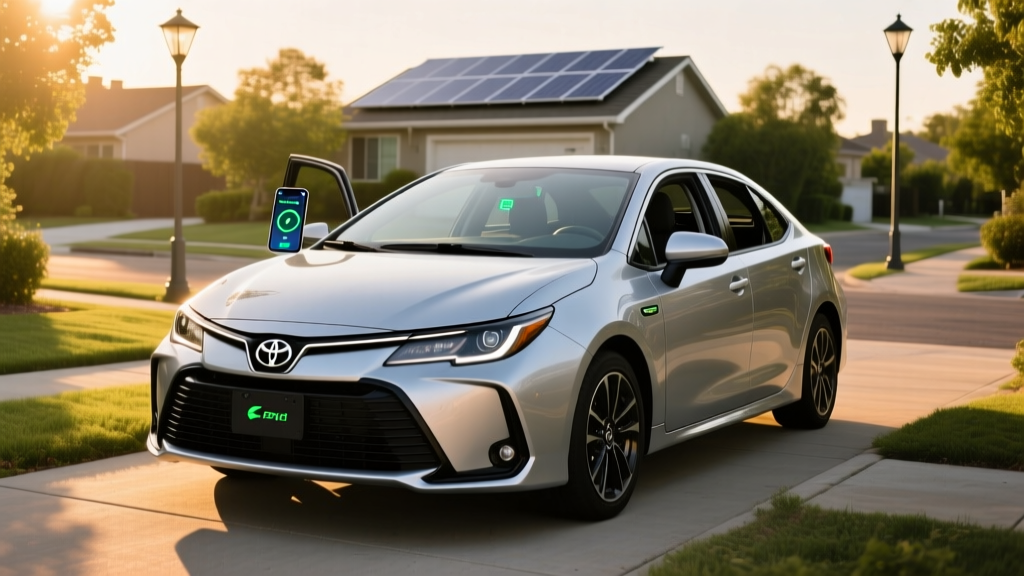
If you've ever looked at a fuel pump and winced, the 2022 Toyota Corolla Hybrid LE exists to make that feeling go away. With an EPA-estimated 53 city / 52 highway / 52 combined MPG, this compact sedan sips fuel at a rate that rivals — and often beats — vehicles costing twice as much. For 2026 buyers shopping the used market, the Corolla Hybrid LE represents one of the lowest total-cost-of-ownership vehicles available, with no plug-in requirements, no range anxiety, and Toyota's proven hybrid reliability backing it up.
But the 2022 model year is also a turning point: it was the last year before Toyota introduced the significantly updated 2023 Corolla Hybrid with a fifth-generation hybrid system and available all-wheel drive. That makes understanding exactly what the 2022 version offers — and where it falls short — essential before you hand over any money.
| Spec | Value |
|---|---|
| Powertrain | 1.8L 4-cyl + electric motor (HEV, no plug) |
| Combined Horsepower | 121 hp (net system) |
| Transmission | Continuously Variable (eCVT) |
| EPA MPG (City / Hwy / Combined) | 53 / 52 / 52 |
| Fuel Tank | 11.4 gallons |
| Total EPA Range | ~593 miles |
| 0–60 mph | ~10.7 seconds |
| Drivetrain | Front-Wheel Drive (FWD only) |
| Hybrid Battery | 0.65 kWh Nickel-Metal Hydride (NiMH) |
| Cargo Volume | 13.1 cu ft (trunk) |
| Original MSRP | $24,050 (LE trim) |
| Hybrid Battery Warranty | 10 years / 150,000 miles |
Understanding What You're Buying: HEV, Not PHEV
A critical distinction before we go further: the 2022 Corolla Hybrid LE is a conventional hybrid electric vehicle (HEV), not a plug-in hybrid (PHEV). You never plug it in. The small 0.65 kWh NiMH battery recharges itself through regenerative braking and the gasoline engine. You fuel it exactly like a regular car — just far less often.
| Feature | HEV (e.g., Corolla Hybrid) | PHEV (e.g., Prius Prime) | BEV (e.g., Tesla Model 3) |
|---|---|---|---|
| Plug in to charge? | No — self-charging | Yes — plug in for electric miles | Yes — plug in exclusively |
| Electric-only range | ~1 mile at low speed | 25–44 miles typical | 250–400+ miles |
| Gasoline engine? | Yes (primary + regen assist) | Yes (backup after EV range) | No |
| Fuel/energy cost per mile | ~$0.07–0.09 | ~$0.03–0.05 (EV mode) | ~$0.03–0.05 |
| Tax credit eligible? | No federal credit | Up to $7,500 (§30D, if new & eligible) | Up to $7,500 (§30D, if new & eligible) |
| Home charger needed? | No | Recommended (Level 2) | Essential (Level 2) |
| Best for | No garage/outlet, high mileage | Short commute + road trips | Home charging access + lower running cost |
If you're comparing the Corolla Hybrid to the Toyota Prius Prime (a PHEV), the Prime offers about 25 miles of electric-only range on the 2022 model and qualifies for a federal tax credit when purchased new. The Corolla Hybrid offers none of that — but it also has a lower purchase price, no charging logistics to manage, and nearly identical combined MPG once the Prime's battery is depleted.
How Many MPG Does the 2022 Corolla Hybrid LE Actually Get?
The EPA rates the 2022 Corolla Hybrid LE at 53 city / 52 highway / 52 combined MPG, according to fueleconomy.gov. That's among the best of any non-plug-in vehicle sold in the United States for that model year.
| Driving Cycle | EPA Rating | Real-World Expectation |
|---|---|---|
| City | 53 MPG | 50–56 MPG (hybrids often beat EPA in stop-and-go) |
| Highway | 52 MPG | 46–50 MPG (sustained 75+ mph reduces regen benefit) |
| Combined | 52 MPG | 48–53 MPG depending on mix |
Real-world context: Toyota's fourth-generation hybrid system is particularly strong in city driving, where frequent braking events recharge the battery and the electric motor handles low-speed acceleration. In mixed suburban driving, owners routinely report 50–55 MPG. On sustained highway trips above 70 mph, expect a slight dip to the mid-to-upper 40s — the gasoline engine does more of the work without regenerative braking assistance.
Cold weather (below 32°F) will reduce fuel economy by roughly 5–10%, as the engine runs more frequently to provide cabin heat and maintain battery temperature. This is normal for all hybrids and is less severe than the 20–30% range loss a full EV experiences in the same conditions.
With the 11.4-gallon fuel tank, the EPA total range sits at approximately 593 miles. Real-world drivers can expect 520–570 miles between fill-ups in typical mixed driving — enough for most people to visit a gas station once every two to three weeks.
Powertrain and Driving Experience
The 2022 Corolla Hybrid LE pairs a 1.8-liter Atkinson-cycle four-cylinder engine with a single front-mounted electric motor, routed through an electronically controlled continuously variable transmission (eCVT). Net system output is 121 horsepower.
That number is modest, and it shows. The 0–60 mph time of roughly 10.7 seconds puts the Corolla Hybrid firmly in "adequate but unhurried" territory. Merging onto fast-moving highways requires planning, and passing at speed demands a firm foot. The eCVT avoids the rubber-band feeling of older Toyota hybrids, but there's no mistaking this for a sporty sedan.
What the powertrain lacks in acceleration, it makes up for in refinement. The transition between electric and gasoline power is nearly imperceptible at low speeds. Regenerative braking feels natural — not grabby — and the car coasts smoothly when you lift off the accelerator. There's no "one-pedal driving" mode as you'd find in a full EV, but the regen is well-calibrated for daily commuting.
One limitation worth flagging: the 2022 Corolla Hybrid LE is front-wheel drive only. Toyota did not offer all-wheel drive on the Corolla Hybrid until the 2023 redesign. If you live in a region with significant snow or ice, this is a meaningful consideration — the 2023+ Corolla Hybrid offers an AWD option with a rear-mounted electric motor.
Battery Longevity, Warranty, and Replacement Cost
The hybrid battery is the single biggest concern for used-hybrid buyers. Here's what you need to know about the 2022 Corolla Hybrid's pack.
Hybrid Battery Warranty
Coverage: 10 years / 150,000 miles (whichever comes first), transferable to subsequent owners.
What it covers: Defects and capacity loss below a defined threshold. Toyota's hybrid battery warranty applies nationwide regardless of state emissions regulations for 2020+ model years.
For a 2022 model in 2026: Approximately 6 years and up to 150,000 miles of factory warranty remain, assuming typical mileage accumulation.
The 2022 Corolla Hybrid uses a 0.65 kWh Nickel-Metal Hydride (NiMH) battery pack. Unlike the larger lithium-ion packs in PHEVs and full EVs, this battery is small, relatively simple, and proven across millions of Toyota hybrids. NiMH chemistry is less energy-dense than lithium-ion but extremely durable under the shallow charge-discharge cycles that Toyota's hybrid management system uses.
Real-world degradation data: Toyota's hybrid system keeps the battery in a narrow state-of-charge window (roughly 40–80%), which dramatically reduces wear. Taxi fleets using Toyota's fourth-generation hybrid system have routinely exceeded 200,000 miles on the original battery pack. Individual failures before 150,000 miles are uncommon.
Replacement cost if out of warranty: A new OEM hybrid battery pack for the Corolla Hybrid typically runs $2,000–$3,500 installed at a dealership. Independent hybrid specialists often offer refurbished packs for $1,200–$2,000. Given the battery's small size and the car's efficient management system, full replacement is rare within the vehicle's typical 15-year lifespan.
Pricing, Value, and Tax Credit Reality for 2026 Buyers
The 2022 Toyota Corolla Hybrid LE carried an original MSRP of $24,050 (including destination charge). In the 2026 used-car market, expect to pay roughly $17,000–$21,000 depending on mileage, condition, and region, based on current market listings.
Federal tax credit: As a conventional hybrid (HEV), the Corolla Hybrid LE does not qualify for the IRS §30D Clean Vehicle Credit. That credit applies only to plug-in vehicles (PHEVs and BEVs) that meet battery sourcing, MSRP, and buyer income requirements. There is no federal tax credit for conventional hybrids.
Used EV credit (§25E): The used clean vehicle credit of up to $4,000 also applies only to plug-in vehicles. The Corolla Hybrid is not eligible.
State incentives: A handful of states offer rebates or HOV lane access for hybrids, but these are increasingly targeted at PHEVs and BEVs. Check your state's energy office or AFDC state incentive database for current programs.
What the Corolla Hybrid lacks in tax incentives, it makes up for in running costs. At $3.25/gallon and 52 MPG combined, you're spending roughly $0.063 per mile on fuel. A comparable gas-only compact at 33 MPG combined costs about $0.098 per mile. Over 15,000 miles per year, that's a fuel savings of approximately $525 annually, or $2,625 over five years — a meaningful offset to the lack of tax credits.
Who Should Choose the 2022 Corolla Hybrid LE?
Pros
- Outstanding real-world fuel economy (48–55 MPG typical)
- No plug-in charging required — fuel and go
- Remaining factory hybrid battery warranty (6+ years in 2026)
- Low cost of ownership — inexpensive tires, brakes, and maintenance
- Proven Toyota reliability with deep dealer network
- Standard Toyota Safety Sense 2.0 (pre-collision, lane keep, adaptive cruise)
Cons
- Modest 121 hp — slow acceleration (10.7 sec 0–60)
- FWD only — no AWD option for 2022
- Small trunk (13.1 cu ft) — no hatchback utility
- No federal or state tax credit eligibility
- Infotainment feels dated vs. 2023+ redesign
- Rear seat space is tight for taller passengers
Decision Framework
Choose the 2022 Corolla Hybrid LE if: You drive 12,000+ miles per year, lack access to home or workplace charging, want the lowest possible fuel cost without any plug-in logistics, and prioritize long-term reliability over performance or tech.
Choose a PHEV (like the Prius Prime) instead if: You have access to a Level 2 charger at home or work, your daily commute is under 30 miles round-trip (where electric-only driving pays off most), and you want eligibility for the federal tax credit on a new or qualifying used purchase.
Choose a full BEV (like a used Model 3 or Bolt) instead if: You have reliable Level 2 home charging, want zero gasoline expenses, prefer stronger acceleration, and are comfortable with public charging logistics for longer trips.
Frequently Asked Questions
How many MPG does the 2022 Toyota Corolla Hybrid LE get in real driving?
The EPA rates it at 53 city / 52 highway / 52 combined. In real-world mixed driving, most owners report 48–55 MPG. City-heavy commutes with frequent stops tend to push the number higher, while sustained highway driving at 75+ mph brings it into the mid-to-upper 40s. Cold weather reduces economy by roughly 5–10%.
Does the 2022 Corolla Hybrid need to be plugged in?
No. The Corolla Hybrid LE is a conventional hybrid (HEV). It charges its own small battery through regenerative braking and the gasoline engine. You never plug it in — you simply fill the gas tank as you would with any car.
Does it qualify for any federal or state tax credit?
No. Federal tax credits under IRS §30D (new vehicles) and §25E (used vehicles) apply only to plug-in electric vehicles — PHEVs and BEVs. The Corolla Hybrid is a conventional HEV and does not qualify for any federal purchase credit. A small number of states may offer minor incentives for hybrids, but these are increasingly rare.
How reliable is the hybrid battery, and what does replacement cost?
Toyota's NiMH hybrid battery packs are among the most durable in the industry, routinely lasting 150,000–200,000+ miles. The 2022 model carries a 10-year / 150,000-mile hybrid battery warranty that transfers to subsequent owners. If replacement is needed out of warranty, expect $2,000–$3,500 for an OEM pack or $1,200–$2,000 for a refurbished unit from an independent hybrid specialist.
How does the 2022 Corolla Hybrid compare to the 2023+ redesign?
The 2023 Corolla Hybrid received Toyota's fifth-generation hybrid system with more power (a combined 138 hp with the available AWD), a revised eCVT, updated infotainment with a larger touchscreen, and an available all-wheel-drive option. If AWD or stronger acceleration matters to you, the 2023+ is a meaningful upgrade. If pure fuel economy and lower used-car pricing are your priorities, the 2022 remains an excellent value with nearly identical MPG.
Hybrid vs. PHEV vs. EV — which should I choose?
It depends on your charging access and driving patterns. If you cannot charge at home or work, a conventional hybrid like the Corolla Hybrid is the simplest path to lower fuel costs. If you have Level 2 charging access and a short daily commute, a PHEV lets you drive most days on electricity while keeping a gas engine for longer trips. If you have reliable home charging and want the lowest running costs and strongest performance, a full BEV is the answer — but requires comfort with public charging infrastructure for road trips.