Quick Verdict: The Sportiest Hybrid Sedan That Actually Saves You Money
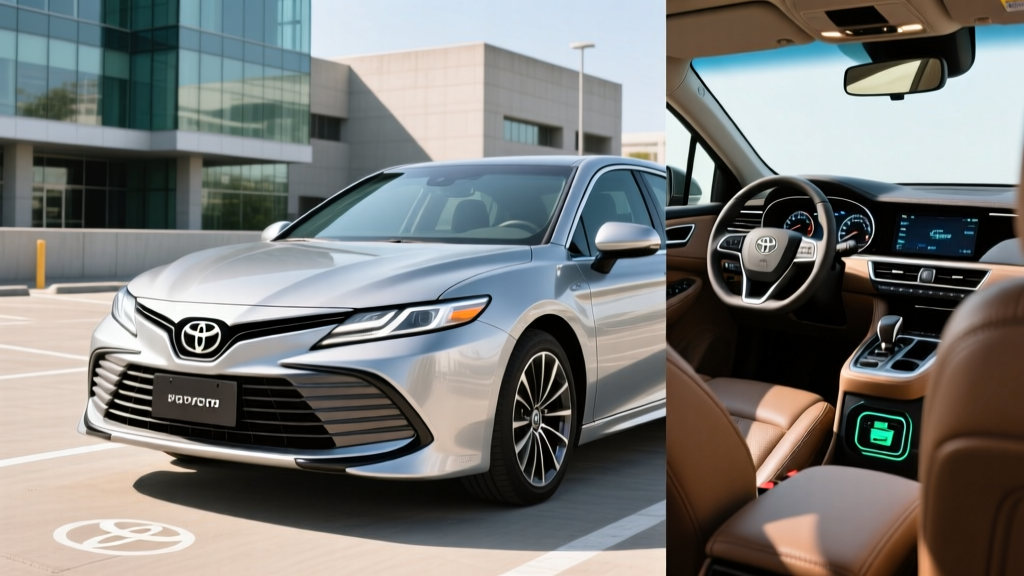
The 2022 Toyota Camry Hybrid XSE occupies a rare sweet spot in the midsize sedan market: it pairs a genuinely engaging chassis with a hybrid powertrain that sips fuel at a rate most compacts can't match. With an EPA-estimated 44 city / 47 highway / 44 combined MPG (on the XLE trim; the XSE with its 19-inch wheels drops slightly to 44/47/44), this is a conventional hybrid electric vehicle (HEV) — meaning no plug, no range anxiety, and no behavior change required from the driver. You fill it with gas and drive. The hybrid system handles the rest.
For 2026 buyers shopping the used and certified pre-owned market, the 2022 Camry Hybrid XSE remains one of the strongest value propositions in the electrified sedan segment. It doesn't qualify for the federal §30D new EV tax credit (that's reserved for plug-in vehicles), but its total cost of ownership routinely undercuts both gas-only midsize sedans and many plug-in hybrids when you factor in fuel savings, reliability, and resale value.
| Specification | 2022 Camry Hybrid XSE |
|---|---|
| Powertrain | 2.5L 4-cyl + electric motor (HEV) |
| Combined Horsepower | 208 hp |
| EPA MPG (City / Hwy / Combined) | 44 / 47 / 44 |
| Fuel Tank Capacity | 13.2 gallons |
| Total Driving Range | ~580 miles |
| 0-60 mph | ~7.5 seconds |
| Drivetrain | FWD (AWD available on other trims) |
| Hybrid Battery | 1.6 kWh (sealed NiMH), not plug-in |
| Original MSRP (base XSE Hybrid) | ~$32,270 |
| Hybrid Battery Warranty | 10 years / 150,000 miles |
HEV vs. PHEV vs. EV: Understanding What the Camry Hybrid Actually Is
Before we dig into the numbers, it's essential to clarify what you're buying — because the terminology trips up even seasoned car shoppers.
| Feature | HEV (Camry Hybrid) | PHEV (e.g., RAV4 Prime) | BEV (e.g., Tesla Model 3) |
|---|---|---|---|
| Plug-in Charging | No — never plugs in | Yes — 120V or 240V | Yes — 120V, 240V, or DC fast |
| Electric-Only Range | ~1 mile at low speed | 25-42 miles typical | 250-400+ miles |
| Fuel / Energy Source | Gasoline only | Gasoline + electricity | Electricity only |
| Federal Tax Credit (§30D) | Not eligible | Up to $7,500 (if eligible) | Up to $7,500 (if eligible) |
| Behavior Change Needed | None — drive like a gas car | Plug in nightly for max benefit | Plan charging routines |
| Best For | High-mileage drivers without home charging | Commute-electric, road-trip-gas drivers | Home-charging owners ready to ditch gas |
The 2022 Camry Hybrid XSE is a conventional hybrid (HEV). Its 1.6 kWh nickel-metal hydride (NiMH) battery is tiny compared to a plug-in hybrid or full EV — but that's intentional. The battery acts as a buffer, capturing energy from regenerative braking and the engine, then deploying it to assist acceleration and enable brief electric-only creeping at low speeds. You never plug it in. The car manages the energy flow automatically.
This distinction matters because Toyota's lineup can confuse buyers. The RAV4 Prime is a PHEV (plug-in). The bZ4X is a BEV (battery electric). The Camry Hybrid is strictly an HEV. No outlet required, no charging app to manage, no plug to remember.
Fuel Economy: EPA Estimates and Real-World MPG
The EPA rates the 2022 Camry Hybrid at 44 city / 47 highway / 44 combined MPG for the XSE trim with 19-inch alloy wheels. (The XLE Hybrid with 18-inch wheels achieves 44/47/44 as well, while the LE Hybrid with smaller wheels hits an impressive 51/53/52.)
| Trim | City MPG | Highway MPG | Combined MPG |
|---|---|---|---|
| LE Hybrid | 51 | 53 | 52 |
| SE Hybrid | 44 | 47 | 44 |
| XSE Hybrid (19" wheels) | 44 | 47 | 44 |
| XLE Hybrid | 44 | 47 | 44 |
Real-world expectations: Hybrids typically exceed their EPA city estimates because regenerative braking recaptures energy in stop-and-go traffic that a gas car wastes as heat. Owners regularly report 46-50 MPG in mixed suburban driving. On sustained highway trips at 75+ mph, expect the number to settle closer to 40-43 MPG — aerodynamic drag dominates at speed, and the hybrid system has less opportunity to recapture energy. In cold weather (below 30°F), plan for a 5-10% reduction as the engine runs more frequently to maintain cabin heat and battery temperature.
With a 13.2-gallon fuel tank, the XSE Hybrid delivers roughly 580 miles of total range in mixed driving. That's Los Angeles to San Francisco and back on a single tank — a practical advantage that no current EV can match without a charging stop.
Powertrain and Performance: 208 HP With a Side of Efficiency
The Camry Hybrid XSE uses Toyota's fourth-generation Hybrid Synergy Drive. A 2.5-liter Dynamic Force four-cylinder engine produces 176 hp and 163 lb-ft of torque on its own, while a front-mounted electric motor adds supplementary power. The combined system output is 208 horsepower.
The XSE trim pairs this powertrain with a sport-tuned suspension, 19-inch black alloy wheels, and a slightly firmer steering calibration than the XLE. It's not a sports sedan — the eCVT (electronically controlled continuously variable transmission) still drones under hard acceleration — but the 0-60 mph time of approximately 7.5 seconds is brisk enough for confident highway merging, and the low-end electric torque makes the car feel more responsive than the horsepower number suggests in city driving.
One note for buyers in snow-belt states: the 2022 Camry Hybrid offers electronic on-demand AWD on the LE and SE trims (adding a rear-axle electric motor), but AWD is not available on the XSE Hybrid. If all-wheel drive is a priority, you'll need to step to the SE Hybrid AWD or look at the RAV4 Hybrid lineup.
Pricing, Tax Credits, and Total Cost of Ownership
The 2022 Camry Hybrid XSE carried an original MSRP of approximately $32,270 (before destination). Well-equipped examples with the Navigation/JBL audio package pushed toward $36,000. On the 2026 used and CPO market, expect to pay between $24,000 and $30,000 depending on mileage and condition.
Does the Camry Hybrid Qualify for a Federal Tax Credit?
No. Under current IRS §30D rules, the federal clean vehicle credit applies only to plug-in electric vehicles — battery electric vehicles (BEVs) and plug-in hybrids (PHEVs) with a battery capacity of at least 7 kWh. The Camry Hybrid's 1.6 kWh NiMH battery does not meet this threshold, and the vehicle cannot be plugged in. It is classified as a conventional hybrid, which is ineligible for the new clean vehicle credit.
Hybrid Battery Warranty: The Longevity Question Answered
Toyota covers the 2022 Camry Hybrid's battery with a 10-year / 150,000-mile warranty (whichever comes first) in all 50 states. This applies to the hybrid traction battery, not the standard 12V auxiliary battery. If the hybrid battery fails within this window, Toyota replaces it at no cost.
Out-of-warranty replacement cost: A new OEM hybrid battery for the Camry Hybrid typically runs $2,500 to $4,000 installed at a dealership. Independent hybrid specialists often offer refurbished batteries for $1,500-$2,500. In practice, Toyota's NiMH hybrid batteries have demonstrated exceptional longevity — many Prius and Camry Hybrid examples exceed 200,000 miles on the original battery with minimal degradation.
Some states offer their own incentives for hybrid purchases, but these vary widely by jurisdiction and change frequently. Check your state's energy office or department of revenue for current programs — never assume a state credit applies without verifying on an official .gov source.
Five-Year Cost of Ownership Snapshot
Assuming 15,000 miles per year and $3.40/gallon regular unleaded, the Camry Hybrid XSE at 44 combined MPG costs roughly $1,159 per year in fuel. A comparable gas-only 2022 Camry SE (2.5L, 30 combined MPG) would cost about $1,700 per year. That's a fuel savings of approximately $541 annually, or $2,705 over five years — before factoring in the hybrid's typically higher resale value.
Who Should Choose the Camry Hybrid XSE (And Who Shouldn't)
The 2022 Camry Hybrid XSE is purpose-built for a specific buyer profile. Here's a decision framework:
Reasons to Buy
- 44+ MPG real-world with zero behavior change — no plugging in, no charging apps
- 580-mile total range eliminates range anxiety entirely
- 10-year/150,000-mile hybrid battery warranty provides peace of mind
- XSE trim delivers sport-tuned suspension and premium interior touches
- Toyota's hybrid reliability track record is industry-leading
- Strong CPO resale value; parts and service available everywhere
Reasons to Look Elsewhere
- No electric-only commuting capability — if you want zero-emission daily driving, you need a PHEV or BEV
- AWD not available on XSE Hybrid trim
- eCVT drone under hard acceleration isn't sporty, despite the XSE badge
- No federal tax credit eligibility
- If you have home charging and a short commute, a PHEV (RAV4 Prime) or BEV (Model 3) saves more on fuel
Choose the Camry Hybrid XSE If:
- You drive 15,000+ miles per year and want maximum fuel savings without plugging in
- You live in an apartment or lack access to home/workplace charging
- You regularly take long road trips and can't plan around charging stops
- You want a proven, reliable powertrain with a decade of battery warranty remaining
Choose a PHEV or BEV Instead If:
- You have Level 2 home charging and a commute under 35 miles (a PHEV covers this electrically)
- You want to qualify for the $7,500 federal tax credit on a new vehicle purchase
- You want to eliminate tailpipe emissions from your daily driving
- You're ready to transition fully to electric and your driving patterns support it
Interior, Tech, and the XSE Premium Experience
The XSE trim sits near the top of the 2022 Camry Hybrid lineup and includes a 9-inch touchscreen with wireless Apple CarPlay and Android Auto, a 9-speaker JBL audio system (with the optional package), heated front seats, a leather-trimmed steering wheel, and ambient interior lighting. Toyota Safety Sense 2.5+ is standard across all trims, bundling adaptive cruise control, lane-keeping assist, automatic emergency braking with pedestrian detection, and blind-spot monitoring.
The cabin materials in the XSE are a step above the SE, with SofTex synthetic leather upholstery and contrast stitching. Cargo space is 15.1 cubic feet — competitive with the segment, though the hybrid battery placement slightly reduces the under-floor storage area compared to the gas-only Camry.
Reliability and Long-Term Ownership
Toyota's hybrid systems have accumulated over two decades of real-world validation since the original Prius. The fourth-generation Hybrid Synergy Drive in the 2022 Camry is among the most thoroughly proven electrified powertrains on the road. The IIHS named the 2022 Camry a Top Safety Pick+, and the powertrain's simplicity — no traditional starter motor, no alternator, no accessory belt, regenerative braking that extends pad life — means fewer wear items than a conventional gas car.
For used buyers in 2026, a 2022 model with 30,000-50,000 miles still has the majority of its 10-year hybrid battery warranty intact. That's a significant advantage over buying a used BEV from a brand with shorter battery coverage or uncertain long-term support.
Frequently Asked Questions
How many MPG does the 2022 Camry Hybrid XSE actually get?
The EPA rates it at 44 city / 47 highway / 44 combined MPG. In real-world mixed driving, owners commonly see 44-48 MPG. Highway-only trips at 75+ mph typically yield 40-43 MPG. Cold weather reduces efficiency by roughly 5-10%.
Does the Camry Hybrid need to be plugged in?
No. The 2022 Camry Hybrid is a conventional hybrid (HEV), not a plug-in hybrid (PHEV). It charges its small battery through regenerative braking and the gasoline engine. You never plug it in — just fill it with gas like any other car.
How long will the hybrid battery last, and what does replacement cost?
Toyota warrants the hybrid battery for 10 years or 150,000 miles. Real-world data from Toyota's hybrid fleet shows many batteries lasting well beyond 200,000 miles. If replacement is needed out of warranty, expect $2,500-$4,000 for a new OEM battery or $1,500-$2,500 for a refurbished unit from an independent specialist.
Does the 2022 Camry Hybrid qualify for any tax credit?
No federal tax credit applies. The IRS §30D clean vehicle credit requires a plug-in vehicle with at least 7 kWh of battery capacity. The Camry Hybrid's 1.6 kWh battery and non-plug-in design make it ineligible. Some states may offer separate hybrid incentives — check your state's official resources.
Camry Hybrid vs. RAV4 Prime: which should I buy?
They serve different needs. The Camry Hybrid XSE is a sedan with 44 MPG, no plug-in capability, and a ~$25,000-$30,000 used price. The RAV4 Prime is a plug-in hybrid SUV with 42 miles of electric-only range, 94 MPGe, AWD standard, and eligibility for the $7,500 federal credit (when purchased new and if eligible). If you have home charging and a short commute, the RAV4 Prime lets you drive electrically most days. If you want simplicity and maximum range without plugging in, the Camry Hybrid wins.
Is the XSE Hybrid available with all-wheel drive?
No. For the 2022 model year, AWD is available on the LE Hybrid and SE Hybrid trims only. The XSE Hybrid is front-wheel drive. If AWD is essential, consider the SE Hybrid AWD or explore Toyota's RAV4 Hybrid lineup.