Quick Verdict: The Sporty Hybrid Sedan That Doesn't Sacrifice Efficiency
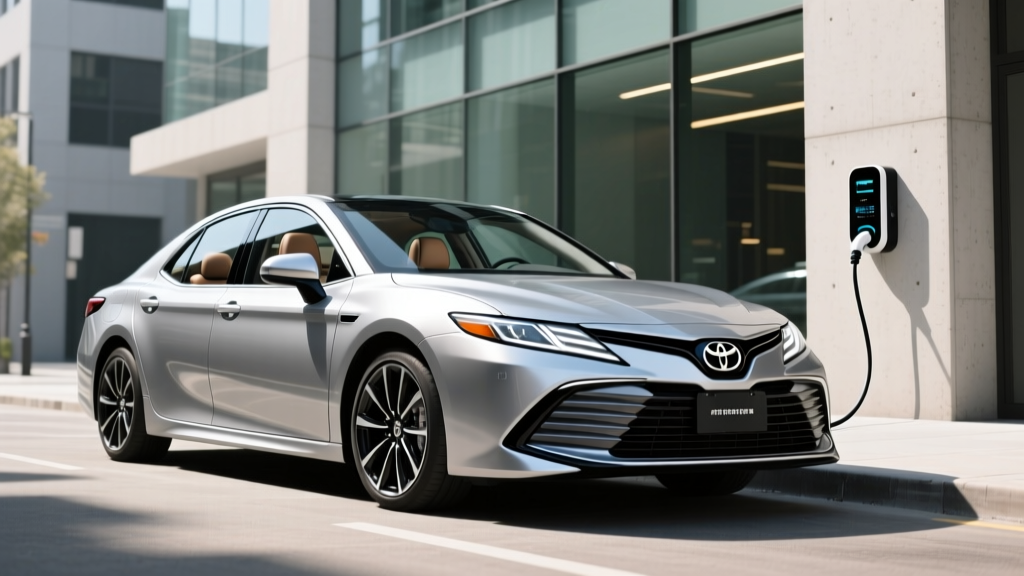
The 2022 Toyota Camry Hybrid SE occupies a specific niche: buyers who want the fuel-sipping economics of a hybrid powertrain wrapped in a sportier aesthetic and slightly firmer ride than the LE or XLE trims. With an EPA-rated 46 MPG combined and a 208-horsepower hybrid system, it remains one of the most efficient midsize sedans on the road — and in 2026, it's a compelling used hybrid option for drivers who aren't ready to commit to a full battery-electric vehicle.
Before we get into the numbers, an important clarification: the Camry Hybrid is a conventional hybrid (HEV), not a plug-in hybrid (PHEV). You never plug it in. It generates electricity through regenerative braking and its gasoline engine, storing energy in a small battery to assist acceleration and enable brief low-speed electric-only driving. If you want plug-in capability from Toyota, you'd look at the Prius Prime or RAV4 Prime.
HEV vs PHEV: Where the Camry Hybrid Fits
| Feature | Camry Hybrid (HEV) | Typical PHEV (e.g., RAV4 Prime) |
|---|---|---|
| Plug-in charging required? | No — self-charging | Yes — for electric-only range |
| Battery size | 1.6 kWh (NiMH) | 18.1 kWh (lithium-ion) |
| Electric-only range | ~1 mile at low speed | 25-42 miles |
| Federal tax credit | None (new); eligible for used-EV credit up to $4,000 | Up to $7,500 (new, subject to §30D rules) |
| Best for | No home charging access; want simplicity | Home charging + short commutes |
Fuel Economy: EPA Ratings and Real-World MPG
The 2022 Camry Hybrid SE carries EPA ratings of 44 MPG city / 47 MPG highway / 46 MPG combined when equipped with the standard 16-inch alloy wheels. These are strong numbers, though it's worth noting that the LE trim achieves slightly better figures (51/53/52 MPG) due to lighter weight and aerodynamic differences.
| Trim | City | Highway | Combined |
|---|---|---|---|
| Hybrid LE | 51 | 53 | 52 |
| Hybrid SE | 44 | 47 | 46 |
| Hybrid XLE | 44 | 47 | 46 |
Source: EPA Fuel Economy Guide
Real-World MPG: What Owners Actually See
Toyota's hybrid system excels in city driving, where frequent braking regenerates the battery and the electric motor handles low-speed propulsion. In real-world use, many Camry Hybrid owners report exceeding the EPA city estimate — 48-52 MPG is common in stop-and-go traffic. Highway driving is less favorable; sustained 75+ MPH cruising typically yields 40-43 MPG because the gasoline engine does most of the work and aerodynamic drag increases.
For mixed driving, expect 44-48 MPG combined — roughly in line with or slightly above the EPA sticker. Cold weather (below 40°F) can reduce fuel economy by 5-10% due to extended engine warm-up and increased cabin heating demand.
Powertrain: 208 Horsepower from a Hybrid System
The 2022 Camry Hybrid pairs a 2.5-liter four-cylinder Atkinson-cycle engine with a permanent-magnet electric motor and a sealed nickel-metal hydride (NiMH) battery pack. Combined system output is 208 horsepower.
| Specification | 2022 Camry Hybrid SE |
|---|---|
| Engine | 2.5L 4-cyl Atkinson-cycle |
| Engine power | 176 hp @ 5,700 rpm |
| Electric motor power | 88 kW (118 hp) |
| Combined system output | 208 hp |
| Battery chemistry | Nickel-metal hydride (NiMH) |
| Battery capacity | 1.6 kWh (gross) |
| Transmission | eCVT (electronically controlled) |
| 0-60 mph | ~7.1 seconds |
| Drivetrain | Front-wheel drive |
| Fuel tank | 13.2 gallons |
The eCVT is not a traditional belt-and-pulley CVT — it uses a planetary gearset to blend engine and motor power seamlessly. There's no rubber-band effect; acceleration feels linear and predictable. The SE trim adds sport-tuned suspension and paddle shifters that simulate stepped gear ratios, giving a more engaging driving feel than the LE or XLE.
With a 13.2-gallon fuel tank and 46 MPG combined, total range is approximately 607 miles — enough for most drivers to go 10-14 days between fill-ups.
What Makes the SE Trim Different?
The SE sits between the base LE and the luxury-oriented XLE in the Camry Hybrid lineup. Key differentiators include:
- Sport-tuned suspension — firmer damping for flatter cornering (trade-off: slightly rougher ride on broken pavement)
- 16-inch machine-finished alloy wheels — specific SE design (18-inch available on SE Nightshade)
- Leather-trimmed steering wheel with paddle shifters
- SofTex-trimmed front seats with sport bolsters
- Rear spoiler and black chrome exhaust tip
- Blind Spot Monitor with Rear Cross-Traffic Alert (standard on SE; optional on LE)
The SE Nightshade Edition adds black exterior accents, black mirror caps, and 18-inch black alloy wheels for a more aggressive appearance.
Pricing and Tax Credit Eligibility
When new, the 2022 Camry Hybrid SE started at an MSRP of $29,070 (including destination charge). The SE Nightshade Edition added approximately $1,000.
As a used vehicle in 2026, expect to find the 2022 Camry Hybrid SE priced between $22,000 and $27,000 depending on mileage, condition, and regional demand.
Federal Tax Credit: What Applies
New vehicle (no longer available): The 2022 Camry Hybrid did not qualify for the §30D new clean vehicle credit. Conventional hybrids are ineligible — only plug-in hybrids and battery-electric vehicles qualify under current IRS rules.
Used vehicle purchase (2026): Under the Previously-Owned Clean Vehicle Credit (§25E), you may qualify for up to $4,000 or 30% of the sale price (whichever is less) when buying from a dealer. However, conventional hybrids are not eligible for this credit either — it applies only to used PHEVs and BEVs meeting battery-capacity thresholds.
Bottom line: The Camry Hybrid offers no federal tax credit. Your savings come purely from fuel economy, not purchase incentives. Some states offer hybrid rebates — check your local DMV or energy office.
Battery Warranty, Lifespan, and Replacement Cost
Hybrid battery longevity is consistently the top concern for used hybrid buyers. Here's what you need to know about the 2022 Camry Hybrid's battery:
| Item | Detail |
|---|---|
| Hybrid battery warranty | 10 years / 150,000 miles (whichever comes first) |
| Hybrid system components warranty | 10 years / 150,000 miles |
| Battery chemistry | NiMH (nickel-metal hydride) |
| Expected battery lifespan | 150,000–200,000+ miles with normal use |
| Replacement cost (if needed) | $2,500–$4,000 (OEM); $1,500–$2,500 (refurbished) |
Toyota's hybrid batteries have an excellent track record. The NiMH chemistry in the Camry Hybrid is less energy-dense than lithium-ion but extremely durable — it's the same technology used in the Prius since 1997, with hundreds of thousands of units still running well past 200,000 miles.
For a 2022 model purchased in 2026, the original 10-year/150,000-mile battery warranty remains in full effect (it transfers to subsequent owners). Unless the vehicle has been abused or sits for extended periods with a fully depleted battery, replacement before 150,000 miles is uncommon.
Reliability note: The 2022 Camry Hybrid earns strong reliability marks from both Consumer Reports and J.D. Power. Toyota's hybrid system has fewer wear items than a conventional powertrain — no starter motor, no alternator, regenerative braking extends pad life, and the eCVT has no belts or clutches to fail. Annual maintenance costs are typically lower than a gas-only Camry.
Camry Hybrid SE vs the Alternatives
The Camry Hybrid SE competes against several midsize hybrid sedans and crossovers. Here's how it stacks up:
| Vehicle | Combined MPG | HP | 0-60 mph |
|---|---|---|---|
| 2022 Camry Hybrid SE | 46 | 208 | 7.1s |
| Honda Accord Hybrid Sport | 48 | 212 | 6.7s |
| Hyundai Sonata Hybrid SEL | 47 | 192 | 7.5s |
| Toyota RAV4 Hybrid XSE | 40 | 219 | 7.4s |
The Accord Hybrid is marginally more efficient and quicker, but the Camry Hybrid's AWD availability (not on the Accord), standard Toyota Safety Sense 2.5+ suite, and proven long-term reliability keep it competitive. If you need cargo space, the RAV4 Hybrid trades 6 MPG for SUV practicality.
Who Should Choose the Camry Hybrid SE?
Pros
- 46 MPG combined — among the best for midsize sedans
- 208 hp provides confident highway merging
- 10-year/150,000-mile hybrid battery warranty
- No plug-in charging required — ideal for apartment dwellers
- 600+ mile total range
- Standard Toyota Safety Sense 2.5+
- Strong resale value and reliability record
Cons
- No federal tax credit (new or used)
- SE fuel economy trails LE trim by 6 MPG
- Firmer ride than LE/XLE (sport suspension trade-off)
- No all-wheel drive on SE (AWD available on LE/XLE only)
- Small 1.6 kWh battery limits electric-only driving to ~1 mile
- Infotainment feels dated vs newer competitors
Camry Hybrid vs PHEV vs Full EV: Which Is Right for You?
The electrified vehicle market in 2026 offers three distinct paths. Here's a decision framework:
Choose the Camry Hybrid (HEV) if:
- You lack home or workplace charging access
- You want zero behavior change — just drive and refuel normally
- Your daily commute exceeds 40 miles (PHEV electric range won't cover it)
- You want the lowest purchase price among electrified options
- You frequently take long road trips and don't want to plan charging stops
Choose a PHEV (e.g., Toyota Prius Prime) if:
- You have reliable Level 2 home charging
- Your daily commute is under 40 miles round-trip
- You want electric-only driving for errands but gas flexibility for road trips
- You qualify for the §30D federal tax credit (up to $7,500, subject to income/MSRP/sourcing rules)
Choose a full EV (e.g., Tesla Model 3, Hyundai Ioniq 6) if:
- You have home Level 2 charging and your daily driving is under 250 miles
- You want zero tailpipe emissions and minimal maintenance
- You want the lowest per-mile "fuel" cost (electricity vs gasoline)
- You qualify for federal/state EV incentives
- You're comfortable with charging-station planning on road trips
Frequently Asked Questions
How many MPG does the 2022 Camry Hybrid SE get?
The EPA rates it at 44 city / 47 highway / 46 combined MPG. Real-world owners typically see 44-48 MPG combined, with city driving sometimes exceeding 50 MPG thanks to regenerative braking. Highway driving at 75+ MPH generally yields 40-43 MPG.
Does the Camry Hybrid need to be plugged in?
No. The Camry Hybrid is a conventional (self-charging) hybrid. It recovers energy through regenerative braking and the gasoline engine to maintain its small 1.6 kWh battery. You never plug it in — just fill up with gasoline as you would any other car.
How far can it drive on electric power alone?
Approximately 1 mile at very low speeds (under 25 MPH) on a fully charged hybrid battery. This is not a plug-in hybrid — the electric-only capability is designed for low-speed maneuvering and brief assist, not meaningful zero-emission commuting. For 25-40 miles of electric-only range, you'd need a PHEV like the Prius Prime.
Is the hybrid battery reliable, and what does replacement cost?
Toyota's NiMH hybrid batteries are among the most durable in the industry, routinely lasting 150,000-200,000+ miles. The 2022 model carries a 10-year/150,000-mile hybrid battery warranty that transfers to second owners. If replacement is ever needed, expect $2,500-$4,000 for an OEM battery or $1,500-$2,500 for a refurbished unit.
Does the 2022 Camry Hybrid qualify for any tax credit?
Not at the federal level. Conventional hybrids are ineligible for both the §30D new vehicle credit and the §25E used vehicle credit — these apply only to plug-in hybrids and battery-electric vehicles with sufficient battery capacity. Some states offer hybrid-specific rebates or HOV lane access; check your state's energy or DMV website for details.
How does the SE compare to the Hybrid LE in fuel economy?
The Hybrid LE achieves 51 city / 53 highway / 52 combined MPG — 6 MPG better combined than the SE. The difference comes from the LE's lighter curb weight, different wheel design, and less aggressive tire compound. If maximum efficiency is your priority, the LE is the clear winner. The SE trades those 6 MPG for sport suspension, styling upgrades, and additional standard features.
Is the Camry Hybrid SE available with all-wheel drive?
No. For the 2022 model year, AWD was available only on the Hybrid LE and Hybrid XLE trims. The SE and SE Nightshade are front-wheel drive only. If AWD is essential, consider the LE or XLE, or look at the RAV4 Hybrid (AWD standard on all trims).
What is the total cost of ownership vs a gas-only Camry?
At 46 MPG combined and $3.50/gallon gasoline, the Camry Hybrid SE costs approximately $1,065 per year in fuel (14,000 miles driven). A comparable gas-only Camry SE (28 city / 39 highway / 32 combined) would cost roughly $1,531 per year — a difference of about $466 annually. Over five years, the hybrid saves approximately $2,330 in fuel, which more than offsets its higher initial purchase price.