Quick Verdict: The Efficiency Benchmark in a Midsize Sedan
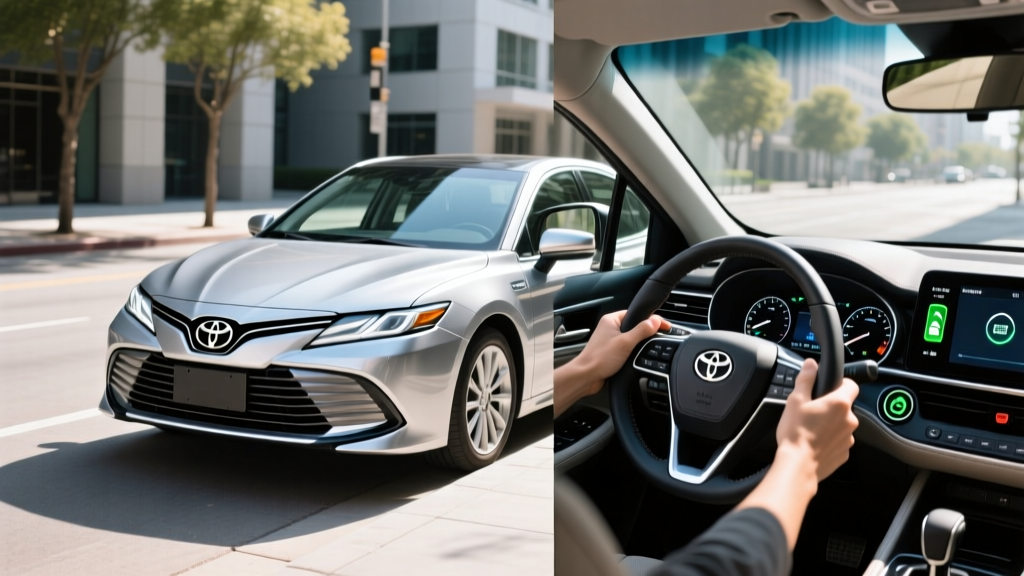
The 2022 Toyota Camry Hybrid LE remains one of the most fuel-efficient midsize sedans ever sold without a plug. With an EPA-rated 52 MPG combined, a proven fourth-generation Toyota Hybrid System II powertrain, and a starting MSRP that undercut most competitors, this trim is the sweet spot for buyers who want maximum efficiency without charging infrastructure. As of 2026, used examples are plentiful and represent strong value in the pre-owned hybrid market.
This is a conventional hybrid (HEV), not a plug-in hybrid (PHEV). You never plug it in — the 1.6 kWh nickel-metal hydride battery recharges through regenerative braking and the gasoline engine. If you need electric-only driving, you want a PHEV like the RAV4 Prime or a full BEV. If you want to spend less time at gas stations and zero time at chargers, the Camry Hybrid LE delivers.
Fuel Economy: EPA Ratings vs. Real-World MPG
The LE trim is the efficiency king of the Camry Hybrid lineup because it rides on 16-inch wheels with low-rolling-resistance tires and carries slightly less weight than the SE or XLE trims. Here's the official EPA breakdown per fueleconomy.gov:
| Metric | LE Trim | SE / XLE Trims |
|---|---|---|
| City MPG | 51 | 44 |
| Highway MPG | 53 | 47 |
| Combined MPG | 52 | 46 |
| Fuel Tank (gal) | 13.2 | 13.2 |
| Total Range (mi) | ~686 | ~607 |
HEV vs. PHEV vs. EV: Where the Camry Hybrid LE Fits
Buyers cross-shopping electrified vehicles often confuse conventional hybrids with plug-in hybrids. Here's the distinction that matters:
| Feature | HEV (Camry Hybrid) | PHEV (e.g., RAV4 Prime) | BEV (e.g., Model 3) |
|---|---|---|---|
| Plug-in Charging? | No | Yes (Level 1/2) | Yes (Level 1/2/DC) |
| Electric-Only Range | ~1 mi at low speed | 25–42 mi typical | 250–350+ mi |
| Gasoline Engine? | Yes | Yes | No |
| Federal Tax Credit (§30D) | No | Up to $7,500* | Up to $7,500* |
| Home Charger Needed? | No | Recommended | Essential |
| Total Range | ~686 mi | ~500+ mi combined | 250–350 mi |
*§30D credit eligibility depends on MSRP caps, buyer income limits, and battery critical-mineral sourcing requirements. Verify current-year rules at IRS.gov.
The Camry Hybrid LE is the right choice if you have no access to home or workplace charging, drive long highway routes, or want zero behavioral change from a gas car. A PHEV makes sense if you can charge at home and most daily trips are under 30 miles. A BEV is ideal if you have reliable Level 2 charging access and want to eliminate gasoline entirely.
Powertrain: 208 Horsepower from Toyota's Hybrid Synergy Drive
The 2022 Camry Hybrid uses Toyota's fourth-generation Hybrid System II, pairing a 2.5-liter Dynamic Force four-cylinder engine with two motor-generators through a planetary gearset (e-CVT). There is no traditional belt-driven CVT or stepped automatic — the power-split device manages engine and motor blending seamlessly.
| Spec | Value |
|---|---|
| Engine | 2.5L DOHC 4-cyl (A25A-FXS) |
| Engine Power | 176 hp @ 5,700 rpm |
| Engine Torque | 163 lb-ft @ 5,200 rpm |
| Electric Motor (MG2) | 118 hp / 149 lb-ft |
| Net Combined System Power | 208 hp |
| Hybrid Battery | 1.6 kWh NiMH (sealed) |
| Transmission | e-CVT (power-split device) |
| Drivetrain | FWD (AWD-e available on SE/XLE) |
| 0–60 MPH | ~7.2 seconds |
The 208 combined horsepower figure is not simply engine + motor added together — Toyota caps the net output based on what the battery and motor can sustain simultaneously. In practice, acceleration from a stop feels brisk thanks to the electric motor's instant torque, while highway passing is adequate but not sporty. The LE trim is FWD only; Toyota's electronic AWD-e (which adds a rear motor for low-speed traction) was available on SE and XLE trims for 2022.
Battery Warranty, Lifespan, and Replacement Cost
Hybrid battery longevity is the single most common concern among first-time hybrid buyers. Toyota addresses this with one of the strongest hybrid battery warranties in the industry, updated significantly for the 2020 model year and carried forward through 2022.
Coverage: 10 years / 150,000 miles (whichever comes first)
Applies to: Hybrid traction battery and hybrid system components
Transferable: Yes, to subsequent owners
Capacity Threshold: Toyota warrants against abnormal degradation; no specific % retention floor is published (unlike BEV warranties at 70%).
Real-world data from fleets and high-mileage owners shows Toyota's NiMH hybrid batteries routinely last 150,000–200,000+ miles with gradual capacity loss. The 1.6 kWh pack is small and operates within a narrow state-of-charge window (roughly 40–80%), which significantly reduces stress and extends cycle life. Unlike BEV batteries that see deep charge-discharge cycles, the Camry Hybrid's battery is baby-ed by the control system.
If replacement is needed out of warranty, a new OEM hybrid battery from Toyota runs approximately $2,000–$3,500 including labor at a dealership. Refurbished or aftermarket NiMH modules are available for $800–$1,500 from independent hybrid specialists. This is dramatically cheaper than BEV battery replacement ($8,000–$20,000+), largely because the pack is small and uses mature NiMH chemistry rather than lithium-ion.
Pricing: Original MSRP and 2026 Used Market Value
When new, the 2022 Camry Hybrid LE was one of the most affordable hybrid midsize sedans available:
| Trim | Original MSRP | EPA Combined MPG |
|---|---|---|
| LE | $27,480 | 52 |
| SE | $28,980 | 46 |
| XLE | $32,270 | 46 |
As of early 2026, used 2022 Camry Hybrid LE examples with 30,000–50,000 miles typically list between $21,000 and $26,000 depending on condition, mileage, and region. Toyota's hybrid reliability reputation keeps resale values strong — expect to pay a premium over comparable non-hybrid Camrys, but the fuel savings offset this within 1–3 years for most drivers.
Does the 2022 Camry Hybrid LE Qualify for Any Tax Credit?
No. The Camry Hybrid LE is a conventional HEV and does not qualify for the federal §30D Clean Vehicle Credit. That credit applies only to plug-in vehicles (PHEVs and BEVs) with battery packs of at least 7 kWh. The Camry Hybrid's 1.6 kWh NiMH pack falls far below this threshold.
Some states offer modest rebates for conventional hybrids, but these are rare and vary by jurisdiction. Check your state's energy office or Alternative Fuels Data Center for local incentives. The value proposition here is fuel savings, not tax subsidies.
Ownership Costs: Fuel Savings vs. Gas-Only Camry
The hybrid premium over a gas-only 2022 Camry LE (MSRP $25,295) was roughly $2,185 at launch. Here's how that payback works at current fuel prices:
| Model | Combined MPG | Gallons Used | 5-Year Fuel Cost |
|---|---|---|---|
| Camry Gas LE (2.5L) | 32 | 2,344 | $7,970 |
| Camry Hybrid LE | 52 | 1,442 | $4,903 |
| 5-Year Savings (Hybrid) | $3,067 | ||
At 15,000 miles per year, the hybrid recoups its original price premium in roughly 3.5 years. Drivers who keep the car 7–10 years (common for Toyota owners) net $2,000–$4,000 in lifetime fuel savings. Insurance rates for the Camry Hybrid are comparable to the gas version — no EV-specific insurance premium applies.
Pros, Cons, and Who Should Buy
- 52 MPG combined — best-in-class midsize sedan efficiency
- No plug, no charger install, no range anxiety
- 10-year / 150,000-mile hybrid battery warranty
- ~686 miles of total range per tank
- Proven, mature NiMH hybrid system with vast service network
- Low replacement battery cost ($2K–$3.5K OEM)
- Standard Toyota Safety Sense 2.5+ (AEB, lane keep, adaptive cruise)
- No federal tax credit (HEV, not PHEV/BEV)
- FWD only on LE trim (AWD-e requires SE/XLE)
- Modest 208 hp — adequate, not quick
- Infotainment feels dated vs. rivals (2022 pre-refresh system)
- NiMH battery (not lithium-ion) — heavier, lower energy density
- Rear seat doesn't fold flat (hybrid battery packaging)
Who Should Choose This Car?
Choose the Camry Hybrid LE if: You drive 15,000+ miles per year, lack home charging access, want maximum fuel savings with zero lifestyle change, and plan to keep the car 8+ years.
Choose a PHEV instead if: You can install a Level 2 charger at home, your daily commute is under 35 miles, and you want to drive mostly on electricity while keeping a gas engine for road trips.
Choose a BEV instead if: You have reliable home/workplace charging, want to eliminate gasoline entirely, and qualify for the §30D federal tax credit that can offset a BEV's higher purchase price.
Frequently Asked Questions
How many MPG does the 2022 Camry Hybrid LE actually get?
The EPA rates it at 51 city / 53 highway / 52 combined. Real-world owners typically see 48–56 MPG depending on driving mix. City-heavy routes favor the hybrid system; sustained 80 MPH highway driving will drop you to the mid-40s.
Does the Camry Hybrid need to be plugged in?
No. This is a conventional hybrid (HEV). The battery recharges through regenerative braking and the gasoline engine. There is no plug, no charging port, and no electric-only driving range beyond brief low-speed creep.
How long will the hybrid battery last?
Toyota's NiMH hybrid batteries commonly last 150,000–200,000+ miles. The 2022 model carries a 10-year / 150,000-mile hybrid battery warranty. The battery operates in a narrow charge window to minimize degradation, and replacement cost is $2,000–$3,500 OEM if needed out of warranty.
Is the 2022 Camry Hybrid LE reliable?
Toyota's hybrid system is among the most proven in the industry, with over 25 years of production history. The Camry Hybrid consistently earns top reliability ratings from Consumer Reports and J.D. Power. The e-CVT power-split device has no belts, clutches, or torque converter to wear out, reducing long-term maintenance versus conventional automatics.
Does it qualify for a federal tax credit?
No. The federal §30D Clean Vehicle Credit requires a plug-in vehicle with at least 7 kWh of battery capacity. The Camry Hybrid's 1.6 kWh NiMH pack does not qualify. Check your state for any local hybrid incentives via the Alternative Fuels Data Center.
Can I get AWD on the 2022 Camry Hybrid LE?
No. The LE trim is front-wheel drive only. Toyota's electronic AWD-e system (a separate rear-axle motor that engages below 25 MPH for traction) was available on the SE and XLE hybrid trims for 2022, which carry a 46 MPG combined rating due to added weight and larger wheels.