Quick Verdict: The Last Full-Size Hybrid Sedan Worth Buying Used
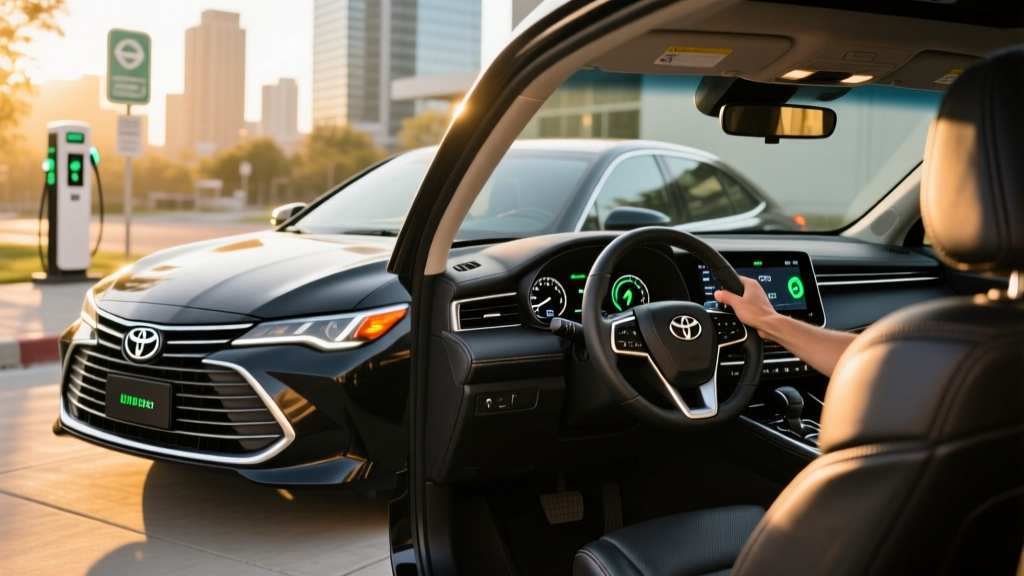
Toyota discontinued the Avalon after the 2022 model year, ending a 28-year run as America's most sensible full-size sedan. The 2022 Toyota Avalon Hybrid Limited represents the pinnacle of that lineage — a 215-horsepower hybrid that returns an EPA-estimated 43 MPG combined while delivering near-luxury interior refinement. In 2026's used-car market, it occupies a rare sweet spot: proven hybrid reliability, no plug-in complexity, and depreciation that has finally brought it into reach for value-minded buyers.
This is a conventional hybrid (HEV), not a plug-in. You never plug it in. It charges its own small battery through regenerative braking and the gasoline engine. If you want electric-only driving, you need a PHEV or a full EV — but if your goal is 500+ miles between fill-ups without changing any habits, the Avalon Hybrid Limited delivers.
2022 Toyota Avalon Hybrid Limited: Core Specifications
| Specification | Value |
|---|---|
| Powertrain | 2.5L 4-cylinder + 2 electric motors (hybrid) |
| Combined Horsepower | 215 hp (net system) |
| Engine Output | 176 hp / 163 lb-ft (gasoline) |
| Front Motor Output | 118 hp / 149 lb-ft |
| Transmission | eCVT (planetary gearset) |
| Drivetrain | Front-wheel drive |
| EPA MPG (City / Hwy / Combined) | 43 / 43 / 44 |
| Fuel Tank Capacity | 13.2 gallons |
| Total Range | ~580 miles |
| Hybrid Battery | 1.6 kWh nickel-metal hydride (NiMH) |
| 0–60 mph | ~7.3 seconds |
| Cargo Volume | 16.1 cu ft |
| Curb Weight | ~3,725 lbs |
| Original MSRP (Limited trim) | $43,650 |
| Estimated Used Price (2026) | $22,000–$28,000 |
Sources: fueleconomy.gov, Toyota Motor Corporation
Fuel Economy: EPA Numbers vs. Real-World MPG
The EPA rates the 2022 Avalon Hybrid Limited at 43 MPG city, 43 MPG highway, and 44 MPG combined. (The slight combined bump reflects EPA's weighted test cycle favoring city-heavy driving for hybrids.)
| Trim | City MPG | Highway MPG | Combined MPG |
|---|---|---|---|
| XLE (Hybrid) | 43 | 44 | 44 |
| XSE Hybrid | 43 | 43 | 43 |
| Limited Hybrid | 43 | 43 | 44 |
In mixed suburban and city driving, owners consistently report 44–48 MPG — hybrids often exceed their EPA city estimates because regenerative braking recovers energy that gas cars waste as heat. On sustained highway trips at 75+ mph, expect 38–42 MPG as aerodynamic drag dominates and the electric motor assists less. In cold weather (below 32°F), fuel economy drops roughly 10–15% due to engine warm-up cycles and reduced battery efficiency, yielding approximately 36–40 MPG combined.
Compared to the gasoline-only Avalon V6 (rated 22 city / 31 highway / 25 combined), the hybrid nearly doubles city efficiency while sacrificing only modest highway numbers. Over 15,000 miles per year at $3.25/gallon, the hybrid saves roughly $900–$1,100 annually in fuel versus the V6.
Hybrid (HEV) vs. Plug-In Hybrid (PHEV) vs. Full EV — Which Fits You?
The Avalon Hybrid is a conventional hybrid (HEV). Understanding the distinction matters for your purchase decision:
HEV vs. PHEV vs. BEV Comparison
| Feature | HEV (Avalon Hybrid) | PHEV (e.g., RAV4 Prime) | BEV (e.g., Model 3) |
|---|---|---|---|
| Plug in to charge? | No | Yes (optional) | Yes (required) |
| Electric-only range | ~1 mile at low speed | 25–42 miles typical | 250–400 miles |
| Total range | ~580 miles | ~500–600 miles | 250–400 miles |
| Battery size | 1.6 kWh (NiMH) | 13–18 kWh (lithium-ion) | 50–100 kWh (lithium-ion) |
| Home charging needed? | No | Recommended | Essential |
| Federal tax credit (new) | None | Up to $7,500 (§30D) | Up to $7,500 (§30D) |
| Maintenance complexity | Low (proven) | Moderate (two systems) | Low (fewer moving parts) |
Choose the Avalon Hybrid (HEV) if: You have no access to home charging, drive 30+ miles daily, want zero behavior change from a gas car, and prioritize range and reliability over electric driving.
Choose a PHEV if: You can install a Level 2 charger at home, your commute is under 40 miles round-trip, and you want daily electric driving with gas backup for road trips.
Choose a full EV (BEV) if: You have reliable home charging, want the lowest operating cost, and are comfortable planning longer road trips around DC fast charging.
Powertrain Deep Dive: How Toyota's Hybrid Synergy Drive Works
The 2022 Avalon Hybrid uses Toyota's fourth-generation Hybrid Synergy Drive, pairing a 2.5-liter Dynamic Force 4-cylinder engine (176 hp, 163 lb-ft) with a permanent-magnet front electric motor (118 hp, 149 lb-ft). Total system output is 215 net horsepower.
Unlike a traditional transmission, the eCVT uses a planetary gearset that seamlessly blends power from the engine and motor. There are no fixed gear ratios and no belt or chain — this is why Toyota's eCVT is among the most durable transmissions in the industry, with virtually no wear components.
The hybrid system operates in several modes:
- EV Mode: Electric motor only, up to ~25 mph for approximately 0.5–1 mile. Useful for creeping through neighborhoods or parking garages.
- Normal Mode: Engine and motor blend automatically for optimal efficiency.
- Eco Mode: Throttle response softens, climate control reduces load, maximizing MPG.
- Sport Mode: Sharper throttle mapping, more aggressive regen, simulated shift points for engagement.
The 0–60 mph time of approximately 7.3 seconds is adequate for merging and passing. It won't thrill, but the electric motor's instant torque (149 lb-ft from 0 RPM) makes the Avalon Hybrid feel quicker around town than the number suggests.
Battery Warranty, Lifespan, and Replacement Cost
Toyota covers the 2022 Avalon Hybrid battery for 10 years or 150,000 miles (whichever comes first) in most states, and 10 years / 150,000 miles in California and states adopting CARB standards. This warranty guarantees the battery will retain sufficient capacity — typically defined as no more than a specified degradation from original output.
Source: Toyota Owner's Warranty Guide
The Avalon Hybrid's 1.6 kWh nickel-metal hydride (NiMH) battery is far smaller and less stressed than a full EV's lithium-ion pack. Because it never fully charges or fully depletes (the system maintains a roughly 40–80% state of charge window), degradation is minimal. Real-world data from millions of Toyota hybrids on the road shows:
- Typical lifespan: 150,000–250,000+ miles before capacity loss becomes noticeable
- Failure rate: Well below 5% within the warranty period
- Replacement cost (out of warranty): $2,500–$4,000 for a new OEM battery, or $1,500–$2,500 for a refurbished unit
- Individual module replacement: Some independent shops can replace failed NiMH modules for $500–$1,000, extending battery life at lower cost
For a 2022 model in 2026, the factory battery warranty is still active with approximately 6 years and significant mileage remaining — a major advantage for used buyers.
Pricing, Tax Credits, and Used-Market Value in 2026
The 2022 Toyota Avalon Hybrid Limited carried an original MSRP of $43,650 (plus destination). Key standard equipment on the Limited trim includes:
- 9-inch touchscreen with navigation and JBL 14-speaker audio
- Heated and ventilated front seats, heated rear seats
- Toyota Safety Sense 2.5+ (adaptive cruise, lane tracing, automatic emergency braking, blind-spot monitoring)
- Wireless Apple CarPlay and Android Auto
- Qi wireless charging pad
- Auto-dimming rearview mirror with HomeLink
- 18-inch alloy wheels
Federal Tax Credit Eligibility
The conventional Avalon Hybrid does not qualify for the federal §30D clean vehicle tax credit. That credit applies only to plug-in electric vehicles (PHEVs and BEVs) with battery capacity of at least 7 kWh. The Avalon Hybrid's 1.6 kWh NiMH battery falls well below that threshold.
However, purchasing a used 2022 Avalon Hybrid in 2026 may qualify you for the Used Clean Vehicle Credit (§25E) — up to $4,000 or 30% of the sale price, whichever is lower. Key requirements per IRS guidelines:
- Sale price must be $25,000 or below
- Buyer income limits: $75,000 (single) / $150,000 (married filing jointly)
- Vehicle must be at least 2 model years old (2022 qualifies in 2026)
- Must purchase from a licensed dealer
- Credit can be applied at point of sale (reduces purchase price directly)
At a typical used price of $22,000–$25,000, the credit could yield $4,000 off — effectively bringing the car to $18,000–$21,000 for eligible buyers. Consult a tax professional to confirm your eligibility.
Who Should Buy the 2022 Avalon Hybrid Limited in 2026?
Pros
- 43+ MPG real-world in city driving — exceptional for a full-size sedan
- 580-mile total range eliminates fuel stops on long trips
- Proven Toyota hybrid reliability with 10yr/150k battery warranty
- Limited trim offers near-Lexus comfort at a fraction of the price
- No plug-in needed — works with existing habits
- Potential $4,000 used EV credit on the used market
- Toyota Safety Sense 2.5+ standard (excellent ADAS suite)
Cons
- Discontinued — no new models, limited future parts availability for body panels
- eCVT drone under hard acceleration (no fixed gears)
- 7.3-second 0–60 is adequate, not quick
- No all-wheel-drive option (AWD was available on gas trims, not hybrid)
- Infotainment is 2022-era (functional but not cutting-edge)
- Only 1.6 kWh battery — no meaningful electric-only driving
- Sedan body style limits cargo versus crossover alternatives
Buy the 2022 Avalon Hybrid Limited if: You commute 30+ miles daily in stop-and-go traffic, want a full-size sedan with luxury features, have no home charging access, and value low running costs with proven reliability.
Look elsewhere if: You need AWD for snow-belt winters (consider the RAV4 Hybrid), want electric-only commuting (consider a PHEV like the Prius Prime), or prefer the elevated driving position of a crossover.
Frequently Asked Questions
How many MPG does the 2022 Toyota Avalon Hybrid Limited get?
The EPA rates it at 43 city / 43 highway / 44 combined. In real-world suburban driving, owners report 44–48 MPG. Highway cruising at 75+ mph yields 38–42 MPG. Cold weather reduces these figures by 10–15%.
Does the Avalon Hybrid need to be plugged in?
No. The 2022 Avalon Hybrid is a conventional hybrid (HEV). Its small 1.6 kWh battery charges through regenerative braking and the gasoline engine. There is no plug and no charging port.
How far can the Avalon Hybrid drive on electric power alone?
Approximately 0.5 to 1 mile at speeds below 25 mph in EV mode. This is designed for parking lots and residential streets, not commuting. For meaningful electric-only range, you need a PHEV (25–42 miles) or a full EV (250–400 miles).
Is the 2022 Avalon Hybrid reliable?
Toyota's Hybrid Synergy Drive is one of the most proven powertrains in the industry, with over 20 million units sold globally since 1997. The eCVT has no belts, chains, or clutch packs to wear out. The NiMH battery is far less stressed than EV lithium-ion packs. With proper maintenance, 200,000+ mile service life is common.
What does a hybrid battery replacement cost?
A new OEM NiMH battery costs $2,500–$4,000 installed. Refurbished units run $1,500–$2,500. Some independent hybrid specialists can replace individual failed modules for $500–$1,000. Most Avalon Hybrid batteries last 150,000–250,000+ miles, and the 10-year/150,000-mile warranty provides additional protection.
Does the 2022 Avalon Hybrid qualify for any tax credit?
When new, it did not qualify for the §30D federal tax credit (that credit requires plug-in vehicles with 7+ kWh batteries). However, buying a used 2022 Avalon Hybrid from a dealer in 2026 may qualify you for the §25E Used Clean Vehicle Credit — up to $4,000 if the sale price is $25,000 or below and you meet income limits. Verify current rules at IRS.gov.
Is the Avalon Hybrid better than a RAV4 Hybrid?
They serve different needs. The Avalon Hybrid delivers superior ride comfort, lower cabin noise, and slightly better fuel economy (44 vs. 40 MPG combined). The RAV4 Hybrid offers AWD, more cargo space (37.5 cu ft vs. 16.1), and a higher driving position. If you need utility and all-weather traction, the RAV4 Hybrid wins. If you prioritize sedan refinement and highway comfort, the Avalon Hybrid is the better choice.
How does the Avalon Hybrid compare to the 2022 Toyota Camry Hybrid?
The Camry Hybrid is mechanically similar (same 2.5L hybrid system, 208 hp) and rates 46–52 MPG combined depending on trim. The Avalon Hybrid is larger, quieter, and more feature-rich in Limited trim, but costs more and delivers slightly lower MPG. On the used market, both are excellent — the Avalon Hybrid Limited targets buyers who want near-Lexus ES comfort without the Lexus price.