Quick Verdict: The Family Hauler That Sips Fuel
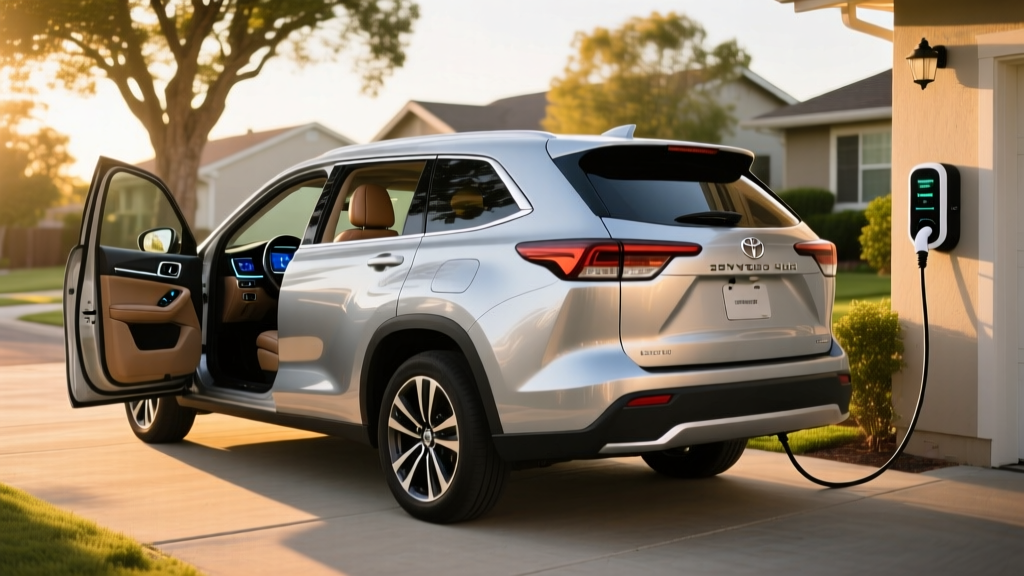
The 2021 Toyota Highlander Hybrid remains one of the most practical three-row SUVs on the used market in 2026. With an EPA-rated 35 MPG combined, standard all-wheel drive, and Toyota's proven hybrid synergy drive system, it offers a compelling middle ground between a conventional gas SUV and a full battery-electric vehicle. For families who need seven or eight seats, can't charge at home, or regularly take long road trips, this conventional hybrid (HEV) eliminates range anxiety while cutting fuel costs roughly in half compared to the gas-only Highlander.
As of 2026, well-maintained examples are plentiful on the used market, typically priced between $28,000 and $38,000 depending on trim and mileage. It does not qualify for any federal EV tax credit since it is a conventional hybrid with no plug-in capability — but its low running costs and strong reliability record make it a smart buy regardless.
HEV vs PHEV: What the Highlander Hybrid Actually Is
Conventional Hybrid (HEV) — That's this vehicle. The 2021 Highlander Hybrid is a self-charging hybrid. It uses a small battery charged exclusively by the gasoline engine and regenerative braking. You never plug it in. The electric motor assists the gas engine and enables brief electric-only driving at low speeds, but the primary energy source is gasoline.
Plug-in Hybrid (PHEV) — Not available for the Highlander. Toyota has never offered a plug-in version of the Highlander in the US market. If you want a Toyota PHEV with a plug, the RAV4 Prime (42 miles electric-only range) is the closest option, though it only seats five. Competitors like the Chrysler Pacifica PHEV offer plug-in capability in a three-row package, but as a minivan rather than an SUV.
This distinction matters because some shoppers confuse "hybrid" with "plug-in hybrid." The Highlander Hybrid has no charging port, no electric-only highway range to speak of, and no eligibility for the federal §30D plug-in vehicle tax credit. It is a traditional gas-electric hybrid designed to maximize fuel economy without any change to your refueling habits.
Fuel Economy: EPA Ratings and Real-World MPG
The 2021 Highlander Hybrid comes exclusively with all-wheel drive (AWD), which slightly affects efficiency compared to a hypothetical FWD-only setup. Here are the official EPA figures, sourced from fueleconomy.gov:
| Driving Condition | EPA Rating | Real-World Expectation |
|---|---|---|
| City | 35 MPG | 34–38 MPG (hybrids often beat EPA in city) |
| Highway | 35 MPG | 31–34 MPG (hybrid advantage shrinks at sustained speed) |
| Combined | 35 MPG | 33–36 MPG |
Why city and highway are identical: Unlike gas-only vehicles, hybrids recapture energy during stop-and-go braking, which offsets the efficiency penalty of city driving. The 2021 Highlander Hybrid's 35/35/35 split is a hallmark of Toyota's hybrid system.
Real-world notes from ownership data: Many Highlander Hybrid owners report exceeding the EPA city estimate, particularly in warm weather with moderate traffic. Highway fuel economy tends to run 2–4 MPG below the EPA sticker at speeds above 70 mph, especially with a full load of passengers and cargo. In cold weather (below 30°F), expect a 5–8% drop in overall efficiency as the engine runs more frequently for cabin heat and battery conditioning.
Cost comparison: At $3.25/gallon (2026 national average), the Highlander Hybrid costs roughly $1,300/year to fuel for 15,000 miles of driving. The gas-only 2021 Highlander AWD (24 MPG combined) costs approximately $2,030/year — a savings of about $730 annually with the hybrid.
Powertrain Specs: 243 HP With Seamless Hybrid Integration
| Specification | 2021 Highlander Hybrid |
|---|---|
| Engine | 2.5L 4-cylinder Atkinson cycle |
| Engine Output | 186 hp / 175 lb-ft torque |
| Front Electric Motor | 134 kW (180 hp) |
| Rear Electric Motor (AWD) | 40 kW (54 hp) |
| Combined System Output | 243 hp |
| Transmission | eCVT (planetary gearset, no belt) |
| Drivetrain | Electronic On-Demand AWD (standard) |
| Hybrid Battery | 1.6 kWh nickel-metal hydride (NiMH) |
| 0–60 mph | ~7.8 seconds |
| Towing Capacity | 3,500 lbs |
| Seating | 7 or 8 passengers (trim-dependent) |
| Cargo (behind 3rd row) | 16.1 cu ft |
| Cargo (all rows folded) | 84.3 cu ft |
The hybrid system pairs a 2.5-liter Atkinson-cycle four-cylinder engine with two electric motors (front and rear) through Toyota's eCVT. This is not a traditional belt-and-pulley CVT — it uses a planetary gearset that blends engine and motor power seamlessly. The result is smooth, linear acceleration without the rubber-band feeling some CVTs produce.
The rear electric motor provides on-demand AWD without a mechanical driveshaft, which reduces weight and drivetrain losses. The 1.6 kWh NiMH battery is small by PHEV or EV standards — it's designed for frequent shallow charge/discharge cycles rather than deep cycling, which contributes to its long service life.
Battery Warranty, Lifespan, and Replacement Cost
Hybrid Battery Warranty: Toyota covers the hybrid battery on the 2021 Highlander Hybrid for 10 years or 150,000 miles (whichever comes first) in all 50 states. This was an upgrade from the prior 8-year/100,000-mile coverage and applies to all Toyota hybrids from the 2020 model year forward.
Hybrid System Components: The hybrid control module, inverter, and related components carry the same 10-year/150,000-mile warranty.
How long do Highlander Hybrid batteries actually last? Toyota's NiMH hybrid batteries have an exceptional track record. The Prius taxi fleet data and long-term owner reports suggest these batteries routinely exceed 200,000 miles before significant degradation. Unlike EV batteries that cycle deeply, the Highlander Hybrid's small battery operates in a narrow state-of-charge window (roughly 40–80%), which dramatically reduces wear.
Replacement cost if out of warranty: A new OEM hybrid battery from Toyota costs approximately $2,500–$3,500 including installation at a dealership. Third-party refurbished batteries are available for $1,500–$2,000. Individual cell module replacement (a common repair for isolated cell failure) can cost as little as $500–$800 at a hybrid specialist shop.
12V auxiliary battery: Like all modern vehicles, the Highlander Hybrid also has a conventional 12V lead-acid battery that powers electronics and starts the hybrid system. This typically lasts 4–6 years and costs $150–$250 to replace — unrelated to the hybrid traction battery.
Used Pricing in 2026 and Tax Credit Eligibility
The 2021 Highlander Hybrid was offered in four trims: LE, XLE, Limited, and Platinum. Original MSRP ranged from approximately $38,200 (LE) to $48,050 (Platinum), plus destination.
| Trim | Original MSRP (2021) | Typical Used Price (2026) |
|---|---|---|
| LE | $38,200 | $27,000–$31,000 |
| XLE | $41,250 | $30,000–$34,000 |
| Limited | $45,050 | $33,000–$37,000 |
| Platinum | $48,050 | $35,000–$39,000 |
Federal tax credit: The 2021 Highlander Hybrid does not qualify for the federal §30D clean vehicle tax credit. That credit applies only to plug-in electric vehicles (BEVs and PHEVs) with a minimum battery capacity of 7 kWh and a charging port. As a conventional hybrid with a 1.6 kWh battery and no plug, it is ineligible.
State incentives: A small number of states offer modest incentives for conventional hybrids, but these are increasingly rare as state programs shift focus to plug-in vehicles. Check your state's energy office or department of environmental quality for current programs.
Used hybrid tax credit: The federal used clean vehicle credit (§25E) also applies only to plug-in vehicles (BEVs and PHEVs), not conventional hybrids. No federal tax benefit is available for purchasing a used Highlander Hybrid.
Reliability Record and Safety Ratings
The 2021 Highlander Hybrid benefits from one of the strongest reliability reputations in the industry. Toyota's hybrid system has been in continuous production since 1997 (Prius), and the fourth-generation Highlander's powertrain is a mature, well-debugged design.
Key reliability points:
- The eCVT planetary gearset has no belts, chains, or clutch packs to wear out — it is among the most durable transmission designs in production.
- Toyota's hybrid battery cooling system uses a dedicated fan and filter; keeping this filter clean (located under the rear seat) extends battery life.
- Brake wear is significantly reduced thanks to regenerative braking — many owners report original brake pads lasting 80,000–100,000 miles.
- Consumer Reports and J.D. Power consistently rate the Highlander Hybrid above average for predicted reliability.
Safety: The 2021 Highlander earned the IIHS Top Safety Pick+ award (with specific headlights) and a 5-Star overall rating from NHTSA. Standard Toyota Safety Sense 2.5+ includes pre-collision braking, lane departure alert, lane tracing assist, full-speed adaptive cruise control, and automatic high beams.
Highlander Hybrid vs Full EV vs Gas: Which Fits You?
Choose the Highlander Hybrid If:
- You need three rows and AWD for a growing family
- You cannot charge at home (apartment, street parking, no garage)
- You take frequent road trips over 300+ miles and don't want to plan charging stops
- You want a proven, low-risk powertrain with strong resale value
- You want to cut fuel costs ~35% vs the gas Highlander without changing habits
Choose a Full EV Instead If:
- You can install a Level 2 home charger and most daily driving is under 250 miles
- You want to qualify for the $7,500 federal tax credit (new) or up to $4,000 (used EV)
- You want zero tailpipe emissions and lower per-mile energy cost (~$0.04/mi vs $0.13/mi)
- You're considering a three-row EV like the Kia EV9, Rivian R1S, or Tesla Model X
The honest tradeoff: The Highlander Hybrid sacrifices some fuel savings and zero-emission capability in exchange for total refueling flexibility. If your lifestyle supports home charging and your road trips are manageable with DC fast-charging stops, a three-row EV will cost less per mile and may net you thousands in tax credits. But if charging access is uncertain or you regularly drive 400+ miles through rural areas, the Highlander Hybrid remains a rational, efficient choice.
Frequently Asked Questions
How many MPG does the 2021 Toyota Highlander Hybrid get?
The EPA rates the 2021 Highlander Hybrid at 35 MPG city, 35 MPG highway, and 35 MPG combined. Real-world owners typically see 33–38 MPG depending on driving style, temperature, and terrain. City driving often exceeds the EPA estimate thanks to regenerative braking, while sustained highway speeds above 70 mph may yield 31–34 MPG.
Does the Highlander Hybrid need to be plugged in?
No. The 2021 Highlander Hybrid is a conventional hybrid (HEV), not a plug-in hybrid (PHEV). It has no charging port. The small hybrid battery is charged entirely by the gasoline engine and regenerative braking during deceleration. You refuel it exactly like a conventional gas vehicle.
Is the 2021 Highlander Hybrid reliable, and what does battery replacement cost?
Yes, it is among the most reliable three-row SUVs available. Toyota's hybrid system has decades of proven durability, and the hybrid battery is warrantied for 10 years/150,000 miles. Out-of-warranty battery replacement costs approximately $2,500–$3,500 for a new OEM unit, though many batteries exceed 200,000 miles without issue.
Does the 2021 Highlander Hybrid qualify for any tax credit?
No. The federal §30D clean vehicle credit and the §25E used vehicle credit both require a plug-in vehicle (BEV or PHEV) with a minimum battery capacity. The Highlander Hybrid is a conventional hybrid with no plug, so it does not qualify for any federal EV tax credit. Check with a tax professional or visit IRS.gov for the latest rules.
How far can the Highlander Hybrid drive on electric only?
Not far — typically less than 1 mile at very low speeds (under 25 mph) in ideal conditions. The 1.6 kWh battery is not designed for sustained electric-only driving. The electric motor's primary role is to assist the gas engine during acceleration, enable engine stop-start, and recapture braking energy. If electric-only range is a priority, look at a PHEV like the RAV4 Prime (42 miles) or a full BEV.
What's the difference between the 2021 Highlander Hybrid and the gas Highlander?
The hybrid uses a 2.5L four-cylinder engine with electric motors (243 hp combined, 35 MPG) while the gas model uses a 3.5L V6 (295 hp, 24 MPG combined AWD). The hybrid is slower to 60 mph (~7.8s vs ~7.2s) but saves roughly $730/year in fuel. The hybrid also has standard AWD (electric rear motor) while the gas model offers FWD or AWD. Cargo and passenger space are identical.
Can the 2021 Highlander Hybrid tow?
Yes. The hybrid is rated to tow up to 3,500 pounds, which is sufficient for a small boat, light utility trailer, or a pair of jet skis. This is 1,500 pounds less than the gas-only Highlander's 5,000-pound rating, so if you regularly tow heavy loads, the gas model may be more suitable.