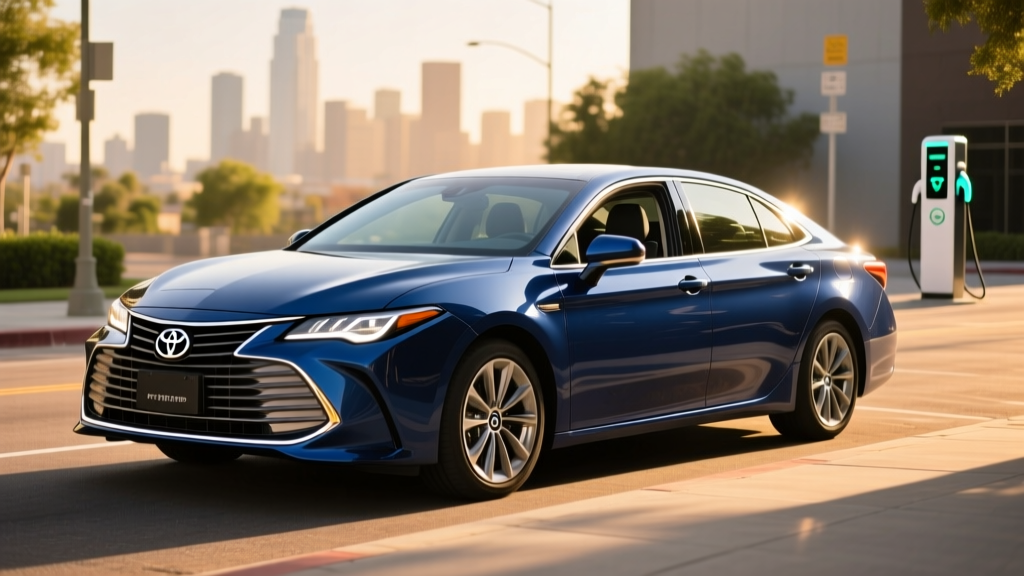
The 2021 Toyota Camry XSE Hybrid occupies a specific niche: buyers who want the sportiest Camry trim without sacrificing the fuel economy Toyota's hybrid system is famous for. With an EPA-rated 46 MPG combined and a combined 208 horsepower, it threads the needle between efficiency and engagement. In 2026, as used examples flood the market at attractive prices, this midsize hybrid sedan deserves a hard look — especially for drivers who aren't ready to commit to a full battery-electric vehicle but want meaningful fuel savings over a gas-only car.
This review covers the exact numbers that matter: EPA and real-world MPG, powertrain specs, hybrid battery longevity and warranty, what you'll actually pay in 2026, and whether a conventional hybrid (HEV) like this one fits your driving life better than a plug-in hybrid or full EV.
Powertrain and Performance Specs
The 2021 Camry XSE Hybrid pairs a 2.5-liter four-cylinder Atkinson-cycle engine with an electric motor-generator through Toyota's Hybrid Synergy Drive system. The engine alone produces 176 horsepower and 163 lb-ft of torque; the electric motor adds 88 kW (118 hp). Combined system output is 208 horsepower, sent to the front wheels via an electronically controlled CVT (eCVT).
| Specification | Value |
|---|---|
| Combined Horsepower | 208 hp |
| Engine | 2.5L 4-cyl Atkinson-cycle |
| Electric Motor Output | 88 kW (118 hp) |
| Drivetrain | Front-wheel drive |
| Transmission | eCVT |
| Hybrid Battery | ~1.6 kWh NiMH (sealed, self-charging) |
| 0–60 mph | ~7.5 seconds |
| Curb Weight | ~3,572 lbs |
| Cargo Volume | 15.1 cu ft |
| EPA MPG (City / Hwy / Combined) | 44 / 47 / 46 |
The XSE trim specifically gets a sport-tuned suspension, 19-inch alloy wheels, and a rear spoiler — all of which add marginal weight and aerodynamic drag compared to the LE Hybrid. That's why the XSE Hybrid carries a slightly lower EPA rating than the LE Hybrid (which is rated at 51/53/52 MPG). You trade roughly 5–6 MPG combined for the sportier ride, larger wheels, and upgraded interior materials. For many buyers in this segment, that tradeoff is worth it.
Fuel Economy: EPA Ratings vs. Real-World MPG
| Driving Cycle | EPA MPG |
|---|---|
| City | 44 MPG |
| Highway | 47 MPG |
| Combined | 46 MPG |
Toyota hybrids have a well-documented tendency to exceed their EPA city rating in real-world stop-and-go driving, thanks to aggressive regenerative braking and frequent engine-off electric-only operation at low speeds. Owners on fueleconomy.gov's My MPG tracker report averages between 42 and 50 MPG in mixed driving, with city-heavy commuters occasionally seeing 48–52 MPG on flat terrain in mild weather.
On sustained highway trips at 75+ mph, expect the number to settle closer to 40–43 MPG. The 19-inch wheels and sport-tuned suspension of the XSE create slightly more rolling resistance and weight than the efficiency-focused LE trim. In cold weather (below 30°F), the gasoline engine runs more frequently to maintain cabin heat, which can drop observed MPG to the high 30s until the engine and catalytic converter are fully warmed.
HEV vs. PHEV vs. Full EV: Which Fits Your Life?
The 2021 Camry XSE Hybrid is a conventional hybrid (HEV). It has a small ~1.6 kWh nickel-metal hydride (NiMH) battery that charges exclusively through regenerative braking and the gasoline engine. You never plug it in. There is no electric-only driving range to speak of — the battery assists the engine and enables brief engine-off coasting and low-speed maneuvers, but it cannot propel the car on electricity alone for meaningful distances.
| Factor | HEV (This Car) | PHEV | Full EV (BEV) |
|---|---|---|---|
| Plug in required? | No | Yes (for EV range) | Yes |
| Electric-only range | None (assist only) | 20–45 miles typical | 220–400+ miles |
| Fuel/energy source | Gasoline only | Gasoline + electricity | Electricity only |
| Home charging needed? | No | Recommended (Level 2) | Essential |
| Federal tax credit (§30D) | Not eligible | Eligible (if requirements met) | Eligible (if requirements met) |
| Best for | No home charging, long trips | Short commute + long trips | Home charging + mostly <300 mi trips |
If you have access to home Level 2 charging and a commute under 30 miles, a PHEV like the Toyota RAV4 Prime or a full EV like the Hyundai Ioniq 6 may deliver lower operating costs. But if you live in an apartment without charging access, regularly drive 400+ mile trips, or simply want zero behavioral change from your gas-car routine, the Camry XSE Hybrid delivers 40%+ fuel savings over its gas-only counterpart with no lifestyle adjustment.
2026 Used Pricing and Tax Credit Eligibility
The 2021 Camry XSE Hybrid originally carried an MSRP of approximately $32,795 (including destination). In the 2026 used market, well-maintained examples with 30,000–60,000 miles are transacting between $21,000 and $26,500 depending on condition, mileage, and region.
The absence of a federal credit stings less when you consider total cost of ownership. At 46 MPG combined and $3.10/gallon gas (a reasonable 2026 national average), you'd spend roughly $1,010 per year on fuel driving 15,000 miles. A comparable gas-only 2021 Camry XSE (2.5L, 30 MPG combined) would cost about $1,550/year — a $540 annual fuel savings that compounds over ownership.
Battery Warranty, Reliability, and Replacement Cost
Toyota covers the hybrid battery in the 2021 Camry with a 10-year / 150,000-mile warranty (whichever comes first). This is one of the strongest hybrid battery warranties in the industry and applies regardless of the state you purchase in, following the extension Toyota implemented for 2020+ model years.
Toyota's hybrid battery packs have an outstanding longevity track record. The NiMH chemistry in this generation is mature and well-understood; Prius taxis have exceeded 300,000 miles on original hybrid batteries. Real-world failure before 150,000 miles is uncommon.
If you do need an out-of-warranty replacement down the road, a new OEM hybrid battery for the Camry Hybrid typically costs between $2,500 and $4,000 installed at a dealership. Third-party refurbished packs are available for $1,500–$2,500. Given the 10-year warranty window and the battery's proven durability, this cost is a low-probability concern for most buyers — but it's worth budgeting for if you plan to keep the car past 200,000 miles.
Overall vehicle reliability is a Toyota strong suit. The NHTSA gave the 2021 Camry a 5-Star overall safety rating, and IIHS named it a Top Safety Pick+ when equipped with specific headlights. Toyota Safety Sense 2.5+ (pre-collision, lane departure, dynamic radar cruise control, lane tracing) is standard on every trim.
Who Should Buy the Camry XSE Hybrid — And Who Shouldn't
✓ Choose This Car If:
- You want 40%+ fuel savings with zero plug-in routine changes
- You regularly take 400+ mile road trips and don't want to plan around chargers
- You don't have access to home or workplace EV charging
- You want a sporty midsize sedan with proven long-term reliability
- You drive 15,000+ miles/year and fuel cost matters
✗ Look Elsewhere If:
- You have home charging and a short commute (a PHEV or EV saves more)
- You want electric-only silent driving or zero tailpipe emissions
- You need all-wheel drive (the 2021 Camry Hybrid is FWD only; the AWD Hybrid arrived in 2023)
- You want eligibility for the $7,500 federal EV tax credit
- You prioritize maximum cargo space (a RAV4 Hybrid or EV crossover offers more)
Pros and Cons at a Glance
Pros
- 46 MPG combined real-world; often exceeds EPA in city driving
- 208 hp provides confident highway passing
- 580+ mile range per tank eliminates trip-planning stress
- 10-year/150,000-mile hybrid battery warranty
- XSE trim delivers sport suspension, 19" wheels, premium interior
- Toyota Safety Sense 2.5+ standard
- Strong resale value and proven reliability
Cons
- FWD only (AWD Hybrid not available until 2023 model year)
- XSE trim loses ~5 MPG vs. LE Hybrid due to larger wheels
- No federal tax credit eligibility
- eCVT drone under hard acceleration (common to Toyota hybrids)
- Infotainment feels dated compared to 2024+ competitors
- Rear seat space tighter than some midsize rivals
Frequently Asked Questions
How many MPG does the 2021 Camry XSE Hybrid actually get?
The EPA rates it at 44 city / 47 highway / 46 combined. Real-world owners typically see 42–50 MPG depending on driving mix. City-heavy commuters often exceed the EPA city number thanks to regenerative braking; sustained highway driving at 75+ mph yields closer to 40–43 MPG.
Does the Camry XSE Hybrid need to be plugged in?
No. This is a conventional hybrid (HEV), not a plug-in hybrid. The small NiMH battery charges itself through regenerative braking and the gasoline engine. You fuel it exactly like a regular gas car — just less often.
How far can it drive on electric power alone?
Effectively zero meaningful distance. The hybrid system uses the electric motor to assist the gasoline engine, enable engine-off coasting, and handle very low-speed maneuvers (like creeping in a parking lot). It cannot sustain electric-only driving at road speeds. If electric-only range is a priority, you need a PHEV or full EV.
Is the hybrid battery reliable, and what does replacement cost?
Toyota's hybrid batteries have an excellent longevity record, often lasting 200,000+ miles. The 2021 Camry Hybrid battery is covered by a 10-year/150,000-mile warranty. Out-of-warranty replacement runs $2,500–$4,000 for an OEM pack, or $1,500–$2,500 for a refurbished unit.
Does the 2021 Camry Hybrid qualify for any tax credits?
Not at the federal level. The IRS §30D Clean Vehicle Credit applies only to plug-in electric vehicles (PHEVs and BEVs) that meet battery sourcing, MSRP caps, and buyer income requirements. Some states or utilities may offer hybrid-specific incentives — check your local programs. (IRS.gov)
How does the XSE Hybrid compare to the gas-only Camry XSE?
The gas-only 2021 Camry XSE (2.5L, 203 hp, 8-speed automatic) is rated at 28 city / 39 highway / 32 combined. The Hybrid gives you 14 more combined MPG, similar horsepower (208 vs 203), and a quieter powertrain in city driving — for roughly $1,500–$2,000 more in original MSRP. At 15,000 miles/year, the fuel savings pay back that premium in about 3 years.
Should I buy this or a full EV in 2026?
If you have reliable home Level 2 charging, drive under 300 miles most days, and want the lowest per-mile energy cost, a full EV like a used Tesla Model 3 or Hyundai Ioniq 5 will cost less to "fuel" and eliminate tailpipe emissions entirely. But if you lack charging access, frequently drive long distances, or want zero behavioral change from gas-car ownership, the Camry XSE Hybrid delivers excellent efficiency with none of the infrastructure dependency.
Sources: EPA fueleconomy.gov, IRS Clean Vehicle Tax Credits, NHTSA 2021 Toyota Camry Safety Ratings.