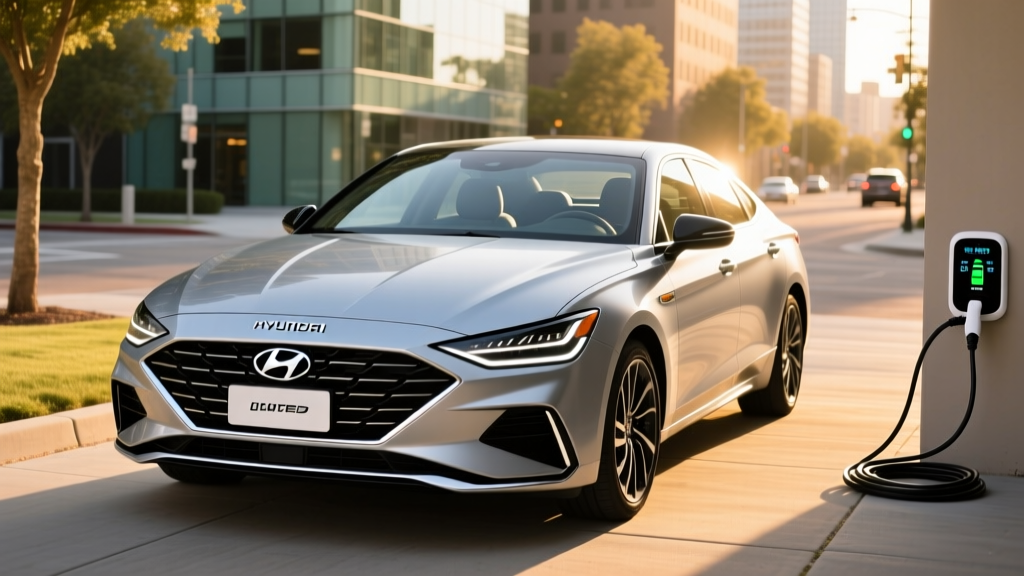
The 2021 Hyundai Sonata Hybrid Limited represents a compelling middle ground in the midsize sedan segment: a conventional hybrid (HEV) that delivers exceptional fuel economy without requiring any plug-in charging or lifestyle change. Now available exclusively on the used market, this top-trim hybrid pairs a 2.0-liter gasoline engine with an electric motor for an EPA-rated 47 MPG combined — a figure that routinely beats its sticker in real-world city driving. Here's everything a prospective buyer or current owner needs to know about specs, reliability, battery longevity, and whether this HEV still makes sense in 2026.
Quick Verdict: Who Is the Sonata Hybrid Limited For?
The 2021 Sonata Hybrid Limited is built for drivers who want maximum fuel efficiency without the complexity, cost, or charging dependency of a plug-in hybrid (PHEV) or full battery-electric vehicle (BEV). It's a strong pick for apartment dwellers without home charging access, high-mileage commuters, and anyone who wants a loaded midsize sedan with premium features at a used-market discount. If you can charge at home and mostly drive under 30 miles a day, a PHEV or BEV may save you more. But if you need a car that simply sips fuel and keeps going, this HEV delivers.
HEV vs. PHEV vs. EV: Which Powertrain Fits You?
Before diving into specs, it's worth clarifying the three electrified powertrain types, because the Sonata nameplate has been offered in multiple forms:
| Powertrain | How It Charges | Electric-Only Driving | Best For |
|---|---|---|---|
| HEV (Conventional Hybrid) e.g., 2021 Sonata Hybrid | Gas engine + regenerative braking only — no plug | Very short distances at low speed (under ~1 mile) | Drivers without charging access; high-mileage commuters |
| PHEV (Plug-in Hybrid) e.g., Toyota RAV4 Prime | Plug in to charge a larger battery; gas engine as backup | Typically 25–45 miles on battery alone | Home chargers with short daily commutes + road-trip flexibility |
| BEV (Battery Electric) e.g., Hyundai Ioniq 6 | Plug in only — no gas engine | Full range: 200–360+ miles | Home-charging access, lower operating cost, zero tailpipe emissions |
The 2021 Sonata Hybrid is strictly an HEV. You never plug it in. The 1.76 kWh lithium-ion battery charges itself through the gasoline engine and regenerative braking. This is fundamentally different from a PHEV, which carries a much larger battery (typically 10–18 kWh) and offers meaningful electric-only range. Hyundai did not offer a PHEV version of the Sonata for the U.S. market in 2021.
Fuel Economy: EPA Ratings and Real-World MPG
The headline number for the 2021 Hyundai Sonata Hybrid Limited is an EPA-estimated 47 MPG combined. Here's the full breakdown from fueleconomy.gov:
| Driving Condition | EPA Rating | Real-World Expectation |
|---|---|---|
| City | 50 MPG | 50–55 MPG (hybrids often exceed EPA in stop-and-go) |
| Highway | 45 MPG | 40–44 MPG (sustained 70+ mph reduces regenerative advantage) |
| Combined | 47 MPG | 44–50 MPG depending on driving mix |
Why real-world MPG can beat the EPA sticker: Conventional hybrids like the Sonata Hybrid thrive in city driving, where regenerative braking recaptures energy that a gas car wastes as heat. Owners who drive predominantly in urban or suburban conditions routinely report 50+ MPG. Conversely, sustained highway driving at 75–80 mph reduces the hybrid system's advantage — the electric motor assists less at constant high speed, and aerodynamic drag dominates. Expect highway-only trips to yield around 40–44 MPG.
Cold-weather impact: In winter conditions (below 35°F), expect a 5–10% MPG reduction. The engine runs more frequently to provide cabin heat and maintain operating temperature, reducing time spent in electric-only mode. This is modest compared to the 20–30% range loss a full EV experiences in cold weather, but it's measurable.
Powertrain Specs: Engine, Motor, and Combined Output
| Specification | 2021 Sonata Hybrid Limited |
|---|---|
| Engine | 2.0L GDI inline-4 (Smartstream) |
| Engine Power | 150 hp @ 6,000 rpm / 139 lb-ft torque |
| Electric Motor | 39 kW (52 hp) permanent-magnet synchronous |
| Combined System Output | 192 hp |
| Transmission | 6-speed automatic (no CVT) |
| Hybrid Battery | 1.76 kWh lithium-ion (located under rear seat) |
| 0–60 mph | ~7.5 seconds (estimated) |
| Drivetrain | Front-wheel drive |
| Fuel Tank | 13.2 gallons |
| Total Driving Range | ~620 miles (13.2 gal × 47 MPG) |
| Curb Weight | ~3,495 lbs |
The Sonata Hybrid's 6-speed automatic transmission is a deliberate choice by Hyundai — it avoids the rubber-band feel of the continuously variable transmissions (CVTs) found in competitors like the Toyota Camry Hybrid and Honda Accord Hybrid. The trade-off is slightly less seamless power delivery, but most drivers appreciate the familiar shift feel and the absence of CVT drone under hard acceleration.
The 192 combined horsepower is competitive in the midsize hybrid sedan class. It's not a performance car, but it merges onto highways confidently and handles passing maneuvers without strain. The electric motor fills in torque at low RPMs before the gasoline engine reaches its power band, which gives the Sonata Hybrid a responsive feel from a stop.
Battery Longevity, Warranty, and Replacement Cost
Hybrid Battery Warranty (2021 Sonata Hybrid)
- Hybrid Battery: 10 years / 100,000 miles (original owner, most states)
- Hybrid Battery (California & CARB states): 10 years / 150,000 miles
- Hybrid System Components: 10 years / 100,000 miles
- Powertrain (engine/transmission): 10 years / 100,000 miles
- Transferability: The 10-year hybrid battery warranty is NOT fully transferable to second owners in most states — it typically drops to 5 years / 60,000 miles for subsequent owners. Verify with a Hyundai dealer using the VIN.
Is the Sonata Hybrid reliable? The 2021 Sonata Hybrid benefits from Hyundai's second-generation TMED (Transmission-Mounted Electric Device) hybrid system, which has proven durable in the Ioniq and Kona Hybrid before it. The 1.76 kWh battery is relatively small and operates within a narrow state-of-charge window (roughly 40–80%), which significantly reduces degradation stress compared to a full EV battery. Most Hyundai hybrid batteries from the 2017+ era show minimal capacity loss at 100,000+ miles.
Battery replacement cost: If the hybrid battery does fail outside of warranty, expect a replacement cost between $2,000 and $3,500 for the battery module pack (not the entire assembly). This is substantially less than a full EV battery replacement ($8,000–$20,000+), because the Sonata Hybrid's 1.76 kWh pack is small. Independent hybrid-battery shops can often refurbish or replace individual cells for $1,000–$1,800. The 12V auxiliary battery (a standard lead-acid or AGM unit in the trunk) is a separate, inexpensive maintenance item (~$150–$250 replacement).
What kills hybrid batteries early: Extreme heat (sustained 100°F+ climates), prolonged storage at very low or very high charge states, and very high mileage without thermal management maintenance. The Sonata Hybrid's liquid-cooled battery system mitigates heat stress effectively. Owners in Arizona or Texas should park in shade when possible and avoid letting the car sit unused for weeks.
Pricing and Tax Credit Eligibility
The 2021 Hyundai Sonata Hybrid Limited originally carried an MSRP of approximately $35,300 (plus destination). On the used market in 2026, expect to pay between $18,000 and $24,000 depending on mileage, condition, and region — a significant discount that makes this one of the best-value loaded hybrid sedans available.
Federal tax credit: The 2021 Sonata Hybrid is a conventional HEV, not a PHEV or BEV. It does NOT qualify for the IRS §30D Clean Vehicle Credit ($7,500 for new EVs/PHEVs). The §30D credit requires a minimum battery capacity of 7 kWh and plug-in charging capability — the Sonata Hybrid's 1.76 kWh battery and lack of a charging port disqualify it entirely.
Used EV credit (§25E): The federal used clean vehicle credit (up to $4,000 or 30% of sale price, whichever is less) also does NOT apply, because it covers only BEVs and PHEVs with at least 7 kWh of battery capacity.
State incentives: Some states offer modest rebates or HOV lane access for conventional hybrids, but these vary widely and change frequently. Check your state's energy office or DMV for current programs. California's Clean Fuel Reward program, for example, has historically focused on PHEVs and BEVs rather than HEVs.
What the Limited Trim Gets You
The Limited is the top-tier trim for the 2021 Sonata Hybrid lineup, sitting above the Blue and SEL trims. Key standard features on the Limited include:
- Panoramic sunroof
- Leather seating surfaces with heated and ventilated front seats
- Heated steering wheel
- 12.3-inch digital instrument cluster
- 10.25-inch touchscreen navigation with wireless Apple CarPlay/Android Auto
- Harman Kardon premium audio (12 speakers)
- Hyundai SmartSense suite: adaptive cruise control with stop-and-go, lane-keeping assist, blind-spot monitoring, rear cross-traffic collision avoidance, highway driving assist
- Remote smart parking assist (RSPA)
- Solar roof panel (charges the 12V auxiliary battery and adds roughly 2 miles of range per day to the hybrid system under ideal conditions)
- LED headlights and taillights
- 17-inch alloy wheels with low-rolling-resistance tires
The solar roof panel is a distinctive feature. Hyundai estimates it can add approximately 700 miles of supplemental range per year under optimal sun conditions by trickle-charging the hybrid battery and reducing parasitic load on the alternator. In practice, this translates to a small but measurable efficiency gain — think 1–2 MPG improvement in sunny climates. It's not a game-changer, but it's a clever efficiency enhancer that costs nothing to use.
Safety Ratings
The 2021 Hyundai Sonata (including the Hybrid) earned strong safety marks. The NHTSA awarded it a 5-Star Overall Safety Rating. The IIHS named the 2021 Sonata a Top Safety Pick+ (the highest designation) when equipped with specific headlights — the Limited trim's LED headlights meet this requirement.
Ownership Costs: Fuel Savings vs. a Gas Sonata
To put the Sonata Hybrid's fuel savings in context, here's a comparison against the gas-powered 2021 Sonata 2.5L (non-turbo), assuming 15,000 miles/year and $3.40/gallon average fuel cost:
| Metric | Sonata Hybrid Limited (47 MPG) | Sonata 2.5L Gas (32 MPG Combined) |
|---|---|---|
| Annual Fuel Cost | ~$1,085 | ~$1,594 |
| 5-Year Fuel Cost | ~$5,425 | ~$7,970 |
| 5-Year Fuel Savings | ~$2,545 saved with the Hybrid | |
| Cost Per Mile (fuel only) | $0.072 | $0.106 |
Over five years, the Hybrid saves roughly $2,500 in fuel alone. Factor in the typical used-market price premium for the Hybrid over the gas model (often $1,000–$2,500), and the payback period is short — often within 2–3 years of ownership.
Pros
- Class-leading 50 MPG city / 47 MPG combined
- No plug-in charging required — just fill up with gas
- Limited trim is loaded with premium features
- 10-year/100,000-mile hybrid battery warranty (original owner)
- 6-speed automatic avoids CVT drone
- 620+ mile total range per tank
- Solar roof panel adds marginal free efficiency
- Strong safety ratings (IIHS TSP+, NHTSA 5-star)
Cons
- No electric-only driving range (HEV, not PHEV)
- No federal or state EV tax credit eligibility
- Highway MPG drops at sustained 75+ mph speeds
- Used-market hybrid battery warranty may be reduced for second owners
- Only front-wheel drive — no AWD option (unlike Toyota Camry Hybrid)
- Smaller trunk than gas Sonata due to hybrid battery placement
Decision Framework: Should You Buy This Hybrid?
Choose the 2021 Sonata Hybrid Limited if:
- You don't have access to home or workplace charging (apartment, street parking)
- Your commute is a mix of city and highway driving
- You want a fully loaded midsize sedan under $25,000 on the used market
- You drive 12,000–20,000+ miles per year and fuel cost matters
- You want zero range anxiety and no charging logistics
Consider a PHEV or BEV instead if:
- You have Level 2 home charging and a short daily commute (under 30 miles) — a PHEV like the Toyota RAV4 Prime or Hyundai Tucson PHEV could eliminate most gas use
- You want to qualify for federal or state EV incentives
- You want zero tailpipe emissions for daily driving (BEV or PHEV in EV mode)
- You want the lowest possible per-mile energy cost (electricity is typically $0.04–$0.06/mile vs. $0.07+/mile for this hybrid)
Frequently Asked Questions
How many MPG does the 2021 Hyundai Sonata Hybrid Limited get?
The EPA rates it at 50 MPG city, 45 MPG highway, and 47 MPG combined. Real-world results vary: city-heavy drivers often see 50–55 MPG, while sustained highway driving at 75+ mph yields 40–44 MPG. Cold weather reduces efficiency by roughly 5–10%.
Does the Sonata Hybrid need to be plugged in?
No. The 2021 Sonata Hybrid is a conventional HEV (hybrid electric vehicle). It has no charging port. The 1.76 kWh battery charges through the gasoline engine and regenerative braking. You fuel it like any normal car.
How far can the Sonata Hybrid drive on electric power alone?
Only very short distances at low speeds — typically under one mile at speeds below 25 mph, such as creeping through a parking lot or in stop-and-go traffic. This is normal for an HEV. If you want meaningful electric-only range (25–45 miles), you need a PHEV, not an HEV.
Is the 2021 Sonata Hybrid reliable?
Yes. Hyundai's second-generation hybrid system has proven durable. The hybrid battery operates in a narrow charge window to minimize degradation, and the liquid-cooled thermal management system protects against heat stress. With normal maintenance, 150,000–200,000+ miles on the hybrid system is realistic.
What does it cost to replace the hybrid battery?
Out of warranty, expect $2,000–$3,500 for a new battery module pack. Refurbished or cell-level repairs from independent hybrid shops can cost $1,000–$1,800. This is far less than a full EV battery replacement. Most hybrid batteries last well beyond 100,000 miles with normal use.
Does the 2021 Sonata Hybrid qualify for any tax credit?
No. The federal §30D Clean Vehicle Credit and the §25E Used Clean Vehicle Credit both require a plug-in vehicle with at least 7 kWh of battery capacity. The Sonata Hybrid's 1.76 kWh battery and lack of a charging port make it ineligible. Some states may offer minor incentives for hybrids — check your state's energy office.
How does the Sonata Hybrid compare to the Toyota Camry Hybrid?
The 2021 Camry Hybrid LE is rated at 52 MPG combined (vs. 47 for the Sonata Hybrid), giving Toyota a slight efficiency edge. However, the Camry Hybrid uses a CVT (which some drivers dislike), and AWD is available on the Camry Hybrid but not the Sonata. The Sonata Hybrid Limited offers more standard premium features (panoramic sunroof, ventilated seats, Harman Kardon audio) at a comparable or lower used-market price.
What is the total driving range on a full tank?
With a 13.2-gallon fuel tank and 47 MPG combined, the Sonata Hybrid can travel approximately 620 miles between fill-ups. City-heavy driving can push this to 660+ miles thanks to the 50 MPG city rating.