Quick Verdict: The Workhorse That Sips Fuel
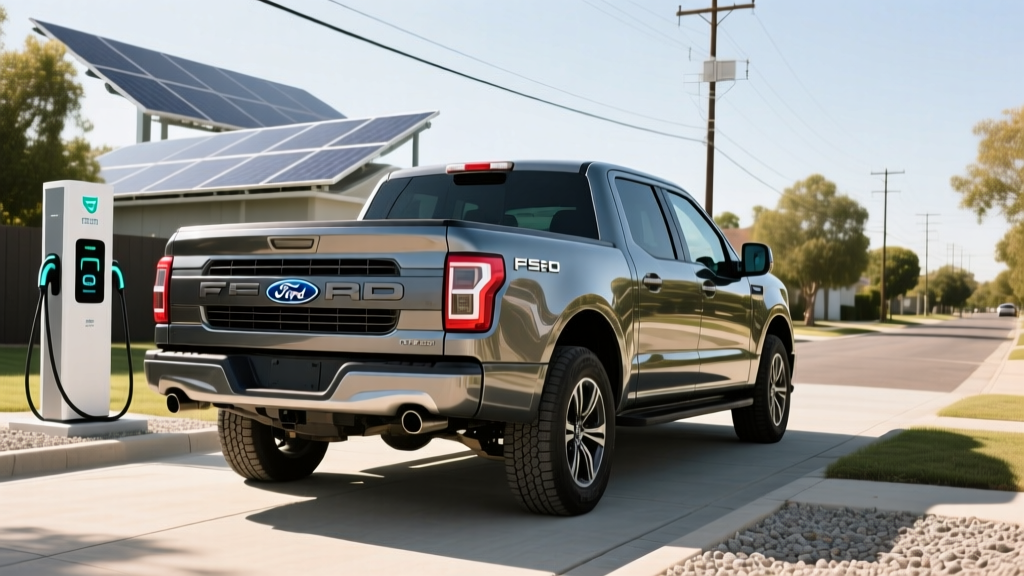
The 2021 Ford F-150 Hybrid — officially branded as the 3.5L PowerBoost Full Hybrid — was Ford's first attempt at electrifying America's best-selling vehicle. It pairs a twin-turbo V6 with a 47-hp electric motor integrated into the 10-speed automatic transmission, producing a combined 430 horsepower and 570 lb-ft of torque. The result is a full-size pickup that achieves 24 MPG combined EPA while retaining up to 12,700 pounds of max towing capacity.
As a conventional hybrid (HEV), the PowerBoost requires no plug-in charging. It recovers energy through regenerative braking and uses a small 1.5 kWh lithium-ion battery to assist acceleration, enable brief low-speed electric driving, and power the Pro Power Onboard generator system. For buyers who need truck capability but want to cut fuel costs without changing their refueling habits, the 2021 F-150 Hybrid remains one of the most practical options on the used market in 2026.
HEV vs PHEV vs EV: Where the F-150 PowerBoost Fits
Conventional Hybrid (HEV): The 2021 F-150 PowerBoost is a self-charging hybrid. You never plug it in. The battery charges via regenerative braking and the gasoline engine. Electric-only driving is limited to very low speeds for short distances (roughly 1–2 miles at parking-lot speeds). The primary benefit is improved fuel economy — roughly 20–30% better than the non-hybrid 3.5L EcoBoost V6.
Plug-in Hybrid (PHEV): A PHEV has a larger battery (typically 12–20 kWh) that you charge from a wall outlet or charger, giving 25–40 miles of electric-only range before the gas engine kicks in. Ford does not offer a PHEV version of the F-150. If plug-in capability in a Ford truck matters to you, the F-150 Lightning is the full-electric alternative.
Battery Electric (BEV): The F-150 Lightning offers 230–320 miles of EPA range, zero tailpipe emissions, and a frunk — but at a higher purchase price and with charging logistics to consider. The PowerBoost HEV is the middle ground: meaningful fuel savings with zero lifestyle change.
Fuel Economy: EPA Ratings and Real-World MPG
| Configuration | City MPG | Highway MPG | Combined MPG |
|---|---|---|---|
| 4×2 (RWD) | 25 | 26 | 25 |
| 4×4 (AWD) | 24 | 24 | 24 |
| Non-hybrid 3.5L EcoBoost 4×4 (comparison) | 18 | 24 | 20 |
Source: EPA / fueleconomy.gov
Real-World MPG Reality Check: The PowerBoost's hybrid system shines in stop-and-go city driving, where regenerative braking and electric assist do the most work. Owners consistently report 25–28 MPG in mixed city driving, sometimes exceeding the EPA city rating. On sustained highway cruising at 75+ mph, expect 20–22 MPG — the aerodynamic penalty of a full-size truck and the added weight of the hybrid system (roughly 250 lbs over the standard EcoBoost) work against it. When towing a 5,000–7,000 lb trailer, fuel economy drops to approximately 12–15 MPG, which is comparable to the non-hybrid V6 under load.
Powertrain and Performance Specs
| Specification | 2021 F-150 PowerBoost Hybrid |
|---|---|
| Engine | 3.5L Twin-Turbo V6 + 47-hp electric motor |
| Combined Horsepower | 430 hp |
| Combined Torque | 570 lb-ft |
| Transmission | 10-speed automatic (motor integrated) |
| Battery Capacity | 1.5 kWh lithium-ion |
| 0–60 mph | ~5.5 seconds (4×4, estimated) |
| Max Towing Capacity | 12,700 lbs (properly equipped) |
| Max Payload | 2,120 lbs |
| Drivetrain | RWD or 4WD |
| Pro Power Onboard | 2.4 kW (standard) or 7.2 kW (optional) |
The PowerBoost's 570 lb-ft of torque is available low in the rev range thanks to electric motor assist, which makes it feel notably responsive off the line compared to the standard 3.5L EcoBoost (400 hp / 500 lb-ft). The hybrid system also serves as a smooth auto start-stop mechanism — the engine restarts are nearly imperceptible compared to the jarring restarts in non-hybrid trucks.
Pro Power Onboard: The Hidden Advantage
One feature unique to the F-150 Hybrid is the Pro Power Onboard system, which uses the hybrid battery and engine to generate household AC power from the bed outlets. The standard 2.4 kW system provides two 120V/20A outlets. The optional 7.2 kW system adds a 240V/30A outlet — enough to simultaneously run a jobsite table saw, charge power tool batteries, and power lights, or run a residential refrigerator and microwave during a power outage.
Because the hybrid battery buffers power delivery, the engine doesn't need to run continuously to generate electricity. At a campsite or tailgate, the truck can run in EV mode briefly, providing silent power before the engine quietly starts to recharge. This capability is something neither the gas-only F-150 nor most competitors can match without a standalone generator.
Pricing, Trims, and Tax Credit Eligibility
The PowerBoost hybrid powertrain was available across multiple F-150 trims for the 2021 model year, from XLT through Platinum and Limited. The hybrid option added approximately $2,500–$3,500 to the build price depending on the trim and configuration.
| Trim Level (2021) | Approximate Original MSRP (4×4) | PowerBoost Available? |
|---|---|---|
| XLT | ~$42,000–$48,000 | Yes (option package) |
| Lariat | ~$48,000–$55,000 | Yes |
| King Ranch | ~$58,000–$63,000 | Yes |
| Platinum | ~$60,000–$66,000 | Yes |
| Limited | ~$70,000+ | Yes |
Federal Tax Credit Status: The 2021 Ford F-150 PowerBoost is a conventional hybrid (HEV), not a plug-in vehicle. Under current IRS §30D rules, conventional hybrids do not qualify for the federal clean vehicle tax credit (up to $7,500), which is reserved for plug-in electric vehicles (PHEVs and BEVs) meeting battery sourcing and income requirements. The F-150 Lightning (BEV) may qualify depending on the buyer's income, MSRP cap compliance, and battery component sourcing — consult IRS.gov §30D guidelines and a tax professional for your specific situation.
Some states offer separate incentives for hybrid purchases or for scrapping older vehicles — check your state's energy or DMV website for current programs.
Battery Warranty, Reliability, and Replacement Costs
Hybrid Battery Warranty: Ford covers the 2021 F-150 PowerBoost hybrid battery for 8 years or 100,000 miles (whichever comes first) under the federal emissions-related warranty mandate. In California Air Resources Board (CARB) states, hybrid battery coverage extends to 10 years or 150,000 miles. This warranty covers defects and capacity loss below a functional threshold.
Reliability Track Record: The 3.5L EcoBoost V6 is one of Ford's most proven engines, and the hybrid system adds relatively few failure points — the electric motor is integrated into the transmission housing with no additional gears or clutches. Early owner reports and reliability surveys from the 2021–2023 period showed no widespread hybrid-system failures. The 1.5 kWh battery is small and conservatively managed, which favors longevity.
Battery Replacement Cost: If the hybrid battery fails outside of warranty, replacement cost is estimated at $2,000–$4,000 for the battery pack, plus labor. This is significantly less than a full EV battery replacement because the pack is small. Given the 8-year/100,000-mile warranty coverage, most original owners will never face this expense.
5-Year Ownership Cost: Hybrid vs Gas F-150
| Cost Factor | F-150 PowerBoost Hybrid (4×4) | F-150 3.5L EcoBoost (4×4) |
|---|---|---|
| Average Used Price (2026) | ~$32,000–$40,000 | ~$28,000–$36,000 |
| EPA Combined MPG | 24 | 20 |
| Annual Fuel Cost (15,000 mi/yr, $3.50/gal) | ~$2,188 | ~$2,625 |
| 5-Year Fuel Cost | ~$10,938 | ~$13,125 |
| 5-Year Fuel Savings (Hybrid) | ~$2,187 | |
| Estimated Annual Insurance | ~$1,800–$2,400 | ~$1,700–$2,300 |
Fuel costs based on EPA estimates and national average gas prices. Your actual costs will vary with driving patterns, fuel prices, and trim. Source: fueleconomy.gov
The hybrid commands a premium on the used market (roughly $3,000–$5,000 over a comparably equipped gas model), and the fuel savings recoup approximately $437 per year at current gas prices. The break-even point on the purchase premium is roughly 7–10 years for an average driver. However, if you drive primarily in the city, tow occasionally, or value the Pro Power Onboard feature, the hybrid's value proposition extends beyond pure fuel-cost math.
Who Should Buy the F-150 Hybrid — and Who Shouldn't
Choose the F-150 PowerBoost Hybrid if:
- You drive a mix of city and highway miles and want 20–25% better fuel economy without plugging in
- You need Pro Power Onboard for jobsite tools, camping, or home backup power
- You want the torque and towing of a V6 turbo with smoother stop-start and low-speed refinement
- You're not ready to manage EV charging logistics but want to reduce fuel spend
Choose the gas-only F-150 (3.5L EcoBoost or 5.0L V8) if:
- You do mostly highway driving with minimal stop-and-go (the hybrid advantage shrinks)
- You want the lowest possible purchase price and don't care about fuel savings
- You prefer a simpler powertrain with no hybrid-specific components
Choose the F-150 Lightning (BEV) if:
- You have reliable home charging (Level 2) and want near-zero fuel costs
- You want 230–320 miles of range, instant torque, and a front trunk
- Your daily driving is under 200 miles and you can plan for road-trip DC fast charging
- You may qualify for the federal tax credit (up to $7,500) depending on income and sourcing rules
Pros
- 24 MPG combined is excellent for a 5,500+ lb 4×4 truck
- 430 hp / 570 lb-ft — strong acceleration and towing
- Pro Power Onboard (up to 7.2 kW) is a unique, practical feature
- No plug-in required — zero lifestyle change from a gas truck
- Smooth, quiet engine restarts and low-speed electric creep
- 8-year/100,000-mile hybrid battery warranty
Cons
- Highway MPG barely exceeds the gas EcoBoost (24 vs 24 combined for 4×4)
- ~250 lbs of added weight slightly reduces payload capacity
- No federal tax credit for conventional hybrids
- Used-market premium of $3,000–$5,000 over gas models
- Towing MPG drops to 12–15 MPG (similar to gas models under load)
- 1.5 kWh battery provides negligible electric-only range
Frequently Asked Questions
How many MPG does the 2021 Ford F-150 Hybrid get?
The EPA rates the 4×4 PowerBoost at 24 city / 24 highway / 24 combined MPG. The 4×2 version earns 25/26/25 MPG. In real-world driving, city MPG often exceeds the EPA rating (25–28 MPG is common), while sustained highway driving at higher speeds typically yields 20–22 MPG.
Does the F-150 Hybrid need to be plugged in?
No. The F-150 PowerBoost is a conventional hybrid (HEV). It charges its 1.5 kWh battery through regenerative braking and the gasoline engine. There is no charging port and no electric-only driving mode of any meaningful distance.
How far can the F-150 Hybrid drive on electric only?
Effectively 1–2 miles at very low speeds (under 25 mph), such as in a parking lot or stop-and-go traffic. The 1.5 kWh battery is too small for meaningful electric-only commuting. If electric-only range matters, consider the F-150 Lightning BEV.
Is the F-150 Hybrid reliable? What does a battery replacement cost?
The PowerBoost system has shown strong reliability since its 2021 introduction, with no widespread failure patterns reported. The hybrid battery is covered for 8 years/100,000 miles (10 years/150,000 miles in CARB states). Out-of-warranty battery replacement is estimated at $2,000–$4,000 — far less than a full EV battery swap.
Does the 2021 F-150 Hybrid qualify for a tax credit?
No federal tax credit is available for conventional hybrids under current IRS §30D rules, which apply only to plug-in vehicles (PHEVs and BEVs). Some states may offer hybrid-specific incentives — check your state energy office for current programs.
Can the F-150 Hybrid power my house?
The optional 7.2 kW Pro Power Onboard system can power significant household loads (refrigerator, microwave, lights, HVAC fan) during an outage via the 240V/30A bed outlet. However, it does not offer vehicle-to-home (V2H) integration like the F-150 Lightning. You would need to manually connect appliances or use a transfer switch installed by an electrician.
How does towing affect the F-150 Hybrid's fuel economy?
When towing a 5,000–7,000 lb trailer, expect fuel economy to drop to approximately 12–15 MPG — comparable to the non-hybrid 3.5L EcoBoost under similar loads. The hybrid system's advantage diminishes under sustained heavy loads where the engine is working near capacity regardless.