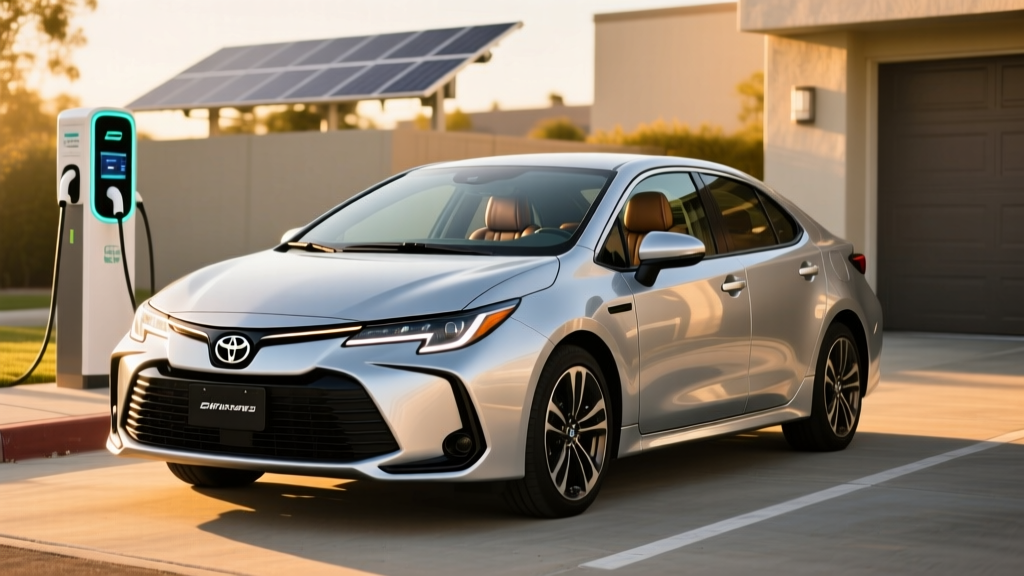
Quick Verdict: The 2021 Corolla Hybrid in 2026
Five years after its debut, the 2021 Toyota Corolla Hybrid remains one of the most efficient sedans on the used market. With an EPA-estimated 52 MPG combined, a proven fourth-generation hybrid powertrain, and Toyota's 10-year/150,000-mile hybrid battery warranty, it occupies a specific niche: buyers who want maximum fuel savings without plugging in, paying a premium, or changing their driving habits. It is a conventional hybrid (HEV), not a plug-in hybrid (PHEV) — meaning it charges its own small battery through regenerative braking and the gasoline engine. No outlet required.
If you are shopping the used market in 2026 and want a no-compromise commuter that sips fuel in stop-and-go traffic, the 2021 Corolla Hybrid delivers predictable, real-world efficiency that often exceeds its EPA sticker in city driving. But it is not a plug-in vehicle, it does not qualify for federal EV tax credits, and its 121 combined horsepower means passing on the highway requires planning.
| Spec | Value |
|---|---|
| Powertrain | 1.8L 4-cyl Atkinson-cycle + electric motor (HEV) |
| Combined Horsepower | 121 hp |
| Transmission | Electronically controlled CVT (eCVT) |
| EPA MPG (City / Hwy / Combined) | 53 / 52 / 52 |
| Fuel Tank | 11.4 gallons |
| Total Range | ~593 miles |
| Hybrid Battery | Nickel-Metal Hydride (NiMH), ~1.3 kWh |
| Drivetrain | Front-wheel drive (AWD-e available) |
| 0–60 mph | ~9.7 seconds |
| Original MSRP (LE trim) | $23,600 |
| Hybrid Battery Warranty | 10 years / 150,000 miles |
HEV vs PHEV vs EV: Where the Corolla Hybrid Fits
The 2021 Corolla Hybrid is a conventional hybrid (HEV). Understanding this distinction is essential before comparing it to plug-in alternatives:
| Feature | HEV (Corolla Hybrid) | PHEV (e.g., Prius Prime) | BEV (e.g., Tesla Model 3) |
|---|---|---|---|
| Plug-in Required? | No | Yes (optional) | Yes (mandatory) |
| Electric-Only Range | None (motor assists engine) | 25–44 miles typical | 250–360+ miles |
| Battery Size | ~1.3 kWh | ~13–18 kWh | 50–82+ kWh |
| Fuel / Energy | Gasoline only | Gasoline + electricity | Electricity only |
| Federal Tax Credit (§30D) | Not eligible | Up to $7,500 (new, if eligible) | Up to $7,500 (new, if eligible) |
| Home Charging Needed? | No | Recommended for full benefit | Yes |
| Best For | No-plug commuters, apartments | Short commutes + road trips | Home-charging access, low mi$/mi |
The Corolla Hybrid's self-charging design means it works exactly like a gas car at the pump — you simply fill up and drive. The hybrid system recovers energy during braking and deceleration, storing it in a small NiMH battery that powers the electric motor to assist the engine or drive the car at very low speeds. There is no plug, no charging cable, and no range anxiety.
Fuel Economy: EPA Numbers and Real-World MPG
| Driving Condition | EPA Estimate | Real-World Expectation |
|---|---|---|
| City | 53 MPG | 50–58 MPG (hybrids excel here) |
| Highway | 52 MPG | 46–52 MPG (aero drag reduces gains) |
| Combined | 52 MPG | 48–55 MPG |
The 2021 Corolla Hybrid's EPA ratings are published on fueleconomy.gov. The combined 52 MPG places it among the most efficient non-plug-in vehicles ever sold in the US.
Real-world context: Toyota's Hybrid Synergy Drive system recovers more energy in stop-and-go traffic than on open highways. Many owners report exceeding the 53 MPG city estimate during warm-weather commuting with moderate acceleration. Highway driving at 75+ mph, however, can pull combined figures down to the mid-40s, as the electric motor provides less benefit at sustained high speeds and aerodynamic drag increases. Cold weather (below 40°F) typically reduces fuel economy by 5–10% due to increased engine warm-up time and cabin heating demand — a pattern consistent across all hybrids.
With the 11.4-gallon fuel tank, expect 500–600 miles between fill-ups depending on driving style and conditions. At the 2026 national average of roughly $3.20/gallon, annual fuel cost for 15,000 miles is approximately $925 — about $550 less than a comparable 30 MPG gas-only compact sedan.
Powertrain: 121 HP From Engine and Motor Combined
The 2021 Corolla Hybrid pairs a 1.8-liter Atkinson-cycle four-cylinder engine (97 hp, 105 lb-ft) with a 72 hp permanent-magnet electric motor. Combined system output is 121 horsepower. The eCVT (electronically controlled continuously variable transmission) uses a planetary gearset rather than a belt or chain, making it one of the most durable transmission designs in the industry.
The AWD-e variant, available on the LE trim, adds a small rear-mounted electric motor (7 hp) that engages the rear wheels from 0–6 mph for improved traction off the line and in slippery conditions. It does not significantly impact fuel economy (EPA 51 combined for AWD-e). This system is not full-time AWD — above 6 mph, the car reverts to front-wheel drive unless slip is detected.
Performance reality: The 0–60 mph time of approximately 9.7 seconds is adequate for commuting but noticeably slower than turbocharged competitors. Highway merging and passing require anticipation. If brisk acceleration matters, a PHEV like the 2021 RAV4 Prime (302 hp, 5.7 seconds) or a BEV would serve you better — at a significantly higher purchase price.
Hybrid Battery: Longevity, Warranty, and Replacement Cost
2021 Corolla Hybrid Battery Warranty: 10 years or 150,000 miles (whichever comes first), covering capacity loss and defects. This warranty is transferable to subsequent owners.
The 2021 Corolla Hybrid uses a nickel-metal hydride (NiMH) battery pack rated at approximately 1.3 kWh. Unlike the larger lithium-ion packs in PHEVs and BEVs, this battery is not designed for electric-only driving — it buffers energy for motor assist and regenerative braking.
Longevity data: Toyota's hybrid batteries have an exceptional track record. The Prius, which shares the same Hybrid Synergy Drive architecture, regularly sees original batteries lasting 200,000+ miles. The NiMH chemistry in the Corolla Hybrid is less energy-dense than lithium-ion but is extremely tolerant of charge/discharge cycling and temperature extremes. Failures before 150,000 miles are uncommon.
Replacement cost (2026 estimate): If the hybrid battery does fail out of warranty, a new OEM replacement from Toyota costs approximately $2,000–$3,000 including parts and labor at a dealership. Refurbished/remanufactured packs are available from third-party suppliers for $1,000–$1,800. Individual cell replacement (a common repair for hybrid batteries where only one or two modules degrade) can cost as little as $300–$600 at a hybrid-specialist shop.
For a 2021 model purchased in 2026, the factory 10-year/150,000-mile warranty remains active until the 2031 model year or 150,000 miles — providing substantial coverage for a used buyer.
Pricing, Tax Credits, and Ownership Economics
The 2021 Corolla Hybrid was sold in a single LE trim with an original MSRP of $23,600 (FWD). The AWD-e variant started at $25,000. In the 2026 used market, expect to pay approximately $16,000–$21,000 depending on mileage, condition, and region.
Federal tax credit status: The 2021 Corolla Hybrid is a conventional HEV and does not qualify for the IRS §30D Clean Vehicle Credit. That credit applies only to plug-in electric vehicles (BEVs and PHEVs) meeting battery-sourcing, MSRP, and buyer income requirements. Some states offer modest rebates for hybrids (typically $500–$1,500), but these vary by jurisdiction and change frequently. Check your state energy office or the Alternative Fuels Data Center for current local incentives.
| Category | 2021 Corolla Hybrid (HEV) | 2021 Corolla Gas (LE) |
|---|---|---|
| Purchase Price (est.) | $18,500 | $15,500 |
| Fuel (5 years) | $4,625 | $7,500 |
| Insurance (est. avg) | $6,500 | $6,000 |
| Maintenance (5 years) | $2,200 | $2,800 |
| Estimated Depreciation | $5,500 | $5,000 |
| Total 5-Year Cost | ~$37,325 | ~$36,800 |
The hybrid's fuel savings ($2,875 over 5 years) nearly offset its higher used purchase price. Toyota Corolla Hybrids also hold resale value well — IIHS rated the 2021 Corolla sedan a Top Safety Pick, supporting strong demand on the used market.
Reliability and Safety Record
The 2021 Corolla Hybrid benefits from Toyota's deepest area of engineering expertise. The Hybrid Synergy Drive system has been in continuous production since 1997, and the 1.8L 2ZR-FXE engine is one of the most proven powertrains in Toyota's lineup. There are no turbochargers, no complex multi-speed transmissions, and no high-voltage systems requiring external charging — fewer failure points than most gas-only vehicles.
The 2021 Corolla earned the IIHS Top Safety Pick award with acceptable headlights and includes Toyota Safety Sense 2.0 as standard equipment: pre-collision braking with pedestrian detection, full-speed adaptive cruise control, lane departure alert with steering assist, lane tracing assist, and automatic high beams.
Common owner-reported issues are minor: some road noise at highway speeds (typical for the segment), a firm ride over sharp bumps, and the CVT's characteristic drone under hard acceleration (a function of the eCVT holding the engine at optimal RPM). There are no widespread hybrid-system or battery failure patterns for this model year.
Who Should Buy the 2021 Corolla Hybrid
Pros
- 52 MPG EPA combined — among the highest of any non-plug-in vehicle
- No plug-in required; works like a normal gas car at the pump
- 10-year/150,000-mile hybrid battery warranty (still active in 2026)
- Proven, durable eCVT and NiMH battery chemistry
- Standard Toyota Safety Sense 2.0 suite
- Low annual fuel cost (~$925/yr at 15,000 miles)
- Strong resale value and reliability reputation
Cons
- 121 hp — sluggish acceleration, especially at highway speeds
- No electric-only driving capability
- Not eligible for federal §30D tax credit
- Rear seat and trunk space are modest for the segment
- Single LE trim limits feature availability (no premium audio, no sunroof from factory)
- Road noise and firm ride compared to larger sedans
Choose the 2021 Corolla Hybrid if: You want maximum MPG without plugging in, you live in an apartment or lack home charging access, your commute is stop-and-go city driving, and you value low running costs over acceleration.
Choose a PHEV (e.g., Prius Prime) instead if: You have home charging, your daily commute is under 25 miles, and you want some electric-only driving while retaining gas flexibility for road trips.
Choose a BEV (e.g., Chevy Bolt, Tesla Model 3) instead if: You have reliable home Level 2 charging, want zero tailpipe emissions, qualify for tax credits on a new or used EV purchase, and are ready to adopt charging as part of your routine.
Stick with a gas Corolla if: You drive fewer than 8,000 miles per year (the hybrid fuel savings won't offset the price premium) or you need the lowest possible upfront purchase price.
Frequently Asked Questions
How many MPG does the 2021 Corolla Hybrid get?
The EPA rates it at 53 city / 52 highway / 52 combined. Real-world owners frequently report 50–58 MPG in city commuting, with highway driving at 75+ mph pulling figures to the mid-to-upper 40s. Cold weather can reduce efficiency by 5–10%.
Does the 2021 Corolla Hybrid need to be plugged in?
No. It is a conventional hybrid (HEV), not a plug-in hybrid (PHEV). The battery recharges through regenerative braking and the gasoline engine. You fuel it exactly like a regular gas car.
Is the 2021 Corolla Hybrid reliable?
Yes. Toyota's Hybrid Synergy Drive has been in production since 1997 with an exceptional reliability record. The NiMH battery pack is designed to last 150,000+ miles, and the eCVT uses a planetary gearset with no belts or clutches to wear. There are no widespread failure patterns for the 2021 model year.
What does it cost to replace the hybrid battery?
A new OEM replacement costs approximately $2,000–$3,000 at a dealership. Refurbished packs run $1,000–$1,800, and individual cell module replacement can cost $300–$600. However, the 10-year/150,000-mile warranty remains active for 2021 models through 2031, making out-of-pocket replacement unlikely for most buyers.
Does the 2021 Corolla Hybrid qualify for a tax credit?
Not for the federal §30D Clean Vehicle Credit, which applies only to plug-in vehicles (BEVs and PHEVs). Some states offer small hybrid rebates ($500–$1,500), but availability varies. Consult your state's energy office or a tax professional for current eligibility.
How does the Corolla Hybrid compare to the Prius?
The 2021 Prius achieves 54–58 MPG combined (depending on trim) with a slightly more aerodynamic liftback body and more cargo space. The Corolla Hybrid is a traditional sedan with a conventional trunk. Both use Toyota's 1.8L hybrid system. Choose the Corolla Hybrid if you prefer sedan styling and a lower used-market price; choose the Prius for maximum efficiency and hatchback versatility.
Is the AWD-e version worth it?
The AWD-e adds a small rear electric motor for improved traction from 0–6 mph and in slippery conditions. It costs slightly more and returns 51 MPG combined (1 MPG less). If you live in a snowy climate, the added confidence off the line is worthwhile. For dry-climate commuters, FWD is sufficient and slightly more efficient.