Why the 2020 Toyota RAV4 Hybrid Still Matters in 2026
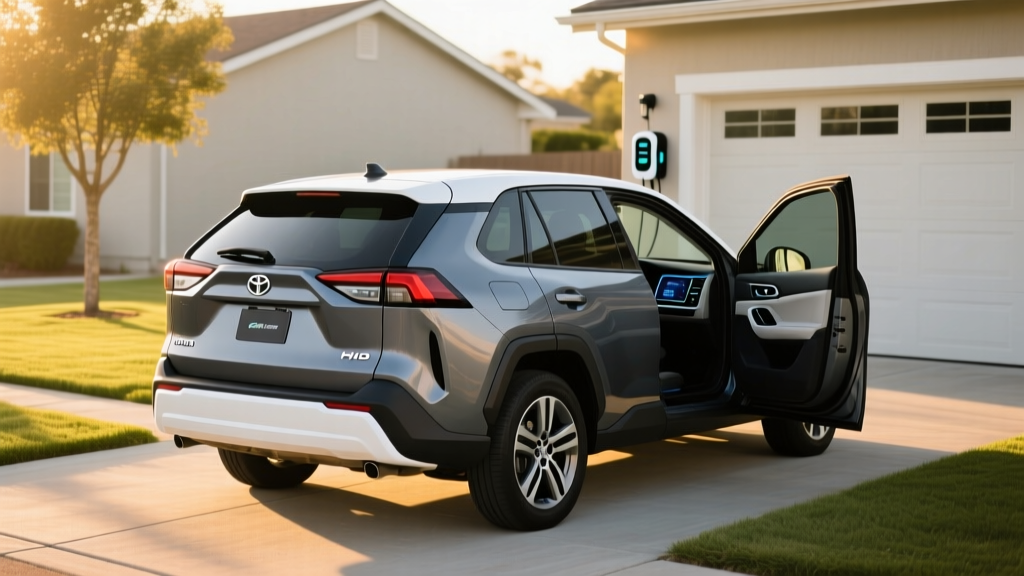
Six years after it launched, the 2020 Toyota RAV4 Hybrid remains one of the most sought-after used compact SUVs on the market — and for good reason. It delivers 41 MPG combined without ever needing a plug, offers standard electronic all-wheel drive, and carries Toyota's reputation for bulletproof hybrid reliability. For buyers in 2026 who aren't ready to commit to a full battery-electric vehicle but want meaningful fuel savings over a gas-only SUV, this generation of RAV4 Hybrid hits a practical sweet spot.
This guide breaks down everything you need to know before buying a used 2020 RAV4 Hybrid: exact EPA fuel economy, real-world MPG expectations, powertrain specs, battery longevity, warranty coverage, and how it stacks up against the plug-in RAV4 Prime and a full EV like the Tesla Model Y.
HEV vs PHEV: Which RAV4 Is Which?
Conventional Hybrid (HEV) — RAV4 Hybrid: Charges its own 1.6 kWh nickel-metal hydride (NiMH) battery through regenerative braking and the gasoline engine. You never plug it in. It operates as a seamless blend of electric motor and 2.5L engine, optimizing for efficiency at every speed. There is no meaningful electric-only range — the electric motor assists the engine and handles low-speed creeping, but the gas engine is always available.
Plug-In Hybrid (PHEV) — RAV4 Prime: Launched for the 2021 model year (not available as a 2020), the RAV4 Prime uses a much larger 18.1 kWh lithium-ion battery that you plug in to charge. It delivers 42 miles of EPA-rated electric-only range before the gas engine kicks in, and it qualifies for federal tax credits when purchased new. If you want plug-in capability, you'll need to look at 2021+ RAV4 Prime models instead.
This article focuses squarely on the 2020 RAV4 Hybrid (HEV). If you're cross-shopping the Prime, we address the comparison below.
Fuel Economy: EPA Ratings and Real-World MPG
The 2020 RAV4 Hybrid's fuel economy is its headline feature. Here's what the EPA rates it at, alongside what owners and testers actually see on the road:
| Driving Condition | EPA Estimate | Real-World Expectation |
|---|---|---|
| City | 41 MPG | 39–44 MPG (hybrids excel in stop-and-go) |
| Highway | 38 MPG | 34–38 MPG (aerodynamic drag reduces hybrid advantage) |
| Combined | 41 MPG | 37–41 MPG depending on driving mix |
Why real-world MPG often exceeds EPA in the city: Hybrids recapture energy through regenerative braking every time you slow down. In heavy traffic with frequent stops, the electric motor handles more of the workload, and the gas engine shuts off at idle. Owners who do mostly urban and suburban driving regularly report 42–44 MPG on forums and fueleconomy.gov user estimates.
Highway reality check: At sustained 70–80 mph speeds, the hybrid system's advantage diminishes. The gas engine does most of the work, and aerodynamic drag dominates. Expect 34–37 MPG on long interstate trips, particularly in cold weather or with a loaded roof rack. This is still substantially better than the gas-only 2020 RAV4 AWD, which the EPA rates at 28 MPG combined.
Cold-weather impact: In temperatures below freezing, expect a 5–10% drop in fuel economy. The engine runs more often to maintain cabin heat and bring the catalytic converter up to operating temperature. This is far less severe than the 20–30% range loss a full EV experiences in cold weather, but it's worth factoring in if you live in northern climates.
Powertrain Specs: Engine, Motors, and Performance
| Specification | 2020 RAV4 Hybrid |
|---|---|
| Engine | 2.5L 4-cylinder Dynamic Force (176 hp, 163 lb-ft) |
| Front Electric Motor | 118 hp, 149 lb-ft |
| Rear Electric Motor (AWD) | 54 hp, 89 lb-ft |
| Net Combined System Output | 219 hp |
| Transmission | eCVT (electronically controlled continuously variable) |
| Drivetrain | Electronic On-Demand AWD (standard on all trims) |
| 0–60 mph | 7.8 seconds (Toyota est.) |
| Towing Capacity | 1,750 lbs |
| Fuel Tank | 14.5 gallons |
| Total Driving Range | ~595 miles (14.5 gal × 41 MPG) |
| Hybrid Battery | 1.6 kWh NiMH (sealed, not plug-in) |
The 2020 RAV4 Hybrid uses Toyota's fourth-generation hybrid system. The key insight: the 219 hp combined figure isn't simply the engine and motor outputs added together — the power control unit blends them based on driving conditions. The result is confident acceleration from a stop (the electric motor delivers instant torque) and adequate highway passing power.
The electronic AWD system is worth noting: there's no mechanical driveshaft connecting the front and rear axles. Instead, the rear electric motor independently powers the rear wheels when the system detects slip or when accelerating from a stop. This means AWD is always available but doesn't add the parasitic drivetrain loss of a traditional mechanical system — a key reason the RAV4 Hybrid AWD achieves nearly the same MPG as a FWD-only competitor.
Battery Longevity, Warranty, and Replacement Costs
Hybrid Battery Warranty (Original): 10 years / 150,000 miles (in states adopting California Air Resources Board standards, including CA, NY, MA, and others) or 8 years / 100,000 miles in remaining states. This warranty applies from the vehicle's original in-service date and transfers to subsequent owners.
What's covered: If the hybrid battery drops below a defined capacity threshold or fails entirely, Toyota replaces it at no cost within the warranty period. This includes the battery control module and related hybrid system components.
Real-world battery lifespan: Toyota's NiMH hybrid batteries have an exceptional track record. Data from fleet operators, taxi services, and long-term owner reports consistently show these batteries lasting 150,000–200,000+ miles before needing replacement. The 2020 RAV4 Hybrid uses a proven NiMH chemistry that is less energy-dense than lithium-ion but extremely durable and tolerant of the shallow charge-discharge cycles that hybrids use (the system keeps the battery between roughly 40% and 80% state of charge to minimize stress).
Replacement cost if out of warranty: A new OEM hybrid battery from Toyota runs approximately $2,500–$4,000 installed at a dealership as of 2026. Refurbished or reconditioned NiMH modules are available from independent hybrid specialists for $1,000–$2,000 installed. For context, a 2020 RAV4 Hybrid with 120,000 miles and a clean maintenance history is statistically unlikely to need a battery replacement for several more years.
Is the hybrid battery reliable? Based on data aggregated from Consumer Reports reliability surveys and long-term owner forums, the RAV4 Hybrid powertrain ranks among the most dependable in the compact SUV segment. Hybrid system failures are rare; the more common maintenance items are standard — brake wear (actually reduced due to regenerative braking), 12V auxiliary battery replacement every 4–6 years, and routine engine service.
Pricing and Tax Credit Eligibility in 2026
Because the 2020 RAV4 Hybrid is a conventional hybrid (HEV), not a plug-in, it does not qualify for the federal §30D clean vehicle tax credit — that credit is reserved for battery-electric vehicles and plug-in hybrids that meet battery sourcing, MSRP, and buyer income requirements under current IRS rules.
Used market pricing (2026 estimates):
- LE trim: $21,000–$24,000 (60,000–90,000 miles)
- XLE trim: $23,000–$26,000 (60,000–90,000 miles)
- XLE Premium: $24,000–$27,000 (60,000–90,000 miles)
- SE / Limited: $25,000–$30,000 (50,000–80,000 miles)
Original MSRP (2020): The 2020 RAV4 Hybrid started at $29,470 (LE, including destination) and climbed to roughly $38,000 for a fully loaded Limited. These figures are useful as depreciation benchmarks — a well-maintained 2020 RAV4 Hybrid has held roughly 65–75% of its original value as of early 2026, which is strong retention for a six-year-old vehicle.
State incentives: Some states offer rebates or HOV lane access for hybrid vehicles, though most incentive programs have shifted focus to plug-in vehicles. Check your state's energy office or DMV for current programs. No federal incentive applies to a conventional hybrid purchase, new or used.
2020 RAV4 Hybrid vs RAV4 Prime vs Full EV
This is the decision framework most buyers need. Here's how the three electrified paths compare for a compact SUV buyer in 2026:
| Factor | RAV4 Hybrid (HEV) | RAV4 Prime (PHEV, 2021+) | Full EV (e.g., Tesla Model Y) |
|---|---|---|---|
| Plug-in Required? | No | Yes (optional but recommended) | Yes (mandatory) |
| Electric-Only Range | N/A (motor assists engine) | 42 miles EPA | 300+ miles EPA |
| Combined MPG / MPGe | 41 MPG | 94 MPGe (electric) / 38 MPG (gas) | 122 MPGe |
| Home Charging Needed? | No | Recommended (120V or 240V) | Yes (240V strongly recommended) |
| Federal Tax Credit (new) | None | Up to $7,500 (subject to §30D rules) | Up to $7,500 (subject to §30D rules) |
| Used Price Range (2026) | $21,000–$30,000 | $30,000–$40,000 | $25,000–$40,000 |
| Fuel/Energy Cost per Mile | ~$0.09 (at $3.50/gal) | ~$0.04 (electric) / $0.09 (gas) | ~$0.04–$0.06 (home charging) |
| Maintenance Burden | Low (standard hybrid) | Moderate (gas + electric systems) | Lowest (no engine, minimal fluids) |
Choose the 2020 RAV4 Hybrid (HEV) if:
- You don't have access to home or workplace charging
- You want maximum simplicity — no plugs, no charging apps, no range planning
- Your budget is under $30,000 for a reliable AWD SUV
- You drive a mix of city and highway and want consistent 38–44 MPG without thinking about it
- You live in an apartment or rent and can't install a charger
Choose the RAV4 Prime (PHEV) if:
- You can charge at home (even a standard 120V outlet adds ~15 miles overnight)
- Your daily commute is under 40 miles round-trip (you'd rarely use gas)
- You want the option of electric-only driving but need gas flexibility for road trips
- You're buying new or CPO and can capture the federal tax credit
Choose a full EV if:
- You have reliable Level 2 home charging
- Your daily driving is under 250 miles and you road-trip infrequently (or are willing to plan DC fast-charging stops)
- You want the lowest per-mile energy cost and minimal maintenance
- You're motivated by tailpipe emission elimination and can absorb a higher purchase price
Pros and Cons at a Glance
Pros
- 41 MPG combined EPA; real-world city driving often exceeds 42 MPG
- Standard electronic AWD on every trim — no FWD-only penalty trims
- No plug-in charging required; works with any gas station
- Proven Toyota hybrid reliability with 10-year/150,000-mile battery warranty (CARB states)
- Strong resale value — retains ~65–75% of MSRP at six years old
- Competent 219 hp system output; quicker than most non-turbo compact SUVs
- Regenerative braking extends brake pad life significantly
Cons
- No electric-only driving mode for zero-emission short trips
- No federal tax credit eligibility (conventional hybrid)
- eCVT drone under hard acceleration — not a sporty driving experience
- 1,750-lb towing capacity is below some turbocharged gas competitors
- Rear cargo space slightly reduced vs gas RAV4 due to hybrid battery placement
- Infotainment system (2020-era Toyota Entune) feels dated by 2026 standards
- Road noise is noticeable at highway speeds compared to premium competitors
Frequently Asked Questions
How many MPG does the 2020 Toyota RAV4 Hybrid actually get?
The EPA rates it at 41 city / 38 highway / 41 combined MPG. In real-world driving, owners doing mostly city and suburban trips regularly see 42–44 MPG thanks to regenerative braking. Highway-only driving at 75+ mph drops to 34–37 MPG. Cold weather reduces economy by roughly 5–10%.
Does the 2020 RAV4 Hybrid need to be plugged in?
No. The 2020 RAV4 Hybrid is a conventional hybrid (HEV). Its small 1.6 kWh battery charges itself through regenerative braking and the gasoline engine. You simply fill it with gas like any other vehicle. If you want plug-in capability, you'd need the 2021+ RAV4 Prime (PHEV).
How long will the hybrid battery last, and what does replacement cost?
Toyota's NiMH hybrid batteries routinely last 150,000–200,000+ miles based on fleet and owner data. The original warranty covers 10 years/150,000 miles in CARB states or 8 years/100,000 miles elsewhere. If replacement is needed out of warranty, expect $2,500–$4,000 for a new OEM battery or $1,000–$2,000 for a refurbished unit from a hybrid specialist.
Does the 2020 RAV4 Hybrid qualify for any tax credit?
No. The federal §30D clean vehicle credit applies only to battery-electric vehicles and plug-in hybrids that meet specific battery sourcing, MSRP caps, and buyer income requirements. Conventional hybrids like the RAV4 Hybrid are not eligible. Some states may offer minor incentives — check your state energy office. A used RAV4 Hybrid purchase also does not qualify for the used clean vehicle credit (that applies to used EVs and PHEVs only).
Is the 2020 RAV4 Hybrid reliable?
Yes. According to Consumer Reports and long-term owner data, the RAV4 Hybrid powertrain is among the most reliable in its class. The hybrid system has fewer wear components than a conventional automatic transmission (no traditional gearbox to fail), regenerative braking extends pad life, and the 2.5L Dynamic Force engine is under-stressed. Common maintenance items are routine: oil changes, tire rotations, cabin air filters, and eventual 12V battery replacement.
How does the 2020 RAV4 Hybrid compare to the gas-only 2020 RAV4?
The gas-only 2020 RAV4 AWD gets 28 MPG combined (25 city / 33 highway) vs the Hybrid's 41 combined. Over 15,000 miles per year at $3.50/gallon, the Hybrid saves roughly $700–$800 annually in fuel costs. The Hybrid also offers more power (219 hp combined vs 203 hp for the gas model) and standard AWD on all trims. The price premium on the used market is typically $1,500–$3,000 over an equivalent gas RAV4 — a premium that pays back in fuel savings within 2–4 years for most drivers.
Can I tow with the 2020 RAV4 Hybrid?
Yes, but capacity is limited to 1,750 pounds — adequate for a small utility trailer, a pair of dirt bikes, or a lightweight pop-up camper. This is less than some turbocharged gas competitors (the Subaru Forester, for example, tows 1,500 lbs, while the gas-only RAV4 Adventure tows 3,500 lbs). If towing is a priority, the RAV4 Hybrid isn't the best choice in this segment.