Quick Verdict: A Proven Hybrid That Still Delivers in 2026
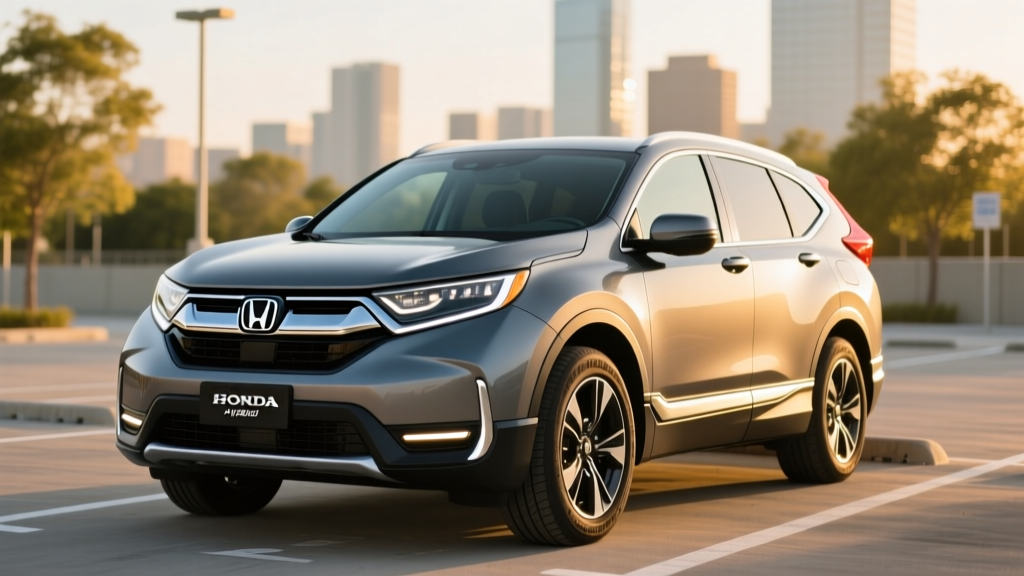
The 2020 Honda CR-V Hybrid remains one of the most practical compact SUVs on the used market for drivers who want meaningful fuel savings without changing their refueling habits. With an EPA-estimated 40 MPG combined and Honda's two-motor hybrid system delivering 212 combined horsepower, it bridges the gap between a conventional gas CR-V and a full electric vehicle — no plug, no range anxiety, no learning curve.
Six years after its debut, the 2020 CR-V Hybrid is now widely available on the used market at prices between $22,000 and $28,000 depending on mileage and condition. For buyers weighing a used hybrid against a new PHEV or EV, this is a compelling, low-risk option — especially if home charging isn't feasible.
| Spec | 2020 Honda CR-V Hybrid |
|---|---|
| Powertrain | 2.0L Atkinson-cycle 4-cyl + 2 electric motors |
| Combined Horsepower | 212 hp |
| EPA MPG (City / Hwy / Combined) | 40 / 35 / 38 |
| Drivetrain | AWD (standard on all hybrid trims) |
| Hybrid Battery | ~1.4 kWh lithium-ion (HEV, no plug) |
| Fuel Tank | 14.0 gallons |
| Total Range | ~530 miles |
| 0–60 mph | ~7.8 seconds |
| Cargo Volume | 33.2 cu ft (rear seats up) |
| Battery Warranty (original) | 8 years / 100,000 miles (10 yr / 150,000 mi in CARB states) |
HEV vs. PHEV: What the 2020 CR-V Hybrid Actually Is
It's essential to understand what you're buying. The 2020 Honda CR-V Hybrid is a conventional hybrid (HEV), not a plug-in hybrid (PHEV). That means:
- No plug required. The small 1.4 kWh battery charges itself through regenerative braking and the gasoline engine. You never need to find a charger.
- No electric-only range to speak of. The battery assists the engine and enables brief low-speed electric-only creeping (typically under 1 mile at low speeds), but this is not a vehicle you can drive on electricity alone for any meaningful distance.
- No federal tax credit. The IRS §30D credit applies only to plug-in vehicles (PHEVs and BEVs) with sufficient battery capacity and qualifying sourcing. The CR-V Hybrid does not qualify — not when new, and not on the used market.
| Feature | 2020 CR-V Hybrid (HEV) | Typical Compact PHEV SUV | Typical Compact EV |
|---|---|---|---|
| Plug-in Required? | No | Yes (Level 2 recommended) | Yes (Level 2 recommended) |
| Electric-Only Range | ~0.5 mi (low speed) | 25–40 mi | 230–320 mi |
| EPA Combined Efficiency | 38 MPG | 75–95 MPGe (elec) + 30–35 MPG (gas) | 100–120 MPGe |
| Total Range | ~530 mi | 400–500 mi | 230–320 mi |
| Federal Tax Credit | None | Up to $7,500 (if eligible) | Up to $7,500 (if eligible) |
| Used EV Credit (§25E) | Not eligible | Up to $4,000 (if eligible) | Up to $4,000 (if eligible) |
Honda did not offer a plug-in hybrid version of the CR-V in the U.S. market for the 2020 model year. If you need electric-only commuting capability, you'd need to look at competitors like the Toyota RAV4 Prime (PHEV) or a full EV like the Hyundai Ioniq 5.
Fuel Economy: EPA Numbers vs. Real-World MPG
The EPA rates the 2020 Honda CR-V Hybrid at 40 MPG city / 35 MPG highway / 38 MPG combined. Those numbers deserve unpacking because hybrids behave differently than gas cars depending on driving conditions.
| Driving Scenario | EPA Estimate | Real-World Expectation |
|---|---|---|
| City (stop-and-go) | 40 MPG | 38–44 MPG (regenerative braking shines here) |
| Highway (65–75 mph) | 35 MPG | 32–36 MPG (less regen benefit, more aero drag) |
| Combined | 38 MPG | 35–40 MPG |
| Cold Weather (below 30°F) | N/A | 30–34 MPG (engine runs more for cabin heat) |
Why city MPG beats highway: The CR-V Hybrid's two-motor system captures kinetic energy during braking and deceleration, feeding it back to the battery. In stop-and-go traffic, this regeneration happens constantly, making the hybrid significantly more efficient than a gas-only CR-V (which gets 30 MPG combined with AWD). On the highway, the gasoline engine does most of the work directly, and the hybrid advantage narrows.
Cold-weather note: Expect a 10–15% fuel economy drop in winter. The Atkinson-cycle engine runs more frequently to provide cabin heat and maintain battery temperature. Owners in northern climates typically report 30–34 MPG in January and February, recovering to EPA numbers by spring.
Compared to the gas-only 2020 CR-V AWD (30 MPG combined), the hybrid saves roughly 2.5 gallons per 100 miles driven. At $3.50/gallon and 12,000 miles per year, that's approximately $1,050 in annual fuel savings, or about $5,250 over five years.
Powertrain Deep Dive: How Honda's Two-Motor System Works
The 2020 CR-V Hybrid uses Honda's third-generation two-motor hybrid system, which is fundamentally different from the planetary-gear setups Toyota popularized. Here's what's under the hood:
- Engine: 2.0-liter Atkinson-cycle inline-4 producing 143 hp and 129 lb-ft of torque. The Atkinson cycle sacrifices peak power for thermal efficiency.
- Drive Motor: 181 hp, 232 lb-ft electric motor that directly drives the front wheels in most conditions.
- Generator Motor: A second motor that acts as a generator, converting engine output to electricity when needed.
- Combined Output: 212 hp (the system is limited by the engine's output, not the sum of all components).
- AWD: A separate rear-mounted electric motor provides all-wheel drive. Unlike mechanical AWD systems, there's no driveshaft connecting front and rear axles.
The system operates in three modes, managed automatically:
- EV Drive: Battery powers the drive motor alone (brief, low-speed only).
- Hybrid Drive: Engine turns the generator motor, which powers the drive motor. The engine doesn't directly turn the wheels. This is the dominant mode in city driving.
- Engine Drive: At steady highway speeds, a lock-up clutch connects the engine directly to the front wheels for maximum efficiency.
The result is smooth, linear acceleration that feels more like an EV than a traditional hybrid. The 0–60 mph time of approximately 7.8 seconds is competitive with the gas CR-V's turbocharged 1.5L (which hits 60 in about 7.5 seconds), but the hybrid's electric torque delivery makes it feel quicker in everyday driving.
Battery Longevity, Warranty, and Replacement Cost
Battery lifespan is the number-one concern for used hybrid buyers, and it's a fair one. Here's what you need to know about the 2020 CR-V Hybrid's battery.
Battery Warranty & Specs
- Battery Chemistry: Lithium-ion (small ~1.4 kWh pack)
- Original Warranty: 8 years / 100,000 miles (10 years / 150,000 miles in California and CARB-adopting states: CO, CT, ME, MD, MA, NJ, NY, OR, RI, VT, WA)
- Warranty Coverage: Defects and capacity loss below a threshold (typically ~60-70% of original capacity)
- Remaining Coverage on a 2020 Model in 2026: Up to 2 years / unlimited remaining miles (or 4 years in CARB states) from original in-service date
Real-world degradation: Honda's hybrid batteries are small and shallow-cycled — they rarely charge above 60% or discharge below 40% State of Charge. This conservative window dramatically extends lifespan. Based on long-term fleet data from Honda and Toyota hybrids using similar strategies, most hybrid batteries last 150,000–200,000 miles before significant degradation. Many first-generation Honda Insights and Toyota Priuses have exceeded 200,000 miles on their original batteries.
Replacement cost: If the battery does fail outside warranty, a replacement lithium-ion pack for the CR-V Hybrid typically costs between $2,000 and $4,000 including installation at a Honda dealer. Independent hybrid specialists may offer refurbished packs for $1,500–$2,500. This is far less than a full EV battery replacement ($5,000–$20,000+) because the pack is small.
What to check on a used 2020 CR-V Hybrid:
- Verify the original in-service date to calculate remaining warranty.
- Check for any hybrid system warning lights on the dash.
- Review maintenance records — Honda's hybrid system requires no special maintenance beyond standard oil changes and coolant service.
- A pre-purchase inspection at a Honda dealer can include a hybrid battery health check.
Used Pricing and Tax Credit Reality
As of early 2026, the 2020 Honda CR-V Hybrid trades on the used market in these ranges:
- LX (base): $22,000–$25,000 (60,000–80,000 miles)
- EX: $24,000–$27,000 (50,000–70,000 miles)
- EX-L: $25,500–$28,000 (40,000–65,000 miles)
- Touring (top trim): $27,000–$30,000 (35,000–55,000 miles)
Tax credit status: The 2020 CR-V Hybrid does not qualify for any federal tax credit. The IRS §30D new clean vehicle credit and the §25E used clean vehicle credit both require a plug-in vehicle with a minimum battery capacity (4 kWh for §30D, 7 kWh for §25E). The CR-V Hybrid's 1.4 kWh battery falls well short. Some states may offer small hybrid incentives, but these vary by jurisdiction — check your state's energy office for current programs.
For comparison, a used PHEV like the Toyota RAV4 Prime or a used EV like a 2021 Tesla Model Y may qualify for the §25E used clean vehicle credit of up to $4,000 (30% of sale price, capped at $4,000), subject to income limits ($75,000 single / $150,000 married filing jointly), a $25,000 maximum sale price, and dealer reporting requirements.
Who Should Choose the 2020 CR-V Hybrid?
Choose the 2020 CR-V Hybrid (HEV) if:
- You can't install a home charger (apartment, street parking, no garage).
- You want fuel savings with zero behavior change — just fill up with gas as usual.
- Your budget is $22,000–$28,000 and you want a reliable compact SUV with AWD.
- You drive a mix of city and highway and want 35–40 MPG without thinking about it.
- You plan to keep the vehicle 5+ years and want proven Honda reliability.
Choose a PHEV (like the RAV4 Prime) instead if:
- You have home Level 2 charging and a commute under 35 miles.
- You want to drive mostly on electricity but need gas backup for road trips.
- You can leverage the §25E used EV credit to offset the higher purchase price.
Choose a full EV (like the Ioniq 5 or Model Y) instead if:
- You have reliable home charging and your daily driving is under 250 miles.
- You want to eliminate gas entirely and minimize maintenance.
- You value instant torque, one-pedal driving, and the lowest per-mile fuel cost.
Pros and Cons at a Glance
Pros
- 40 MPG city — excellent for stop-and-go commuting
- Standard AWD on all hybrid trims
- No plug-in required — zero infrastructure needed
- Smooth, EV-like acceleration feel from the two-motor system
- Spacious cargo area (33.2 cu ft) with no battery intrusion
- Proven Honda reliability with widely available parts and service
- Affordable used pricing in 2026 ($22K–$30K)
Cons
- No electric-only commuting capability (unlike a PHEV)
- No federal tax credit eligibility (new or used)
- Highway MPG (35) is less impressive than city (40)
- Road noise is noticeable at highway speeds — a known CR-V complaint
- Infotainment system is dated by 2026 standards (no wireless CarPlay on lower trims)
- Some remaining battery warranty has elapsed on 2020 models
Frequently Asked Questions
How many MPG does the 2020 Honda CR-V Hybrid get?
The EPA rates it at 40 MPG city / 35 MPG highway / 38 MPG combined. In real-world driving, expect 35–40 MPG combined depending on conditions. City driving often exceeds the EPA estimate thanks to regenerative braking, while sustained highway driving and cold weather can drop it to 30–34 MPG.
Can I plug in the 2020 CR-V Hybrid to charge?
No. The 2020 CR-V Hybrid is a conventional hybrid (HEV), not a plug-in hybrid (PHEV). The battery charges itself through regenerative braking and the gasoline engine. There is no charging port and no electric-only driving range beyond brief low-speed creeping.
How far can the 2020 CR-V Hybrid go on electric only?
Effectively zero meaningful distance. The hybrid system can propel the vehicle on electric power alone for roughly half a mile at very low speeds (under 25 mph), such as in a parking lot. This is not a vehicle designed for electric-only commuting. If you need 25–40 miles of electric-only range, look at a PHEV like the Toyota RAV4 Prime.
Is the 2020 CR-V Hybrid reliable, and what does battery replacement cost?
Yes. Honda's two-motor hybrid system has proven highly reliable, and the small lithium-ion battery is shallow-cycled for longevity. Most Honda hybrid batteries last 150,000–200,000 miles. If replacement is needed out of warranty, expect $2,000–$4,000 at a dealer. The original 8-year/100,000-mile battery warranty may still have up to 2 years of coverage remaining on a 2020 model in 2026.
Does the 2020 CR-V Hybrid qualify for any tax credit?
No. The federal §30D new vehicle credit and §25E used vehicle credit both require plug-in vehicles. The CR-V Hybrid's 1.4 kWh battery does not meet the minimum capacity threshold. Some states may offer small hybrid incentives — check your state energy office for current programs.
How does the CR-V Hybrid compare to the gas CR-V?
The gas-only 2020 CR-V AWD gets 30 MPG combined (27 city / 32 highway) with its 1.5L turbo engine. The hybrid gains 8 MPG combined — roughly 27% better fuel economy — while adding standard AWD, 212 combined hp (vs. 190 hp for the turbo), and smoother low-speed driving. The hybrid typically costs $1,500–$2,500 more on the used market, which pays for itself in fuel savings within 2–3 years at average mileage.
Is the 2020 CR-V Hybrid good in snow?
Yes. All 2020 CR-V Hybrid trims come with standard AWD via a rear electric motor. Combined with Honda's traction management system and the instant torque from the electric drive motor, it performs well in light to moderate snow. Ground clearance is 8.2 inches, competitive for the class. For severe winter conditions, dedicated winter tires make a significant difference regardless of drivetrain.